

Mettur, Tamil Nadu – After an anxious 80-day wait, the mighty sluice gates of the Stanley Reservoir at Mettur, a beacon of hope for millions, were ceremoniously opened on Tuesday, September 1st, at precisely 11:30 AM. This annual ritual, more than just an engineering feat, marks the symbolic genesis of the agricultural season for generations of farmers across the fertile Cauvery delta, a region often hailed as Tamil Nadu’s rice bowl. The gushing release of Cauvery water, a sight both majestic and deeply significant, signals the belated commencement of samba cultivation, a critical crop for the state’s food security and economy.
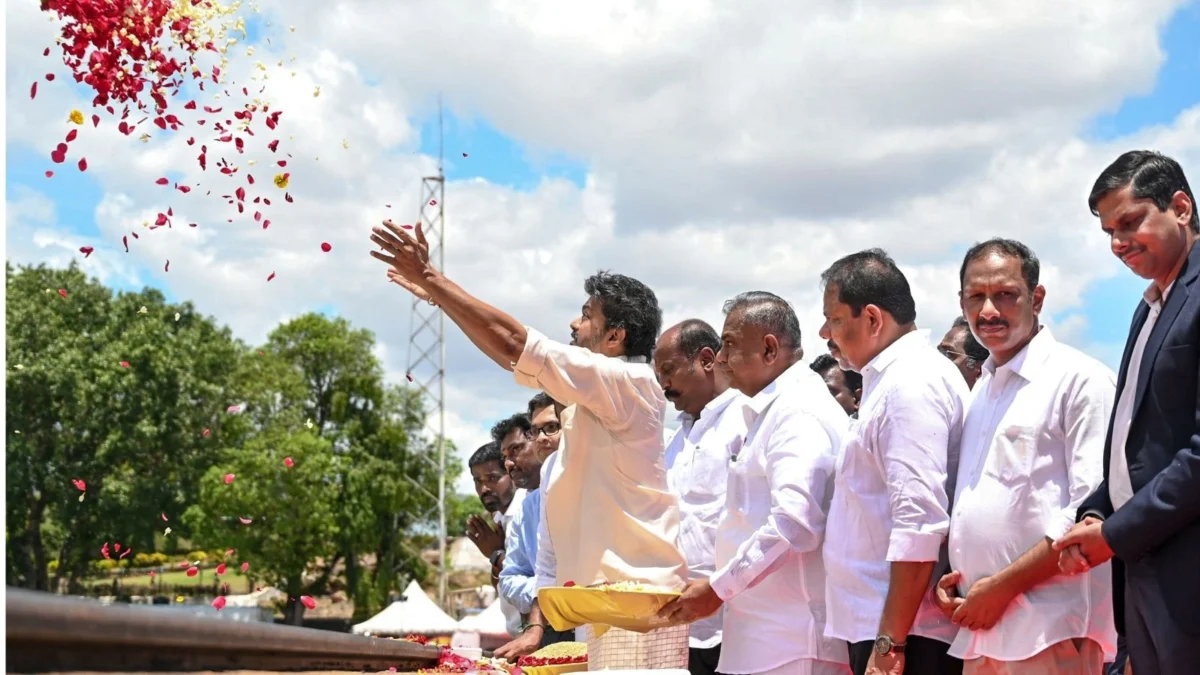
Presiding over the solemn and celebratory occasion was Tamil Nadu Chief Minister C Joseph Vijay. With a gesture steeped in tradition, he scattered flowers and grains into the powerful current as it surged forth from the reservoir, a prayer for abundance and prosperity. The initial discharge, a cautious 3,000 cusecs (cubic feet per second), was slated for a gradual increase to 7,000 cusecs by Tuesday evening, a carefully calibrated measure to manage the precious resource.
However, the jubilation was tempered by the stark realities of water scarcity. The government’s initial plan outlines a release duration of just 45 days, until October 15th, with the discharge subject to stringent regulation based on the fluctuating water availability and the pressing irrigation requirements. This short window underscores the precarious balance between agricultural demand and the prevailing environmental constraints.
As of 8 AM on Tuesday, the reservoir’s water level stood at 91.56 feet, a significant distance from its full capacity of 120 feet. The stored volume was 54.45 thousand million cubic feet (tmc ft), barely exceeding half of its total capacity of 93.47 tmc ft. Compounding the concern, inflow had marginally declined to 10,857 cusecs from the previous 11,501 cusecs. These figures paint a clear picture of the challenge at hand, explaining both the profound significance of Tuesday’s opening and the palpable anxiety that continues to surround it.
The Beating Heart of Tamil Nadu’s Agriculture: Mettur’s Enduring Significance
Mettur is far more than just another reservoir within Tamil Nadu’s extensive irrigation network; it is the lifeblood of the Cauvery delta. The water released from this colossal dam embarks on a crucial journey downstream, sustaining agriculture across a vast expanse of 16.05 lakh acres. This vital lifeline directly benefits farmers and communities in twelve key districts: Tiruchi, Thanjavur, Tiruvarur, Cuddalore, Nagapattinam, Erode, Pudukkottai, Ariyalur, Perambalur, Karur, Mayiladuthurai, and Namakkal. These districts collectively form the agricultural backbone of Tamil Nadu, heavily reliant on the timely and adequate flow of Cauvery water for paddy, sugarcane, and other essential crops.
In a normal agricultural year, the Mettur Dam is traditionally opened on June 12th, marking the optimal time for preparatory agricultural activities, and subsequently closed on January 28th. This schedule provides a generous 230-day irrigation window, during which an estimated 330 tmc ft of water is required to meet the comprehensive irrigation needs of the delta. However, the prevailing year has been anything but normal. Inadequate storage levels, a consequence of deficient rainfall in the catchment areas, regrettably prevented the customary June opening, pushing the critical release date back to September 1st.
A Season Delayed: A Historical Perspective
The delayed opening of the Mettur Dam on September 1st marks a concerning trend, representing only the fourth instance in recent memory that a delta irrigation release has commenced in September. Previous such delays occurred in 2002, 2012, and 2016, each bringing with it a unique set of challenges and anxieties for the farming community. These past delays serve as stark reminders of the vulnerability of the region’s agriculture to the vagaries of monsoon patterns and inter-state water disputes.
Delving deeper into the dam’s extensive 93-year history, the data reveals a telling pattern. Water has been released on the traditional June 12th date on only 20 occasions, and even earlier than this date on a mere 11 instances. Tuesday’s opening, therefore, stands as the 62nd recorded instance of a delayed commencement of irrigation, highlighting the increasing frequency of deviations from the optimal schedule. Each delay translates into significant economic hardship for farmers, impacting crop cycles, yield expectations, and ultimately, their livelihoods. The samba crop, typically sown in August-September and harvested in January-February, is particularly sensitive to these delays, requiring consistent water supply throughout its growth stages. A shortened irrigation window could force farmers to opt for less profitable, shorter-duration varieties or face reduced yields.
Navigating Scarcity: Government’s Strategy and Farmer’s Plight
The constrained initial release duration of 45 days has naturally sparked apprehension among the farming community. During his visit to Mettur, Chief Minister Vijay met with a delegation of farmers who voiced their urgent appeals. They implored the government to extend the water release beyond the announced 45 days, emphasizing the critical need for a sustained water supply to ensure the successful maturation of their samba crops. Furthermore, they sought measures to divert any potential surplus Mettur water to the numerous water bodies in the Thalaivasal region, a move that could significantly bolster local irrigation capabilities and groundwater levels.
In response to these concerns, the government has assured a closely managed and coordinated approach to water distribution. The Chief Minister’s office has directed the Agriculture and Farmers Welfare, Water Resources, and Revenue and Disaster Management departments to work in seamless coordination with district administrations. This multi-departmental effort aims to optimize water usage, respond swiftly to local needs, and mitigate potential crises.
A significant aspect of the government’s strategy involves rigorous monitoring to prevent misuse. Joint teams, comprising officials from the Water Resources, Revenue, Police, and electricity departments, will be deployed across the delta. Their mandate is to vigilantly monitor and curb illegal pumping and unauthorized extraction of water, ensuring equitable distribution and preventing wastage. Farmers, too, have been advised to adopt more sustainable and efficient agricultural practices. Recommendations include cultivating medium-duration paddy varieties, which require less water over a shorter period, and implementing water-saving techniques such as direct seeding and System of Rice Intensification (SRI), which can drastically reduce water consumption compared to traditional transplanting methods.
The government candidly attributed the challenging water position to a confluence of environmental factors: a significant deficit in the southwest monsoon rainfall and the pervasive impact of the El Niño weather phenomenon. El Niño typically leads to warmer sea surface temperatures in the equatorial Pacific, which can disrupt global weather patterns, often resulting in reduced rainfall in parts of India, including the critical catchment areas that feed the Cauvery.
The Unending Battle: Tamil Nadu’s Stance on Cauvery
Beyond the immediate challenge of water management, the state government reiterated its unwavering commitment to securing Tamil Nadu’s rightful share of Cauvery water from neighbouring Karnataka. This commitment extends to pursuing all available legal and administrative avenues under the framework of the Cauvery Water Disputes Tribunal’s final award and the Supreme Court’s landmark 2018 judgment. These legal instruments, the culmination of decades of contentious disputes, delineate the allocation of Cauvery waters between the riparian states, and Tamil Nadu remains steadfast in its efforts to ensure their full implementation. The perennial nature of this inter-state dispute adds another layer of complexity and uncertainty to the agricultural prospects of the Cauvery delta.
A Legacy Forged in Water: The History of Mettur Dam
The political and agricultural importance of Mettur Dam is inextricably linked to its rich and compelling history. The colossal project, a testament to early 20th-century engineering ambition, commenced construction in 1925 and reached completion in 1934. The construction involved a prodigious effort, employing approximately 17,000 workers, a massive undertaking for its time. However, the creation of this vital reservoir also came at a human cost, necessitating the evacuation and displacement of several villages that lay within its proposed submergence zone.
When the reservoir’s waters recede sufficiently during periods of low storage, remnants of this submerged landscape re-emerge, offering poignant glimpses into a bygone era. These include the evocative ruins of an old church and the Nandhi (sacred bull) sculpture of the ancient Jalagandeeswarar temple, visible markers of a drowned past.
Spanning an impressive 1,700 metres, the Mettur Dam was strategically built across the Cauvery River with a dual purpose: to provide extensive irrigation for agriculture and to generate hydroelectric power, a vital component of the region’s energy infrastructure. The dam receives its water supply from its own direct catchment area, as well as crucial inflows from the Kabini and Krishna Raja Sagar reservoirs, both situated upstream in Karnataka. This interconnectedness of water sources inherently ties Mettur’s fortunes to the rainfall patterns and water management decisions made in the neighbouring state, thus fuelling the long-standing inter-state water dispute.
Beyond the Delta: Mettur’s Broader Reach
Mettur’s influence extends beyond the primary Cauvery delta. A network of canal releases, typically commencing on August 1st, irrigates nearly 45,000 acres in the districts of Salem, Namakkal, and Erode, further underscoring the dam’s expansive reach and significance.
In a proactive move to address water scarcity and optimize resource utilization, the government launched a separate Rs 565-crore surplus-water scheme in 2020. This ambitious project was designed to harness excess water when the reservoir reaches its full level of 120 feet, pumping it into numerous lakes and tanks across Mettur, Omalur, Edappadi, and Sankari regions. By 2025, the scheme had successfully supplied surplus water to 60 lakes, significantly replenishing local water bodies and boosting groundwater tables. However, despite these achievements, the project remains incomplete, highlighting ongoing challenges in infrastructure development and resource allocation. The full realization of this scheme could further alleviate water stress in these areas and provide a crucial buffer against monsoon failures.
Political Undertones and Public Sentiment
Chief Minister Vijay’s visit to Mettur for the dam opening was a highly anticipated event, drawing large crowds along the approximately 40-kilometre route from Salem airport to the reservoir site. Workers from his party, the Tamilaga Vetri Kazhagam (TVK), alongside enthusiastic residents, began gathering as early as 8 AM, eager to catch a glimpse of the state’s leader. The significant public turnout underscored the deep emotional and political resonance of the dam’s opening. To ensure the smooth conduct of the event and the safety of the dignitaries and public, more than 3,800 police personnel were meticulously deployed, managing crowd control and traffic.
After the ceremonial opening of the gates, Chief Minister Vijay engaged directly with the farming community, listening to their concerns and aspirations. He also took the opportunity to inspect a detailed exhibition organised by the Water Resources Department, showcasing various aspects of water management and irrigation technologies. His visit concluded with a tour of the dam’s powerhouse, a critical component of its hydroelectric generation capabilities, before he departed Mettur around 2 PM.
The Mekedatu Shadow: A Diplomatic Gambit and its Aftermath
The opening of the Mettur sluice gates unfolds against the complex backdrop of the ongoing Cauvery dispute and, specifically, the contentious Mekedatu balancing reservoir project proposed by Karnataka. Just weeks prior to the dam opening, Chief Minister Vijay had made a noteworthy attempt to initiate direct political talks with Karnataka over the long-standing water-sharing dispute. However, these proposed discussions ultimately failed to materialise, a development that drew considerable criticism from opposition parties in Tamil Nadu.
In a subsequent and comprehensive defence of his initiative in the Tamil Nadu Assembly, responding to a special calling attention motion on the Cauvery water-sharing dispute and Karnataka’s proposed Mekedatu reservoir, Vijay clarified his government’s position. He unequivocally stated that his administration had never intended to dilute Tamil Nadu’s long-held legal stance or compromise its rights. Instead, he articulated a belief in the inherent value of testing whether diplomatic dialogue, even in the most intractable inter-state disputes, could potentially create even the smallest opening for resolution or mutual understanding.
The Mekedatu project, a proposed balancing reservoir by Karnataka across the Cauvery River, remains a significant point of contention. Tamil Nadu vehemently opposes its construction, arguing that it would severely impede the natural flow of water to the lower riparian state, thereby jeopardising the agricultural livelihoods of millions in the Cauvery delta. This project, if completed, could fundamentally alter the dynamics of the Cauvery water-sharing agreement and exacerbate the existing water scarcity issues for Tamil Nadu. The CM’s failed attempt at dialogue, therefore, highlights the deeply entrenched positions of both states and the persistent challenges in finding an amicable solution to this vital resource dispute.
Looking Ahead: Hopes, Challenges, and the Monsoon’s Mercy
The opening of the Mettur Dam, while a moment of relief and hope, is also a stark reminder of the delicate balance governing agriculture and livelihoods in Tamil Nadu. The delayed start, the constrained release, and the shadow of the inter-state Cauvery dispute, compounded by the realities of climate change and erratic monsoons, paint a complex picture for the coming agricultural season.
Farmers will now race against time to maximize their samba cultivation within the limited irrigation window. The effectiveness of government advisories on water-saving techniques and crop selection will be crucial. Ultimately, the success of this agricultural season will heavily depend on favourable rainfall in the coming months, which could allow for an extension of the water release period.
The larger implications extend beyond immediate crop yields. They touch upon food security, rural employment, and the overall economic stability of Tamil Nadu. The Mettur Dam’s waters, historically a symbol of prosperity, now also carry the weight of ongoing negotiations, environmental challenges, and the enduring resilience of a farming community perpetually hoping for the monsoon’s mercy and a fair share of a life-sustaining river. The coming weeks will be critical, as the state navigates these interwoven challenges, with the fate of its rice bowl hanging in the balance.
