

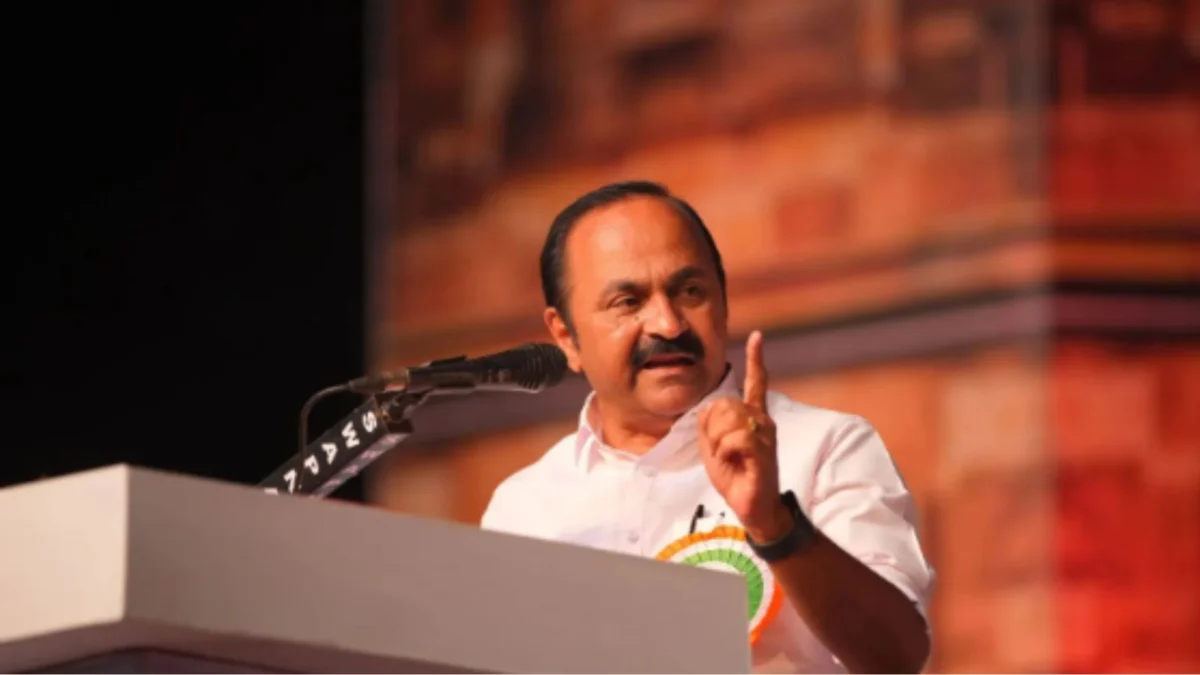
Thiruvananthapuram, Kerala – September 2, 2026 – A political earthquake has rattled Kerala, triggered by Chief Minister V.D. Satheesan’s recent pledge to meticulously examine the long-standing demand for reservation benefits for Dalit Christians. The Chief Minister’s statement, made during a commemorative event, has not only put the ruling United Democratic Front (UDF) government on a potentially perilous tightrope but has also thrown a wrench into the Bharatiya Janata Party’s (BJP) meticulously cultivated strategy to court the state’s Christian vote base.
The promise, delivered at a function marking the 163rd birth anniversary of iconic social reformer Ayyankali last Friday, has been lauded by sections of the Christian community as a step towards rectifying historical injustice. However, it has simultaneously unleashed a torrent of criticism and warnings from the BJP and its ideological affiliates, the Sangh Parivar, who accuse the UDF of "appeasement politics" and threatening the rights of existing Scheduled Castes (SCs). This development underscores the volatile intersection of caste, religion, and electoral calculations in Kerala, a state renowned for its complex socio-political dynamics.
The Chief Minister’s Stance and Immediate Backlash
Main Facts: A Bold Promise, A Swift Retort
Addressing the gathering in honour of Ayyankali, a towering figure in the fight against caste discrimination, Chief Minister Satheesan articulated a stark reality: Dalit Christians, despite their conversion, continue to be denied the full spectrum of benefits and reservations available to both other Christian communities and Scheduled Castes. He highlighted the community’s persistent socio-economic backwardness, asserting that his government would initiate a comprehensive study into the issue and devise concrete measures to address their plight. "It is an anomaly that a section of our citizens continues to face systemic disadvantage, despite their faith. Our government is committed to ensuring justice for all," Satheesan declared, signalling a potentially significant policy shift.
The Chief Minister’s remarks, however, were met with immediate and fierce opposition. Shajumon Vattekkad, the state president of the BJP’s SC Morcha, was among the first to launch a blistering attack, demanding an immediate withdrawal of Satheesan’s statement. Vattekkad minced no words, stating, "The Chief Minister is playing the politics of appeasement, pure and simple. If his intention is to dilute the constitutionally guaranteed reservation meant for the SC community and extend it to Dalit Christians, he must realise he is playing with fire." He emphasised that the quota granted to the SC community was "not charity but their inalienable right," warning that the BJP SC Morcha would mobilise the community and launch a widespread agitation against the government should such a proposal move forward.
Chronology: From Anniversary to Agitation Threat
The sequence of events unfolded rapidly, underscoring the political sensitivity of the issue:
- Friday, August 29, 2026: Chief Minister V.D. Satheesan addresses the Ayyankali birth anniversary function, promising to examine the demand for reservation for Dalit Christians and address their backwardness.
- Saturday-Sunday, August 30-31, 2026: News of the Chief Minister’s statement spreads, sparking initial discussions and reactions across political spectrums and social media.
- Monday, September 1, 2026: BJP’s SC Morcha State President, Shajumon Vattekkad, issues a strong condemnation, accusing the CM of appeasement and threatening agitation.
- Tuesday, September 2, 2026: BJP state vice-president K.S. Radhakrishnan, through a Facebook post, publicly questions the rationale for extending SC reservation to Dalit Christians, articulating a philosophical and ideological objection. Simultaneously, R.V. Babu, state president of the Hindu Aikya Vedi, an influential umbrella organisation of Sangh Parivar outfits, voices his opposition, alleging government support for religious conversion.
This swift chronological unfolding demonstrates the deep fissures this issue exposes, particularly for the BJP, which has been attempting to bridge divides with the Christian community while maintaining its core ideological stance against religious conversion.
Supporting Data: Historical Roots, Legal Quandaries, and Political Realities
The Genesis of a Demand: Dalit Christians and Persistent Discrimination
The demand for Scheduled Caste status for Dalit Christians is not a new phenomenon; it is a plea rooted in decades of social and economic marginalisation. Dalit Christians are largely descendants of historically oppressed Hindu communities who converted to Christianity over generations, often seeking refuge from the rigid caste system and its associated indignities. However, conversion, while offering spiritual solace, frequently failed to eradicate the deep-seated social stigma and economic disadvantages tied to their original caste identity. Within the Christian community itself, many Dalit Christians continue to face discrimination, often relegated to lower social strata, segregated in places of worship, and excluded from positions of influence.
The Catholic Church in Kerala, particularly the Syro-Malabar Catholic Church, has been a vocal proponent of this demand, acknowledging the internal caste-based discrimination faced by its Dalit members. They argue that these communities continue to endure the same socio-economic backwardness as their Hindu, Sikh, and Buddhist Dalit counterparts and, therefore, deserve similar constitutional safeguards. A substantial number of Dalit Christians are concentrated in southern and central Kerala, with significant populations in districts like Kottayam (especially within the Syro-Malabar Catholic Church) and Pathanamthitta and Idukki (among various non-Catholic and Pentecostal groups). These regions are precisely where the BJP has been striving to expand its electoral footprint.
The Legal Labyrinth: Constitution (Scheduled Castes) Order, 1950
At the heart of the debate lies the Constitution (Scheduled Castes) Order, 1950. This seminal order, as amended over the years, currently restricts Scheduled Caste status and its associated benefits (including reservations in education, employment, and legislatures) to members of Hindu, Sikh, and Buddhist communities. The rationale behind this exclusion, historically, was the premise that Christianity and Islam are egalitarian religions that do not recognise a caste system, and therefore, conversion to these faiths would liberate individuals from caste-based discrimination.
However, proponents of extending SC status to Dalit Christians and Muslims argue that this premise is flawed. They point to numerous studies and anecdotal evidence demonstrating the persistence of caste-like structures and discrimination within these communities. They contend that denying SC status based on religion is discriminatory and violates the principle of equality, especially when the socio-economic conditions of these converted communities mirror those of existing SCs. Successive governments at the Centre have grappled with demands to extend SC status to Dalits who converted to Christianity or Islam, forming various commissions to study the issue.
BJP’s Strategic Dilemma: Christian Outreach vs. Hindutva Ideology
For the BJP, Chief Minister Satheesan’s statement represents a profound political dilemma. In recent years, the party has made a concerted effort to expand its electoral base in Kerala beyond its traditional Hindu support, specifically targeting the state’s influential Christian community. This outreach has involved:
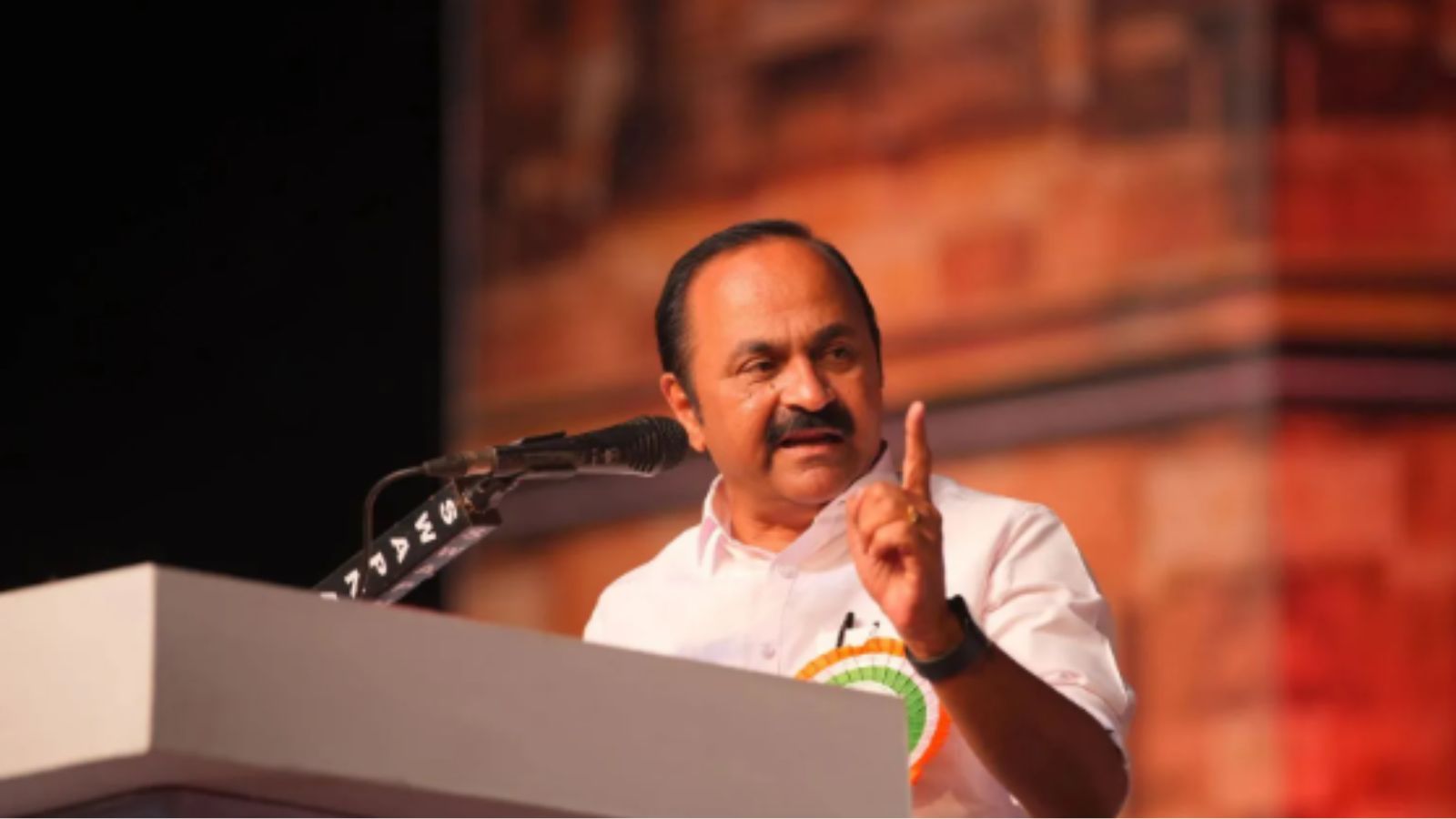
- Direct Engagement: Senior BJP leaders, including Prime Minister Narendra Modi, have engaged directly with Church leaders.
- Symbolic Gestures: Public gestures of goodwill and participation in Christian festivals.
- Narrative Building: Attempting to project Hindus and Christians as communities with shared interests, often by positioning them against what BJP leaders describe as "Muslim appeasement" by other political fronts.
- Inclusion of Christian Leaders: Bringing prominent Christian figures into the party fold and fielding Christian candidates in constituencies with significant Christian populations.
This outreach strategy, however, has consistently clashed with the core tenets of the wider Sangh Parivar, which views religious conversion, particularly from Hinduism, with deep suspicion and often actively campaigns against it. The issue of conversion has, therefore, been a major fault line within the BJP’s Kerala unit and its parent ideological body.
Previous incidents vividly illustrate this internal tension:
- Chhattisgarh Nuns Arrest (Last Year): The arrest of two Kerala Catholic nuns in Chhattisgarh on allegations of religious conversion and human trafficking exposed the deep ideological schism. While Kerala BJP leaders, including state president Rajeev Chandrasekhar (then a Union Minister), publicly rejected allegations of forced conversion and vowed support for the nuns, sections of the Sangh Parivar in Kerala criticised this stance, citing the case as an example of alleged conversion of marginalised Hindus by Christian organisations.
- FCRA Amendment Bill, 2026 (This Year): The debate resurfaced with the Foreign Contribution (Regulation) Amendment Bill, 2026. While BJP leaders sought to allay concerns among Christian organisations regarding the proposed changes to foreign funding regulations, Hindutva organisations in Kerala simultaneously demanded stricter scrutiny of funds received by churches, alleging their potential use for facilitating religious conversions.
These instances highlight the tightrope walk the BJP performs in Kerala: balancing the pragmatic need to attract Christian votes with the ideological imperatives of its Hindutva base. Satheesan’s promise on Dalit Christian reservation now directly confronts this delicate balance, forcing the BJP to choose between alienating its Hindu support or jeopardising its Christian outreach.
Limited Electoral Gains: A Question of Payoff
Despite sustained efforts, the BJP’s attempts to cultivate the Christian vote did not yield significant electoral breakthroughs in the 2026 Assembly elections. The party managed to secure three Assembly seats—Nemom, Kazhakkoottam, and Chathannoor—but these gains were largely attributed to its traditional Hindu support base, rather than a decisive shift among Christian voters. The limited electoral returns have intensified internal debates within the BJP regarding the effectiveness and political payoff of its Christian outreach strategy. While some leaders continue to advocate for deeper engagement with the community, sections of the Sangh Parivar have become increasingly vocal about the perceived dangers of religious conversion and the need to prioritise the sentiments of the Hindu majority.
National Context: The Balakrishnan Commission
The question of extending Scheduled Caste status to Dalits who have converted to Christianity or Islam is not confined to Kerala; it is a pressing national issue. In 2022, the Union government appointed a high-level commission, headed by former Chief Justice of India K.G. Balakrishnan, to thoroughly examine this complex matter. The commission’s mandate includes assessing the changes in socio-economic status post-conversion, the prevalence of discrimination, and the implications of extending SC status to new groups. Its tenure has been extended multiple times, with the latest extension running until June 2026, indicating the intricacy and sensitivity of the issues it is deliberating. Any move by a state government, like Kerala’s, to address this issue could potentially influence the national discourse and the recommendations of the Balakrishnan Commission.
Official Responses: A Spectrum of Views
Chief Minister V.D. Satheesan (UDF): The Chief Minister’s official stance is framed around social justice and rectifying historical wrongs. By promising to "study the issue and find ways to address the community’s backwardness," he positions the UDF government as responsive to the needs of a historically marginalised group. This move can be seen as an attempt to consolidate minority votes, especially within the Christian community, and to project a progressive, inclusive image for the UDF.
Shajumon Vattekkad (BJP SC Morcha President): Vattekkad’s response is unequivocal: he views the CM’s promise as "the politics of appeasement." His core argument is that existing SC reservations are a constitutional right, not a charitable handout, and any dilution or extension to converted communities would infringe upon the rights of the current beneficiaries. He has threatened "agitation" and "mobilisation of the SC community," indicating a readiness to take to the streets to defend what he perceives as a direct threat to their entitlements.
K.S. Radhakrishnan (BJP State Vice-President): Radhakrishnan introduces a more philosophical and ideological dimension. In his Facebook post, he questions the very basis of claiming SC status after conversion. His argument posits that if conversion to Christianity implies shedding caste identity and escaping caste oppression, then the rationale for claiming SC status is nullified. He further challenges the Christian community to "first acknowledge and address" internal caste discrimination before seeking external governmental recognition for it. This position aligns with the traditional Sangh Parivar view that caste is a Hindu phenomenon and conversion should ideally lead to liberation from it.
R.V. Babu (Hindu Aikya Vedi State President): Babu’s opposition mirrors the broader Sangh Parivar narrative, alleging that the government is "supporting religious conversion" through such proposals. The Hindu Aikya Vedi, as an umbrella organisation of various Hindutva outfits, staunchly opposes any measure that it perceives as incentivising conversion or undermining the Hindu identity. Their stance reflects a deep-seated suspicion of Christian missionary activities and a strong commitment to protecting existing Hindu SC reservations.
The Christian Church (General Stance): While not explicitly quoted in the original article regarding this specific incident, the Catholic Church in Kerala and various Christian denominations have historically and consistently advocated for the extension of SC status to Dalit Christians. Their argument is rooted in the lived reality of discrimination faced by these communities, regardless of their religious affiliation, and a commitment to social justice within their own faith traditions. They view the CM’s statement as a positive, albeit long-overdue, acknowledgement of their demand.
Implications: A Rippling Effect Across Kerala and Beyond
Political Ramifications for Kerala:
- For the UDF Government: Chief Minister Satheesan’s promise is a calculated, yet risky, political manoeuvre. If successful, it could significantly consolidate the Christian vote base, potentially bolstering the UDF’s prospects in future elections. However, it risks alienating a section of Hindu voters, particularly existing Scheduled Castes who fear dilution of their benefits. The LDF, the current opposition, will also be forced to articulate its stand on this contentious issue, potentially opening new avenues for political contestation.
- For the BJP: The issue has landed the BJP in a precarious position. Their carefully constructed Christian outreach, aimed at making inroads into a crucial demographic, is now directly undermined by the demands of their own ideological base. If they support the move, they risk alienating their core Hindu voters and the wider Sangh Parivar. If they oppose it vehemently, they risk alienating the Christian community whose votes they desperately seek. This dilemma could exacerbate internal divisions within the party in Kerala.
- For Social Harmony: The debate could heighten caste and religious tensions in the state. The existing Scheduled Caste communities, feeling threatened, might mobilise against the move, potentially leading to social friction.
Social and Economic Implications:
- For Dalit Christians: If the demand is met, it could significantly improve the socio-economic conditions of Dalit Christians, offering them access to education, employment, and political representation that has historically been denied. It would be a recognition of their continued marginalisation despite religious conversion.
- For Existing SCs: The primary concern articulated by BJP’s SC Morcha and Hindu Aikya Vedi is the potential dilution of existing SC reservations. They fear that extending the quota to a larger population would reduce the opportunities available to those who are currently beneficiaries. This zero-sum perception underscores the deep anxieties surrounding affirmative action policies.
Legal and Constitutional Implications:
- State vs. Centre: While the CM has promised to "study the issue," the power to amend the Constitution (Scheduled Castes) Order, 1950, rests with the Union government and Parliament. Kerala’s move, therefore, would likely be a recommendation or a call to action for the Centre.
- Impact on Balakrishnan Commission: The vigorous debate in Kerala could influence the ongoing deliberations of the K.G. Balakrishnan Commission at the national level. The commission’s eventual recommendations will be crucial in shaping the national policy on this complex issue.
Chief Minister Satheesan’s promise has effectively opened a Pandora’s Box, bringing to the forefront deeply entrenched issues of caste, religion, and identity in Kerala. As the state navigates this volatile terrain, the political landscape is set for a period of intense debate, mobilisation, and strategic recalibration, with potential ramifications that extend far beyond its borders. The coming months will reveal whether this bold move by the UDF government will be hailed as a triumph of social justice or lead to unforeseen political and social upheaval.
