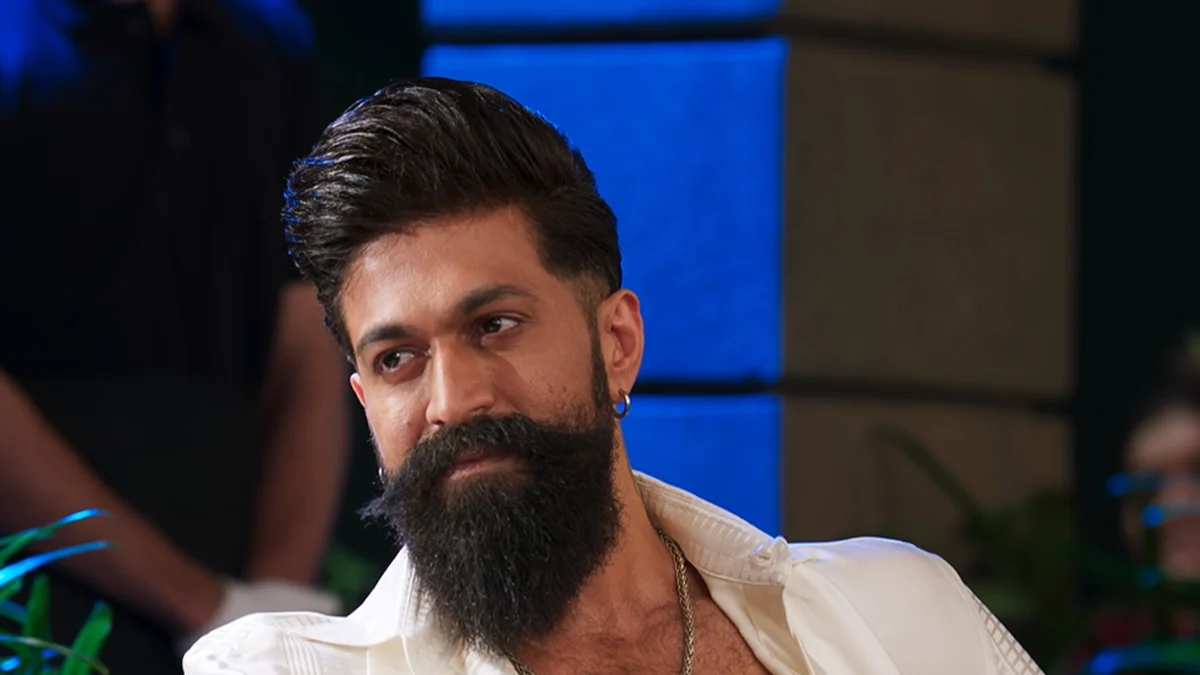
The highly anticipated "Toxic: A Fairy Tale for Grown-Ups" sees Yash venturing beyond the colossal shadow of the K.G.F. franchise, a move that has ignited a fervent debate within the industry and among his vast fanbase. While the film showcases Yash’s unwavering commitment to artistic exploration, its mixed reception underscores the complex challenges faced by Indian superstars aiming for widespread appeal across diverse regional markets.
Following the monumental success of the K.G.F. films, which catapulted him to national recognition, Yash articulated a clear desire to transcend the confines of being associated with just a few iconic roles. "If people associate you with just a few works, it means you haven’t attempted different kinds of movies," he stated in a candid interview. With his latest venture, "Toxic: A Fairy Tale for Grown-Ups," directed by Geetu Mohandas, Yash has indeed embarked on a path of cinematic diversification. However, early reactions suggest this journey is far from a seamless transition, with the film presenting a complex tapestry of ambitious ideas that, at times, struggle to coalesce into a cohesive whole.
The Shadow of K.G.F. and the Allure of the Alpha-Male
The initial impressions of "Toxic" have, for some, conjured echoes of Yash’s previous blockbuster. The protagonist, Raaya, portrayed by Yash, exhibits a reckless and self-absorbed demeanor that bears a striking resemblance to the invincible gangster persona he so masterfully embodied in the K.G.F. universe. This familiar archetype, often seen in the works of directors like Sandeep Reddy Vanga and Upendra, has been a point of contention for viewers who arrived with heightened expectations for a radical departure. The film itself acknowledges this through a poignant line from Raaya’s girlfriend: "You are not bad. You are just toxic." This characterization, while perhaps intentional, has led to a perception of a lack of originality in the film’s first half, a significant concern for those anticipating a complete reinvention.
However, the narrative takes a discernible turn in its latter half, introducing a different facet of Yash’s performance. The film bravely delves into the character’s vulnerability, showcasing a more nuanced and layered portrayal that deviates from the singular focus on invincibility. This shift suggests a deliberate attempt to explore the complexities of its protagonist, moving beyond a mere rehashing of a tried-and-tested formula.

A Tale of Two Films: The Geetu Mohandas-Yash Collaboration
"Toxic" is, by all accounts, a film that feels like two distinct entities sharing the same screen. This duality is a direct consequence of the ambitious collaboration between Yash and Geetu Mohandas, two artists with seemingly divergent creative sensibilities. The evident clash of their ideas has inevitably led to a mixed response, placing a spotlight on Yash’s decision-making process. Renowned in film circles for his meticulous strategic approach, the question arises: did he miscalculate with "Toxic"? The jury, it seems, is still out.
The film’s reception serves as a potent lesson for Yash and other pan-Indian stars on the intricacies of navigating the national cinematic landscape. A pan-Indian release, while a significant achievement, is merely the first step. The true challenge lies in resonating with a diverse audience, each with its own established stars and cinematic preferences. When a popular actor from one regional industry ventures into another, the expectation is not just for a presence, but for a performance that transcends boundaries and offers something truly special.
The Superstar’s Dilemma: Image vs. Experimentation
A perennial challenge for established superstars is the tightrope walk between their ingrained on-screen persona and the burgeoning desire to experiment. The comfort of their trademark mannerisms and dialogue delivery often proves difficult to relinquish. Yet, the creative urge to explore new territories is equally strong. The outcome of such ambitious endeavors is not always guaranteed to be a commercial triumph. While Rajinikanth was lauded for his choices in films like "Kabali" (2016) and "Kaala" (2018), the box office figures for these projects told a different story, highlighting the inherent risks involved.
"Toxic" represents a significant gamble for Yash. It aims to be a spectacle-driven, "mass" entertainer infused with psychological undertones. The integration of such psychological subtext, typically explored in genre-specific films, into an action-packed narrative is a bold move by both Yash and Mohandas. It speaks to a willingness to push the boundaries of conventional filmmaking and explore hybrid genres.

Trojan Horse Filmmaking and the Quest for Balance
Many critics have characterized "Toxic" as an example of "Trojan Horse filmmaking." Yash, who also co-wrote the screenplay, and Mohandas appear to have employed the conventional grammar of a mass-appeal movie to subtly convey a message intended for a more discerning audience. The core issue, however, lies in the duo’s struggle to strike an effective balance between their disparate visions. While "Toxic" is undeniably a painstakingly crafted and visually impressive film, it falters due to an apparent indecision on what elements to prioritize and which to discard. This internal conflict has polarized opinions, with a segment of Yash’s fanbase advocating for him to fully embrace his director’s vision in complex narratives, while another segment prefers him to stick to out-and-out commercial entertainers.
The path forward for Yash remains uncertain. Will he continue to take such ambitious risks? The prevailing sentiment suggests that while his imaginative spirit may remain uncompromised, he will likely strive for a more refined equilibrium between entertainment and compelling storytelling in his future projects. The demand for larger-than-life characters, a hallmark of his stardom, will undoubtedly continue, but the execution will be under even closer scrutiny.
A Setback’s Significance and Yash’s Artistic Involvement
A setback on the pan-Indian stage is not a minor issue that Yash can easily dismiss. His involvement in "Toxic" extends beyond acting; he has also co-produced the film. This hands-on approach positions him as an artist deeply invested in every facet of a project, a characteristic that distinguishes him from other pan-Indian stars like Prabhas, who, by comparison, tends to focus primarily on his acting roles. This deeper involvement, while commendable, also places greater responsibility on Yash for the film’s overall success or failure.
Despite the mixed reviews and the inherent polarization of opinions, "Toxic" has demonstrated resilience at the box office following its opening weekend. Audiences are reportedly discovering the script’s potential and engaging in discussions about its narrative subversions. This sustained audience interest has effectively dispelled any lingering doubts about Yash’s star power. The film, though not instantly palatable to all, has generated enough discourse and debate to solidify its place in the ongoing conversation surrounding pan-Indian cinema.

The Unwavering Spirit of Yash
The unwavering spirit of Yash, as articulated during the trailer launch of "Toxic," is a testament to his audacious approach. "I am someone who doesn’t listen to anybody. If I can see it, then nothing can stop me if I can put my full effort," he declared. This self-belief, coupled with his ambition, fuels his drive to explore unconventional narratives.
While market pressures might steer him towards mounting his next project on an even grander scale, the execution will be paramount. His fans, having witnessed the reception of "Toxic," will likely implore him to exercise greater caution and precision in his filmmaking choices. Amidst this ongoing uncertainty, one thing is unequivocally clear: the anticipation for Yash’s next cinematic endeavor has reached a fever pitch, fueled by the bold, albeit divisive, statement that is "Toxic: A Fairy Tale for Grown-Ups." The actor’s willingness to gamble, his commitment to artistic growth, and the inherent challenges of the pan-Indian landscape have all converged in this ambitious undertaking, leaving the industry and its audiences eagerly awaiting his next move.