

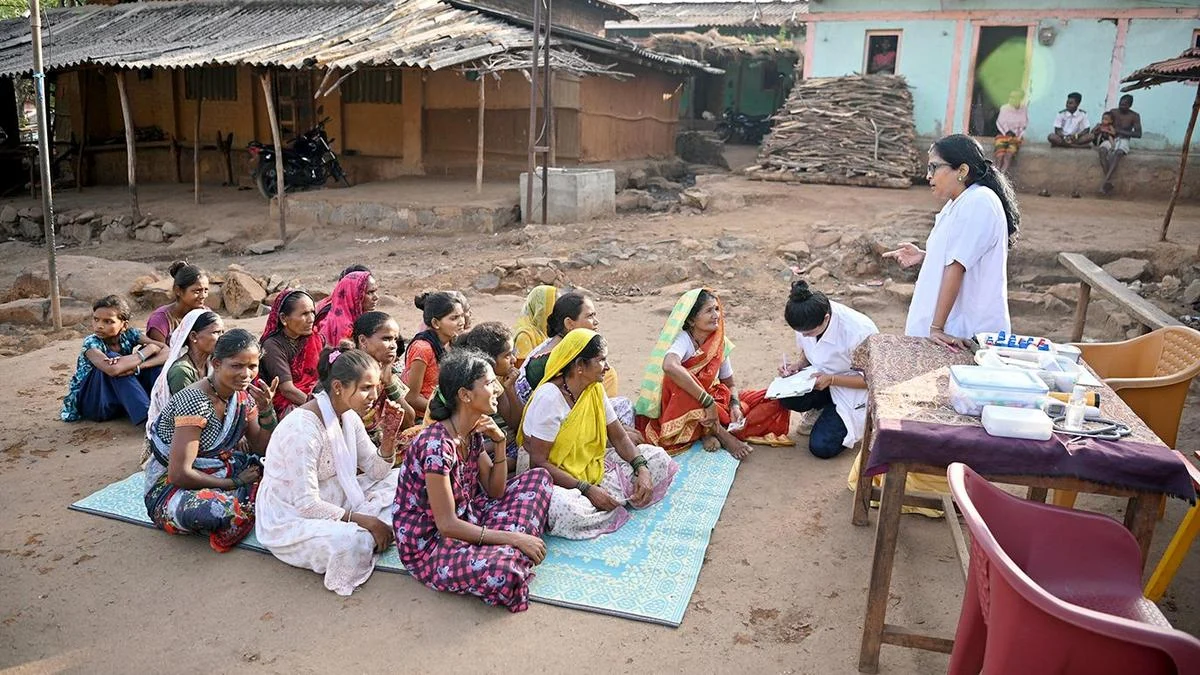
The image is a recurring motif in Indian journalism: a grainy photograph of a pregnant woman, her face etched with pain, being carried across a treacherous mountain path or a flooded nullah on a makeshift stretcher. Sometimes it is a wooden cot; other times, a plastic chair lashed to bamboo poles. To the urban reader, it is a fleeting moment of pathos, a "flicker of something" before the thumb swipes to the next headline. However, for Dr. Ramani Atkuri, a veteran of community medicine with 35 years of experience in Central India’s tribal belts, these images are not the end of a story, but the beginning of a preventable tragedy.
In her seminal work, Staying Alive: Dispatches from the Margins, Atkuri moves beyond the aesthetics of poverty to document the "cascade of events" that lead to the death of those the system has forgotten. Her account is a harrowing indictment of a public health architecture that is conceptually sound but functionally hollowed out, leaving the country’s most vulnerable citizens to shoulder a burden they cannot afford.
Main Facts: The Reality of Health on the Margins
The core of the rural healthcare crisis, as Atkuri identifies, is that for the marginalized, "healthcare" is not a service—it is a desperate struggle against biological and systemic odds. The book chronicles the lives of those in Central India, primarily tribal communities, where the margin between life and death is thin enough to be severed by a single malarial mosquito or a delayed diagnosis.
The Anatomy of Neglect
Atkuri’s dispatches highlight that the "diseases of neglect"—tuberculosis, malaria, cholera, and snakebites—remain the primary killers in rural India. These are not medical mysteries; they are the everyday hazards of poverty. When combined with chronic malnutrition, these conditions become fatal. The author notes that while India’s public health policies are often praised on paper, the reality on the ground is defined by:
- Chronic Under-staffing: A lack of qualified doctors and nurses willing to serve in remote areas.
- Inadequate Investment: Low public spending on health that forces the poor into the arms of expensive, and often exploitative, private providers.
- Deteriorating Infrastructure: Facilities that lack basic necessities, such as running water, reliable electricity, or essential medicines.
- Data and Technology Gaps: The deployment of high-tech solutions without the necessary planning or ground-level support.
Atkuri’s 35-year journey, starting from her training at CMC Vellore, reveals a system where the "invisible" stay invisible until they become a statistic in a maternal or infant mortality report.
Chronology: The Tale of Sombari Sabar
To understand the systemic failure, one must look at the specific chronology of a single case. The story of Sombari Sabar, detailed in the chapter "Saving Sombari Sabar," serves as a microcosm of the broader crisis.
The Journey to the Clinic
The event begins with a "regal" but tragic procession. Sombari, a tribal woman in her late pregnancy, is carried down a hillside on a wooden chair secured to bamboo poles. To protect her from the blistering sun, a black umbrella is fixed to the back of the chair. She is tied to the seat for safety as four men navigate the uneven terrain. By the time she reaches Atkuri’s dispensary, she has been in labor for two days.
The Failed Interventions
Before reaching the clinic, Sombari had already been subjected to the "shadow" healthcare system—informal providers who administered two takatara suji (injections intended to provide strength). In reality, these injections often cause more harm than good in cases of obstructed labor, potentially leading to uterine rupture.
The Race Against Time
Upon examination, the medical team realizes the gravity of the situation. A frantic race begins. Sombari is rushed to the district hospital in a jeep, bouncing down mountain roads. In the hospital, the lack of basic equipment is glaring; the medical team is forced to hang her IV drip from the metal bar of a window.
The Ultimate Sacrifice
The tragedy deepens when Sombari requires a blood transfusion. Her family members, suffering from the same systemic poverty as she, are found to be too anaemic to donate. The health workers themselves step in to donate their own blood. They exhaust their personal funds to buy medicines on credit, reaching a point where they cannot even afford a cup of tea for themselves.
Despite this Herculean effort, the outcome is bleak. The baby, likely dead for days, does not survive. Sombari, exhausted by infection, shock, and a ruptured uterus, eventually succumbs. Her death was not caused by a single medical error, but by a "cascade of events" spanning days, miles, and years of neglect.
Supporting Data: The Statistical Weight of Poverty
The story of Sombari Sabar is backed by sobering data that defines the health landscape of rural India. Atkuri points to the structural conditions that ensure the next generation is born at a disadvantage.

The Cycle of Malnutrition
- Anaemia and BMI: A significant portion of women in tribal and rural belts suffer from chronic anaemia and low Body Mass Index (BMI). This creates a cycle where mothers give birth to low-birth-weight babies, who are then more susceptible to infections and developmental delays.
- The NFHS Context: According to the National Family Health Survey (NFHS-5), over 57% of women aged 15-49 in India are anaemic. In tribal pockets, these numbers are often significantly higher, yet these are the populations with the least access to iron-folic acid supplementation.
The Burden of Expenditure
India has one of the highest levels of Out-of-Pocket Expenditure (OOPE) for healthcare in the world. Atkuri’s accounts show that those who can least afford it end up paying the most. When a family member falls ill, the cost of transport, medicines, and "informal" fees often forces families into a debt trap, leading to distress migration.
Migration and the Continuity of Care
Distress migration, often triggered by drought or debt, is a major barrier to healthcare. When families are uprooted to states where they do not speak the language, they lose access to:
- Immunization Schedules: Children miss critical vaccines.
- Antenatal Care: Pregnant women fall through the cracks of the system.
- Chronic Disease Management: Conditions like TB or leprosy go untreated as patients move from one construction site to another.
Official Responses and Policy Gaps
While the Indian government has launched several ambitious programs, Atkuri’s observations suggest a significant disconnect between New Delhi’s policy rooms and the mud paths of Central India.
The Policy Framework
The Indian public health architecture—including the National Health Mission (NHM) and the more recent Ayushman Bharat (PM-JAY)—is designed to provide a safety net. Policies exist for free maternal care (Janani Suraksha Yojana) and the treatment of endemic diseases.
The Execution Gap
The book argues that these policies are "hollowed out" by a lack of investment. While the government promotes digital health IDs and telemedicine, the basic infrastructure—doctors, nurses, and medicines—is missing.
- Staffing Crisis: There is a nearly 80% shortage of specialists at Community Health Centres (CHCs) in rural areas.
- Infrastructure: Many primary health centers lack the basic capacity to handle emergencies like Sombari’s, serving merely as referral points that add more time to a patient’s journey toward life-saving care.
The Technological Paradox
Atkuri is blunt about the role of technology. While it is often touted as a "silver bullet," she notes that it is frequently deployed without sufficient planning. Digital record-keeping is of little use if there is no electricity to power the devices or if the data collected does not lead to a change in resource allocation.
Implications: A Call for Human-Centric Reform
The implications of Atkuri’s dispatches are clear: the current trajectory of India’s rural health system requires a fundamental shift in philosophy, not just a marginal increase in the budget.
Decentralization as a Solution
One of the key takeaways from Staying Alive is the need for decentralization. For the public health system to be responsive, power and resources must be moved closer to the communities. This means empowering local Panchayats and community health workers (ASHAs) with more than just responsibilities; they need the authority and funding to address local crises.
The Need for "Humanity" in Medicine
Beyond infrastructure, Atkuri calls for a return to humanity in healthcare. The medical profession, she suggests, has become increasingly detached from the social realities of the patients. Seeing a patient not just as a "case" of obstructed labor, but as a person like Sombari Sabar—with a family, a history, and a right to survive—is essential for any meaningful reform.
The Moral Imperative
The book leaves the reader with a haunting realization: the deaths of the Sombari Sabars of India are not "tragedies" in the sense of being unavoidable acts of fate. They are systemic failures. As long as the health of a citizen depends on their proximity to a paved road or their ability to speak a certain language, the "public" in public health remains an unfulfilled promise.
Staying Alive: Dispatches from the Margins is more than a book review or a collection of anecdotes; it is a witness account of a silent emergency. It insists that the lives on the margins deserve to be looked at, written about, and, above all, cared for. For the reformers and policymakers, the message is simple: quality infrastructure and better data are necessary, but they will always arrive too late if they are not built on a foundation of equity and basic human dignity.
