

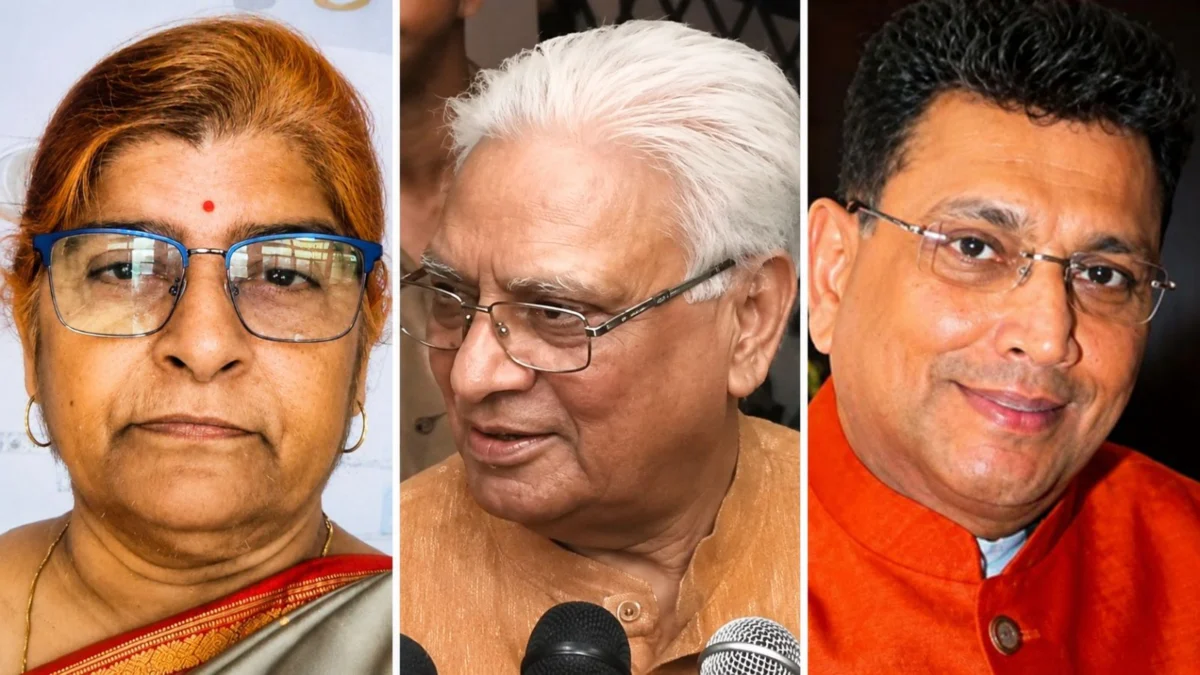
LUCKNOW, September 2, 2026 – In a significant restructuring aimed at bolstering governance, transparency, and administrative efficiency, the Shri Ram Janmabhoomi Teerth Kshetra Trust, responsible for the monumental Ram Temple in Ayodhya, announced a series of pivotal appointments on Wednesday. The most notable among these is the induction of retired Air Marshal Jitendra Mishra as the temple’s first-ever Chief Executive Officer (CEO), a move signaling a professionalization of its operational management. Complementing this, the Trust has also welcomed three new trustees, marking a conscious effort towards broader social inclusion and diversified expertise, including its inaugural woman member.
These strategic appointments arrive at a crucial juncture, filling vacancies created by recent losses and resignations, and come in the wake of a highly publicized donation theft controversy that had necessitated a renewed focus on integrity and robust oversight. The newly inducted trustees are Dr. Nirmala Yadav, an accomplished academician; advocate Madan Mohan Pandey, a veteran legal mind intimately familiar with the Ram Janmabhoomi litigation; and businessman-social worker Mahesh Bhagchandka, who will also assume the crucial role of Treasurer.
The decision to appoint a CEO, particularly a retired Air Marshal, underscores the Trust’s ambition to manage the sprawling temple complex and its burgeoning pilgrimage site with the precision, logistical acumen, and strategic foresight characteristic of military leadership. Coupled with the diverse professional backgrounds of the new trustees, these changes signal a determined effort to enhance the Trust’s capabilities across administrative, legal, financial, and community engagement fronts, thereby reinforcing public confidence in its stewardship of one of India’s most significant spiritual projects.
Chronology of Transformation: Filling Critical Gaps
The recent appointments are not merely an expansion but a strategic recalibration, addressing specific needs and challenges that have emerged over the past year. The impetus for these changes stems from both natural attrition and unforeseen circumstances, highlighting the Trust’s adaptive approach to its evolving responsibilities.
The most immediate catalyst for the new trustee appointments was the unfortunate demise of Bimlendra Mohan Mishra last year, a respected member whose absence created a vacuum in the Trust’s advisory capacity. More critically, the Trust faced a period of intense scrutiny following a high-profile donation theft scandal, which led to the resignations of former general secretary Champat Rai and member Anil Mishra. These departures, while regrettable, presented an opportunity for the Trust to introspect and realign its governance structure, placing a renewed emphasis on probity, accountability, and public trust.
In the immediate aftermath of these events, the Trust initiated a meticulous process to identify individuals who could not only fill these vacant positions but also bring fresh perspectives, unimpeachable integrity, and specialized expertise to the table. The elevation of Govind Giri to the post of general secretary, replacing Champat Rai, further necessitated the appointment of a new Treasurer, a role now assumed by Mahesh Bhagchandka.
The decision to create and fill the position of Chief Executive Officer, a role previously non-existent, reflects a maturation in the Trust’s operational vision. As the Ram Temple rapidly approaches its full operational capacity and anticipates millions of pilgrims annually, the need for a dedicated, professional administrator to oversee day-to-day operations, logistics, security, and project management became paramount. The selection of Air Marshal Jitendra Mishra for this pioneering role underscores the Trust’s commitment to institutionalizing best practices in large-scale organizational management.
These changes, therefore, are not isolated events but interconnected elements of a comprehensive strategy to fortify the Trust’s leadership, broaden its representative base, and equip it for the immense responsibilities that lie ahead in managing a global spiritual landmark. They signify a transition from the initial phase of construction and consecration to a new era of sustainable management and development, guided by principles of inclusion, transparency, and professional excellence.
Supporting Data: Profiles of the New Leadership
The new appointees bring a rich tapestry of experience and diverse skill sets, carefully chosen to address the multi-faceted demands of managing the Ram Temple complex.
Air Marshal Jitendra Mishra (Retd.): The Inaugural CEO
The appointment of Air Marshal Jitendra Mishra (Retd.) as the first Chief Executive Officer of the Shri Ram Janmabhoomi Teerth Kshetra Trust marks a significant departure from traditional management structures for religious bodies. Air Marshal Mishra, a distinguished veteran of the Indian Air Force, brings a formidable track record of strategic leadership, meticulous planning, and large-scale logistical management honed over decades of service.
A decorated officer, Air Marshal Mishra’s career in the Air Force encompassed command of major operational units, strategic planning roles at the highest echelons, and extensive experience in managing complex logistical chains across challenging terrains. His expertise in resource allocation, crisis management, security protocols, and the efficient execution of large-scale projects will be invaluable in overseeing the vast operations of the Ram Temple complex. This includes managing daily pilgrim influx, maintaining the temple’s infrastructure, ensuring security, coordinating with various government agencies, and implementing long-term development plans for Ayodhya. His military background instills a culture of discipline, precision, and unwavering commitment, qualities deemed essential for the transparent and efficient administration of a project of such national and international significance. His appointment signals a clear intent by the Trust to adopt modern, professional management practices in its daily functioning.
Dr. Nirmala Yadav: A Pioneer for Inclusion
Dr. Nirmala Yadav’s induction as the first woman member of the Shri Ram Janmabhoomi Teerth Kshetra Trust is a landmark moment, signaling a crucial step towards greater gender representation and social inclusion within a traditionally male-dominated religious institution. Hailing from Shikohabad in Uttar Pradesh, the 66-year-old retired college principal brings a wealth of academic and institutional administrative experience.
With postgraduate degrees in Hindi and Sanskrit and a PhD, Dr. Yadav’s academic credentials are impeccable. Her 19 years as a college principal and 15 years as a member of a university executive council have equipped her with profound insights into educational administration, community engagement, and the intricacies of institutional governance. Her experience in fostering inclusive environments within academic settings will be particularly beneficial in shaping the Trust’s outreach programs and ensuring that the temple complex caters to the spiritual and cultural needs of a diverse populace. Furthermore, her identity as a woman from the Other Backward Classes (OBC) category adds another layer of representation, underscoring the Trust’s stated commitment to reflecting the broader social fabric of India. Her presence is expected to bring a more nuanced perspective to decision-making, particularly concerning family, community, and gender-specific needs related to pilgrimage and temple activities.
Madan Mohan Pandey: The Legal Custodian
The appointment of Madan Mohan Pandey, 74, as a Trust member injects unparalleled legal depth and historical continuity into the body. An advocate based in Ayodhya Cantonment, Pandey’s association with the Ram Janmabhoomi litigation spans nearly three decades, placing him at the very heart of the historical dispute that culminated in the Supreme Court’s landmark 2019 verdict.
Pandey represented Shri Ram Lalla Virajman and Mahant Shri Ramchandra Paramhans before both the Allahabad High Court and the Supreme Court from 1990 to 2019. This period covers the most crucial stages of the legal battle, granting him an intimate understanding of the legal complexities, historical precedents, and emotional sensitivities surrounding the temple issue. His direct involvement in defending the deity’s rights provides an invaluable institutional memory and legal perspective that few others possess. Beyond the Ram Janmabhoomi case, Pandey’s six-year tenure as Additional Advocate General of Uttar Pradesh further showcases his extensive legal and governmental experience. His current affiliations, including serving as vice-president of Shri Hari Satsang Samiti and patron of the Kathakar Yojana Training Centre in Ayodhya, demonstrate his continued dedication to spiritual and cultural preservation within the Ayodhya community. His legal acumen will be crucial in navigating any future legal challenges, ensuring compliance, and advising on various regulatory matters pertaining to the temple’s administration and expansion.
Mahesh Bhagchandka: The Steward of Finance and Ideology
Mahesh Bhagchandka, 68, a prominent Delhi-based businessman and social worker, assumes the critical role of Treasurer for the Trust, succeeding Govind Giri. His appointment brings a blend of financial acumen, organizational leadership, and deep ideological commitment to the Trust’s core mission.
A graduate with a strong business background, Bhagchandka’s expertise in financial management will be indispensable in overseeing the Trust’s substantial assets, managing donations, and ensuring transparent financial operations, particularly important in the wake of the recent controversy. His association with the Ashok Singhal Foundation is particularly significant, given Singhal’s towering figure in the Ram Janmabhoomi movement. This connection underscores Bhagchandka’s long-standing dedication to the cause and alignment with the movement’s foundational principles. He is also a member of the executive committee of the World Hindu Economic Forum, highlighting his engagement with global Hindu initiatives and economic development.
Bhagchandka’s personal involvement extends to participating as a yajman in both the Ram Temple Bhoomi Pujan and Pran Pratishtha ceremonies, signifying his profound spiritual and personal connection to the project. His work on the installation of Ram Stambhs at 222 sites linked to the Shri Ram Van Gaman Yatra further illustrates his commitment to cultural preservation and the dissemination of the Ramayana’s legacy. Additionally, his authorship of the book "Hindutva Ke Prayog" ("Experiments in Hindutva") provides insight into his intellectual engagement with the ideological underpinnings of the movement, making him a significant voice in the Trust’s future direction. His comprehensive profile suggests a Treasurer who is not only financially adept but also deeply invested in the cultural and spiritual mission of the Ram Temple.
Official Responses: Reaffirming Trust and Vision
In light of these significant appointments, official spokespersons for the Shri Ram Janmabhoomi Teerth Kshetra Trust have articulated a clear vision and rationale, emphasizing renewed commitment to transparency, inclusive governance, and professional management.
A senior Trust official, speaking on condition of anonymity due to internal protocols, stated, "These appointments represent a thoughtful and strategic evolution of our Trust. We have diligently sought individuals who embody not only integrity and unwavering dedication but also bring specialized expertise critical for managing a project of this magnitude. The aim is clear: to ensure the Ram Temple complex is managed with utmost professionalism, financial prudence, and a deep sense of responsibility to millions of devotees worldwide."
Responding to queries about the appointment of Air Marshal Jitendra Mishra as CEO, another Trust member highlighted the imperative for a centralized, highly efficient administrative head. "The sheer scale of the Ram Temple project, from its daily operations to future expansion plans and the management of pilgrim amenities, demands a leader with exceptional organizational and logistical capabilities. Air Marshal Mishra’s distinguished career in the Indian Air Force makes him uniquely suited for this role, promising a new era of streamlined operations and robust security."
Regarding the inclusion of Dr. Nirmala Yadav, officials underscored the Trust’s commitment to reflecting India’s diverse social fabric. "Dr. Yadav’s appointment is a momentous step towards genuine social inclusion. As our first woman trustee and a representative from the OBC community, she brings invaluable perspectives that will enrich our decision-making and ensure the temple’s initiatives resonate with a broader cross-section of society. This move reaffirms our belief in inclusive spiritual leadership."
The selection of Madan Mohan Pandey and Mahesh Bhagchandka was also lauded for their respective contributions. "Advocate Pandey’s unparalleled legal insight, drawn from decades of direct involvement in the Ram Janmabhoomi case, provides an indispensable foundation for our legal and historical understanding," explained a spokesperson. "And Shri Bhagchandka, with his strong financial background and deep spiritual commitment, is ideally positioned to steward the Trust’s resources with transparency and vision as our new Treasurer. His connection to the movement’s ideological roots through the Ashok Singhal Foundation further strengthens our mission."
These official responses collectively project an image of a Trust that is proactively addressing its challenges, learning from past experiences, and strategically positioning itself for a future where the Ram Temple stands not just as a religious edifice but as a beacon of cultural heritage, managed with exemplary governance and a profound sense of public duty.
Implications: A New Chapter for Ayodhya and Beyond
The recent restructuring within the Shri Ram Janmabhoomi Teerth Kshetra Trust carries profound implications, not only for the management of the Ram Temple but also for the broader landscape of religious institutions, social representation, and the future development of Ayodhya.
Professionalization of Religious Management
The most striking implication is the clear move towards professionalizing the management of a major religious and cultural institution. The appointment of a retired Air Marshal as CEO signals a departure from traditional, often volunteer-driven, models of temple administration. This suggests a recognition that the Ram Temple, with its monumental scale, immense public interest, and significant financial flows, requires a level of organizational rigor, strategic planning, and operational efficiency typically found in large corporations or government enterprises. This model could set a precedent for other large religious trusts in India, encouraging a shift towards more structured and professionally managed operations, encompassing everything from security and logistics to visitor experience and community engagement.
Enhanced Social Inclusion and Representation
The induction of Dr. Nirmala Yadav as the first woman and OBC member is a powerful symbolic statement. It challenges long-standing patriarchal norms within many religious bodies and underscores a commitment to making the Trust more representative of India’s diverse population. This move is likely to resonate positively with women and marginalized communities, potentially fostering a greater sense of ownership and connection with the temple project. It also sends a message that spiritual leadership and governance are not exclusive domains but open to all who possess the requisite wisdom and dedication, regardless of gender or caste.
Restoration of Public Trust and Transparency
The timing of these appointments, following the donation theft scandal, is critical. By bringing in individuals with impeccable records and diverse professional backgrounds, particularly a military officer for the CEO role and a finance expert as Treasurer, the Trust aims to unequivocally signal its commitment to transparency, accountability, and ethical governance. This strategic overhaul is designed to rebuild and reinforce public faith, ensuring that the vast donations received are managed with the utmost integrity and deployed effectively for the temple’s construction and future maintenance. The emphasis on robust oversight and professional stewardship is a direct response to past criticisms.
Strategic Strengthening of Expertise
The varied expertise brought by the new trustees – legal acumen from Madan Mohan Pandey, academic and administrative experience from Dr. Nirmala Yadav, and business/financial leadership from Mahesh Bhagchandka – creates a well-rounded leadership team. This diverse skill set will enable the Trust to navigate complex legal issues, manage vast financial resources, engage effectively with the academic and cultural spheres, and administer day-to-day operations with greater proficiency. It positions the Trust to tackle challenges ranging from urban planning in Ayodhya to international outreach and cultural preservation initiatives.
Future Vision for Ayodhya
Ultimately, these appointments contribute to a larger vision for Ayodhya. The Ram Temple is not merely a religious structure but is envisioned as the nucleus of a burgeoning spiritual and cultural city, attracting pilgrims and tourists from across the globe. The new leadership, with its blend of professional management, legal foresight, financial prudence, and inclusive representation, is tasked with translating this grand vision into a tangible reality. The challenges ahead include sustainable urban development, managing tourism infrastructure, preserving local heritage, and fostering community harmony. The strategic shift in the Trust’s composition suggests a proactive approach to these multifaceted responsibilities, aiming to establish Ayodhya as a global spiritual destination managed with modern efficiency and profound cultural sensitivity. This new chapter promises a more robust, representative, and professionally guided stewardship of one of India’s most cherished spiritual projects.
