

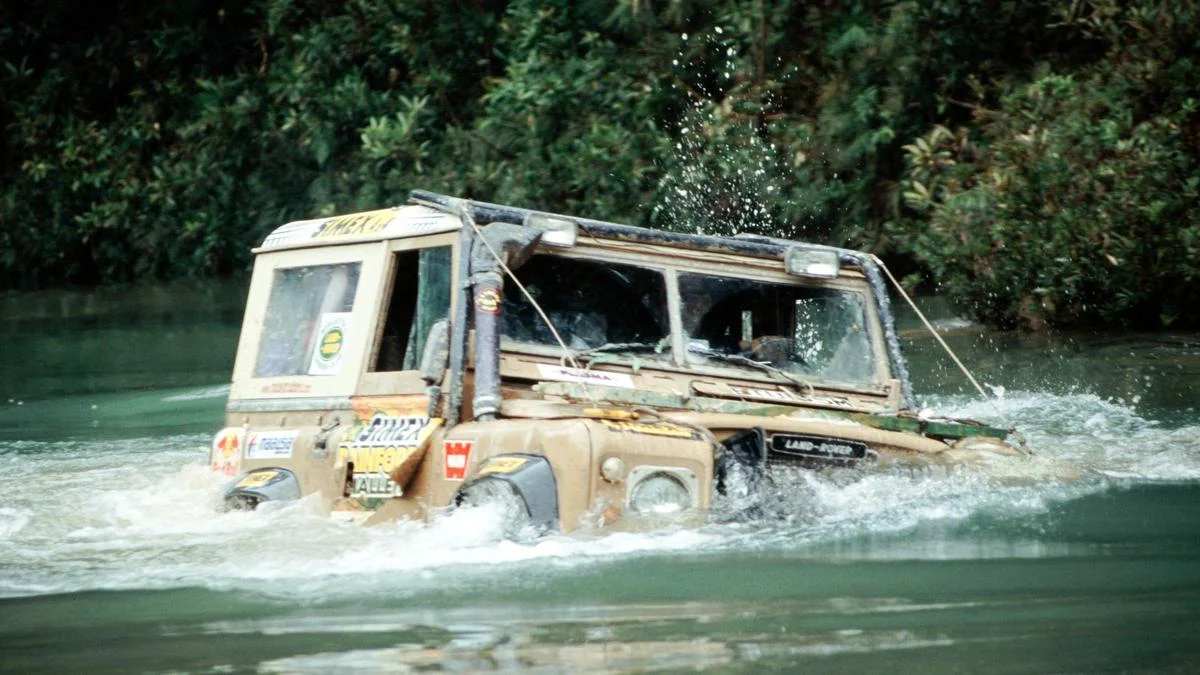
The Rainforest Challenge (RFC) India is widely regarded as the ultimate test of man and machine against the elements. Set against the backdrop of Goa’s dense forests during the peak of the monsoon, the event is not merely a race but a grueling expedition through mud, slush, and vertical inclines. In the 2024 edition, which concluded on August 1, a duo from Kerala, Athul Thomas and Binil Babu—competing under the team name "Killerbull"—etched their names into the annals of Indian off-roading history.
By securing the championship in the 4X4 Stock class in their Maruti Jimny, the pair achieved a milestone never before reached by a team from Kerala in this specific category. Their victory is a story of veteran expertise meeting raw racing instinct, set against a backdrop of financial hurdles and the unforgiving tropical wilderness.
The Pinnacle of Off-Roading: Understanding RFC India
To appreciate the magnitude of Athul and Binil’s victory, one must understand the pedigree of the Rainforest Challenge. Founded in Malaysia in 1997 by Luis J.A. Wee, the RFC is ranked among the top ten toughest motor races in the world and sits comfortably in the top five toughest off-road events globally. The Indian edition, launched a decade ago, has become the flagship off-road event in South Asia, attracting the finest drivers and navigators from across the country.
Supported by the State Government of Goa, the event is strategically timed to coincide with the monsoon. The heavy rains transform the Goan hinterlands into a treacherous landscape where traditional roads cease to exist. Participants are forced to navigate through "Special Stages" (SS) that involve deep slush pits, river crossings, and nearly vertical embankments that require winching and precise throttle control.
The 2024 edition maintained this reputation for brutality. The competition was divided into several categories: the 4X4 Extreme, Modified, and Stock classes. While the Extreme and Modified categories allow for massive tires, custom suspensions, and high-output engines, the Stock class—where Athul and Binil competed—is a test of how a factory-spec vehicle (with minimal modifications) can handle extreme terrain.
The Chronology of a Championship: 14 Stages of Intensity
The path to the podium was a four-day marathon of physical and mental endurance. The event was structured into 14 distinct Special Stages (SS), each designed to test a specific aspect of off-roading, from technical navigation to mechanical sympathy.
Day 1 & 2: The Opening Salvo
The first two days focused on technicality. For Binil Babu, a manager at Ducati Kochi and a veteran bike racer, this was a baptism by fire. While Athul Thomas brought a decade of experience and over 300 events worth of knowledge, Binil was stepping into a four-wheeler competition for the first time.
"The terrain is tough; you are literally driving through forests with uneven paths," Binil remarked. The duo had to navigate through narrow tracks marked only by cones. In the Stock class, where the Maruti Jimny’s compact dimensions are an advantage, the margin for error is razor-thin. Hitting a cone or failing to complete a stage within the allotted time results in heavy point penalties.

Day 3: The Endurance Test
As the rains intensified, the "slush factor" became the primary antagonist. The 4X4 Stock category saw 24 other cars vying for the top spot. Unlike the Extreme class, where vehicles use massive winches and 35-inch tires to "bully" the terrain, the Stock class requires finesse. Athul and Binil had to rely on momentum and precise tire placement to avoid getting "high-centered" in the deep ruts left by the larger vehicles.
Day 4: The Final Push
By the final day, the physical toll on the drivers and the mechanical toll on the Maruti Jimny were evident. Off-roading at this level requires the co-driver (the navigator) to frequently jump out of the vehicle, often waist-deep in mud, to scout lines or attach winch cables. Despite the exhaustion, Team Killerbull remained consistent. Out of a possible 1,400 points across the 14 stages, the duo amassed a staggering 1,247 points, securing their lead and the championship trophy.
Supporting Data: The Mechanics of the Win
The victory of the Maruti Jimny in the Stock class is a significant data point for the Indian automotive community. The Jimny, known for its lightweight ladder-frame chassis and ALLGRIP PRO 4WD system, proved that it could punch well above its weight class.
The Scoring Breakdown
The RFC scoring system rewards consistency over raw speed. Points are awarded for:
- Stage Completion: Finishing within the "Max Time."
- Technical Skill: Navigating obstacles without hitting markers.
- Safety: Adherence to helmet and harness rules.
- Teamwork: The synergy between the driver and the co-driver.
Athul and Binil’s score of 1,247 points suggests they achieved nearly 90% of the maximum possible score, a rarity in an event where mechanical failure or "DNF" (Did Not Finish) statuses are common.
The Competition Landscape
The 4X4 Stock category featured 25 entries in total. While other Kerala-based teams found success in the Extreme and Modified categories, the Stock class has historically been dominated by teams from Northern and North-Eastern India. Team Killerbull’s win marks a shift in the geographical distribution of off-roading talent in India, proving that Kerala’s racing circuit is producing world-class technical drivers.
The Financial Reality: Official Responses and Hurdles
Despite the glory of the podium, the victory is bittersweet when viewed through a financial lens. Motorsport in India remains an expensive pursuit, largely funded by the private savings of the participants.
Binil Babu revealed that the cost of preparing for and participating in the RFC India was approximately ₹6 lakh. This includes vehicle preparation, registration fees, transport, and maintenance. "We dipped into our savings to make this happen," Binil stated, highlighting a common struggle for Indian motorsports athletes.

A Tale of Two States
The duo pointed out a stark contrast in how different state governments and local communities support their athletes. While the winners of the 4X4 Extreme class from Arunachal Pradesh were accorded a "hero’s treatment" and received significant institutional recognition, the Kerala duo feels that the local support system for motorsports in their home state is still in its infancy.
"We are not looking for that level of massive support, but something from local sponsors would be helpful," Binil noted. He emphasized that Kerala possesses a wealth of talent in both two-wheel and four-wheel racing, but many promising drivers are forced to quit because of the "prohibitive" costs associated with the sport.
Implications: Motorsport as a Tool for Social Change
The success of Athul Thomas and Binil Babu carries implications beyond the trophy cabinet. It touches upon the perception of speed and safety among the youth.
Shifting Perspectives on Speed
One of the most profound arguments made by the duo is the role of organized motorsports in promoting road safety. Kerala, like many other states, faces challenges with illegal street racing and "stunting" on public roads. Binil argues that events like the RFC provide a constructive outlet for adrenaline.
"This is a great outlet for youngsters who love speed; it changes your perspective on it. Your entire attitude towards speed becomes healthy," Binil explained. In a controlled environment like the RFC, speed is secondary to control, strategy, and safety. By encouraging youngsters to move from the streets to the "stages," the sport can foster a more disciplined generation of drivers.
The Growth of the Off-Roading Industry
The victory also underscores the growing "overlanding" and off-roading culture in India. The Maruti Jimny’s success serves as a powerful marketing tool for the domestic automotive industry, proving that Indian-market vehicles are capable of tackling world-class challenges. This, in turn, fuels a secondary industry of aftermarket parts, specialized garages, and adventure tourism, particularly in states like Goa and Kerala.
Conclusion: The Road Ahead for Team Killerbull
As the mud dries on their Maruti Jimny, Athul Thomas and Binil Babu are already looking toward the future. Their victory in the 4X4 Stock class at RFC India 2024 is a testament to the fact that experience and instinct can overcome a lack of corporate backing. However, their plea for sponsorship remains a critical call to action for Kerala’s business community.
For Athul, the veteran, this win is another feather in a crowded cap. For Binil, the biker-turned-navigator, it is the beginning of a new chapter in four-wheel racing. Together, they have proven that with 1,247 points and a "Killerbull" spirit, even the toughest rainforests in the world can be conquered. The challenge now lies not in the forests of Goa, but in building a sustainable ecosystem where the next generation of Kerala’s racers can thrive without exhausting their life savings.
