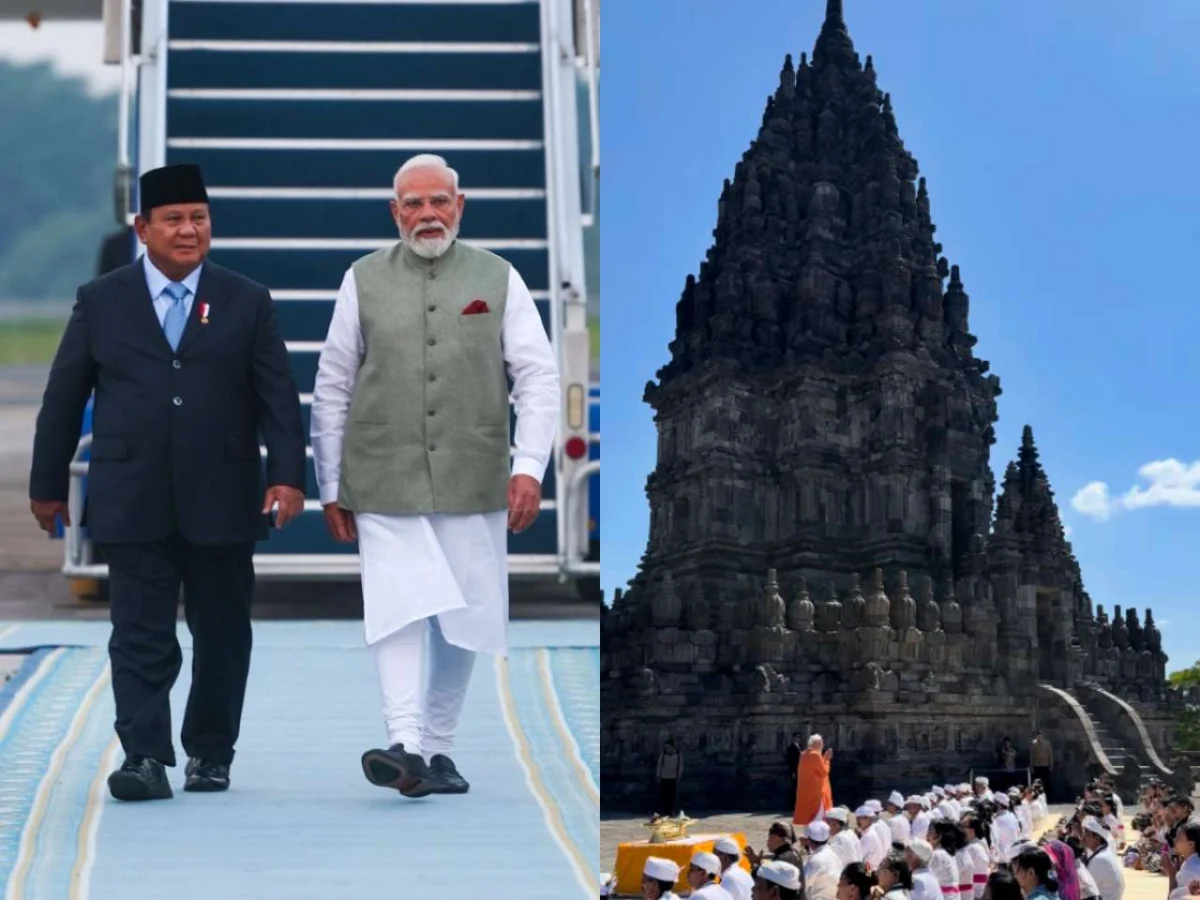
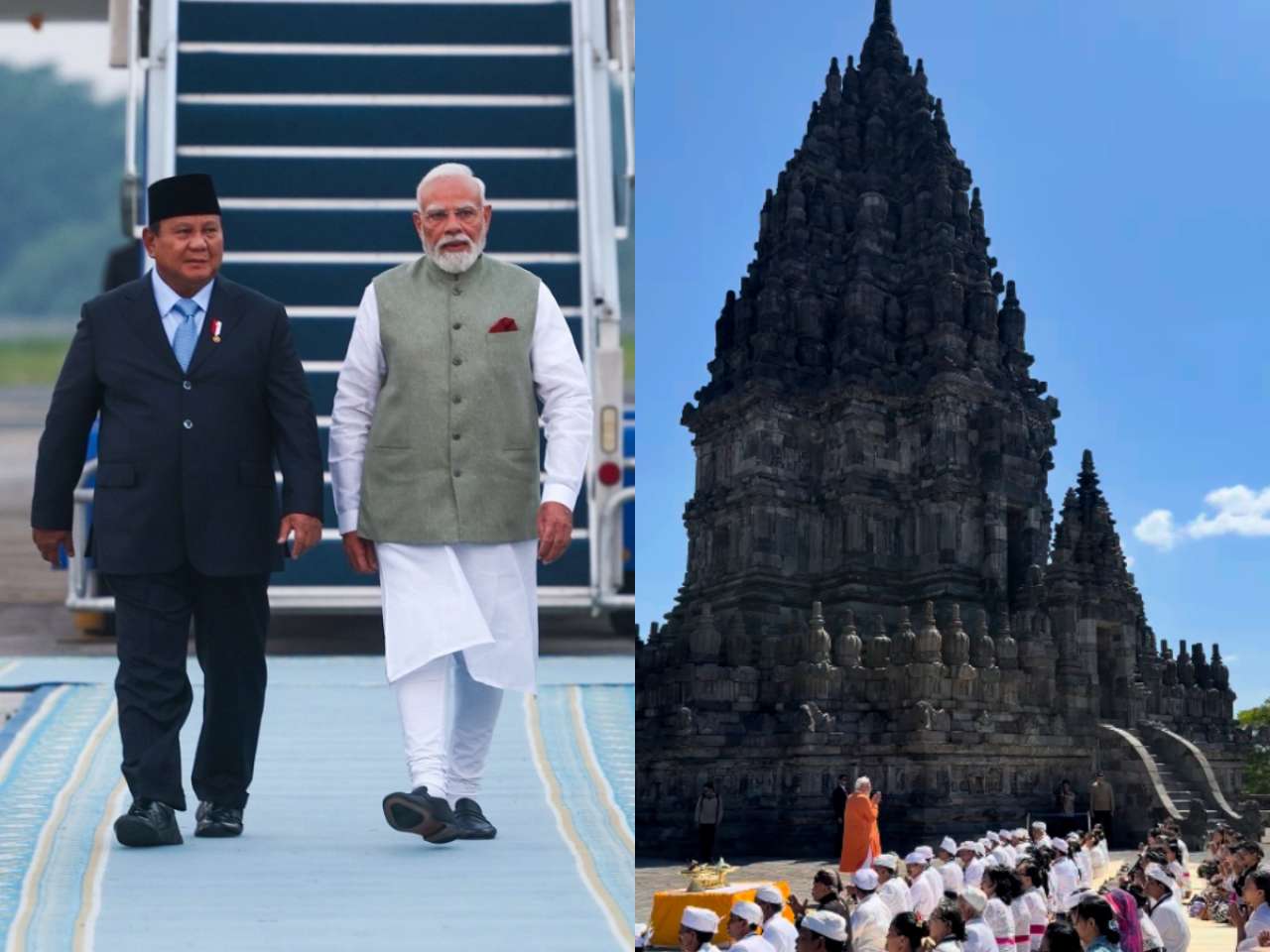
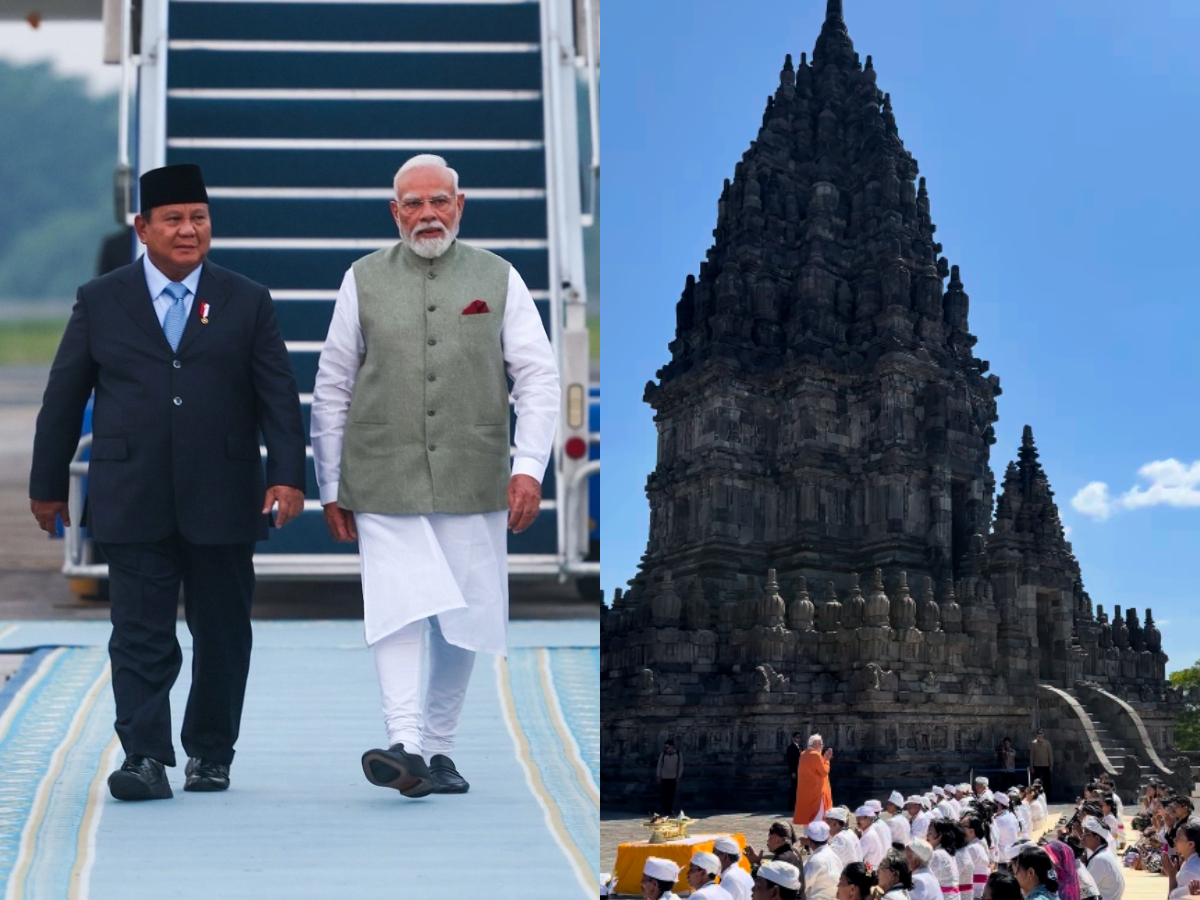
Yogyakarta, Indonesia – During his recent state visit to Indonesia, Prime Minister Narendra Modi made a significant pilgrimage to the magnificent Prambanan Temple complex in Yogyakarta, a UNESCO World Heritage Site that stands as a profound testament to the deep-rooted and centuries-old cultural, spiritual, and historical connections between India and Indonesia. The visit transcended diplomatic courtesies, offering a poignant moment to reflect on shared heritage and the enduring influence of Indian civilization on the archipelago.
This iconic temple complex, a jewel of Javanese history, serves as a powerful symbol of Indonesia’s rich Hindu past, particularly noteworthy given the nation’s status as the world’s most populous Muslim-majority country. Prime Minister Modi’s presence at Prambanan underscored not only the historical significance of the site but also the potential for renewed collaboration in preserving this invaluable cultural legacy.
A Shared Heritage: India’s Enduring Influence on Indonesian Culture
The visit by Prime Minister Modi to Prambanan is far more than a symbolic gesture; it is a reaffirmation of the historical narrative that links India and Indonesia. The flow of cultural and religious ideas from India to the Indonesian archipelago began over 1,500 years ago, primarily through burgeoning trade routes and subsequent cultural exchanges. This interaction was not a one-way imposition but a dynamic process of adoption, adaptation, and integration, resulting in unique syncretic traditions that define much of Indonesia’s historical landscape.
The rise of Hindu and Hindu-Buddhist kingdoms across Java, Sumatra, and Bali left an indelible mark on the region. These empires, such as the Mataram Kingdom in Central Java, were patrons of art, architecture, and religion, and their legacies are most visibly preserved in magnificent temple complexes like Prambanan and its Buddhist counterpart, Borobudur. These structures are not merely historical relics; they are living embodiments of a shared past, reflecting philosophical concepts, artistic styles, and religious narratives that originated in India but flourished and evolved in the Indonesian context.
)
Chronology of a Grand Legacy: The Rise and Resilience of Prambanan
The 9th and 10th Centuries: The Dawn of a Majestic Era
The foundations of the Prambanan Temple complex were laid during the zenith of the ancient Mataram Kingdom, under the Sanjaya dynasty. Constructed primarily between the 9th and 10th centuries, Prambanan was conceived as a grand tribute to the Hindu Trimurti: Lord Shiva, the preserver; Lord Vishnu, the creator; and Lord Brahma, the destroyer. The architectural ambition and spiritual dedication behind its creation speak volumes about the prominence of Hinduism in the region during that period.

Architectural Grandeur: A Symphony in Stone
Prambanan is renowned for its towering spires and intricate design, reflecting a sophisticated understanding of both architecture and Hindu cosmology. The central focus of the complex comprises three main temples, each dedicated to one of the principal deities. The Temple of Shiva, the largest and most imposing, reaches a height of approximately 47 meters, dominating the surrounding landscape. Within its sanctum, statues of Lord Shiva, along with his consort Durga, their son Ganesha, and the sage Agastya, are enshrined. The temples are meticulously arranged in a square layout, a deliberate architectural choice rooted in Hindu philosophical interpretations of the universe and its order.
)
Originally, the Prambanan complex was an expansive city of devotion, encompassing an estimated 240 temples spread across nearly 40 hectares. While many of the smaller structures have succumbed to the ravages of time, the principal shrines have undergone extensive restoration, allowing visitors to marvel at their original grandeur.
The Epic Narratives Carved in Stone: A Visual Testament to the Ramayana
)
One of the most captivating features of Prambanan is its elaborate bas-relief carvings that adorn the temple walls. These intricate sculptures narrate the epic tale of the Ramayana, one of Hinduism’s most revered scriptures. The narrative unfolds in a clockwise sequence as visitors circumambulate the temple, offering a unique and immersive way to experience the story of Prince Rama’s exile, his wife Sita’s abduction by the demon king Ravana, and his eventual triumph with the help of the monkey god Hanuman.
These stone carvings are a powerful visual representation of the deep cultural osmosis between India and Indonesia. While they clearly depict Indian epics, they also exhibit a distinct Javanese artistic sensibility, a testament to the local interpretation and integration of foreign cultural influences. This artistic fusion is further amplified by the tradition of hosting open-air Ramayana ballet performances. Set against the dramatic backdrop of the illuminated temple complex, these performances, combining dance, music, and theatre, bring the ancient epic to life for contemporary audiences, further cementing the cultural bond.
)
The Legend of Princess Roro Jonggrang: Folklore Woven into History
Beyond its religious and architectural significance, Prambanan is intrinsically linked to a beloved Javanese legend: the tale of Princess Roro Jonggrang. According to folklore, the courageous warrior Bandung Bondowoso agreed to marry the princess on the condition that he would construct a thousand temples in a single night. Bolstered by supernatural powers, he was on the cusp of fulfilling this daunting task. However, Princess Roro Jonggrang, desperate to avoid the marriage, devised a clever ruse. She instructed the villagers to light fires and pound rice, creating the illusion of dawn’s arrival. Deceived, the spirits assisting Bandung Bondowoso vanished, leaving the thousandth temple incomplete.
)
Enraged by this perceived betrayal, Bandung Bondowoso, in his fury, cursed the princess, transforming her into stone. Local tradition posits that the statue of Durga within the Shiva temple is, in fact, Princess Roro Jonggrang herself. While historians view this narrative as a charming piece of folklore, it underscores the deep cultural tapestry that intertwines history, mythology, and local legends in Indonesia.
From Ruin to Renaissance: The Resilience of Prambanan
)
The grandeur of Prambanan began to wane following political shifts in the 10th century, leading to a period of gradual decline and neglect. The forces of nature, including devastating volcanic eruptions, seismic activities, and the relentless passage of time, took their toll. Many structures crumbled, becoming buried under ash and overgrown vegetation, pushing the once-magnificent complex into obscurity.
The rediscovery of Prambanan in the 19th century marked the beginning of its long journey back to prominence. Restoration efforts commenced, aiming to salvage and reconstruct the damaged edifices. Even in the 21st century, the site faced challenges, notably the devastating 2006 Yogyakarta earthquake, which caused significant damage. However, through sustained restoration projects and international cooperation, the monument’s integrity has been preserved, ensuring its survival for future generations.
)
Supporting Data: A UNESCO World Heritage Site and a Symbol of Religious Harmony
The designation of the Prambanan Temple Compound as a UNESCO World Heritage Site in 1991 by the United Nations Educational, Scientific and Cultural Organization underscores its universal value and immense historical and architectural significance. This recognition highlights the global importance of preserving such sites that bear witness to the evolution of human civilization and cultural diversity.
Prambanan is often juxtaposed with the nearby Borobudur Temple, a monumental Buddhist structure. Together, these two sites offer a comprehensive panorama of the religious and cultural landscape of ancient Java, showcasing the coexistence and interplay of Hinduism and Buddhism, two major religions that profoundly shaped the region’s identity.
)
While Indonesia is now the world’s most populous Muslim-majority nation, the historical presence of Hinduism, as exemplified by Prambanan, remains a vital part of the national narrative. The enduring influence of Hindu traditions is particularly evident in Bali, which remains the primary center of Hinduism in Indonesia. However, sites like Prambanan serve as crucial reminders of the archipelago’s diverse religious heritage and the historical interactions that contributed to its rich cultural mosaic.
Official Responses and Collaborative Efforts
Prime Minister Modi’s visit to Prambanan was met with enthusiasm and a shared sense of purpose by Indonesian officials. The two nations have expressed a strong commitment to collaborating on the conservation and restoration of this invaluable UNESCO World Heritage Site. This partnership is expected to leverage India’s expertise in heritage preservation and cultural diplomacy, alongside Indonesia’s stewardship of its own historical treasures.
)
The Indonesian Ministry of Tourism and Creative Economy, and the Ministry of Education, Culture, Research, and Technology, have actively engaged in initiatives to promote and protect cultural heritage sites. The visit by Prime Minister Modi is seen as a catalyst for strengthening these efforts, fostering a greater understanding and appreciation of the shared cultural legacy between India and Indonesia.
Discussions between the two governments are likely to focus on areas such as the sharing of best practices in heritage conservation, joint research initiatives, capacity building for local heritage professionals, and collaborative tourism promotion strategies that highlight the cultural significance of sites like Prambanan.
)
Implications for Indo-Indonesian Relations and Global Cultural Diplomacy
The visit of Prime Minister Modi to Prambanan carries significant implications, extending beyond the realm of bilateral relations:
- Strengthening People-to-People Connect: By acknowledging and celebrating shared cultural roots, the visit reinforces the bonds between the people of India and Indonesia. It fosters a sense of mutual respect and understanding, building bridges that transcend political and economic interactions.
- Promoting Cultural Tourism: The renewed focus on Prambanan as a symbol of Indo-Indonesian cultural ties is expected to boost cultural tourism. Travelers interested in history, religion, and ancient civilizations will likely be drawn to this iconic site, benefiting local economies and promoting cross-cultural exchange.
- Championing Cultural Heritage Preservation: India’s engagement with Prambanan aligns with its broader commitment to the preservation of global cultural heritage. By collaborating with Indonesia, India demonstrates its role as a responsible global actor invested in safeguarding the world’s historical and cultural treasures.
- Highlighting Religious Pluralism: In a world often marked by religious divisions, the symbolic significance of a high-ranking Indian leader visiting a prominent Hindu temple in a Muslim-majority nation is profound. It serves as a powerful reminder of Indonesia’s historical religious diversity and the potential for harmonious coexistence.
- Enhancing Soft Power: The visit enhances India’s soft power by showcasing its rich cultural heritage and its commitment to fostering cultural diplomacy. It positions India as a nation that values its historical connections and actively participates in global cultural preservation efforts.
Prime Minister Modi’s visit to the Prambanan Temple was a moment of profound cultural resonance, underscoring the enduring legacy of ancient India in the Indonesian archipelago. It served as a powerful reminder of the shared history that binds the two nations and a promising catalyst for future collaboration in preserving and celebrating this invaluable common heritage. As the world increasingly recognizes the importance of cultural understanding, the echoes of India’s past at Prambanan resonate with renewed significance, promising a brighter future for Indo-Indonesian cultural ties.