

In an era often characterized by fleeting digital memories and a deluge of information, a quiet but profound movement is gaining momentum across India: the curation of personal archives. More than just dusty attics filled with heirlooms, these meticulously assembled collections are emerging as vital repositories of individual and collective memory, offering nuanced perspectives that often elude grand historical narratives. From doctoral researchers grappling with family legacies to artists exploring embodied knowledge, a diverse array of individuals is embracing personal archiving as a means to understand themselves, their communities, and their place in the broader tapestry of history.
The Personal as a Lens for History: Unearthing Untold Stories
The genesis of personal archiving is often deeply rooted in individual experiences and a desire to connect with one’s heritage. For Debankita Das, a doctoral researcher at the School of Social Sciences, University of Hyderabad, this pursuit is intrinsically linked to her family’s profound experience of the Partition. "My grandfather and his family migrated from Dhaka to the eastern Himalayan region of Bengal in 1946, while my grandmother comes from Assam’s Tezpur region. So I wanted to look at these interlinked histories," Das explains. This personal impetus led her to create a memorial archive of her grandmother’s life and health history. The sudden demise of her grandmother in 2020, a profound shock for Das given their close bond, fueled this endeavor. "To talk about her ancestral history, her link with my grandfather, and then expand it to my grandfather’s history was cathartic for me," she shares. Her archive is a rich tapestry woven from family photographs, handwritten letters, and cherished objects – her grandmother’s crochet work, ritualistic paraphernalia, and even a medicine box – each item a tangible thread connecting to a life lived.
This drive to preserve personal histories is not an isolated phenomenon. Increasingly, individuals are engaging in the act of curating personal archives, gathering anything that holds significance: documents, digital artifacts, oral accounts, and even "embodied memories." Unlike the grand, often institutionalized archives, personal archives are inherently subjective in their form. However, they possess a unique historical significance. Ishita Shah, a Bengaluru-based curator of the Constructing Personal Archives (CPA) programme, clarifies the broader scope: "The personal is not about me, my family or my community, but rather a more self-experienced and relatable way of looking at history."

The distinction from institutional archives lies in their focus. While institutional archives often emphasize scale, milestones, and broad societal impact, personal archives offer intimate glimpses into lived experiences. They delve into the "everydayness, value system and behind-the-scenes stories" of individuals, providing a counterpoint to official narratives.
A Rising Tide: The Post-Pandemic Surge in Archiving
The recent surge in interest in personal archiving, according to Ishita Shah, can be significantly attributed to the seismic shifts brought about by the COVID-19 pandemic and its lingering aftermath. "The pandemic and the other uncertainties and fragilities of the world around us have brought this interest," Shah observes. Even for those not inherently drawn to the grand sweep of history, the pandemic fostered a deeper appreciation for "their sense of lineage and belonging, trying to find things that they feel very connected to." This sentiment underscores a fundamental human need for roots and continuity in times of global disruption. Shah, who regularly conducts workshops on personal archiving, has witnessed firsthand this growing desire among individuals, communities, and institutions to establish their own archives.
This trend is also fueled by the pervasive nature of our highly mediated world, one often characterized by an overwhelming influx of information and the ephemeral nature of memory. "In the overabundance we live in, to practice restraint and choice is an informed and conscious thought," Shah remarks. She believes that the act of archiving offers a crucial counterpoint, fostering a balanced relationship between understanding an object’s importance, its use, its preservation, and its future relevance. "The mechanisms of labelling, cataloguing and finding aids become very important, allowing you to keep things for the long-term, find them easily and still be very efficient about how you collect and organise them, especially in a country like ours where space is highly constrained and political," she adds, highlighting the practical considerations in densely populated and politically charged environments.

Biswadeep Chakraborty, an archivist at the India Foundation for the Arts (IFA) in Bengaluru, concurs that the growing interest in personal and family archives stems from a crucial realization: "that history is not only made by governments and institutional narratives, but also by ordinary day-to-day people and their lived experience." He posits that technological advancements have acted as a catalyst, democratizing the understanding of history. "Thanks to our smartphones, it is very easy to learn about history, and to understand that history is not just in the written annals of kings, queens and governments. We are also learning so much about social, cultural and personal history now because people write about it on social media," he notes. This ease of digital dissemination has broadened the scope of what is considered historical, bringing everyday experiences and personal narratives into the public discourse.
Beyond the digital realm, a deep-seated longing for tangible connections to "slower, simpler times" also serves as a potent driver for personal archiving. This nostalgia for a perceived past, untainted by the complexities of the present, motivates individuals to preserve the artifacts that evoke those memories.
Evidence of Human Life: Preserving the Tangible and the Ephemeral
The core of personal archiving often lies in the preservation of material objects, which serve as concrete evidence of human life and experience. Biswadeep Chakraborty emphasizes the importance of these artifacts: "Material objects are central to archives, in general, and historical research because they preserve evidence of human life that written records alone cannot capture." He recounts how participants in his "Archiving the Personal" workshop at IFA brought an array of items, from a pendant and a purse to football memorabilia, a film reel, and an HMT watch, all imbued with personal significance and a desire for preservation. This hands-on workshop underscores the practical need for guidance in safeguarding these precious memories.

Fareeda AM, a video editor who attended the workshop, found the experience transformative. She now views archiving as a vital method for documenting "ordinary things that carry personal, cultural, and historical value." Fareeda highlights a common human tendency: "we often take these ordinary objects for granted until they are gone." For her, archiving is about preserving not just memories but also ways of life, a way of documenting their own lives and those of their parents before these recollections fade. "It helps us understand what is being lost over time, whether through climate change, social change, or simply the passing of generations. That is why I feel now is the right time to begin preserving these stories and objects before they disappear," she asserts, articulating a sense of urgency that resonates with many.
Beyond Materiality: The Body as Archive and the Power of Embodied Memory
While material objects form a significant part of personal archives, the concept is expanding to encompass less tangible forms of memory. For Paarvathi Om, an interdisciplinary artist and researcher, the body itself becomes an archive. "When the body is approached as the archive, one begins to sense the expanse of the memories and experiences stored, submerged and knotted. I was interested in retrieval: who all am I, without my knowing," she explains, reflecting on her deep involvement with the CPA program.
Working with the body as a repository of somatic memory, for Paarvathi, is not about generating new archival material but about uncovering what already exists. This insight, she believes, is deeply informed by her theatre practice. "Embodied archiving and its retrieval inform much of my theatre process, where they are free to interact with each other, and a fresh new archive has a chance to emerge," she elaborates, finding this process inherently subversive and meaningful.

Performance studies scholar Diana Taylor, in her book The Archive and the Repertoire, underscores the significance of embodied practices in memory conservation and identity formation across various societies. She notes the inherent tension between "the archive of supposedly enduring materials (i.e., texts, documents, buildings, bones) and the so-called ephemeral repertoire of embodied practice/knowledge (i.e., spoken language, dance, sports, ritual)." Taylor argues that the repertoire, much like the archive, is mediated through processes of selection, memorization, and transmission within specific representational systems.
Lakshmana KP, who explores Dalit aesthetics in performance, echoes this sentiment. While acknowledging that embodied archiving is not a conventional method, he recognizes its immense power as a source of inspiration. "I go back to the memories and lived experiences of not just myself, but the actors I work with. Not just traumatic experiences, but the instruments that they have seen, the songs they have heard, their mythologies…," he shares, drawing from the rich cultural and personal histories of the actors in the Bengaluru-based Jangama Collective.
For marginalized communities, where written records are often scarce, embodied knowledge becomes a crucial avenue for historical understanding. "For me, the knowledge of marginalized communities exists in their ritual, in their instruments, their bodies, their voices, their food cultures. To tap into the knowledge systems of these communities, you have to get into these things, so the form of archiving is very different," Lakshmana explains. This perspective highlights the adaptability and inclusivity of personal archiving, extending its reach beyond traditional forms of documentation.

Reclaiming Narrative: Dissent, Decolonization, and Representation
Regardless of its form, the act of building a personal archive serves as a powerful tool for reclaiming narrative, particularly for individuals and communities whose stories have been marginalized or overlooked by mainstream history. "Difficult and oppressed histories are better narrated by the people who have gone through them," states Ishita Shah, viewing personal archiving as a profound act of dissent. "The state or institution will choose to ignore or erase you, but you still have the power to tell your story," she asserts, emphasizing the agency that personal archiving bestows upon individuals.
Debankita Das resonates with this sentiment, pointing out the limitations of historical narratives that focus solely on specific geographical regions. "When you read about the history of Bengal, it is essentially focused on the Deltaic Ganga Valley region. There is this assumption that this represents Bengal’s entire space-time history, but that is not the case," she argues. Das highlights the vibrant cultures, languages, cuisines, and histories of communities in the north-eastern Himalayas and the Brahmaputra Valley of Assam, regions often overlooked or exoticized in historical accounts, despite their significant experiences following the 1947 Partition.
"Personal archiving, for me, therefore helps decolonize and de-institutionalize these histories and archives, and reclaim representation," Das declares. She advocates for the creation of a network of personal archives, connecting individuals whose stories are rarely heard. "The most important thing for me to understand is that the place where I come from was shaped into a shared living space both by the local Himalayan and foothill communities, the latter of whom were displaced and had to migrate in search of a new home and belonging following the events leading to pre-Partition and the Partition. So, if I can join other people’s stories as well, it will be more fruitful," she concludes, underscoring the collaborative and connective potential of personal archiving.

Practical Guidance: Tips for Preserving Personal Archives
For those embarking on the journey of personal archiving, practical guidance on preservation is crucial. Sindhu Nagaraja, Chief Conservator at Khandya Station, a specialized center for art, archaeology, and conservation in Bengaluru, offers valuable advice. "We suggest buffering, which involves using either acid-free paper boxes or even normal good-quality, destarched cotton cloth," she recommends.
For delicate objects, wrapping them in multiple layers can offer protection from environmental factors. "This way, the object is not exposed too much. Even if there is mould growth due to humidity, it will remain on the surface layers. It won’t penetrate inside," Nagaraja explains, also highlighting the utility of silica gel for absorbing excess moisture.
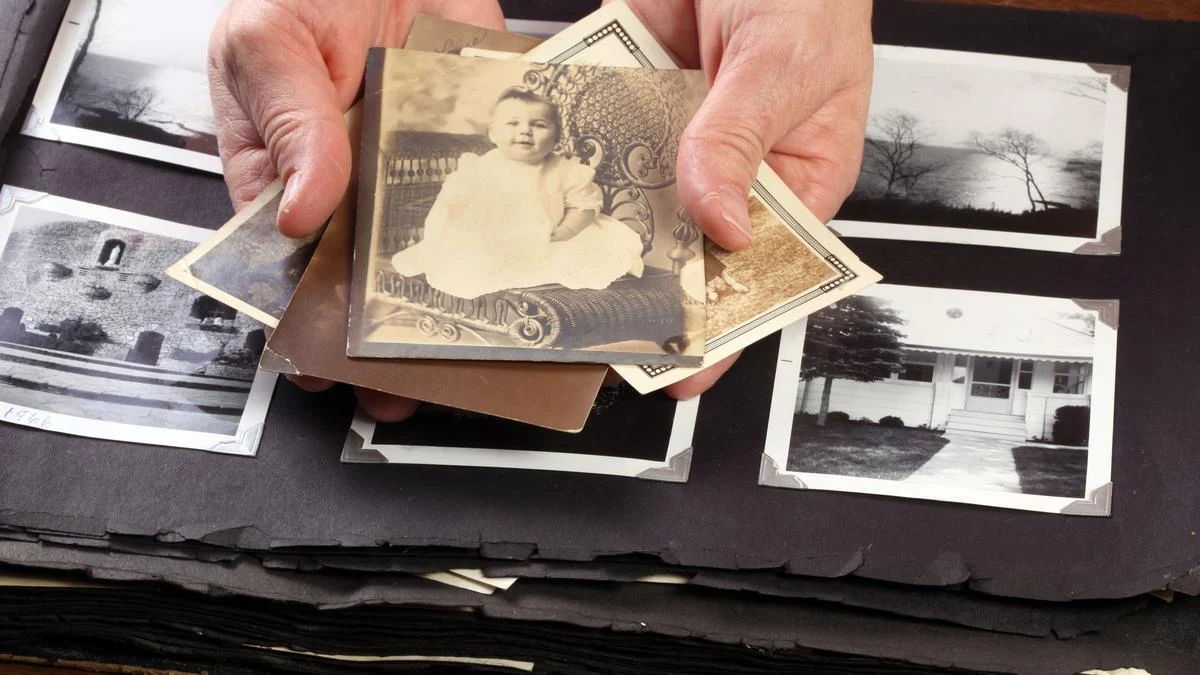
Vintage photographs, often central to personal archives, require specific care. Nagaraja advises against keeping them in traditional albums, which can damage them over time. Instead, she suggests storing them separately, interleaved with archival-grade, unbuffered sheets of paper. These should then be placed in archival sleeves or self-made archival pockets within an archival box. For further organization, these pockets can be housed in small archival folders.

Beyond the physical preservation of objects, labelling and providing context are equally vital components of archiving. As Biswadeep Chakraborty from IFA emphasizes, "You need to sit down and try to think about why something, whether in the physical or digital realm, is important, and label and name it in a way that makes it easy to go back and retrieve." This thoughtful approach ensures that the archive remains not just a collection of items but a navigable and meaningful repository of personal history. The growing interest in personal archiving signifies a deeper societal recognition of the value of individual narratives, offering a powerful means to understand the past, present, and future.
