

New Delhi, September 07, 2026 – Pankaj, a distinguished figure within the Employees’ Provident Fund Organisation (EPFO), has carved a career marked by unwavering dedication to labour rights and rigorous enforcement against corporate malfeasance. For years, he stood on one side of the legal divide, a formidable presence leading crackdowns on employers who defaulted on provident fund dues and engaged in exploitative practices. His tenure, which began as Assistant Provident Fund Commissioner in 1994, saw him orchestrate impactful drives involving factory workers, weavers, and daily wage labourers, often confronting powerful industrialists and corporate giants. Today, as Additional Central Provident Fund Commissioner (HQ), he helms EPFO’s national public grievances vertical and spearheads the organization’s vital district outreach initiative, ‘Nidhi Aapke Nikat,’ testament to his enduring commitment to public service.
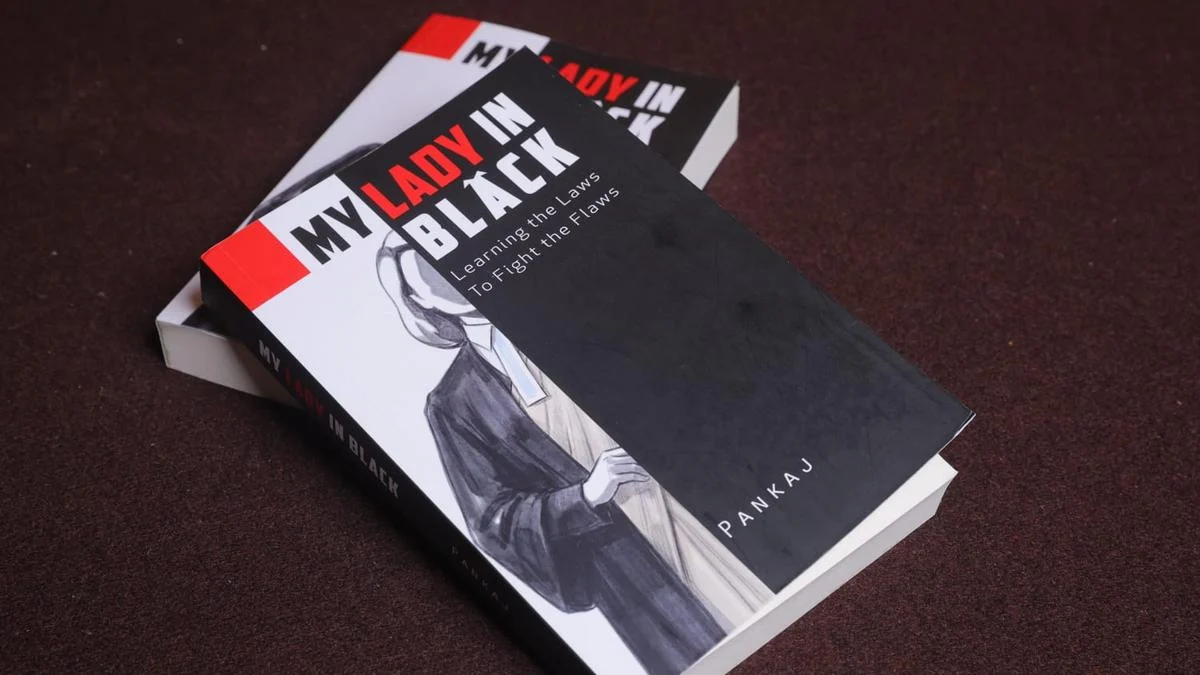
However, the trajectory of Pankaj’s career took an unexpected and deeply personal turn, transforming him from the arbiter of justice to its subject. This dramatic shift, a crucible of legal battles and personal resilience, forms the compelling narrative of his recently published book, My Lady in Black: Learning the laws to fight the flaws. The book, lauded for its candid exploration of the justice system’s intricacies and its profound human cost, has already captured the attention of the film industry, signaling its potential for wider reach and impact.
The Unforeseen Descent: A Conspiracy Unravelled
The narrative pivots on June 22, 2006, a date etched in Pankaj’s memory as the beginning of a harrowing ordeal. He describes this period as a meticulously orchestrated conspiracy, fueled by personal vendetta and executed through the very machinery of law enforcement he had once wielded. What ensued was a staggering 14-year legal battle, a protracted struggle that saw him endure two months in the confines of Hotwar jail. The chargesheet, he contends, was built upon fabricated testimony, and a sanction order was invoked using a legal provision that, remarkably, did not exist. The protracted fight culminated in his eventual acquittal, a victory that, while just, came at an immeasurable personal cost.
"It was very difficult," Pankaj reflects, his voice tinged with the weight of that experience. "Once you are trapped, you are condemned." The stark reality of facing the legal system as an accused, he explains, is a vastly different landscape than enforcing its dictates. The media spotlight, which often amplifies accusations, tends to relegate acquittals to mere footnotes, a stark contrast he highlights in his book.
The book launch, held at the prestigious India Habitat Centre in New Delhi on August 30th, drew a distinguished assembly of senior civil servants, members of the judiciary, and seasoned journalists, all eager to engage with a story that transcends personal tribulation to offer profound insights into the workings of justice. While the book is grounded in true incidents, Pankaj acknowledges the inclusion of creative liberties to enhance its narrative flow and impact.
The ‘Lady in Black’: A Beacon of Strength and Intellect
The title of the book, My Lady in Black, is a poignant tribute to Pankaj’s wife, Jyotsna. Her unwavering support and intellectual prowess became the bedrock upon which his legal defence was built. An MBA in Finance by training, Jyotsna embarked on a remarkable journey of academic reinvention, returning to university to study law specifically to navigate the labyrinthine complexities of her husband’s case. She immersed herself in the legal intricacies, meticulously examining every facet of the prosecution’s arguments and developing counter-strategies.
"What my wife did was next to impossible," Pankaj states with profound admiration. "Studying something that was alien just to get me past this hardship." Her dedication was not merely emotional; it was an active, strategic engagement with the legal system. He vividly recalls moments during the trial where the Public Prosecutor employed leading questions, a tactic Jyotsna, with her newfound legal acumen, rigorously challenged. She pursued these issues with relentless determination, studying relevant precedents, and tirelessly petitioning the court, transforming her personal struggle into a testament to intellectual fortitude and marital devotion.

Prison’s Harsh Lessons: Confronting the ‘Dark Underbelly’
The two months spent in Hotwar jail represented another unforeseen chapter in Pankaj’s ordeal, offering a stark glimpse into the ‘dark underbelly of society.’ Within those walls, he encountered undertrials, convicted criminals, and individuals accused of the most serious offenses. This immersion, he admits, challenged deeply held assumptions and preconceptions about those on the fringes of society.
Yet, prison also revealed unexpected facets of humanity. He met prisoners who expressed a fervent desire to learn English, an aspiration for self-improvement even in the bleakest of circumstances. He heard others articulate ambitions of entering public service, dreaming of becoming Members of Parliament or Legislative Assemblies. This encounter with the human spirit, resilient and aspiring even in confinement, profoundly altered his perspective.
"The experience, he says, made him look at society differently. It also gave him a perspective on people and institutions that he could not have acquired from the other side of the system." This period of forced introspection, while born of injustice, provided an invaluable, albeit painful, education in the complexities of human motivation and societal stratification.
The Catharsis of Writing: Processing Trauma and Illuminating Process
The act of writing My Lady in Black served as a crucial cathartic process for Pankaj, a means to process the years of turmoil and injustice. "It was cathartic to write the book," he shares, underscoring the therapeutic value of articulating his experiences and emotions.
Beyond the personal narrative, the book offers a unique, insider’s examination of the trial court’s functioning. Pankaj delves into the intricacies of cross-examination, the procedural nuances of legal proceedings, and aspects of the justice system that often remain opaque to those outside its confines. His own journey from the bench to the dock provided an unparalleled learning experience, offering a comprehensive understanding of how a case unfolds from the perspective of the accused.
However, Pankaj is clear that acquittal, while a triumph of truth, does not erase the profound impact of those years of accusation. The emotional and psychological toll of living under a cloud of suspicion for an extended period is a scar that remains. This is precisely what My Lady in Black seeks to preserve: not merely the legal record of a case, but the deeply personal and emotional cost of enduring an accusation for years.
"Justice wins but costs you a lot," he concludes, encapsulating the bittersweet reality of his journey. His book stands as a powerful testament to the resilience of the human spirit, the invaluable strength of partnership, and a critical examination of a justice system that, while striving for fairness, can exact a heavy price. The film adaptation promises to bring this compelling narrative of struggle, love, and the enduring pursuit of truth to an even wider audience.
