

The automotive landscape in China has witnessed a significant milestone with the official market launch of the Freelander 8. Once a cornerstone of the Land Rover lineup, the "Freelander" nameplate has been resurrected not merely as a model, but as a dedicated brand identity under the Chery Jaguar Land Rover (CJLR) joint venture. The Freelander 8, a full-size SUV, enters the world’s most competitive EV market with a formidable list of specifications: an Extended-Range Electric Vehicle (EREV) powertrain, dual-motor all-wheel drive (AWD), and a staggering output of up to 818 horsepower.
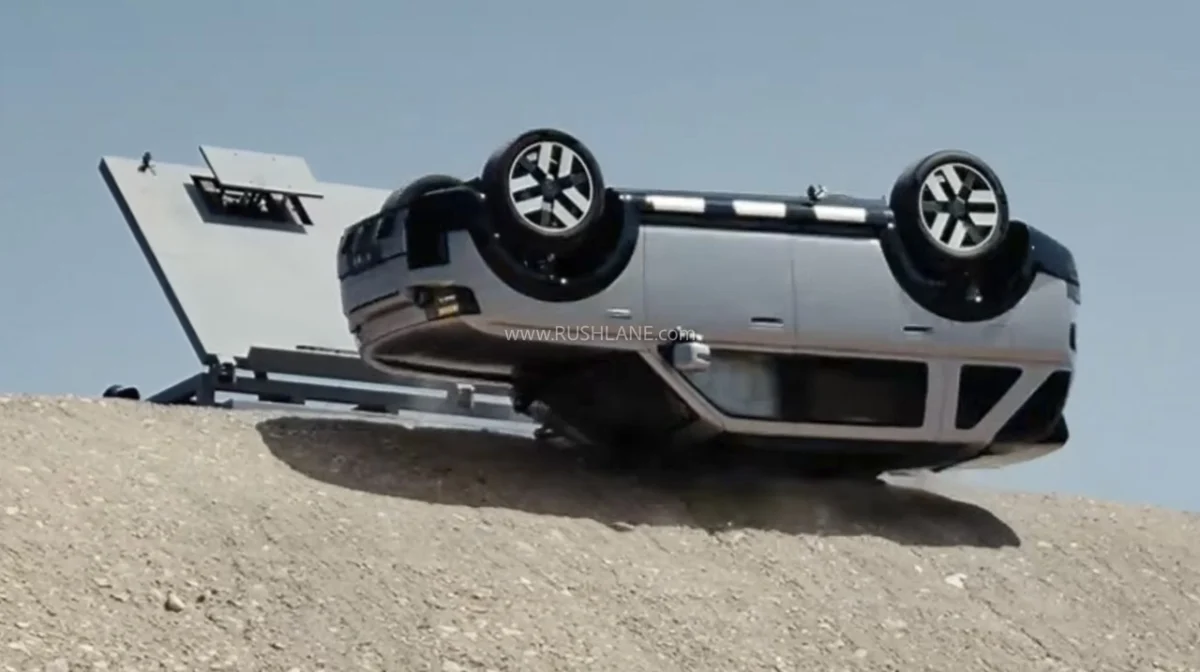
Beyond the raw performance figures, the launch was defined by a controversial and dramatic demonstration of structural integrity. In a bid to prove the vehicle’s durability, CJLR subjected a production-spec Freelander 8 to a violent multiple-rollover crash test. The aftermath, which saw the vehicle continue to operate under its own power despite catastrophic body damage, has sparked intense debate regarding the engineering of modern high-performance SUVs and the strategic direction of the CJLR partnership.
Chronology: From Revitalization to Market Launch
The journey of the new Freelander began as a strategic pivot by Jaguar Land Rover (JLR) to strengthen its foothold in the Chinese market through its partnership with Chery. While JLR has shifted toward a "House of Brands" strategy globally (Range Rover, Defender, Discovery, and Jaguar), the Freelander name was identified as having significant residual brand equity in China, making it the perfect candidate for a localized, tech-forward sub-brand.
- Initial Announcement: Earlier in 2024, CJLR confirmed that the Freelander name would return as an independent brand focusing on New Energy Vehicles (NEVs). The goal was to combine JLR’s design heritage and off-road DNA with Chery’s rapid development cycles and battery-electric expertise.
- The Debut of Freelander 8: Following months of speculation and spy shots, the Freelander 8 was officially unveiled as the flagship of this new era. It was positioned as a premium, full-size SUV designed to compete with high-end Chinese rivals such as Li Auto and AITO.
- The Launch Event (September 2024): The vehicle officially went on sale across China. To differentiate itself from the sea of luxury SUVs, CJLR focused its marketing on "survivability" and "mechanical resilience," culminating in the now-famous rollover demonstration.
- Immediate Market Reception: Within the first 12 hours of the order books opening, the brand recorded 5,000 firm orders. These are classified as non-refundable deposits once the configuration is locked, indicating a high level of consumer confidence in the product’s value proposition.
Structural Integrity: The Rollover Demonstration
The most striking aspect of the Freelander 8 launch was a video demonstration that defied conventional automotive marketing. A Freelander 8 was sent down a steep incline, intentionally triggered into a series of violent rollovers and impacts. The exercise was designed to simulate a worst-case scenario high-speed accident on rough terrain.

Post-Crash Functionality
By the conclusion of the test, the vehicle’s exterior was unrecognizable. The roof was crushed, the bonnet deformed, and multiple body panels were shredded or hanging by wires. The glasshouse was shattered, and the structural pillars showed signs of extreme stress. However, the demonstration’s climax occurred when the driver—or remote operator—engaged the powertrain.
Despite the visible carnage, the SUV’s EREV system remained functional. The battered Freelander 8 was filmed navigating a loose-surface gradient, using its dual-motor AWD system to climb a steep sandy slope. This performance was intended to highlight that the vehicle’s core "brain," battery protection, and drivetrain remained intact even when the "skin" was destroyed.
Industry Perspective on the Test
While the demonstration was visually impressive, industry analysts have been quick to point out that manufacturer-organized stunts differ significantly from standardized, independent NCAP (New Car Assessment Program) testing. NCAP tests focus on occupant protection—specifically the deceleration forces on the human body and the integrity of the survival cell—rather than the vehicle’s ability to drive after a crash. Nevertheless, for the Chinese consumer, the "unkillable" nature of the Freelander 8 serves as a powerful psychological marketing tool, echoing the rugged reputation of the original Land Rover vehicles.
Supporting Data: Technical Specifications and Pricing
The Freelander 8 is a behemoth by any standard, designed to offer both luxury and extreme performance. Its engineering reflects a blend of traditional SUV dimensions and cutting-edge EREV technology.

Dimensions and Chassis
- Length/Width/Height: 5,118 mm / 2,050 mm / 1,898 mm
- Wheelbase: 3,040 mm
- Ground Clearance: 220 mm
- Kerb Weight: 2,980 kg (nearly 3 metric tonnes)
- Turning Radius: 5.15 meters (achieved via active rear-wheel steering)
- Suspension: Dual-chamber air suspension for variable ride height and damping.
Powertrain and Performance
The Freelander 8 utilizes an EREV setup, which is currently the preferred choice for large SUVs in China due to its ability to eliminate range anxiety while providing electric driving characteristics.
- The "Extender": A 1.5-liter turbocharged petrol engine acts solely as a generator to charge the battery.
- Battery: A 60.3 kWh Lithium Iron Phosphate (LFP) pack.
- Electric Range: 310 km (CLTC cycle) on pure electric power.
- Total Output: 610 kW (approx. 818 hp) and 813 Nm of torque.
- Acceleration: 0–100 km/h in 4.6 seconds.
- Towing Capacity: 2,000 kg.
Pricing Structure and Trims
The vehicle is offered in three primary trim levels, available in either five-seat or executive six-seat configurations:
| Trim Level | 5-Seat Price (Yuan) | 6-Seat Price (Yuan) | Approx. USD Equivalent |
|---|---|---|---|
| Pro | 309,900 | 319,900 | $43,500 – $44,900 |
| Max | 349,900 | 359,900 | $49,100 – $50,500 |
| Max+ | 389,900 | 399,900 | $54,700 – $56,100 |
Official Responses and Market Strategy
The 5,000 orders received within 12 hours represent a significant win for CJLR. Official spokespeople for the joint venture have emphasized that the Freelander 8 is not a "rebadged Chery," but a unique synthesis of JLR’s chassis tuning expertise and Chery’s digital ecosystem.
The decision to use an EREV powertrain was a calculated response to the Chinese market’s shifting preferences. While Battery Electric Vehicles (BEVs) are popular in urban centers, EREVs have seen a massive surge in the SUV segment because they allow for long-distance travel across China’s vast geography without relying on the charging infrastructure. By providing 818 hp, CJLR is also targeting the performance-oriented buyer who would traditionally look at BMW’s M-division or Mercedes-AMG, but at a significantly lower price point.

Global Implications: The India Connection
The development of the Freelander 8 and its underlying platform has massive implications beyond the Chinese border, specifically for India’s Tata Motors. As the owner of Jaguar Land Rover, Tata Motors has a unique "open-door" policy regarding technology sharing between its subsidiaries.
The Avinya Pivot
Recent reports suggest that Tata Motors is fundamentally revising its strategy for the upcoming Avinya premium EV brand. Originally, Avinya was slated to use JLR’s Electrified Modular Architecture (EMA). However, recent internal assessments concluded that the EMA platform—designed for high-end European and North American markets—would be too costly for the Indian market, potentially pricing the Avinya out of its target segment.
Instead, Tata Motors is reportedly looking to source the architecture from the Chery-JLR (Freelander) ecosystem. This platform is already industrialized, cost-optimized for Asian markets, and proven to support both BEV and EREV configurations.
Strategic Advantages for Tata
- Cost Competitiveness: Using the Freelander/CJLR platform allows Tata to benefit from the economies of scale already established in China.
- Time to Market: Adopting an existing, robust platform could shave years off the development cycle for the Avinya X (codenamed P2), which is targeted for a 2027 launch.
- Localized Engineering: While the "bones" of the car may be shared with the Freelander 8, Tata Technologies is reportedly leading the effort to rework the software, electronics, and ADAS (Advanced Driver Assistance Systems) to suit Indian road conditions and consumer preferences.
Conclusion
The Freelander 8 is more than just a new SUV; it is a testament to the evolving nature of global automotive partnerships. By resurrecting a classic name and pairing it with extreme performance and structural resilience, CJLR has created a compelling product for the Chinese market. Simultaneously, the platform’s potential adoption by Tata Motors for the Avinya range signals a new era of cross-continental synergy, where Chinese manufacturing efficiency and JLR’s engineering prestige combine to create the next generation of premium mobility in India and beyond.
