

Introduction
For decades, the MINI brand has been synonymous with a specific kind of automotive joy: compact dimensions, "go-kart" handling, and a retro-chic aesthetic that prioritizes personality over utilitarianism. In the Indian market, where road conditions often demand ruggedness and families prioritize interior volume, MINI has traditionally occupied a niche "second or third car" status. However, the arrival of the new MINI Countryman C marks a definitive turning point.
Larger, more technologically advanced, and significantly more practical, the Countryman C is no longer just a "lifestyle" accessory. It represents a calculated move by the BMW Group to transition MINI from a cult classic into a mainstream contender within the premium SUV space. As the brand navigates a shifting landscape of electrification and digital-first design, the Countryman C emerges as the bridge between MINI’s spirited past and its more pragmatic, versatile future.
Main Facts: A Paradigm Shift in Dimensions and Design
The new MINI Countryman C is the third generation of the brand’s largest model, and it represents the most significant departure from the original Alec Issigonis philosophy to date. While the "MINI" name remains, the "Countryman" moniker has grown to encompass a vehicle that can finally compete head-to-head with established premium compact SUVs like the Mercedes-Benz GLA, the Audi Q3, and its own stablemate, the BMW X1.
A New Design Language: Charismatic Simplicity
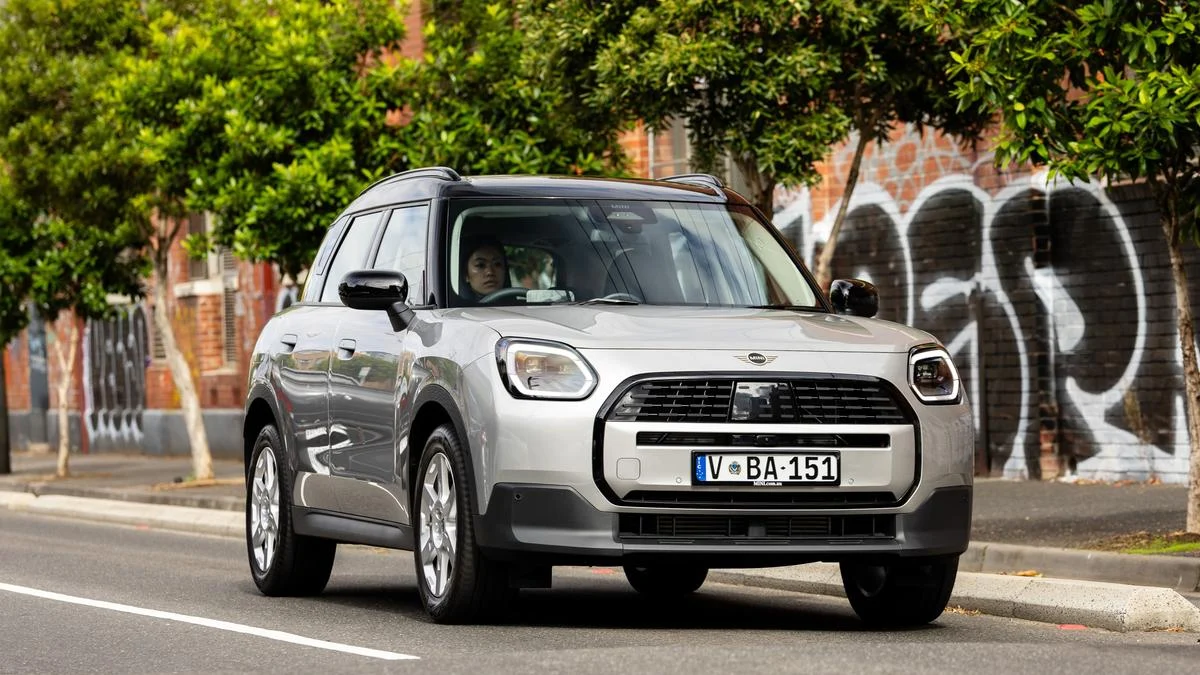
The Countryman C introduces the world to MINI’s new design philosophy, dubbed "Charismatic Simplicity." This approach strips away excessive chrome and intricate lines in favor of clean surfaces and a more muscular stance. The most striking change is the octagonal front grille and the redesigned LED headlights, which now offer three different light signatures, allowing owners to customize the vehicle’s "expression."
Substantial Growth
The most critical "fact" of the new Countryman C is its physical growth. It has grown by 13 centimeters in length and 6 centimeters in height compared to its predecessor. This increase isn’t just for show; it fundamentally alters the vehicle’s cabin ergonomics. With a longer wheelbase, rear-seat passengers—traditionally the casualty of MINI’s compact footprint—now enjoy legroom comparable to mid-sized sedans.
The Powerplant
The "C" in Countryman C denotes the entry-level internal combustion engine (ICE) variant. It features a 1.5-liter three-cylinder turbocharged petrol engine paired with a 48V mild-hybrid system. This setup produces 170 hp and 280 Nm of torque, enabling the vehicle to sprint from 0 to 100 km/h in 8.3 seconds. While enthusiasts might miss the larger displacement of the "S" or "JCW" variants, the "C" is strategically positioned to balance performance with the fuel efficiency demanded by the Indian luxury buyer.
Chronology: From Cult Classic to Premium SUV
To understand the significance of the new Countryman C, one must look at the evolution of the model over the last 15 years.
- 2010: The Birth of the Rebel (R60): MINI shocked its fanbase by launching the first-generation Countryman. It was the first MINI to exceed four meters in length, the first with four doors, and the first with all-wheel drive. Critics argued it was "too big" to be a MINI, yet it quickly became one of the brand’s best-selling models globally.
- 2017: Refining the Formula (F60): The second generation moved to the BMW UKL2 platform. It became more refined, less quirky, and more "BMW-like" in its build quality. In India, this model established MINI as a visible player in the premium segment, though it was still viewed as a niche alternative to the BMW X1.
- 2023-2024: The Global Reveal: The third-generation (U25) was unveiled, showcasing a radical shift toward digitalization and sustainability. It was announced alongside the all-electric Countryman SE, signaling MINI’s dual-track strategy.
- 2024-2025: Indian Market Entry: The Countryman C arrives in India at a time when the "SUV-ification" of the market is complete. MINI India recognizes that to grow, it must offer a vehicle that can serve as a primary family car, leading to the launch of this larger, more practical iteration.
Supporting Data: Technical Specifications and Interior Innovations
The shift from "hatchback-plus" to "proper SUV" is backed by empirical data that highlights the Countryman C’s newfound utility.
Dimensional Comparison
| Feature | Previous Gen (F60) | New Countryman C (U25) | Change |
|---|---|---|---|
| Length | 4,299 mm | 4,433 mm | +134 mm |
| Width | 1,822 mm | 1,843 mm | +21 mm |
| Height | 1,557 mm | 1,656 mm | +99 mm |
| Boot Space | 450 Liters | 505 – 1,450 Liters | Significant Increase |
The Digital Revolution: MINI OS 9
The interior is dominated by a world-first: a 9.4-inch circular OLED display. This high-resolution screen replaces the traditional instrument cluster. Powered by MINI Operating System 9, the interface is as intuitive as a smartphone.
- Experience Modes: The Countryman C features up to eight "MINI Experience Modes." Each mode changes the ambient lighting, the display UI, and even the synthetic engine soundscape.
- Sustainability: The dashboard and door panels are covered in a 2D-knitted textile made from recycled polyester. This replaces the traditional leather and plastic-heavy interiors of the past, aligning with global sustainability trends.
Performance and Efficiency
The 48V mild-hybrid system provides an electric boost of 14 kW, which aids in smoother start-stop transitions and provides extra torque during low-speed acceleration. This is particularly relevant for Indian stop-and-go city traffic, where the previous generation’s jerky low-end delivery was a common critique.

Official Responses: The Brand’s Strategic Vision
BMW Group India has been vocal about the role the new Countryman C plays in their portfolio. Executives suggest that the "new MINI" is about more than just a change in sheet metal; it is a change in brand philosophy.
In various press briefings, Stefan Richmann, Head of MINI, has emphasized that the new generation is designed for "the adventurer and the family." By removing the "clutter" of the interior—eliminating the gear lever and moving most controls to the central "toggle bar"—MINI claims they have returned to the minimalist roots of the 1959 original while providing the space required for 2025.
Local leadership at BMW Group India has noted that the Indian consumer is evolving. "The Indian premium buyer is no longer satisfied with just a badge," a spokesperson noted during a recent preview. "They want a vehicle that handles the school run as efficiently as it handles a weekend trip to the hills. The Countryman C is our answer to that demand for versatility without losing the MINI soul."
Furthermore, the brand has confirmed that while the "C" (petrol) will be the volume driver in India, it paves the way for the high-performance JCW and the all-electric SE variants, ensuring that MINI remains relevant as India’s infrastructure for EVs continues to mature.
Implications: A New Competitor in the Luxury SUV Arena
The launch of the Countryman C has several long-term implications for the Indian automotive market and the MINI brand’s trajectory.
1. Challenging the "Second Car" Stigma
Historically, MINI sales in India were capped because the cars were seen as impractical for families. With the Countryman C’s increased boot space (expandable to 1,450 liters) and genuine five-passenger capacity, it can now realistically compete as a household’s primary luxury vehicle. This broadens the target demographic from young urbanites to established families.
2. The Tech-First Luxury Consumer
By leaning heavily into the OLED interface and "Experience Modes," MINI is targeting a younger, tech-savvy demographic that may find the traditional interiors of Mercedes or Audi too conservative. The Countryman C isn’t just a car; it’s a "gadget on wheels," a strategy that has worked well for brands like Tesla and is now being adopted by legacy luxury makers.
3. Pricing and Positioning
As the Countryman C moves up-market in size and features, its price point is also expected to climb. This creates a gap in the sub-40 lakh luxury segment that MINI once occupied. However, it positions the brand more firmly against the BMW X1. While they share a platform, the Countryman C offers a more "emotive" and "funky" alternative to the X1’s "corporate" and "serious" demeanor, allowing the BMW Group to capture two different types of buyers with the same underlying technology.
4. A Gateway to Electrification
The design and tech architecture of the Countryman C are identical to the electric Countryman SE. By familiarizing the Indian public with this new form factor and interface via the petrol "C" variant, MINI is softening the ground for its eventual transition to a fully electric lineup by 2030.
Conclusion
The new MINI Countryman C represents a bold gamble. It risks alienating some purists who believe a MINI should always be "mini," but it gains a massive opportunity to dominate the premium compact SUV segment. By prioritizing practicality, embracing a minimalist digital future, and maintaining the brand’s legendary driving dynamics, the Countryman C is no longer just a stylish outlier. It is a mature, capable, and formidable contender that marks the beginning of a new era for MINI in India. For the first time, choosing a MINI doesn’t require a compromise on space or utility—and that change alone could be what transforms the brand’s fortunes in the years to come.
