

By Senior Real Estate Correspondent
For many Indian professionals, the transition into retirement is marked by a singular, high-stakes question: how to safeguard a lifetime’s worth of savings while ensuring a steady appreciation of wealth. This is the exact predicament facing Ramanathan Aiyar, a recently retired professional who finds himself at a crossroads with a corpus of Rs 50 lakh. Like many in his position, Aiyar is caught in the classic real estate tug-of-war: the "Plot vs. Flat" dilemma.
As urbanization accelerates across India, the choice between a piece of land and a vertical apartment unit has evolved from a simple lifestyle preference into a complex financial strategy involving taxation, liquidity, and risk management. This report explores the multifaceted nuances of this choice to determine which asset class offers the superior return on investment (ROI) in the current economic climate.
1. Main Facts: Defining the Asset Classes
To understand the investment potential, one must first define the fundamental nature of these two real estate products.
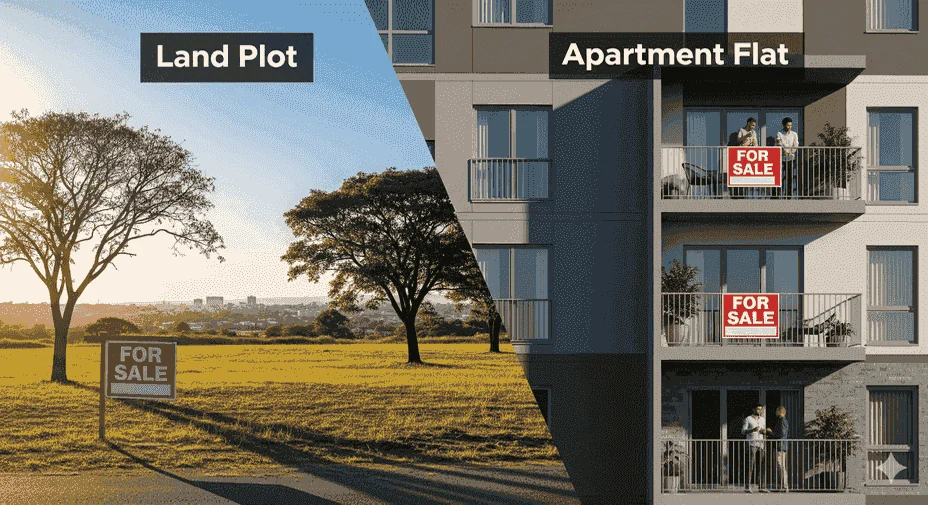
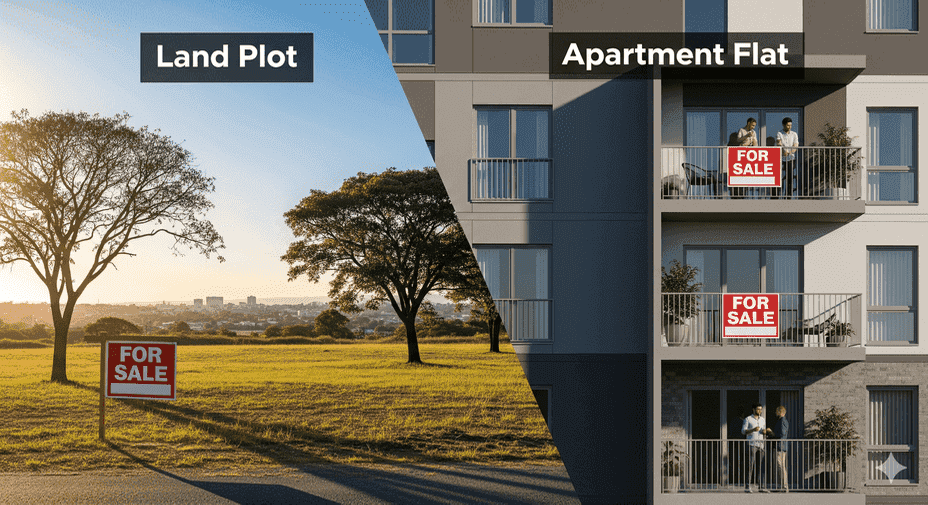
The Residential Flat: Convenience and Community
A flat, or apartment, is a self-contained housing unit that occupies only part of a building, generally on a single storey. In the modern Indian context, flats are typically part of larger complexes or gated communities. They are designed for the "end-user" who prioritizes immediate habitability, security, and shared amenities.
The Residential Plot: Control and Scarcity
A plot is a parcel of land. It represents the "raw material" of real estate. Investing in a plot offers the buyer the freedom to build a customized structure according to their own timeline and architectural preferences. Unlike flats, which are "depreciating assets" sitting on "appreciating land," a plot is a pure land play, subject to the laws of scarcity.
2. Chronology of Acquisition: The Effort Factor
The journey from "intent to buy" to "possession" varies significantly between these two options, impacting the investor’s time and mental energy.
The "Turnkey" Experience of Flats
When purchasing a flat, especially from a reputed developer, the buyer essentially pays for a managed process. The developer handles the land acquisition, government approvals, construction logistics, and basic infrastructure (water, electricity, and sewage). For a retiree like Aiyar, this means the "effort" is largely financial and administrative. Once the keys are handed over, the primary task is interior furnishing.
The "Sovereign" Journey of Plots
Conversely, buying a plot is only the first step of a long-term project. If the goal is to build a home, the owner must navigate a complex chronology:
- Verification: Ensuring the land has a clear title and is not under litigation.
- Approvals: Securing building plan approvals from local municipal bodies.
- Construction: Hiring architects, contractors, and labor.
- Supervision: Monitoring the quality of materials and adherence to timelines.
While this path offers total creative control, it involves significant "leg work" and local body interactions that may be daunting for senior citizens or those seeking a passive investment.
3. Supporting Data: A Tabular Comparison of Investment Metrics
To provide a clearer picture for investors, we have analyzed the two assets across five critical financial pillars:
| Basis of Differentiation | Plot / Land Investment | Flat / Apartment Investment |
|---|---|---|
| Flexibility | High; total freedom to build and modify. | Low; limited to internal modifications. |
| Appreciation Rate | High; land is scarce and appreciates faster. | Moderate to Low; building ages and depreciates. |
| Financial Assistance | Challenging; lower LTV (50-80%), shorter tenure. | Easier; higher LTV (80-85%), longer tenure. |
| Income Potential | Zero; until a structure is built. | Immediate; can be rented out post-possession. |
| Tax Benefits | Available only after construction is complete. | Available immediately on home loan interest/principal. |
| Maintenance | Low; minimal costs until construction. | High; monthly society and amenity charges. |
4. Official Responses and Expert Perspectives
Industry leaders suggest that the choice should be dictated by the investor’s "investment horizon" and "income needs."
Kalyan Chakrabarti, Managing Director of Red Fort Capital, notes that the decision depends on the intended use of the capital. "If you are looking for a regular yield, assets like commercial or office spaces are useful. However, if you wish to use the investment as a ‘store of value’ with a long-term outlook, land is worth considering. For shorter terms, a relatively small apartment unit is more liquid and manageable," Chakrabarti explains.
From a safety perspective, Ramesh Menon, Founder of Certes Realty, emphasizes the importance of the "End-User" drive. He suggests that in today’s market, projects in developing areas or gated communities that have secured all local authority approvals are the safest bets for both plots and flats.
Financial Nuances: The Loan and Tax Angle
The banking sector treats these two assets very differently. Nitin Singhal, a relationship officer at PNB Housing Finance Ltd, points out the disparity in Loan-to-Value (LTV) ratios. "A home loan for a flat can fetch 80-85% funding with tenures up to 30 years. For a plot, we allow 80% LTV for new land, but this can drop to 50% for resale land, with a maximum tenure of only 15 years," Singhal states.
Furthermore, Chartered Accountant Kunj Kaushal highlights a significant tax pitfall for plot buyers. While flat owners can claim deductions up to Rs 1.5 lakh (principal) and Rs 2 lakh (interest) under Sections 80C and 24 of the Income Tax Act from the start, plot owners can only avail of these benefits after the construction of a house on that land is completed.
5. Implications: Lifestyle, Security, and Maintenance
Beyond the balance sheet, the choice between a plot and a flat has profound implications for one’s daily life.
The "Hidden" Costs of Flat Living
While flats offer convenience, they come with a "never-ending bill." Monthly maintenance charges for lifts, security, swimming pools, and common lighting can range from Rs 3,000 to Rs 20,000 depending on the luxury tier of the project. For a retiree on a fixed budget, these costs can erode disposable income over time.
The Security Gap in Plotted Developments
Security is a major factor in the Plot vs. Flat debate. Flats in gated communities offer 24/7 surveillance, intercoms, and controlled access, providing peace of mind for families and the elderly. Plot owners, unless part of a managed "plotted development" township, are responsible for their own security. This often necessitates building high boundary walls and installing independent CCTV systems, adding to the initial capital expenditure.
Delivery Risks and Possession
A critical risk for flat buyers is the "delivery timeline." The Indian real estate market has historically been plagued by project delays. While the Real Estate Regulatory Authority (RERA) has mitigated this, a flat remains a "promise of delivery." A plot, conversely, is a physical asset that is usually ready for immediate possession, allowing the investor to take tangible control of their asset much faster.
6. The Verdict: Which is Better for Ramanathan Aiyar?
The decision for an investor like Aiyar boils down to a trade-off between Appreciation and Income.
- Choose a Plot if: You have a 10+ year horizon, do not require immediate rental income, and want to leave a high-value legacy for your heirs. Plots are "inflation hedges" that typically outperform flats in terms of capital gains because land does not age, whereas buildings do.
- Choose a Flat if: You require immediate monthly rental income to supplement your pension, you value community living and ready-made security, and you want to maximize tax savings on a home loan.
Final Summary
As the video analysis of long-term costs suggests, the "actual cost" of property includes loan interest, maintenance, and taxes. While a plot and a self-built house may deliver higher returns in a booming market, the "ease of exit" and "ease of management" often favor the flat.
For Ramanathan Aiyar, with a Rs 50 lakh budget, a plot in a developing Tier-2 city or a suburban area of a Tier-1 city could offer explosive growth. However, if his priority is a stress-free retirement with a steady check in the mail, a well-located 2BHK flat in a secondary market might be the more prudent path.
Disclaimer: Real estate investments are subject to market risks. Investors are advised to conduct independent due diligence, verify land titles through legal experts, and ensure all projects are RERA-registered before committing capital.
