

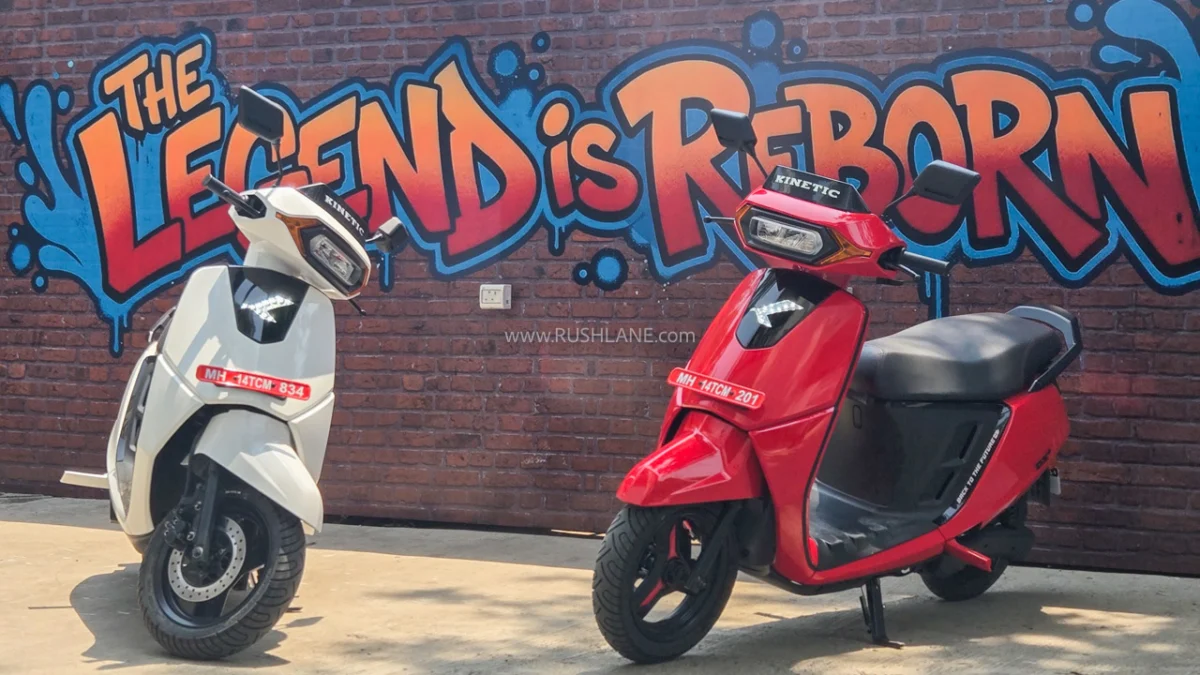
In a significant move to consolidate its position in the rapidly evolving Indian electric vehicle (EV) market, Kinetic Green (often referred to as Kinetic EV) has officially announced the expansion of its flagship DX electric scooter lineup. Addressing one of the primary concerns of modern EV adopters—range anxiety—the company has introduced a new range-topping variant of the DX+ featuring a substantial 3.1 kWh battery. This strategic update not only enhances the domestic appeal of the scooter but also serves as a cornerstone for Kinetic’s ambitious plans to export Indian-manufactured electric two-wheelers to seven international markets.
The launch marks a pivotal moment for the brand, which has long been associated with democratizing personal mobility in India through iconic products like the Kinetic Luna. By integrating modern lithium-iron-phosphate (LFP) technology with a design language that resonates with family-oriented consumers, Kinetic is attempting to bridge the gap between legacy reliability and future-ready innovation.
The Core Transformation: Battery, Range, and Performance Trade-offs
The headline feature of the new variant is the 3.1 kWh battery pack, which represents a notable step up from the 2.6 kWh unit found in the standard DX and the entry-level DX+. This upgrade is a direct response to consumer feedback gathered following the initial launch of the DX family, where users expressed a desire for a "marathon runner" capable of handling longer commutes without frequent charging intervals.
Range and Efficiency
The new 3.1 kWh variant boasts a certified range of 132 km on a single charge, a significant improvement over the 105 km range offered by the 2.6 kWh version. This 27 km increase (approximately 25%) positions the DX+ as a more viable option for delivery partners, long-distance commuters, and suburban families.
Motor Detuning for Optimization
Interestingly, the pursuit of a higher range has led to a strategic recalibration of the scooter’s powertrain. While the DX+ 2.6 kWh variant features a motor with a peak power output of 4.78 kW, the new 3.1 kWh variant has been equipped with a motor tuned to produce 3.8 kW of peak power. This reduction of 1.2 kW is a calculated engineering decision aimed at maximizing energy efficiency and thermal management. By lowering the peak power draw, Kinetic ensures that the larger battery can sustain the vehicle over longer distances without the efficiency losses typically associated with high-performance discharge rates.
Furthermore, the ride modes have been simplified for the 3.1 kWh variant. Unlike the 2.6 kWh models which occasionally feature a "Turbo" mode for bursts of speed, the new range-focused variant offers two distinct modes: Range and Power. This simplification underscores the vehicle’s positioning as a sensible, utility-driven machine rather than a performance-oriented sport scooter.
Chronology of the DX Lineup Development
The journey of the Kinetic DX series reflects the broader trajectory of the Indian EV industry—moving from experimental early stages to a focus on mature, feedback-driven iterations.
- Phase 1: The Initial Launch: Kinetic introduced the DX and DX+ models to tap into the "family scooter" segment, which has traditionally been dominated by internal combustion engine (ICE) giants. The initial focus was on build quality and the "Made in India" sentiment.
- Phase 2: Market Feedback: Shortly after the rollout, market data indicated that while the 100-km range was sufficient for city errands, it left a gap for users with unpredictable daily schedules or those living in areas with sparse charging infrastructure.
- Phase 3: Technical Refinement: Kinetic’s R&D wing worked on integrating a higher-density battery pack while maintaining the scooter’s existing chassis and ergonomics. The decision to use LFP (Lithium Iron Phosphate) chemistry was finalized due to its superior thermal stability and longer cycle life compared to NMC (Nickel Manganese Cobalt) alternatives.
- Phase 4: The 3.1 kWh Launch: The current release represents the culmination of this refinement process, offering a "pro" version of the DX+ that addresses the range deficit while preparing the platform for international regulatory standards.
Supporting Data: Specifications and Feature Set
To understand the value proposition of the new Kinetic DX+ 3.1 kWh variant, one must look at the comprehensive specifications that define its "practicality-first" approach.
Technical Specifications Table
| Feature | DX+ (2.6 kWh) | DX+ (3.1 kWh) |
|---|---|---|
| Battery Capacity | 2.6 kWh | 3.1 kWh |
| Chemistry | LFP | LFP |
| Certified Range | 105 km | 132 km |
| Peak Power | 4.78 kW | 3.8 kW |
| Ride Modes | Range, Power, Turbo | Range, Power |
| Body Material | Metal | Metal |
| Instrument Cluster | 8.8-inch LCD | 8.8-inch LCD |
| Boot Space | 37 Liters | 37 Liters |
Aesthetics and Utility
Despite the internal changes, the DX+ maintains the aesthetic versatility that has made it a favorite among conservative buyers. It continues to be offered in five sophisticated color options: Red, Blue, Black, Grey, and White.
The hardware suite remains robust, featuring:
- Metal Body Construction: A rarity in the modern EV market dominated by plastic panels, the metal body offers durability and a sense of "heft" that Indian consumers equate with longevity.
- Storage Excellence: The 37-liter under-seat storage is among the largest in its class, capable of housing a full-face helmet and additional groceries or chargers.
- Advanced Electronics: The scooter features an 8.8-inch LCD instrument cluster providing clear telemetry, a front disc brake for enhanced safety, and "Keyless Go" functionality with password-based ignition, reducing the reliance on physical keys.
- Ergonomics: The "Easy Flip" footrests and cruise control are designed to reduce rider fatigue during longer journeys made possible by the new battery.
Official Response: A Vision for the Future
The leadership at Kinetic EV views this launch as more than just a product update; it is a statement of intent regarding the brand’s global footprint.
Mr. Ajinkya Firodia, Managing Director and Vice Chairman of Kinetic EV, emphasized the brand’s heritage and its alignment with modern needs:

“The DX has always stood for practicality, reliability, and a design that connects with generations of Indian consumers. With the new 3.1 kWh LFP battery, we are taking that familiar experience a step forward by offering greater range, enhanced performance, and greater confidence for everyday riding.”
He further added:
“The upgraded DX+ brings together the strengths of our iconic design with modern electric technology and thoughtful features, making the transition to electric mobility even more practical and appealing for Indian customers.”
Firodia’s comments highlight a key marketing pillar for Kinetic: the "familiar experience." By keeping the design grounded and focusing on tangible improvements like battery life and storage, Kinetic is positioning itself as the "sensible" alternative to the flashier, tech-heavy startups in the EV space.
Implications: Strengthening India as an EV Hub
The launch of the 3.1 kWh variant has several far-reaching implications for both the company and the Indian automotive sector.
1. Global Export Ambitions
Kinetic has confirmed that it is evaluating the prospects of exporting the DX scooter to seven different nations. The introduction of the 3.1 kWh variant is crucial here, as international markets often have higher average speeds and longer commuting distances than Indian urban centers. A 130+ km range is often the "entry-level" requirement for European and Southeast Asian markets. By manufacturing these high-spec variants in India, Kinetic is contributing to the "Make in India" initiative and establishing a global supply chain for affordable electric mobility.
2. Competitive Positioning
The Indian electric two-wheeler market is currently a battleground. On one side, you have tech-first companies like Ola Electric and Ather Energy; on the other, legacy players like TVS (iQube) and Bajaj (Chetak). Kinetic’s DX+ 3.1 kWh variant carves out a niche by offering a metal body and high range at a price point that undercuts many premium rivals. It appeals to the "rationalist" buyer—someone who prioritizes durability and range over 0-40 km/h sprint times or touchscreen interfaces.
3. Impact on the "Family Scooter" Segment
For decades, the family scooter segment was defined by the Honda Activa. The transition to electric in this specific demographic has been slow due to concerns about battery safety and the "flimsiness" of early electric scooters. Kinetic’s use of LFP batteries (known for being safer and less prone to thermal runaway) and a metal chassis directly addresses these demographic-specific hurdles.
4. Technological Maturation
The decision to detune the motor to achieve higher range indicates a maturing R&D philosophy. Rather than chasing "vanity metrics" like top speed, Kinetic is focusing on the "Total Cost of Ownership" (TCO) and "Usable Range." For a typical Indian household, a scooter that goes 130 km reliably is far more valuable than one that goes 90 km/h but runs out of juice in 70 km.
Conclusion: The Road Ahead for Kinetic
The Kinetic DX+ 3.1 kWh variant is a calculated evolution. It acknowledges that the first wave of EV adoption was driven by early adopters, but the second wave—the mass market—requires reliability, range, and ruggedness.
By expanding the battery capacity and refining the power delivery, Kinetic has created a product that is equally at home in the bustling streets of Pune as it would be in the emerging EV markets of Southeast Asia or Africa. As the company begins its export journey to seven nations, the DX+ will serve as the ambassador of Kinetic’s engineering prowess, proving that legacy brands can indeed teach the new guard a few lessons about longevity and consumer trust.
For the Indian consumer, the message is clear: the transition to electric no longer requires compromising on the "toughness" of a metal body or the freedom of a long-range commute. The DX+ 3.1 kWh is not just a new variant; it is a bridge to a more sustainable and mobile future.
