

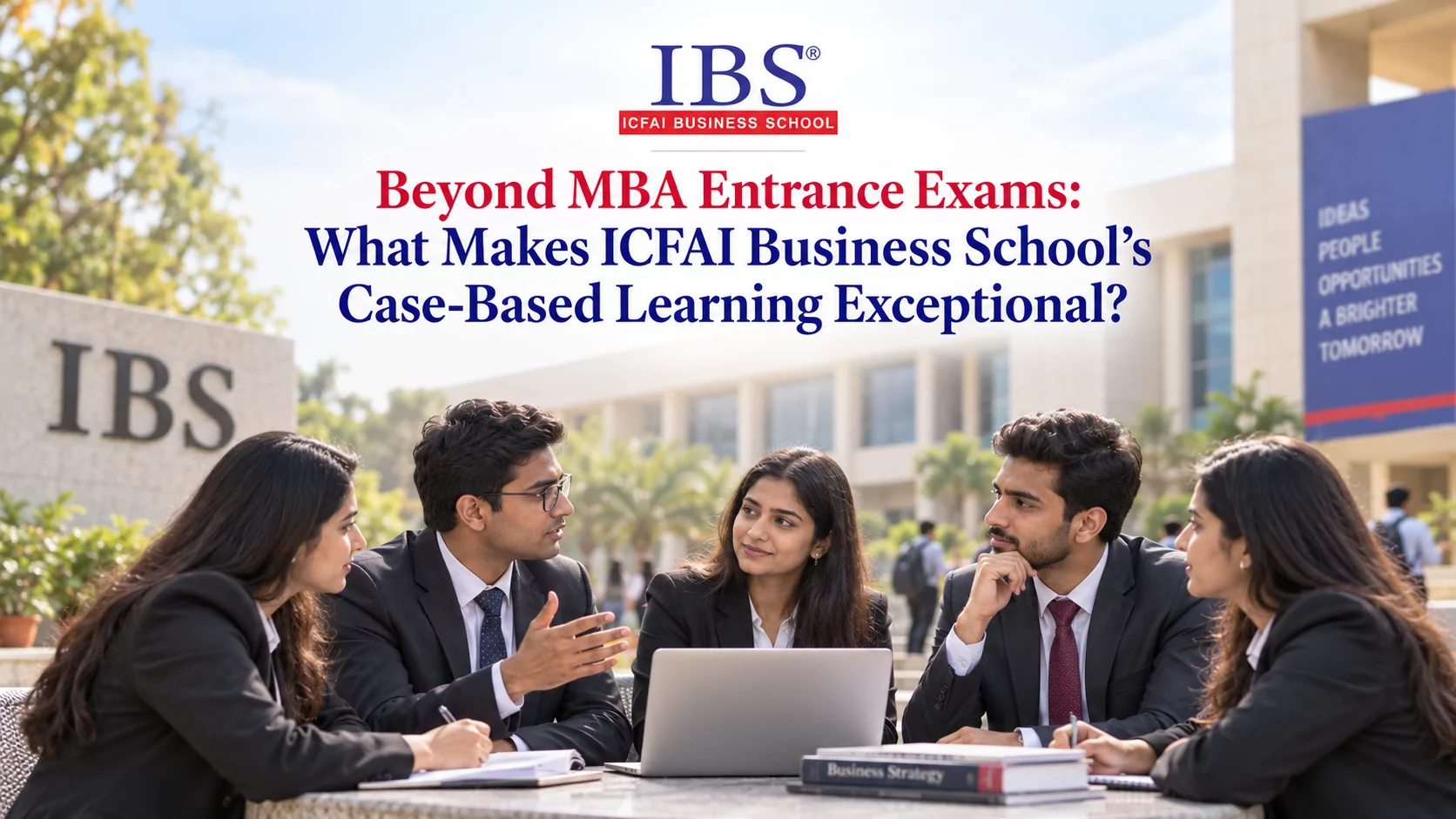
New Delhi, India – September 26, 2024 – In the highly competitive landscape of management education in India, entrance exam percentiles often cast a long shadow, frequently becoming the primary metric for evaluating premier institutions. However, a business school’s ultimate success and its contribution to the corporate world are more profoundly defined by its efficacy in cultivating future leaders equipped to navigate the complexities of real-world business challenges. ICFAI Business School (IBS) is carving a distinctive niche by moving beyond the conventional emphasis on standardized test preparation. Instead, IBS is anchoring its management curriculum in an immersive, world-class case-based learning methodology, a pedagogical approach that promises to equip its graduates with a robust and practical skill set.
The cornerstone of this innovative academic model is the IBS Case Research Center (IBS CRC). Garnering significant international acclaim, the IBS CRC has been recognized as the third-largest producer of management cases globally. This prestigious ranking places it in esteemed company, alongside renowned institutions such as Harvard Business Publishing and INSEAD. The cases developed by IBS CRC are not merely academic exercises; they are meticulously crafted to possess substantial international teaching impact. These real-world business scenarios form the operational core of the rigorous two-year full-time MBA and PGPM programs offered across all nine IBS campuses. This integrated ecosystem ensures that every student benefits from direct exposure to the same caliber of business challenges and analytical frameworks that are taught at leading global business schools.
The Strategic Imperative of Case-Based Pedagogy in Executive Development
The case-based teaching approach serves as a critical bridge, effectively connecting theoretical management principles with the practical realities of executive decision-making. This methodology immerses students in intricate and often unstructured business scenarios, compelling them to engage in a dynamic process of analysis. They learn to sift through incomplete data, pinpoint critical operational dilemmas, and formulate strategic solutions within defined constraints. This active learning environment starkly contrasts with passive information absorption. Instead, students are actively encouraged to participate in robust classroom debates and collaborative group discussions. Within these forums, they are required to present, articulate, justify, and rigorously defend their proposed analytical frameworks and strategic recommendations against the critical scrutiny of their peers.
This rigorous process is instrumental in cultivating a suite of essential executive capabilities. On a technical level, it sharpens critical thinking skills, enhances quantitative analysis abilities, and refines the capacity for data synthesis and strategic alignment. Simultaneously, it significantly bolsters crucial soft skills. Students develop their active listening skills, hone their persuasive communication techniques, and build resilience in making high-pressure decisions – all qualities that are indispensable for effectively managing the multifaceted challenges encountered in real-world corporate environments.
To gain deeper insights into how this case-based methodology actively constructs practical leadership acumen, prospective students and educators are encouraged to explore video testimonials from various IBS campuses. These videos vividly illustrate how ICFAI strategically integrates real-world business scenarios into its curriculum, thereby sharpening students’ analytical prowess and decision-making capabilities.
[Link to Videos: https://ibsindia.org/StudentTestimonials/CaseStudies.html]
Navigating the Admissions Gateway: IBSAT 2026 and Beyond
For aspiring management professionals seeking admission to a robust business school network, the IBSAT 2026 examination presents a streamlined and promising pathway. The IBSAT (ICFAI Business School Aptitude Test) is the gateway to IBS’s esteemed MBA and PGPM programs, with admissions for the 2027-2029 batch commencing with the 2026 examination.
The IBSAT is designed to assess a candidate’s aptitude for management studies, focusing on areas crucial for success in a business curriculum. This includes verbal ability, reading comprehension, logical reasoning, and quantitative techniques. The test aims to identify candidates who possess the analytical and problem-solving skills necessary to thrive in the case-based learning environment that defines IBS.
Key Dates and Application Process for IBSAT 2026:
While specific dates for the IBSAT 2026 examination and application deadlines are typically announced by the institution, the general process involves online registration, appearing for the aptitude test, and subsequent selection rounds. Prospective candidates are advised to monitor the official IBS website and the IBSAT portal for the most up-to-date information regarding application opening and closing dates, exam schedules, and admission criteria.
The application for IBSAT 2026 opens a critical window for individuals aiming to secure a place in one of India’s leading management institutions. The examination is a crucial step in the admission process, and thorough preparation is recommended.
The MBA/PGPM 2027-2029 Admissions Cycle:
The admission cycle for the MBA and PGPM programs for the 2027-2029 batch is initiated through the IBSAT 2026 examination. This intake will see successful candidates join the dynamic academic environment across IBS campuses, benefiting from the distinctive case-based curriculum and the expertise of its faculty.
Supporting Data and Global Recognition
The impact and effectiveness of IBS’s case-based pedagogy are substantiated by its global recognition and the continuous development of its case repository. The IBS Case Research Center’s consistent ranking among the top global producers of management cases underscores the quality and relevance of the learning materials it generates. These cases are not only utilized within IBS but are also adopted by numerous business schools worldwide, attesting to their pedagogical value and their ability to address contemporary business issues.
The sheer volume and diversity of cases produced by IBS CRC provide students with a broad spectrum of business contexts to analyze. This includes cases spanning various industries such as finance, marketing, human resources, operations, and strategy, offering a comprehensive understanding of the interconnectedness of business functions. The continuous influx of new cases ensures that the curriculum remains dynamic and relevant, reflecting the evolving global business landscape.
Implications for Future Business Leaders
The strategic decision by IBS to prioritize case-based learning over a singular focus on entrance exam scores has profound implications for the development of future business leaders. Graduates emerging from IBS are not merely equipped with theoretical knowledge; they possess a demonstrated ability to analyze complex situations, think critically under pressure, and formulate practical, actionable solutions. This hands-on approach cultivates a proactive and adaptable mindset, essential for navigating the unpredictable nature of modern business environments.
Furthermore, the collaborative nature of case discussions fosters essential interpersonal skills, including teamwork, negotiation, and effective communication. Graduates are therefore likely to be not only technically proficient but also adept at working with diverse teams and influencing stakeholders. This holistic development prepares them for leadership roles where strategic vision, operational efficiency, and strong interpersonal skills are paramount.
The emphasis on real-world problems also instills a sense of business acumen and ethical responsibility. By grappling with the complexities and consequences of business decisions within their case studies, students develop a nuanced understanding of the broader societal and ethical implications of their choices. This contributes to the development of responsible business leaders who are committed to sustainable and ethical practices.
Connecting with the IBS Community
For prospective students and their families seeking firsthand insights into the IBS experience, engaging with the existing alumni and current student network is invaluable. These individuals can offer authentic perspectives on the academic rigor, the case-based learning methodology, and the overall campus life. To facilitate this, dedicated online forums and official admission portals often provide opportunities for prospective students to connect with the IBS community.
An example of such a resource is the official PaGaLGuY forum dedicated to IBSAT 2026 admissions. These platforms serve as crucial hubs for information exchange, allowing individuals to ask questions, share experiences, and gain a clearer understanding of what to expect from the IBS MBA/PGPM programs.
[Link to PaGaLGuY Forum: https://www.pagalguy.com/t/official-ibsat-2026-icfai-business-school-ibs-mba-pgp-admissions-2027-29-pagalguy/4211078]
In conclusion, ICFAI Business School’s commitment to a deeply immersive case-based learning approach positions it as a forward-thinking institution. By prioritizing the development of practical, analytical, and leadership skills through real-world business scenarios, IBS is not just preparing students for examinations; it is actively shaping the next generation of influential and effective business leaders for India and the global arena. The IBSAT 2026 offers a gateway to this transformative educational journey, promising a curriculum that truly transcends the traditional metrics of academic success.
