

Main Facts: The Strategic Leap into South America
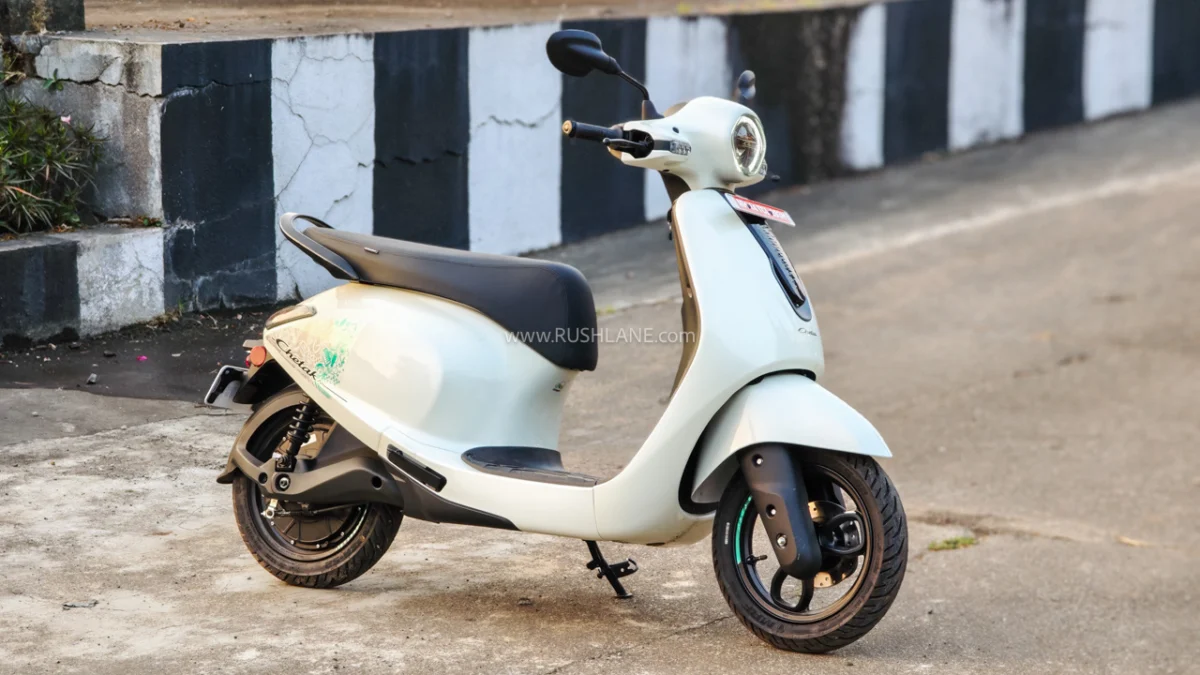
In a move that signals a significant escalation in its global electrification strategy, Bajaj Auto has officially filed a design patent for the Chetak C25 electric scooter with the Brazilian National Institute of Industrial Property (INPI). This development marks the Indian two-wheeler giant’s intent to penetrate one of the most robust motorcycle markets in Latin America, positioning the Chetak C25 as a premium yet accessible solution for urban mobility.
The Chetak C25, which has already established a firm foothold in the Indian domestic market, is being tailored to meet the specific regulatory and consumer demands of Brazil. By positioning the vehicle within the "electric moped" classification, Bajaj aims to capitalize on lower barrier-to-entry regulations regarding licensing and insurance. The C25 variant is characterized by its 2.5 kWh battery pack, a 2,200-watt electric motor, and a neo-retro aesthetic that pays homage to the legendary Chetak brand while integrating modern EV technology.
Key highlights of the Brazilian entry include:
- Regulatory Alignment: Technical specifications designed to comply with Brazilian moped laws (under 4,000W output and potentially governed top speeds).
- Competitive Benchmarking: A direct challenge to established players, most notably the Yamaha NEO’s.
- Market Positioning: An emphasis on durability through an all-metal body, a rarity in the increasingly plastic-dominated electric scooter segment.
- Expansion Footprint: Building on Bajaj’s existing export presence in Sri Lanka, the Philippines, and Nepal.
Chronology: From Indian Icon to Global Contender
The journey of the Bajaj Chetak from a localized cultural icon to a global EV aspirant is a study in strategic brand evolution.
1. The Revival (2019-2020)
After a decade-long hiatus of the Chetak brand, Bajaj Auto shocked the industry by reviving the nameplate not as a budget internal combustion engine (ICE) scooter, but as a premium electric vehicle. This marked the beginning of "Bajaj 2.0," focusing on sustainable technology.

2. Domestic Consolidation and Iteration (2021-2023)
Bajaj spent the initial years refining the Chetak’s powertrain and expanding its service network across India. The company introduced various trims, including the "Premium" and "Urbane" variants. The C25 emerged as a strategic "sweet spot" model—balancing range, performance, and cost-efficiency.
3. The Brazilian Foundation (2022-2024)
Before introducing EVs, Bajaj established a direct presence in Brazil (Bajaj do Brasil), moving away from third-party distributors. They inaugurated an assembly plant in Manaus, Amazonas, focusing initially on the Dominar series of motorcycles. This infrastructure was a prerequisite for the eventual introduction of their electric portfolio.
4. The Patent Filing (Late 2024 – Early 2025)
The recent filing with the INPI confirms that the research and development phase for "tropicalizing" the Chetak for Brazilian roads is nearing completion. This filing is the final administrative hurdle before local testing and official launch announcements.
Supporting Data: Technical Specifications and Performance Metrics
To understand the Chetak C25’s potential impact in Brazil, one must examine the data that differentiates it from its peers.
Powertrain and Efficiency
The Chetak C25 is powered by a 2.5 kWh Lithium-ion battery pack. In its Indian configuration, it offers a certified range of approximately 113 km on a single charge. The motor generates a peak power of 2,200 watts.

In Brazil, the classification of an "electric moped" requires the motor output to remain below 4,000 watts. The Chetak C25 fits comfortably within this bracket. However, Brazilian law also mandates that mopeds have a top speed of 50 km/h or less. While the Indian version reaches 60 km/h, industry experts suggest a simple firmware update (Electronic Control Unit mapping) will be used to cap the speed for the Brazilian market, ensuring it meets moped criteria.
Charging and Utility
- 0-80% Charge: Achievable in 2 hours and 25 minutes, making it one of the faster-charging units in the entry-level segment.
- Storage: A 25-litre under-seat compartment provides ample space for a half-face helmet or groceries, a critical factor for "last-mile" delivery and daily commuting.
- Construction: Unlike the Yamaha NEO’s, which utilizes extensive plastic fairings, the Chetak features a high-tensile steel body, providing superior longevity in harsh urban environments.
The Competitive Gap: Chetak C25 vs. Yamaha NEO’s
The primary rival in the Brazilian market, the Yamaha NEO’s, presents a different technological philosophy:
- Power: Yamaha uses a 2.4 kW hub motor (slightly higher than Chetak’s 2.2 kW).
- Range: Yamaha offers 39 km (single battery) or 71 km (dual battery). The Chetak’s 113 km range offers a significant 59% advantage over Yamaha’s dual-battery setup.
- Pricing: The Yamaha NEO’s is priced at approximately BRL 25,590 (approx. USD 4,600). In contrast, the Chetak C25 is sold in India for roughly BRL 6,300 (before taxes and import duties). Even with Brazilian taxes, Bajaj is expected to undercut Yamaha significantly, potentially offering the Chetak in the BRL 15,000 to 18,000 range.
Official Responses and Corporate Strategy
While Bajaj Auto has not yet released a definitive launch date for the Brazilian market, the company’s leadership has been vocal about its international ambitions. During recent investor calls, Bajaj executives emphasized that the company views Brazil not just as a market, but as a strategic hub for South American operations.
"Our expansion into Brazil is a long-term commitment," a company spokesperson noted during the inauguration of the Manaus plant. "We are bringing our best-in-class technology to the Brazilian rider, and the Chetak represents the pinnacle of our electric mobility vision."
The filing of the design patent is a standard but essential corporate procedure to protect intellectual property before a physical product launch. It signals that the "Chetak" sub-brand is being prepared for a multi-national rollout. Bajaj has also hinted at the "TecPac" software suite being available globally, which includes features like:

- Smartphone Connectivity: For turn-by-turn navigation and call alerts.
- Hill Hold Assist: Preventing the scooter from rolling back on inclines.
- Reverse Mode: Simplifying parking in tight urban spaces.
Implications: A Paradigm Shift in Brazilian Urban Mobility
The entry of the Bajaj Chetak C25 into Brazil carries weight far beyond a simple product launch. It represents several shifts in the regional economic and automotive landscape.
1. Democratization of Electric Mobility
Currently, the Brazilian EV market for two-wheelers is bifurcated between very expensive premium imports and low-quality, unbranded imports. Bajaj, with its reputation for manufacturing "value-engineered" but high-quality machines, could provide the "middle path." By offering a 100+ km range at a price point significantly lower than Japanese competitors, Bajaj could trigger a mass-migration from ICE to EV for delivery professionals and students.
2. Pressure on Legacy Manufacturers
Honda and Yamaha have long dominated the Brazilian motorcycle market. However, their transition to electric has been cautious. Bajaj’s aggressive entry with a proven platform (the Chetak) forces these legacy manufacturers to accelerate their EV timelines or risk losing market share in the emerging "green" segment.
3. Infrastructure and Sustainability Goals
Brazil has been working toward reducing urban carbon emissions. The introduction of reliable, long-range electric scooters like the Chetak C25 aligns with government incentives for clean energy. If Bajaj chooses to leverage its Manaus plant for local assembly of the Chetak, it could also benefit from "Processo Produtivo Básico" (PPB) tax incentives, further lowering the cost for the end consumer.
4. The "Moped" Loophole
By qualifying as a moped, the Chetak C25 becomes accessible to a wider demographic. In many Brazilian jurisdictions, the requirements for a moped license (ACC – Autorização para Conduzir Ciclomotores) are less stringent than a full Category A motorcycle license. This makes the Chetak an ideal "first vehicle" for the younger generation.

Conclusion
The Bajaj Chetak C25 is more than just a scooter; it is a strategic tool intended to carve out a dominant position for Bajaj Auto in the Western Hemisphere. With its robust all-metal construction, superior range compared to the Yamaha NEO’s, and a design that balances nostalgia with futurism, the Chetak is well-positioned to become a common sight on the streets of São Paulo and Rio de Janeiro. As the patent moves toward approval, the Brazilian two-wheeler market stands on the precipice of an electric revolution led by an Indian powerhouse.
