

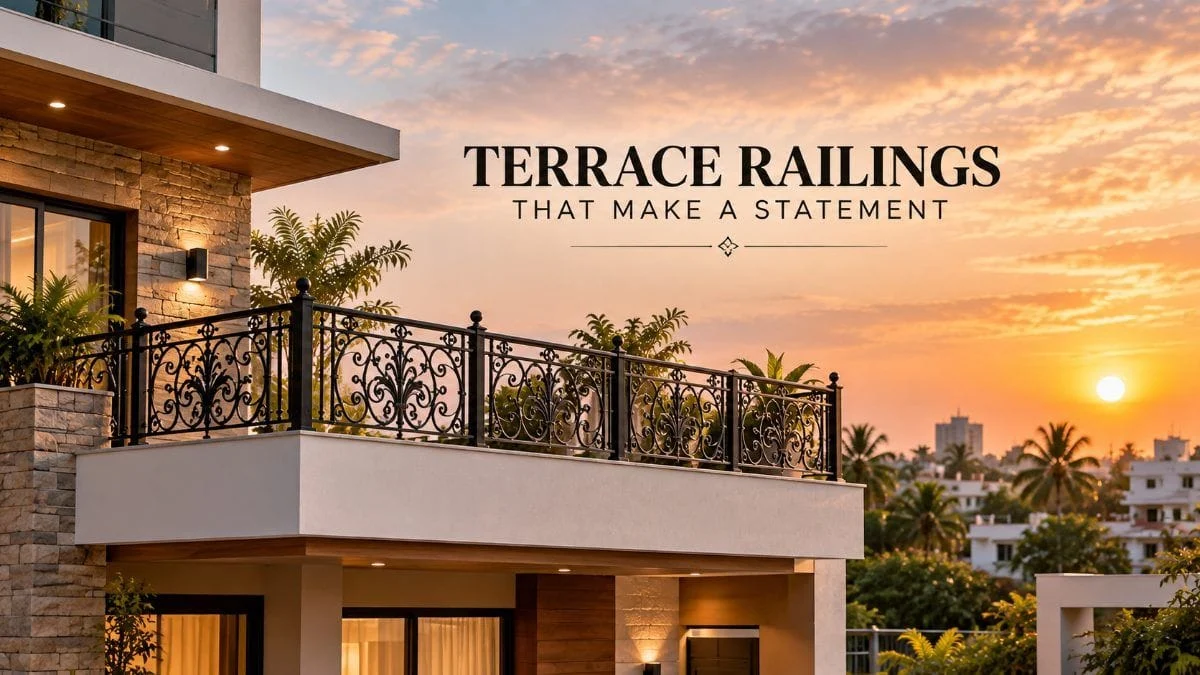
In the evolving landscape of Indian residential architecture, the terrace has transitioned from a mere utility area for drying laundry into a sophisticated extension of the living space. Whether it is a sprawling bungalow in a tier-2 city or a compact independent house in a bustling metropolis, the terrace serves as a multi-functional sanctuary for morning rituals, evening social gatherings, and urban gardening. Central to the transformation of this space is the terrace railing—an element that serves the dual purpose of ensuring structural safety and defining the home’s exterior aesthetic.
As homeowners increasingly prioritize "curb appeal," the selection of a railing design has become a critical architectural decision. From the rustic charm of terracotta to the sleek transparency of stainless steel cables, the choices available today reflect a blend of global trends and localized functional requirements.
The Evolution of the Indian Terrace: From Function to Fashion
Historically, Indian terraces were enclosed by simple brick parapets or rudimentary iron grills. However, the rise of the "outdoor living" concept has catalyzed a shift in design philosophy. Modern Indian homeowners now view the terrace as a "fifth room," demanding designs that offer a seamless transition between the interior luxury and the exterior environment.
The chronology of this shift can be traced back to the early 2000s, where the introduction of high-grade stainless steel and toughened glass began to challenge the dominance of heavy cast-iron designs. Today, the market is characterized by a "fusion" approach, where traditional materials like stone and brick are integrated with modern fabrication techniques like CNC (Computer Numerical Control) laser cutting and powder coating.
Core Design Paradigms for Indian Homes
Selecting the right railing requires a balance of four pillars: Durability, Safety, Maintenance, and Style. Below is an analytical look at ten prominent design directions currently shaping Indian residential exteriors.
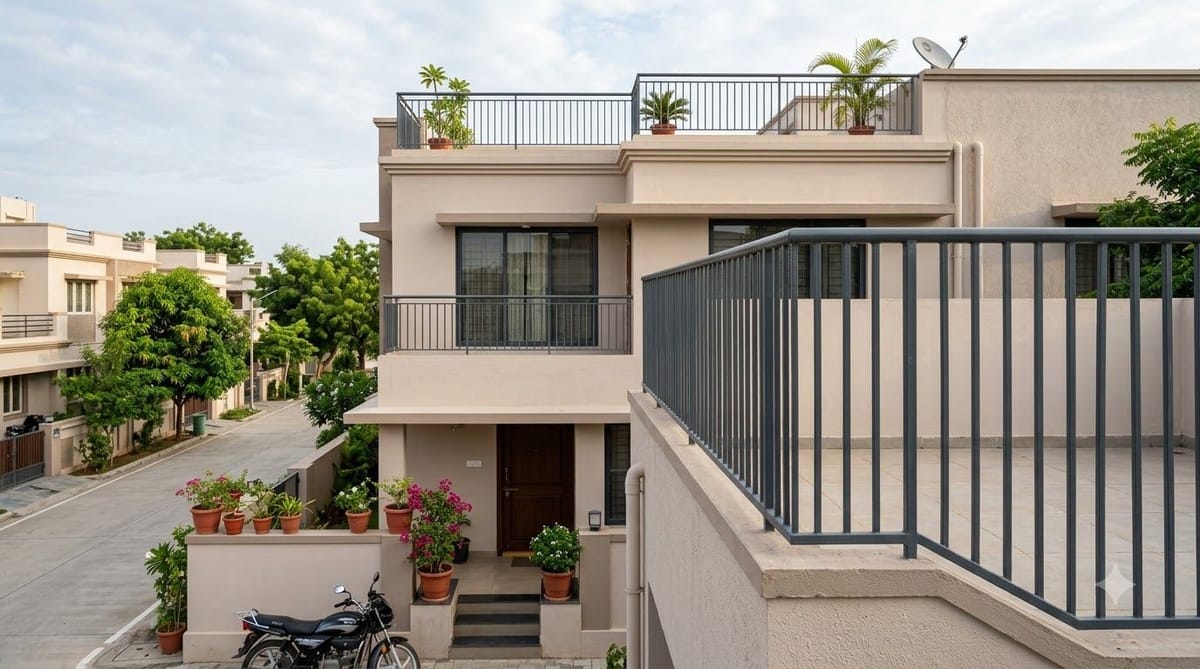
1. Minimalist Vertical Iron Rod Railings
The vertical iron rod design remains a staple due to its cost-effectiveness and versatility. By utilizing mild steel (MS) rods placed at regular intervals, architects can create a sense of height and rhythm.
- Architectural Impact: Ideal for modern minimalist homes.
- Pro Tip: To prevent the "prison bar" look, designers recommend using varying thicknesses for the vertical members or a flat-top handrail in a contrasting color like charcoal grey or matte black.
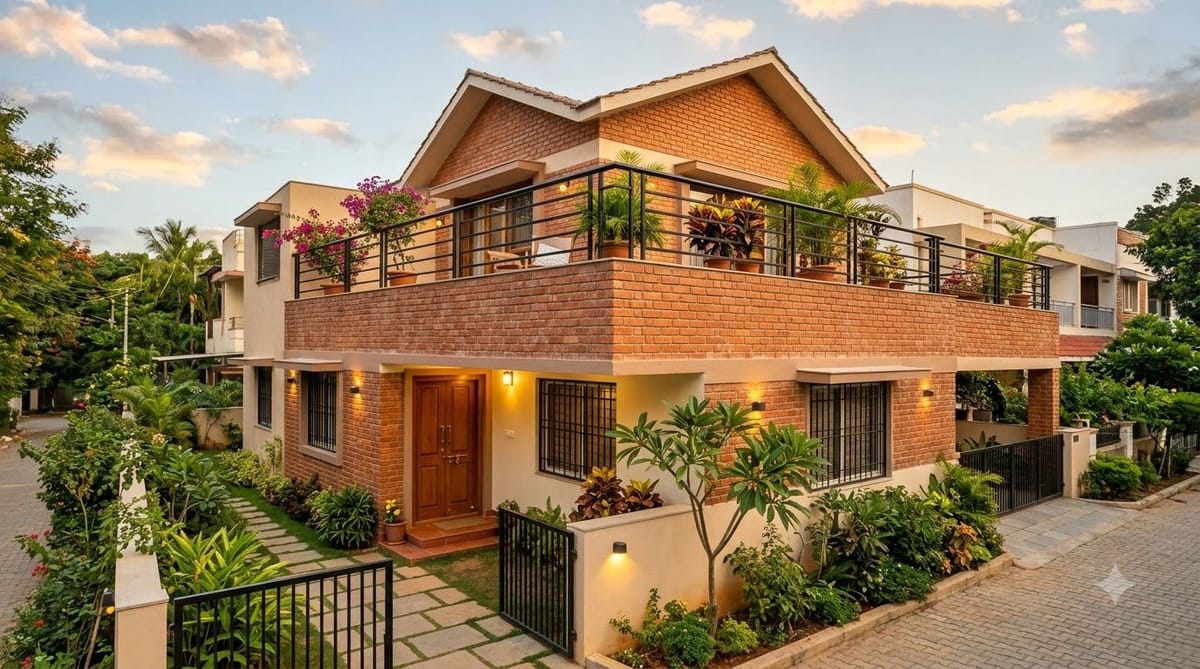
2. Industrial Chic: Exposed Brick and Metal Fusion
This design caters to the growing "Industrial" and "Farmhouse" aesthetic. By combining a low brick parapet with a metal railing on top, the structure gains a grounded, earthy feel.
- Material Insight: Using wire-cut bricks or terracotta cladding tiles can provide the look of exposed masonry without the structural weight of traditional brickwork.
3. Neo-Classical Arched Railings
For homes featuring arched windows or colonial-inspired facades, arched railings provide visual continuity. These designs replace the harshness of straight lines with soft curves.
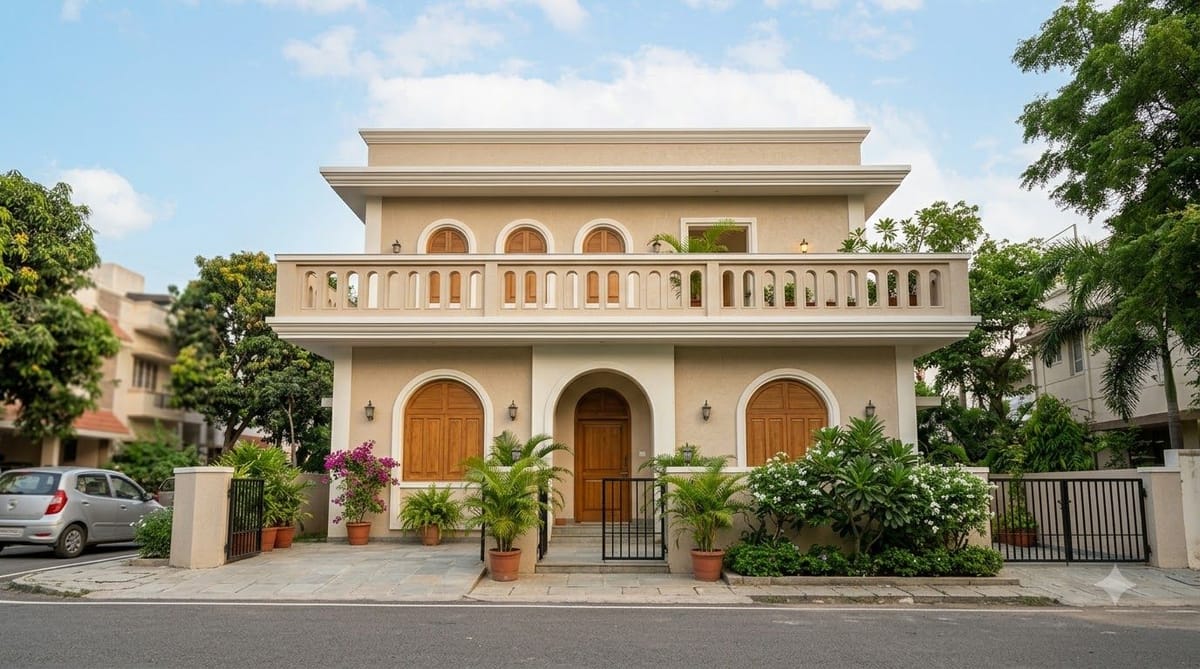
- Application: Best suited for independent villas and heritage-style bungalows. It creates a "soft" boundary that feels inviting rather than restrictive.
4. Traditional RCC Parapets with Decorative Jaali
The Jaali (lattice) is an iconic element of Indian architecture, providing privacy while allowing for cross-ventilation. Modern iterations use GFRC (Glass Fiber Reinforced Concrete) or CNC-cut metal sheets to replicate these intricate patterns.
- Functional Benefit: It breaks the force of high-altitude winds and provides a "peek-a-boo" view, which is essential for homes in densely populated urban clusters.
5. Solid Half-Wall Railings for Maximum Privacy
In neighborhoods where houses are built in close proximity, privacy is a premium. A solid half-wall or a high parapet finished with exterior-grade textures (such as grit finish or stone dust) ensures that the terrace remains a private retreat.
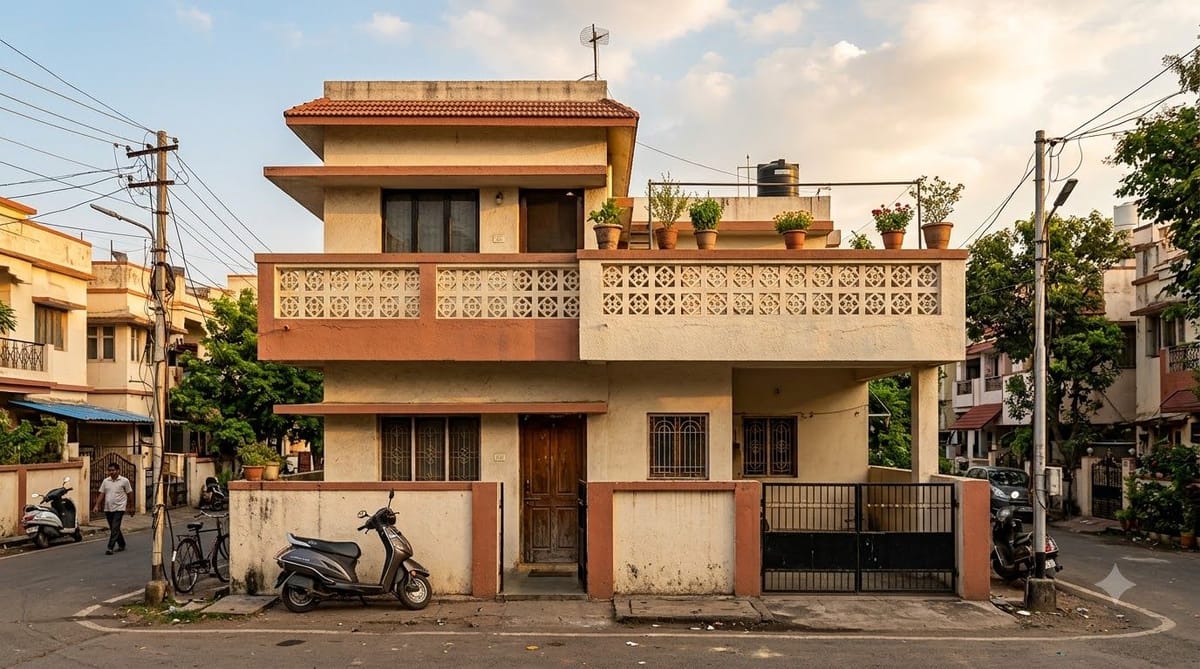
- Design Tip: To avoid a "boxy" appearance, the wall can be punctuated with small geometric cut-outs or integrated with recessed LED lighting for a dramatic nighttime effect.
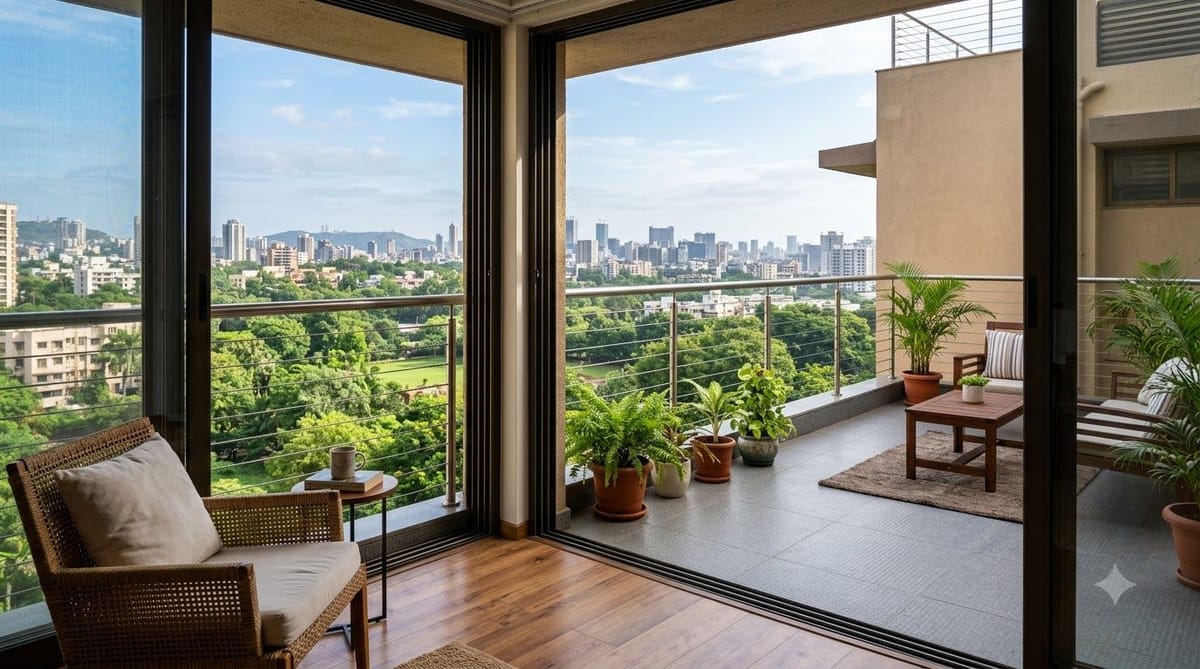
6. Contemporary Stainless Steel Cable Railings
Borrowing from nautical and high-tech architecture, cable railings use thin, high-tension stainless steel wires. This is the ultimate "invisible" railing, perfect for homes with a view of a garden, a lake, or a city skyline.
- Maintenance Note: Grade 316 stainless steel is recommended for coastal cities like Mumbai or Chennai to prevent salt-air corrosion.
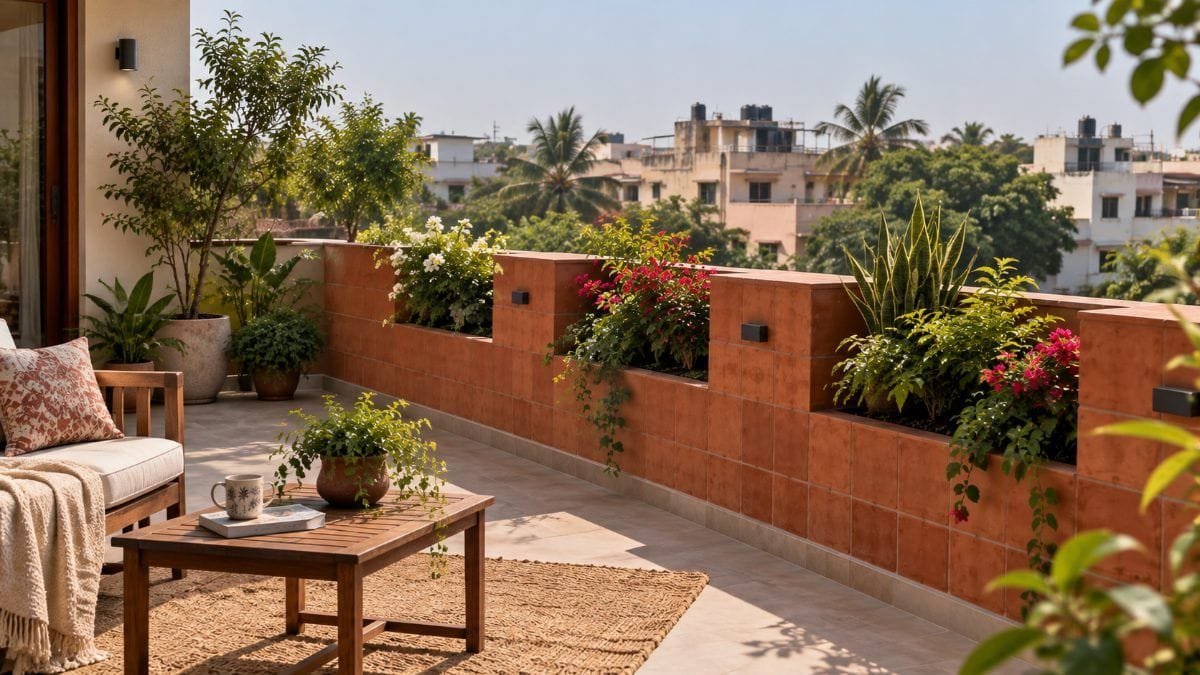
7. Vernacular Terracotta and Planter-Integrated Designs
Aligning with the "biophilic design" trend, terracotta railings offer a warm, organic palette. Many modern designs now incorporate built-in concrete or terracotta planters directly into the railing structure.
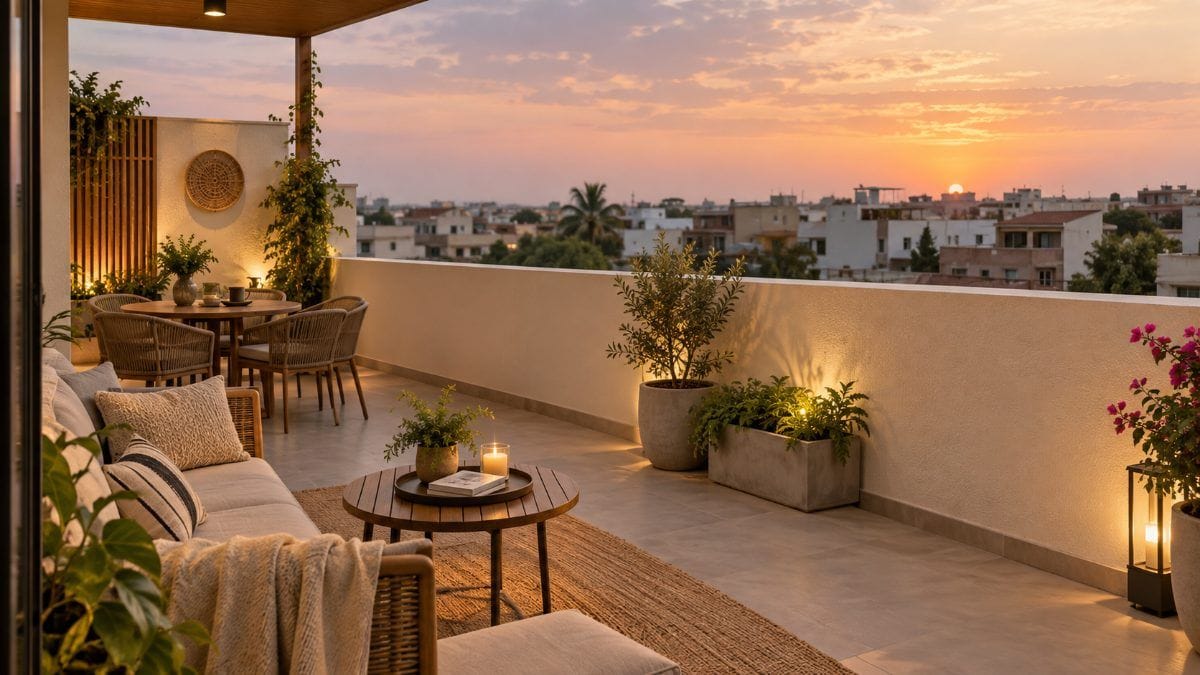
- Sustainability Factor: Terracotta is a natural insulator and matches perfectly with the "Vocal for Local" movement, utilizing indigenous craftsmanship.
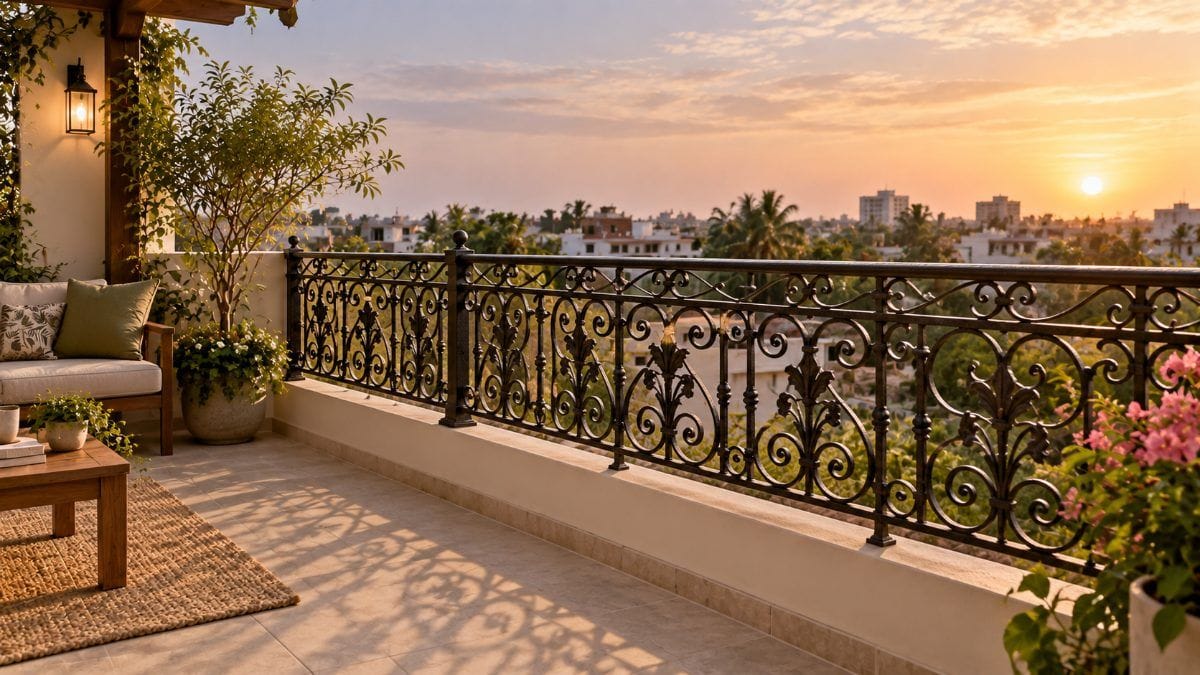
8. Artisanal Wrought Iron Railings
Wrought iron allows for high levels of customization, featuring floral motifs, scrolls, and geometric patterns. While more expensive than standard MS, it adds a "premium" feel to the property.
- Durability: Requires periodic repainting or high-quality powder coating to withstand the Indian monsoon.
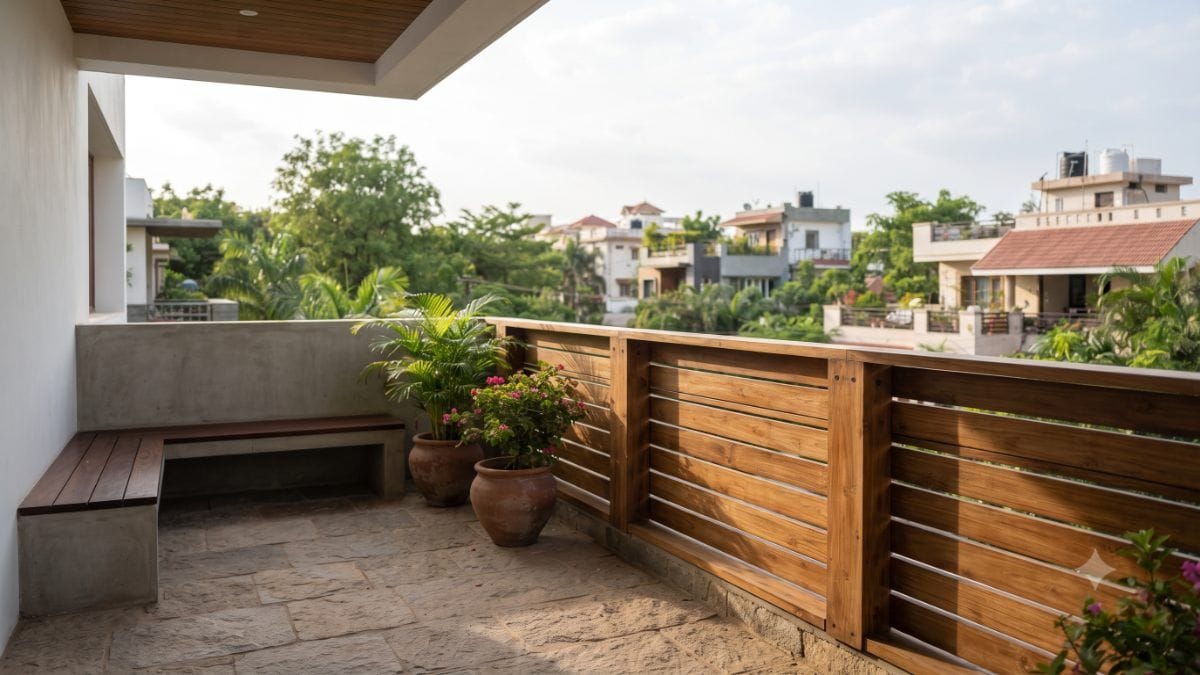
9. Modern Wooden-Slat Railings
Wooden slats (or WPC – Wood Polymer Composite) offer a sophisticated, high-end look. WPC is particularly favored in India because it mimics the grain of teak or mahogany but is resistant to termites and rot.
- Privacy Control: The spacing between the slats can be adjusted—narrower for privacy, wider for a sense of openness.
10. Stone-Clad Parapet Designs
Utilizing natural stones like slate, granite, or sandstone for cladding a solid parapet adds a layer of luxury and thermal mass.
- Visual Texture: The rough texture of the stone contrasts beautifully with the smooth finish of the house’s exterior paint, creating a multi-dimensional facade.
Supporting Data: Material Analysis and Safety Standards
When choosing a railing, homeowners must consider the technical specifications to ensure long-term viability.
| Material | Durability | Maintenance | Cost (Relative) | Best For |
|---|---|---|---|---|
| Mild Steel (MS) | Moderate | High (Rust-prone) | Low | Budget-friendly homes |
| Stainless Steel (SS) | Very High | Low | Medium-High | Coastal & Modern homes |
| WPC (Wood Composite) | High | Low | Medium | Contemporary aesthetics |
| Toughened Glass | Moderate | High (Cleaning) | High | Unobstructed views |
| Aluminum | High | Very Low | Medium | Light-weight structures |
Safety and Compliance
According to the National Building Code (NBC) of India, the minimum height for a balcony or terrace railing should be 1050 mm (approx. 3.5 feet). For homes with children, the "sphere rule" is often applied by architects—ensuring that a sphere of 100 mm diameter cannot pass through any gap in the railing to prevent accidental falls.
Implications for Property Valuation and Lifestyle
The choice of terrace railing is no longer a peripheral concern; it has significant implications for property value and the resident’s quality of life.
- Curb Appeal and Resale Value: A well-designed railing acts as the "jewelry" of the house. Real estate experts note that houses with cohesive exterior designs, including premium railings, can command a 5-8% higher premium in the secondary market.
- Psychological Well-being: The "openness" provided by designs like cable or glass railings has been linked to improved mood and a sense of freedom, which is crucial in cramped urban environments.
- Climate Adaptation: In India’s heat, solid walls can trap hot air on the terrace. Conversely, perforated designs like Jaalis or slats encourage airflow, naturally cooling the outdoor space.
Expert Perspective and Final Thoughts
Architects suggest that the "best" design is one that respects the home’s existing language. A common mistake is installing a high-tech glass railing on a traditional Kerala-style home or a heavy wrought-iron grill on a sleek, minimalist villa.
"The railing is the boundary between the private world of the home and the public world of the street," says an urban design consultant. "It should provide security without feeling like a cage, and beauty without being a maintenance burden."
As Indian homeowners continue to invest in their properties, the trend is moving toward Hybrid Designs—combining the strength of metal with the warmth of wood or the privacy of stone. Ultimately, a successful terrace railing design should be a silent guardian that enhances the joy of standing under the open sky.
Disclaimer: This article provides general information based on current architectural trends and industry standards. For specific structural advice, readers are encouraged to consult with a certified architect or civil engineer to ensure compliance with local municipal bylaws and safety codes.
