

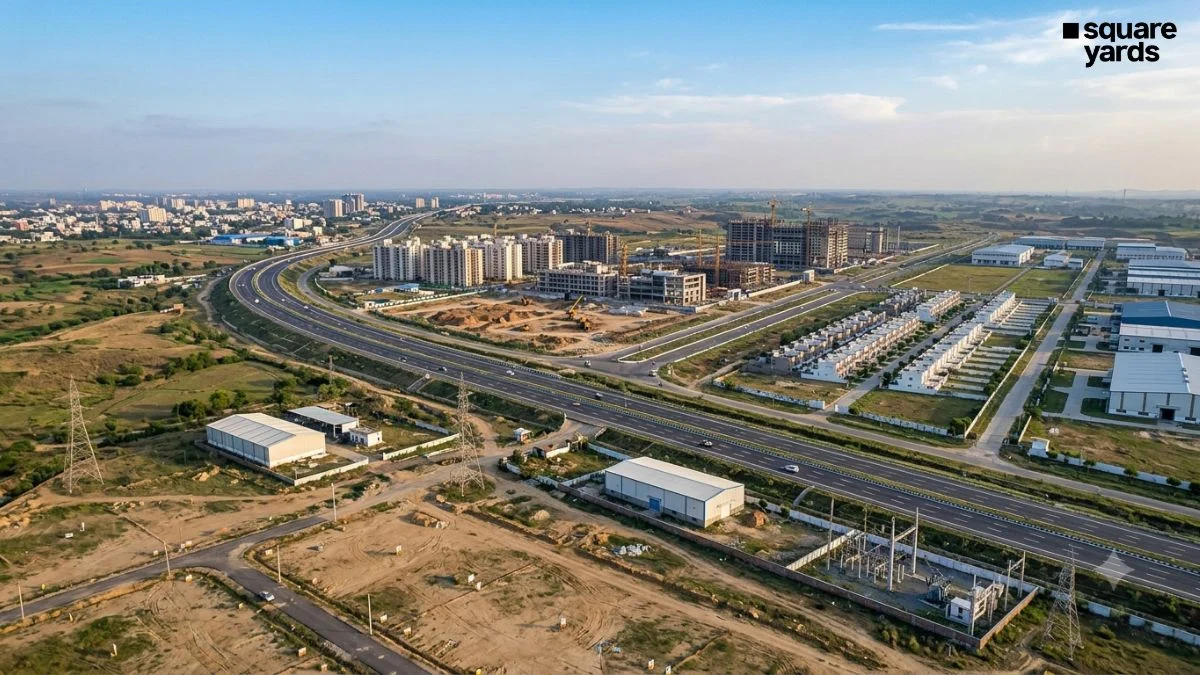
LUCKNOW – In a move that signals a paradigm shift in regional connectivity and economic decentralization, the Uttar Pradesh government has greenlit two massive expressway projects totaling nearly Rs 18,730 crore. This investment is the cornerstone of a broader Rs 24,000 crore infrastructure stimulus aimed at transforming the state’s western and southern hinterlands into high-growth economic corridors.
With the approval of the Rs 10,761 crore Meerut-Haridwar extension of the Ganga Expressway and the Rs 7,968.30 crore Jhansi Link Expressway, Uttar Pradesh is aggressively pursuing its vision of becoming a $1 trillion economy. These projects, fully funded by the state, are designed to unlock the latent value of "frontier" real estate markets, moving the needle of development away from the saturated hubs of Noida and Lucknow toward emerging industrial and logistics centers.
I. Main Facts: The Blueprint for a Connected Uttar Pradesh
The recent cabinet approvals focus on two strategic arteries that will serve as the lifelines for the state’s next phase of urban and industrial growth. Both projects are being spearheaded by the Uttar Pradesh Expressways Industrial Development Authority (UPEIDA).
1. The Meerut-Haridwar Extension (Ganga Expressway)
- Investment: Rs 10,761 crore.
- Scope: This project extends the ambitious Ganga Expressway, creating a seamless link between the National Capital Region (NCR) and the spiritual and economic hub of Haridwar in Uttarakhand.
- Districts Impacted: Meerut, Muzaffarnagar, Bijnor, and Saharanpur.
- Specifications: A six-lane Greenfield corridor with provisions for expansion to eight lanes.
2. The Jhansi Link Expressway
- Investment: Rs 7,968.30 crore.
- Distance: 106.3 km.
- Scope: This link will connect the existing Bundelkhand Expressway (starting near Phoolpura in Jalaun) with National Highway 44 (NH-44) at Ambabai in Jhansi.
- Strategic Goal: To integrate the Bundelkhand region with the national highway grid and support the burgeoning Defense Industrial Corridor.
II. Chronology: From Connectivity to Industrialization
The evolution of Uttar Pradesh’s infrastructure has followed a calculated trajectory over the last decade. Understanding the timeline of these new approvals requires looking at the state’s transition from building "simple roads" to "economic engines."
- 2012–2017: The focus was on the Agra-Lucknow Expressway, which established the template for high-speed connectivity in the state.
- 2018–2021: The conceptualization and rapid construction of the Purvanchal and Bundelkhand Expressways began, shifting focus to the underdeveloped eastern and southern regions.
- 2022–2024: The commencement of the Ganga Expressway—one of India’s longest—marked a turning point. The government began integrating "Industrial Manufacturing and Logistics Clusters" (IMLCs) into the expressway designs.
- September 2024 (The Current Milestone): The approval of the Meerut-Haridwar and Jhansi links represents the "interconnectivity phase." Rather than building isolated highways, the state is now creating a "nexus" where various expressways feed into one another, creating a web of accessibility that covers nearly every corner of the state.
III. Supporting Data: The Infrastructure-Real Estate Correlation
Historical data from established markets in Uttar Pradesh provides a compelling roadmap for what investors can expect in these new corridors. According to recent market intelligence from Square Yards, infrastructure projects have a direct and measurable impact on property valuations.
The Lucknow Precedent
As the state capital expanded its infrastructure, real estate prices in peripheral areas surged:
- North Lucknow: Currently valued at approximately Rs 6,950 per sq. ft., representing a 14.73% year-on-year (YoY) increase.
- West Lucknow: Currently at Rs 6,850 per sq. ft., showing a 14.98% YoY rise.
- Apartment Prices: The wider Lucknow market has seen a consistent 6.42% increase, driven by the accessibility provided by the Outer Ring Road and the Lucknow-Kanpur Expressway.
The Yamuna Expressway Benchmark
The Yamuna Expressway serves as the most accurate "mirror" for the potential of the Meerut-Haridwar and Jhansi links.
- Micromarket Growth: The Yamuna Expressway belt is currently averaging Rs 9,700 per sq. ft., up 5.13%.
- Specific Node Performance:
- Sector 25: Rs 9,000 per sq. ft. (8.9% rise).
- Sector 22A: Rs 9,850 per sq. ft.
- Observation: These gains are not merely speculative; they are anchored in the development of the Noida International Airport and the industrial clusters flanking the highway.
Projected Impact for New Corridors
Analysts suggest that the Meerut-Haridwar link could see a 10-12% appreciation in land values in the Bijnor and Muzaffarnagar belts within the first 24 months of construction, as logistics firms begin land acquisition for warehousing.
IV. Official Responses: The Vision of UPEIDA
The Uttar Pradesh Expressways Industrial Development Authority (UPEIDA) has been vocal about the multifaceted objectives of these projects. Officials emphasize that these are not merely transport projects but "multi-modal economic corridors."
Industrialization and Employment:
In official statements, UPEIDA has identified the Integrated Manufacturing and Logistics Cluster (IMLC) program as the primary driver for these expressways. The goal is to move beyond transport and create "self-sustaining urban ecosystems." This includes:
- Warehousing & Cold Storage: Vital for the agricultural belts of Western UP.
- Food Processing Units: To add value to the local produce of the Bundelkhand and Ganga regions.
- Satellite Cities: Developing new residential and commercial zones to decongest traditional metros.
The Defense Corridor Strategy:
Regarding the Jhansi Link, official sources highlight its role in the Uttar Pradesh Defense Industrial Corridor. Jhansi is one of the six key nodes (alongside Aligarh, Agra, Kanpur, Lucknow, and Chitrakoot). With over 5,125 hectares earmarked for defense manufacturing, the Jhansi Link Expressway is viewed as the "logistical backbone" required to transport heavy machinery and finished defense hardware to national gateways.
V. Implications: A Structural Shift in the Real Estate Cycle
The approval of these expressways triggers a "Development Cycle" that will redefine the state’s property market over the next decade.
1. Beyond Residential: The Rise of Industrial Real Estate
While traditional real estate focus is often on housing, the bigger opportunity in the Meerut-Haridwar and Jhansi corridors lies in industrial and institutional land. The demand for worker housing, rental accommodation for industrial staff, and commercial retail space to serve these new populations will create a secondary wave of demand.
2. Tourism and Pilgrimage Connectivity
The Meerut-Haridwar extension is a masterstroke for the tourism economy. By cutting travel time from the NCR and Central UP to Haridwar, the state is facilitating a surge in "weekend tourism" and pilgrimage traffic. This will directly benefit the hospitality sector, leading to a rise in demand for hotels, resorts, and vacation homes along the Bijnor-Haridwar stretch.
3. Balanced Regional Development
Historically, Western UP (Noida/Ghaziabad) and Central UP (Lucknow) have hoarded the lion’s share of investment. The Jhansi Link Expressway is a deliberate attempt to correct this imbalance. By connecting the "dry" region of Bundelkhand to the major markets of the north and south via NH-44, the government is incentivizing industries to set up in areas where land is more affordable and labor is plentiful.
4. The "Sultanpur Cluster" Effect
The announcement of the Sultanpur manufacturing and logistics cluster alongside these road projects suggests a "plug-and-play" model for investors. Real estate developers are now looking at "plotted developments" near these clusters, anticipating a transition from agricultural land to industrial and then residential use.
Conclusion: The Horizon for Investors
Uttar Pradesh is no longer just building roads; it is building an interconnected economic engine. The Rs 18,730 crore investment in the Meerut-Haridwar and Jhansi Link Expressways represents a structural shift in how the state functions.
For the real estate sector, the message is clear: growth is moving toward the corridors. As UPEIDA continues to link these expressways with manufacturing hubs, the "peripheral" locations of today—such as Jalaun, Bijnor, and Phoolpura—are set to become the "established" markets of tomorrow. While the immediate impact will be construction-led, the long-term legacy of these approvals will be the creation of a sophisticated, logistics-heavy economy that supports both industrial giants and the next generation of urban dwellers.
The "Trillion Dollar" dream of Uttar Pradesh is being paved, one kilometer at a time, and the real estate market is poised to be its primary beneficiary.
