

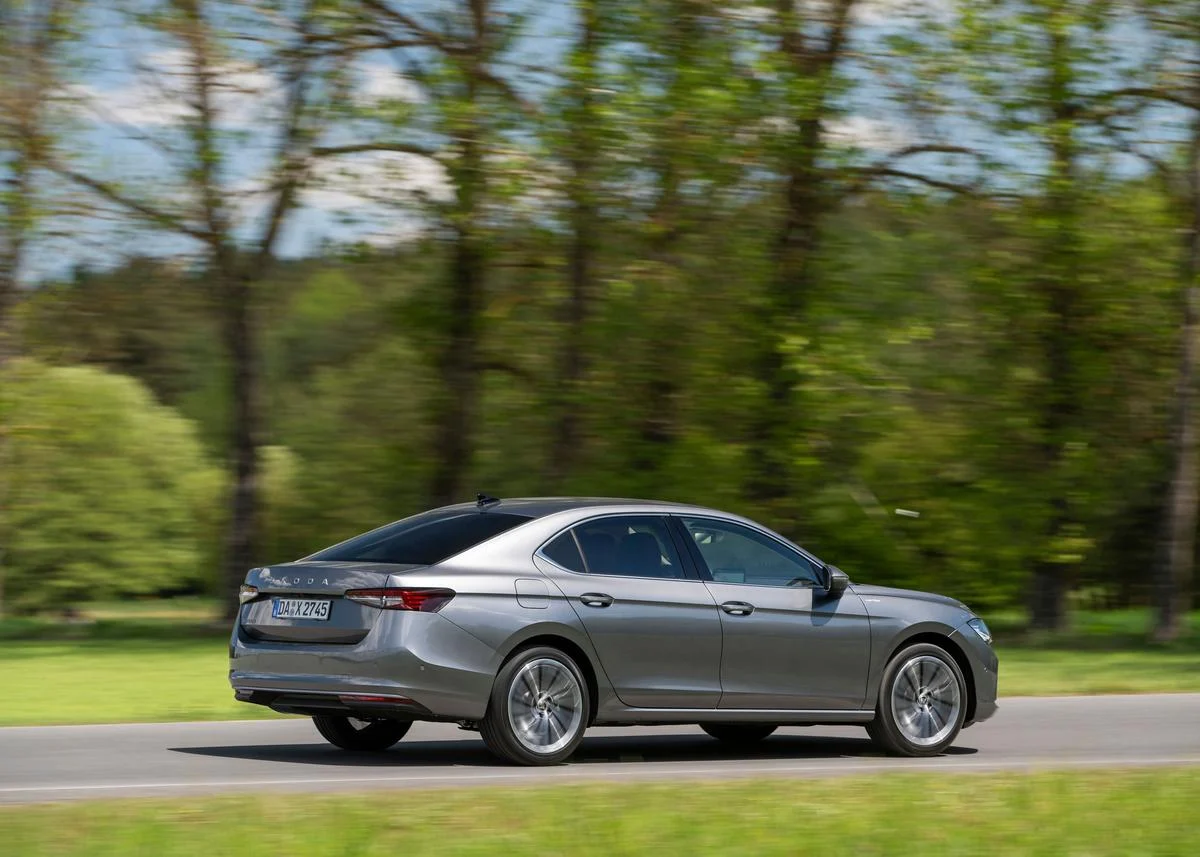
In an era where the automotive landscape is increasingly dominated by high-riding SUVs and the silent hum of electric motors, Skoda is preparing to reintroduce a legend that defies current trends. The fourth-generation Skoda Superb is slated for a grand return to the Indian market, bringing with it a blend of old-school diesel reliability and modern-day luxury sophistication. As the automotive world pivots toward hybridization, Skoda’s decision to reintroduce the Superb with a 2.0-litre TDI diesel engine is a calculated move aimed at a loyalist base that values long-distance cruising, torque-rich performance, and the sheer elegance of a flagship sedan.
Expected to arrive in the first half of 2027, the new Superb isn’t just a car; it is a statement of intent. By leveraging the potential benefits of the India-EU Free Trade Agreement (FTA), Skoda aims to position this notchback as a premium alternative to entry-level luxury cars from German rivals, offering more space and practicality for a significantly more competitive price point.
Main Facts: The Resurgence of the Flagship Notchback
The fourth-generation Skoda Superb represents the pinnacle of the Czech automaker’s internal combustion engine (ICE) craftsmanship. Unlike its predecessors, which often shared more visible DNA with their Volkswagen cousins, the new Superb carves out a distinct identity.
Key Specifications at a Glance:
- Engine: 2.0-litre TDI Diesel (Volkswagen Group stable)
- Performance: ~150hp and 360Nm of peak torque
- Transmission: 7-speed Dual-Clutch Automatic (DSG)
- Drivetrain: Front-Wheel Drive (FWD)
- Technology: Dynamic Chassis Control (DCC) and Progressive Dynamic Steering
- Body Style: Five-door Notchback (Sedan silhouette with a hatchback-style tailgate)
- Trim Level: Top-spec Laurin & Klement (L&K)
- Launch Timeline: H1 2027
- Expected Price: ₹50 lakh to ₹60 lakh (Ex-showroom)
The most striking "main fact" is the return of the diesel engine. Following the implementation of BS6 Phase 2 norms in India, many manufacturers, including the Volkswagen Group, moved toward a petrol-only strategy. However, the Superb’s core demographic—executives and luxury seekers who travel between cities—has remained vocal about their preference for diesel’s efficiency and "legs" on the highway.

Chronology: The Evolution of a Legacy
To understand the significance of the 2027 launch, one must look at the Superb’s journey in India, which has spanned over two decades.
- The Early 2000s (The First Generation): Skoda entered the Indian market with the first-gen Superb, which was essentially a stretched Volkswagen Passat. It immediately gained a reputation for offering "limousine-like" rear legroom at a fraction of the cost of a Mercedes-Benz E-Class.
- The Second Generation (The Twin-Door Era): This model introduced the innovative "Twindoor" boot, which could open as either a sedan or a hatchback. It solidified the Superb’s status as the king of the executive segment, outperforming rivals like the Honda Accord and Toyota Camry.
- The Third Generation (The Sharp Sophisticate): Launched in 2016, the third-gen car moved to the MQB platform. It was sharper, lighter, and more premium. However, the discontinuation of the diesel variant in 2020 and the eventual phase-out of the model in early 2023 left a void in the ₹40–50 lakh sedan segment.
- 2024–2026 (The Interim Gap): Skoda briefly re-introduced a limited run of the 3rd-gen Superb as a CBU (Completely Built Unit) in 2024 to gauge demand, which sold out almost instantly despite a high price tag.
- 2027 (The Fourth Generation): The upcoming model is designed to be the ultimate refinement of the formula, bringing back the diesel engine and introducing advanced suspension tech to tackle Indian road conditions.
Supporting Data: Engineering and Design Philosophy
The fourth-generation Superb is a masterclass in "understated luxury." While it is a large vehicle, Skoda’s design team has utilized contoured surfacing and sharply defined character lines to mask its bulk.
Aesthetics and Aerodynamics
The design is more than just skin deep. The new Superb features a significantly improved drag coefficient, making it one of the most aerodynamic sedans in its class. This helps in reducing wind noise and improving fuel efficiency—a key metric for diesel buyers. The "Crystalline" LED Matrix headlights and the signature Skoda grille have been evolved to look more sculptural, giving the car a "chiselled" appearance that feels more expensive than its badge suggests.
The Interior Experience
Inside, the cabin is a blend of digital innovation and ergonomic tradition. Skoda has opted for a 13-inch central infotainment screen, but crucially, it has retained "Smart Dials"—physical rotary controllers with integrated digital displays. This is a direct response to customer feedback regarding the difficulty of using touch-only interfaces while driving.

- Rear Space: The Superb offers 947mm of rear legroom, a figure that rivals cars two segments above it.
- Boot Capacity: At 645 litres (expandable with fold-down seats), the notchback design provides a level of utility that conventional three-box sedans cannot match.
Performance Dynamics
The inclusion of Dynamic Chassis Control (DCC) for the India-spec model is a significant upgrade. DCC allows the driver to adjust the dampers between "Comfort" and "Sport" modes, essentially giving the car two different personalities. For the potholed roads of Indian metros, the "Comfort" setting provides a "magic carpet" ride, while "Sport" firms up the handling for highway stability.
Official Responses and Strategic Positioning
While Skoda Auto India has been cautious about providing specific pricing due to the volatile nature of import duties, internal sources and industry experts suggest a "wait-and-watch" approach regarding the India-EU Free Trade Agreement.
The CBU Strategy
Skoda officials have indicated that the Superb will likely arrive as a Completely Built Unit (CBU). Under current regulations, CBUs attract high import taxes (up to 100% or more depending on the value). However, if the FTA is ratified by 2027, these duties could be slashed significantly.
Skoda’s Market Positioning:
"The Superb is our halo product," says a source close to the company’s product planning. "It isn’t about chasing high volumes like the Kushaq or Slavia. It’s about reminding the Indian consumer what Skoda stands for: superior build quality, immense practicality, and a driving experience that punches above its weight."

The "Diesel Gamble"
Industry analysts suggest that Skoda is tapping into a "white space" left by other manufacturers. With the Toyota Camry being the only other major player in this segment (and it being a petrol-hybrid), the Superb Diesel will have a monopoly on the long-distance executive cruiser market.
Implications: A Shift in the Luxury Landscape
The return of the Superb has several far-reaching implications for the Indian automotive market:
1. The Survival of the Sedan
The Superb’s success would prove that there is still a robust market for executive sedans. Many buyers are suffering from "SUV fatigue" and are looking for a vehicle that offers better high-speed stability and a more professional image than a typical crossover.
2. The FTA as a Catalyst
If Skoda manages to price the Superb near the ₹50 lakh mark due to favorable trade agreements, it will put immense pressure on the entry-level luxury segment. Buyers who were considering a BMW 2 Series or an Audi A4 might find the Superb’s massive cabin and diesel economy more compelling for daily use.

3. Diesel’s "Last Hurrah"
This move signals that diesel is not dead in the luxury segment. For heavy-duty users, the energy density and torque of a 2.0 TDI engine remain superior to current battery-electric vehicle (BEV) tech for cross-country travel, where charging infrastructure remains a concern.
4. Brand Halo Effect
The presence of the Superb in showrooms will likely boost the brand’s premium perception, which trickles down to its mass-market models like the Slavia and Kushaq. It serves as a "technology demonstrator" for the brand’s capabilities in comfort and safety.
Conclusion: The Right Move at the Right Time?
The fourth-generation Skoda Superb Diesel is a calculated risk. It ignores the industry-wide rush to abandon diesel and the consumer trend of moving toward SUVs. Instead, it doubles down on what Skoda does best: building a cavernous, comfortable, and classy sedan that feels "simply clever."
The success of this flagship will ultimately hinge on two factors: the finalization of the India-EU Free Trade Agreement and Skoda’s ability to price it aggressively. If they can hit the "sweet spot" of ₹50–55 lakh, the Superb won’t just be a return of a nameplate; it will be a return to form for a segment that has been waiting for a hero.

For the executive who spends four hours a day in the back seat or the driving enthusiast who takes monthly 1,000-km road trips, the 2027 Skoda Superb Diesel might just be the only car that makes sense in an increasingly electrified world.
This report was compiled in association with Motorscribes and The Hindu, tracking the latest developments in the Indian automotive sector.
