

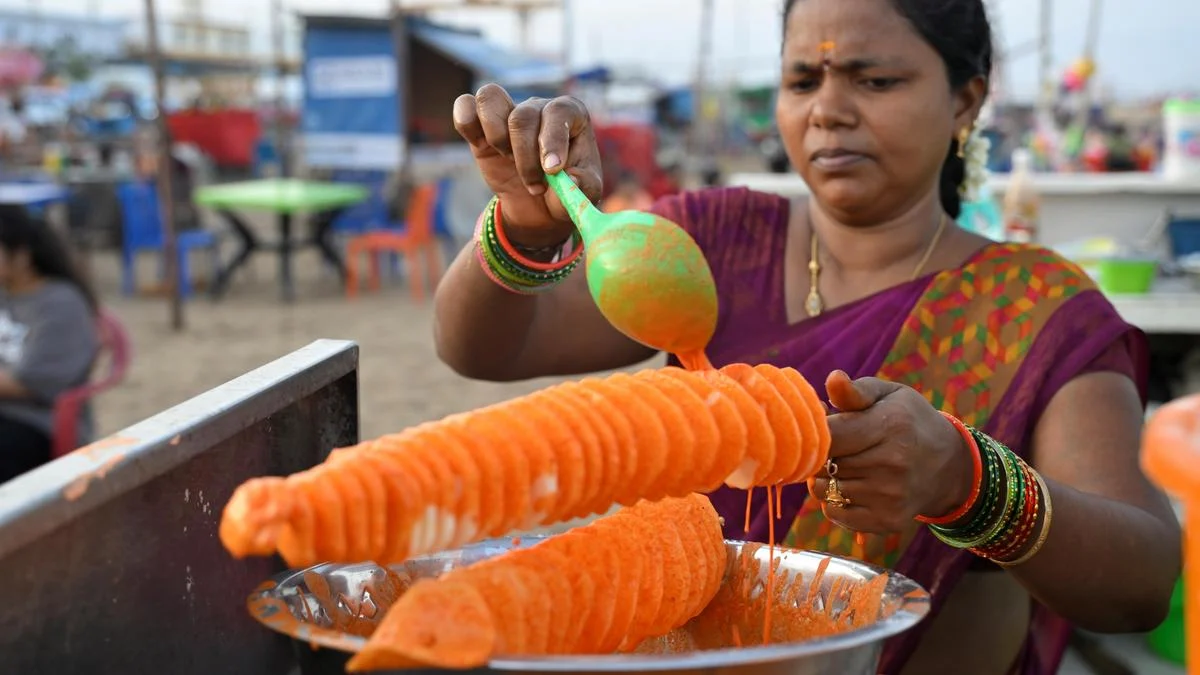
The relationship between a city and its coastline is often defined by commerce or recreation, but in Chennai, that bond is forged in the heat of a tawa and the briny scent of the Bay of Bengal. For the capital of Tamil Nadu, the beach is not merely a geographic boundary; it is the city’s largest communal dining room. From the historic sands of the Marina to the upscale stretches of Besant Nagar and the rugged docks of Kasimedu, the food sold along the shore has evolved into a sophisticated, multi-layered culinary ecosystem that defines the "Madras" identity.
Main Facts: A Diverse Gastronomic Tapestry
Chennai’s beach food is far from a monolithic offering. It is a curated spectrum of flavors that caters to every socioeconomic bracket. At the heart of this experience are the iconic staples that have remained unchanged for decades: maanga pattani sundal (dried peas tossed with raw mango and spices), golden-brown bajjis (fritters), and the ubiquitous "fish fry."
The Staples of the Sand
The sundal is perhaps the most symbolic of these offerings. It is a humble dish of boiled white peas, tempered with mustard seeds, curry leaves, and topped with a generous shaving of tart, raw mango. It is light, nutritious, and perfectly suited for the humid coastal climate. Parallel to this are the bajji stalls, where long green chilies (milagai), sliced potatoes, raw bananas, and onions are dipped into a thick gram flour batter and deep-fried to a crisp.
The Seafood Corridor
As one moves from the central Marina toward the fishing hubs like Pattinapakkam and Kasimedu, the menu shifts from snacks to substantial meals. The "Meen Saapadu" (fish meal) messes of Pattinapakkam have gained legendary status, offering fresh catches of the day—ranging from vanjaram (seer fish) to nethili (anchovies)—served alongside steaming rice and spicy fish gravy. In the northern reaches of the city, the Pazhaverkadu (Pulicat) region contributes its famous prawns and crabs, creating a seafood corridor that spans the city’s entire eastern edge.
Modern Evolutions
While tradition remains the bedrock, the coastline is not immune to change. Besant Nagar (popularly known as "Bessie") has seen a surge in "food truck culture." Here, alongside the traditional corn-on-the-cob vendors, one can find artisanal ice creams, sliders, and fusion snacks, reflecting the changing tastes of Chennai’s younger, more cosmopolitan demographic.
Chronology: From Street Snacks to Organized Culinary Tourism
The evolution of Chennai’s beach food reflects the broader socio-economic history of the city.
The Early Decades (1960s–1980s)
In the mid-20th century, the beach was a place of simple pleasures. Food was secondary to the "airing" (taking in the sea breeze). Vendors were mobile, often carrying baskets of roasted peanuts or boiled pulses on their heads. The maanga sundal was the undisputed king, sold in small paper cones made from recycled newspapers. During this era, many middle-class families, like that of 56-year-old Jayashree, viewed beach food with a degree of skepticism.
"My father would refuse to buy much of the food sold at the beach, worried that it was unhygienic," Jayashree recalls. For her generation, the compromise was toys—plastic windmills or whistles—while the adults sat on the sand.

The Rise of the Fixed Stall (1990s–2010s)
Following the liberalization of the Indian economy, the beaches became more crowded, and the vendors became more permanent. The "Bajji-Stall" became a fixture. These were no longer just mobile hawkers but semi-permanent structures with gas burners and display racks. This period also saw the rise of the Marina’s fish fry stalls.
For vendors like Ganesh, who has been in the business for 30 years, this era was a turning point. Starting as a child helping his mother, he witnessed the transition from a few scattered stalls to the organized rows of seafood vendors that exist today. The introduction of varied masalas and the "secret podi" (spice powder) became a way for stalls to compete in an increasingly crowded market.
The Contemporary Era (2020–Present)
Today, beach food is a primary destination rather than a side-effect of a walk. For younger residents like 23-year-old Rajeeth Nisha and Kirijha, the ritual has flipped. They visit the beach specifically for the fish fry. "We love the fish fry here. Because we come as a group, we enjoy it more," they say, highlighting how the beach has become a social hub centered around shared plates.
Supporting Data: The Anatomy of a Beach-Side Dish
The distinctive taste of Chennai beach food is often attributed to the "secret ingredients" of the vendors, but it is also a result of specific local varieties and techniques.
The Fish Roster
At stalls like the Alli Muthu fish stall at the Marina, the variety of seafood is a testament to the Bay of Bengal’s biodiversity. Common offerings include:
- Vanjaram (Seer Fish): The premium choice, prized for its meaty texture.
- Nethili (Anchovies): Crispy and eaten whole, often served as a spicy snack.
- Paarai (Trevally): A firm fish that holds up well to deep frying.
- Kanava (Squid): A more recent addition to the street-food menu, reflecting changing palates.
The "Secret" Marinade
Vendor Ganesh notes that his marinade involves a complex blend of nearly ten ingredients. While the base is usually ginger-garlic paste and chili powder, the "magic" lies in the podi sprinkled over the fried fish. This blend typically includes:
- Chicken Masala (for umami)
- Garam Masala
- Cumin and Coriander powders
- A specific "Fish Fry Masala" unique to the vendor’s family recipe.
The Chutney Mystery
The bajji stalls are equally famous for their accompanying chutney. Unlike the thick coconut chutneys found in restaurants, beach-side chutney is often thinner, more piquant, and has a bright orange or yellow hue. Despite countless "beach-style chutney" recipes appearing on the internet, locals maintain that the flavor is impossible to replicate at home.
Official Responses: Regulation and Modernization
The popularity of beach food has necessitated intervention from the Greater Chennai Corporation (GCC) and the Food Safety and Standards Authority of India (FSSAI).

Hygiene and Standardization
Historically, the "unhygienic" label mentioned by older residents like Jayashree was a significant hurdle. In recent years, the FSSAI has conducted several workshops for beach vendors, teaching them about food handling, the use of clean oil, and waste management. Several stalls at the Marina have now been certified under the "Clean Street Food Hub" initiative, a move designed to boost tourist confidence.
The Marina Modernization Project
Under the Smart City Mission, the GCC has attempted to regulate the sprawl of vendors. The plan involves providing standardized, aesthetically uniform carts to vendors. While this has met with some resistance from those who fear losing their traditional spots, the goal is to create a more organized "Food Zone" that balances the charm of street food with the requirements of urban planning.
Environmental Concerns
Environmentalists have frequently raised concerns about the impact of food stalls on the beach ecosystem. The use of single-use plastics and the disposal of cooking oil were major issues. In response, the city has implemented stricter "No Plastic" zones, and many vendors have shifted back to traditional serving methods, such as dried leaf plates (donnas) and wooden spoons.
Implications: The Social and Economic Impact
The beach food culture of Chennai carries weight far beyond the calories consumed. It has profound implications for the city’s social fabric and local economy.
Social Leveling
The beach is one of the few truly democratic spaces in Chennai. On the sands of the Marina, a software engineer from an IT park and a daily-wage laborer from North Chennai might sit side-by-side, eating from the same plate of prawns. As 31-year-old Nisha from Kodungaiyur points out, "At home, I make the same things, but we all eat from separate plates. Here, we buy one big fish or one plate of prawns and everyone shares." This "sharing culture" fosters a sense of community that is increasingly rare in the fragmented urban landscape.
Economic Livelihoods
The beach food economy supports thousands of families. From the fishermen who provide the catch to the spice grinders, the vegetable suppliers, and the stall owners themselves, the coastline is a massive informal employer. For families like Ganesh’s, these stalls are generational assets that have provided upward mobility for three decades.
The "Intangible" Ingredient
Ultimately, the enduring appeal of Chennai’s beach food lies in its environment. As the original text suggests, the flavor is derived from more than just the masala. It is the salt in the air, the sticky humidity, the sound of the crashing waves, and the sand between one’s toes.
The beach provides a sense of "easy abandon." It is a place where the rules of formal dining are suspended. People eat with their hands, share with strangers, and linger over a five-rupee cup of tea. In a rapidly modernizing city, the beach food stalls remain a sanctuary of sensory nostalgia, proving that some of the best culinary experiences cannot be found in a five-star kitchen, but are instead cooked on a rusted tawa under the open sky.
