

The Indian automotive landscape is currently witnessing a paradigm shift as the transition to electric mobility accelerates. At the forefront of this transformation is the Kia Syros EV, a vehicle that transcends the traditional boundaries of the sub-four-metre category. By blending high-performance metrics with a masterclass in spatial engineering, Kia has positioned the Syros EV not just as an alternative to internal combustion engine (ICE) vehicles, but as a superior proposition in its own right.
Priced between ₹13.50 lakh and ₹20.00 lakh (ex-showroom), the Syros EV enters a highly competitive segment, directly challenging incumbents and upcoming rivals like the Maruti Suzuki e Vitara. However, as early drive reports suggest, the Syros EV’s strength lies in its "well-judged" nature—a harmonious balance of range, technology, and everyday usability.
Main Facts: A Sub-Four-Metre Giant
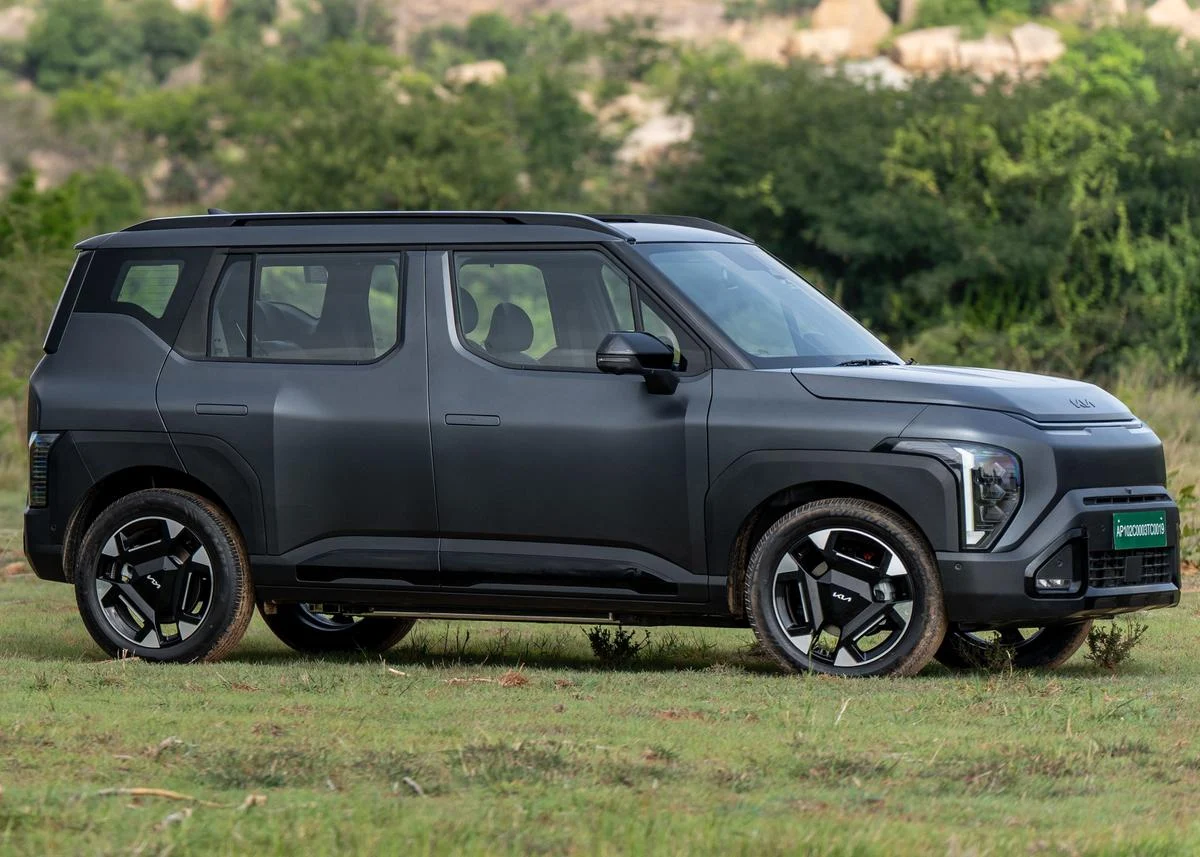
At first glance, the Kia Syros EV adheres to the strict regulatory requirements of the Indian market, measuring exactly 3,995 mm in length. However, dimensions on paper rarely tell the full story. The vehicle features a 2,550 mm wheelbase and a notably tall-boy stance, which gives it a road presence typically associated with SUVs from a segment above.
The design philosophy is one of "subtle differentiation." Unlike some manufacturers who opt for radical, futuristic designs for their electric wings, Kia has maintained a sense of familiarity. The Syros EV retains the upright, boxy silhouette of its ICE counterpart but incorporates EV-specific elements such as a closed-off front grille, aerodynamically optimized wheels, and revised bumpers. This approach ensures the vehicle looks contemporary and sophisticated without feeling alien to traditional SUV buyers.

Key Specifications at a Glance:
- Length: 3,995 mm
- Wheelbase: 2,550 mm
- Battery Options: 42 kWh and 51.4 kWh
- Maximum Range (MIDC): 526 km (51.4 kWh variant)
- Peak Power: 171 PS
- Peak Torque: 255 Nm
- Acceleration (0-100 km/h): 8.1 seconds
- Boot Space: Up to 465 Litres
Chronology: From Concept to Segment Disruptor
The journey of the Syros EV reflects Kia’s strategic evolution in India. Having established a stronghold with the Seltos and Sonet, Kia identified a gap in the market for a compact SUV that didn’t compromise on rear-seat comfort or cargo capacity—two common pain points in the sub-four-metre segment.
The development of the Syros platform was centered on "packaging efficiency." By utilizing the floor-mounted battery architecture inherent to EVs, Kia engineers were able to push the wheels to the corners and elevate the roofline. The result is a cabin that defies its exterior footprint. The launch of the Syros EV follows the global success of the EV6 and EV9, bringing the brand’s advanced electrification technology down to a more accessible price point for the Indian masses.
Supporting Data: Performance and Engineering Depth
The Syros EV is offered with two distinct battery configurations to cater to different usage patterns. The entry-level 42 kWh unit offers a respectable MIDC-rated range of 443 km, making it an ideal choice for urban commuters. However, the headline-grabber is the 51.4 kWh extended-range version.
Powertrain Dynamics
The 171 PS electric motor is a significant inclusion. In a segment where power figures often hover around the 120-140 PS mark, the Syros EV’s output provides a decisive edge. The 255 Nm of torque is available instantaneously, a characteristic of permanent magnet synchronous motors. This allows the Syros EV to sprint from 0 to 100 km/h in just 8.1 seconds.

Beyond outright speed, the "drivability" factor is enhanced by several technical features:
- Regenerative Braking: Drivers can toggle through multiple levels of regeneration using steering-mounted paddles.
- i-Pedal Mode: This allows for single-pedal driving, where the car decelerates significantly upon lifting the accelerator, feeding energy back into the battery and reducing brake wear in stop-and-go traffic.
- Thermal Management: The battery system includes conditioning features to ensure optimal performance and charging speeds even in India’s extreme temperature fluctuations.
Charging Infrastructure Compatibility
Kia has addressed the "range anxiety" hurdle by equipping the Syros EV with high-speed charging capabilities. Using a 100 kW DC fast charger, the 51.4 kWh battery can be replenished from 10% to 80% in approximately 39 minutes. For home or office use, the car supports 11 kW AC charging, ensuring a full charge can be achieved overnight.
Interior Versatility: A Masterclass in Space
The most compelling argument for the Syros EV lies within its doors. The cabin is designed with a "lounge" concept, prioritizing occupant flexibility. The standout feature is the sliding and reclining rear bench. This allows owners to prioritize either rear-seat legroom or luggage capacity depending on the journey.
With the seats adjusted for cargo, the Syros EV offers a cavernous 465-litre boot. This is a class-leading figure that challenges even mid-sized SUVs. The flat floor, a benefit of the EV architecture, ensures that three adults can sit in the rear with relative ease, avoiding the cramped middle-seat experience common in this segment.

Technology and Comfort
The dashboard is dominated by a dual 12.3-inch screen setup—one for the digital instrument cluster and one for the infotainment system. Kia has wisely retained physical controls for the climate system, a move praised by ergonomics experts for reducing driver distraction.
- Ventilated Seats: A crucial feature for the Indian climate.
- Panoramic Sunroof: Enhances the sense of airiness within the tall cabin.
- Connected Car Tech: Over-the-air (OTA) updates and remote vehicle management.
Official Positioning: The Strategy of "Premium Value"
Kia’s official stance on the Syros EV emphasizes that "value" does not mean "cheap." The company is positioning the vehicle as a premium product that offers a higher return on investment through technology and utility. By pricing the top-end variant at ₹20 lakh, Kia is inviting buyers of larger ICE SUVs to consider the benefits of a more technologically advanced, albeit smaller, electric vehicle.
Safety is a non-negotiable pillar of this positioning. The Syros EV comes standard with:
- Six airbags.
- Electronic Stability Control (ESC).
- All-wheel disc brakes.
- Level 2 ADAS: Including Forward Collision-Avoidance Assist, Lane Keeping Assist, and Adaptive Cruise Control.
The calibration of these ADAS features has been specifically tuned for Indian road conditions, where traffic patterns are often non-linear and unpredictable.

Implications: Challenging the Status Quo
The arrival of the Kia Syros EV has significant implications for the Indian automotive market and the broader EV ecosystem.
1. The "Maruti Factor"
The most immediate impact will be on the Maruti Suzuki e Vitara. While Maruti Suzuki enjoys a vast service network and immense brand trust, the Syros EV offers a more "complete" feel in terms of interior packaging and performance. This rivalry will likely drive both manufacturers to offer better warranties, charging solutions, and feature sets, ultimately benefiting the consumer.
2. The Death of the "Second Car" Myth
For years, EVs in India were viewed as "city cars" or secondary vehicles. With a real-world range that can comfortably exceed 350-400 km on the highway and a performance envelope that allows for effortless overtaking, the Syros EV is one of the first compact cars capable of serving as a family’s primary vehicle.
3. Urban Planning and Aerodynamics
The Syros EV’s tall, boxy shape highlights a growing trend: the prioritization of "usable space" over "aerodynamic efficiency." While a more streamlined car might offer a few extra kilometers of range, Kia’s research suggests that Indian buyers value the command driving position and interior volume more. This design choice may set a trend for other manufacturers developing EVs for emerging markets.

4. Market Maturity
The Syros EV’s price bracket (₹13.5L – ₹20L) is the new "sweet spot" for the Indian middle class. By offering a product that feels premium and technologically ahead of the curve, Kia is accelerating the maturity of the market, moving the conversation away from "Why should I buy an EV?" to "Which EV offers the most versatility?"
Verdict: A Benchmark in the Making
The Kia Syros EV is a remarkably well-rounded package. It does not ask the buyer to make sacrifices in exchange for zero-emission mobility. Instead, it offers a more powerful motor, a more flexible cabin, and a more comprehensive tech suite than most of its petrol or diesel counterparts.
While the additional mass of the battery is felt during spirited cornering, and the upright shape leads to some wind noise at high speeds, these are minor trade-offs for a vehicle that excels in 95% of daily driving scenarios. For the Indian family looking to transition to electric, the Syros EV isn’t just a sensible choice—it is a compelling one. It proves that in the electric era, being "compact" no longer means being "small."
