

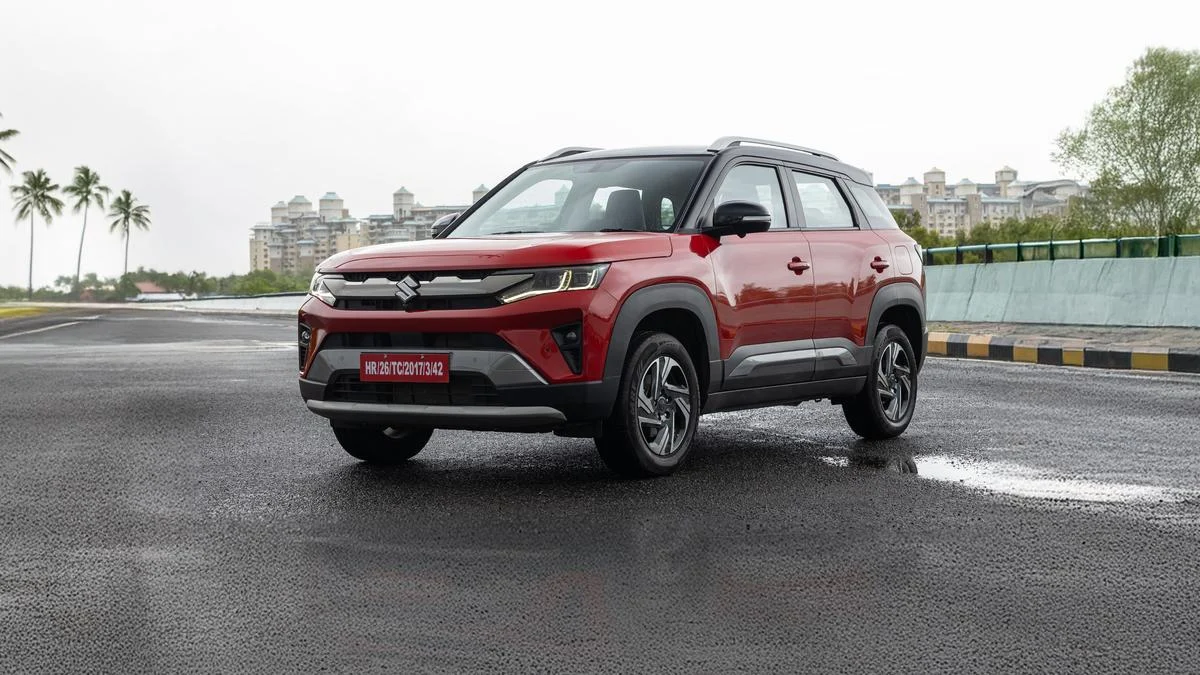
In the high-stakes theater of the Indian automotive market, few names carry as much weight as the Maruti Suzuki Brezza. Since its inception, the Brezza has served as a cornerstone of Maruti Suzuki’s Arena portfolio, acting as the primary engine of growth in the sub-four-meter SUV category. However, the landscape of 2024 is vastly different from the one the Brezza first dominated. Today, the compact SUV segment is a battlefield where performance, safety ratings, and high-tech features are the primary weapons. In a strategic move to reclaim its technological edge, Maruti Suzuki has introduced the 1.0-litre Boosterjet turbo-petrol engine, signaling a significant shift in the model’s DNA.
Main Facts: The Power of the Boosterjet
The headline of the new Brezza lineup is undoubtedly the return of the Boosterjet technology. The 1.0-litre, three-cylinder turbocharged petrol engine is engineered to deliver a punchy 110.12 PS of power and a peak torque of 170 Nm. This is a departure from the traditional naturally aspirated 1.5-litre K-Series engine that has long been the staple of the Maruti stable.
While the 1.5-litre engine remains available for those prioritizing linear power delivery and urban refinement, the 1.0-litre Turbo is aimed squarely at the "discerning driver." This engine is exclusively paired with a six-speed manual gearbox, a choice that emphasizes driver engagement. The turbocharger provides a much-needed surge in the mid-range, allowing the Brezza to feel more agile during highway overtakes and spirited climbs.
Key technical specifications of the new variant include:

- Engine: 1.0L Boosterjet Turbo-Petrol
- Max Power: 110.12 PS
- Max Torque: 170 Nm
- Transmission: 6-Speed Manual
- Safety Rating: 5-Star Bharat NCAP
- Infotainment: 10.1-inch SmartPlay Pro+ Touchscreen
- Price Range: ₹7.40 lakh to ₹11.31 lakh (Turbo variants)
Chronology: From Diesel Dominance to Turbocharged Ambition
To understand the significance of the 1.0 Turbo, one must look at the Brezza’s evolutionary timeline. When the Vitara Brezza first launched in 2016, it was a diesel-only offering. It capitalized on the "National Engine of India"—the Fiat-sourced 1.3-litre Multijet—and quickly became the highest-selling SUV in the country.
The Petrol Pivot (2020): With the implementation of BS6 emission norms, Maruti Suzuki made the bold decision to exit the diesel segment entirely. The Brezza transitioned to a 1.5-litre K15B petrol engine. While reliable and fuel-efficient, this engine lacked the low-end torque that diesel loyalists craved.
The Feature Revolution (2022): Maruti launched the second-generation Brezza (dropping the "Vitara" prefix), focusing heavily on interior quality and features like a sunroof and a 360-degree camera. This was a response to the growing dominance of South Korean rivals like the Hyundai Venue and Kia Sonet.
The Performance Correction (Present): The introduction of the 1.0 Boosterjet represents the final piece of the puzzle. By offering a turbocharged petrol option, Maruti is finally addressing the performance gap that existed between the Brezza and rivals like the Tata Nexon and Mahindra XUV 3XO, both of which have leveraged turbo-petrol engines to attract younger, performance-oriented buyers.
Supporting Data: Performance vs. Practicality
The decision to offer two distinct petrol powertrains allows Maruti Suzuki to play a dual-pronged strategy. Data from recent road tests and consumer clinics suggests a clear divide in buyer preferences.

The 1.5L Naturally Aspirated Advantage: This engine remains the choice for the "commuter." It is paired with a six-speed torque converter automatic, making it the superior choice for heavy stop-and-go traffic in cities like Delhi, Mumbai, and Bengaluru. Its fuel efficiency remains class-leading in real-world urban conditions.
The 1.0L Turbo Advantage: The Boosterjet engine’s 170 Nm of torque arrives much earlier in the rev range compared to the naturally aspirated unit. This translates to better "in-gear" acceleration. For instance, the time taken to accelerate from 60 km/h to 100 km/h is significantly reduced, making the vehicle feel lighter and more responsive.
The Safety Breakthrough: Perhaps the most critical data point for the new Brezza is its five-star safety rating from Bharat NCAP. While the 1.5-litre automatic variant was the primary test subject, the certification extends to the 1.0 Turbo models. This makes the Brezza one of the safest vehicles in Maruti’s history, directly challenging Tata Motors’ long-held "safety-first" marketing narrative.
Official Responses and Market Positioning
While Maruti Suzuki executives have traditionally focused on "Total Cost of Ownership" (TCO), the messaging around the Brezza 1.0 Turbo has shifted toward "Performance without Compromise."
Industry analysts suggest that Maruti’s move is a defensive-offensive maneuver. By pricing the LXi Turbo variant at an aggressive ₹7.40 lakh, Maruti is not just competing with other compact SUVs; it is encroaching on the territory of premium hatchbacks.

"The Brezza has always been a sensible choice," notes a senior automotive consultant. "With the Boosterjet, Maruti is trying to make it an emotional choice as well. They are signaling that they can match the European and Korean manufacturers in engine technology while maintaining the service network that remains their ‘Fortress Wall’ in rural and semi-urban India."
The competition, however, is not standing still. The segment currently hosts a formidable lineup:
- Tata Nexon: The incumbent safety leader with a wide range of powertrain options (EV, Petrol, Diesel, CNG).
- Mahindra XUV 3XO: The performance king with the most powerful turbo-petrol in the segment.
- Hyundai Venue & Kia Sonet: The "feature-rich" twins that offer sophisticated dual-clutch transmissions (DCT).
- Skoda Kylaq: The newest entrant, focusing on European driving dynamics and build quality.
Implications: A Strategic Course Correction
The arrival of the Brezza 1.0 Turbo has several long-term implications for the Indian automotive industry and Maruti Suzuki’s future trajectory.
1. The "Turbo-Normal" in India:
For years, Maruti Suzuki resisted the downsizing trend, preferring larger-displacement naturally aspirated engines for their longevity. The adoption of the Boosterjet in a high-volume product like the Brezza suggests that Maruti now views turbocharged small-displacement engines as a reliable, mainstream solution. This may pave the way for the Boosterjet to appear in other models like the Baleno or the Fronx in higher states of tune.
2. Closing the Tech Gap:
The Brezza’s cabin evolution—featuring a 10.1-inch screen, ventilated seats, and wireless charging—indicates that Maruti has finally acknowledged that "functional" is no longer enough. To retain its 40%+ market share, the company must provide an "aspirational" environment. The inclusion of premium features in the ZXi+ variants shows a willingness to move up-market.

3. Safety as a Sales Driver:
For a long time, Maruti Suzuki faced criticism regarding the structural integrity of its "Heartect" platform vehicles. The 5-star Bharat NCAP rating for the Brezza is a watershed moment. It removes a significant barrier for safety-conscious buyers who previously would have defaulted to a Tata or Mahindra. This level of safety, combined with Maruti’s legendary reliability, creates a formidable "peace of mind" package.
4. Maintaining the Value Proposition:
The most significant implication is the pricing strategy. By keeping the entry-level Turbo variant under ₹8 lakh, Maruti is ensuring that the Brezza remains accessible to the Indian middle class. In an era where car prices are skyrocketing, the Brezza’s ability to offer a 5-star safety rating and a turbocharged engine at this price point is a major disruption.
Conclusion: The Sensible Choice, Now with Spirit
The Maruti Suzuki Brezza 1.0 Turbo is more than just a new engine option; it is a declaration of intent. It represents a brand that is listening to the market—a market that demands more than just fuel efficiency. By blending its traditional strengths of a massive service network and high resale value with modern requirements like turbocharged performance and top-tier safety ratings, Maruti Suzuki has revitalized its most important SUV.
While the competition is fiercer than ever, the Brezza 1.0 Turbo stands out by offering a balanced "middle path." It may not be the fastest car in its class, nor the one with the most flamboyant design, but it is perhaps the most complete package for the average Indian family. For the buyer looking for a vehicle that is easy to drive in the city, capable on the highway, safe for the family, and affordable to maintain, the new Brezza makes a case that is increasingly difficult to ignore.
As the compact SUV segment continues to evolve, the Brezza has proven that it is not a relic of the past, but a versatile platform capable of reinventing itself for the future. With the Boosterjet under the hood and a five-star badge on the door, the Brezza is well-positioned to remain the "People’s SUV" for years to come.
