

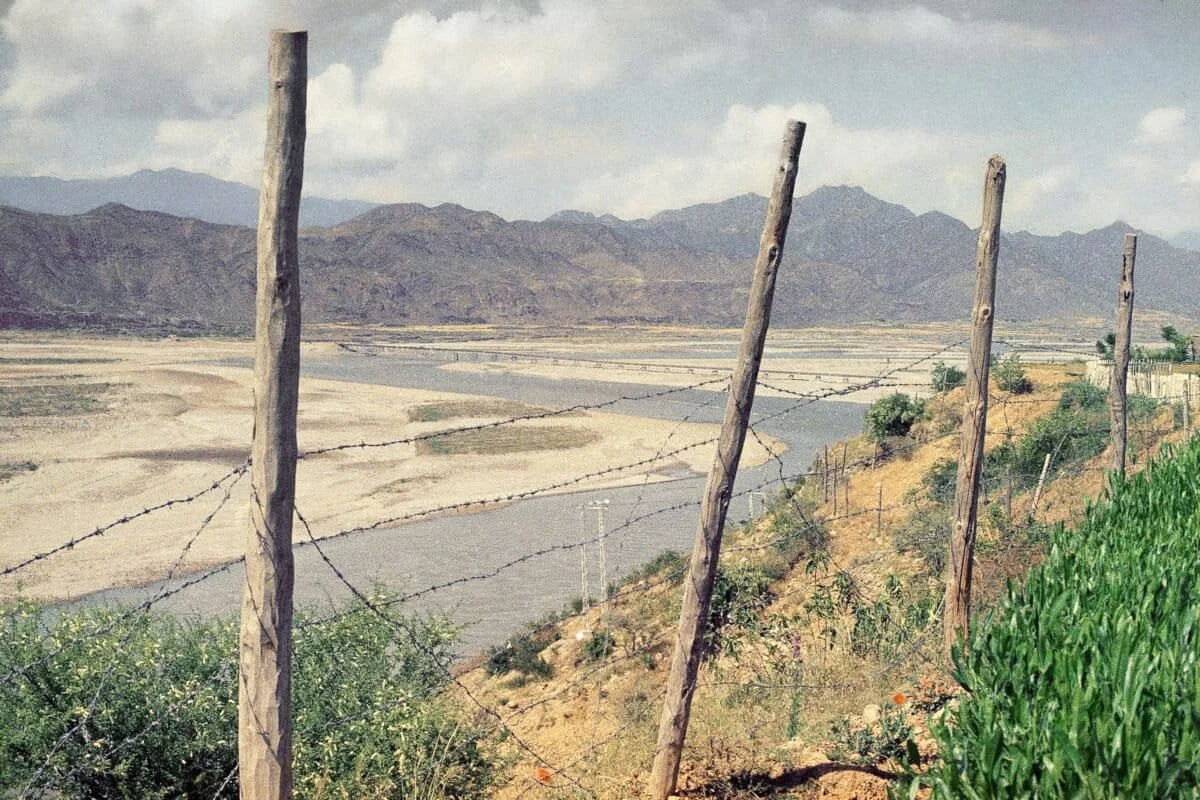
The 64-year-old Indus Waters Treaty (IWT), long hailed as one of the world’s most successful transboundary water-sharing agreements, is currently facing its most significant existential crisis. On August 31, the Permanent Court of Arbitration (PCA) in The Hague issued a pivotal order asserting that India cannot unilaterally retreat from or suspend the treaty. This ruling follows India’s 2023 decision to place the pact in "abeyance," a move triggered by escalating geopolitical tensions and disagreements over hydroelectric projects.
With India categorically rejecting the PCA’s jurisdiction and the treaty’s dispute resolution mechanisms stalled in a "parallel track" deadlock, the future of water security for over 300 million people hangs in the balance.
I. Main Facts: The Treaty and the Current Impasse
The Indus Waters Treaty, signed in 1960 and brokered by the World Bank, partitions the six rivers of the Indus Basin between India and Pakistan. Under the agreement:
- The Eastern Rivers (Ravi, Beas, and Sutlej): Allocated to India for unrestricted use.
- The Western Rivers (Indus, Jhelum, and Chenab): Allocated to Pakistan.
As the upper riparian state, India is permitted to use the Western rivers for domestic consumption, non-consumptive applications, and "run-of-the-river" hydroelectric projects, provided these structures do not significantly impede or reduce the flow of water to Pakistan.
The current friction centers on the Ratle Hydroelectric Project, an 850-megawatt facility planned by India on the Chenab River in the Kishtwar district of Jammu and Kashmir. Pakistan has raised technical objections, alleging that the dam’s design allows for excessive "pondage" (water storage), which could be used to manipulate water flows during critical agricultural periods. India maintains the design is fully compliant with the treaty’s technical annexures.

The PCA’s recent order sought to freeze certain construction aspects of the Ratle project, specifically prohibiting India from concreting the dam wall above certain levels until 90 days after a final decision by a "Neutral Expert." However, India’s refusal to recognize the court’s authority has rendered the order diplomatically moot, though legally significant in the international arena.
II. Chronology: From Cooperation to "Abeyance"
The trajectory of the IWT has shifted from technical cooperation to a tool of geopolitical leverage over the last decade.
- 1960: The IWT is signed by Indian Prime Minister Jawaharlal Nehru and Pakistani President Ayub Khan. It survives three major wars (1965, 1971, and 1999) without being suspended.
- 2016: Following a militant attack on an Indian army camp in Uri, Prime Minister Narendra Modi famously stated that "blood and water cannot flow together." India began reviewing its participation in the Permanent Indus Commission (PIC) meetings.
- 2016–2022: Pakistan requests the World Bank to appoint a Court of Arbitration regarding the Ratle and Kishanganga projects. Simultaneously, India requests the appointment of a Neutral Expert.
- April 2022: In a move that India criticized as a breach of the treaty’s hierarchy, the World Bank decides to proceed with both processes simultaneously—appointing both a Neutral Expert and a Chairman for the Court of Arbitration.
- January 2023: India issues a formal notice to Pakistan to modify the treaty, citing Pakistan’s "intransigence" over the hydropower disputes. Shortly after, India signals that the treaty is in "abeyance."
- August 31, 2024: The PCA rules that India is legally bound by the treaty and cannot unilaterally suspend its obligations. India rejects the ruling as "illegal."
III. Supporting Data: A Basin Under Duress
While the diplomatic row dominates headlines, hydrological and demographic data suggest that the 1960 framework is increasingly ill-equipped to handle 21st-century realities.
1. Demographic Pressure and Water Demand
The Indus Basin supports approximately 300 million people. Population projections indicate a staggering increase in demand:
- India: The population within the basin is projected to grow by 103% by the end of the century.
- Pakistan: The basin population is expected to surge by 144%.
Between 2000 and 2010 alone, irrigated areas in the Indus River System increased by 13%, with the Chenab basin seeing a 23% rise in agricultural water usage.
2. The Groundwater Crisis
The IWT focuses almost exclusively on surface water, yet groundwater baseflows contribute between 10% and 60% of the total water in the river system. Today, the Indus Basin aquifer is the second-most overstressed in the world. Unsustainable extraction for agriculture, driven by outdated laws and a lack of integrated management, has led to a rapid decline in water tables on both sides of the border.

3. Climate Change and Erratic Flows
Research from Pennsylvania State University and other climate bodies suggests that river flows will become increasingly volatile:
- The Upper Basin: Expected to see increased precipitation but also accelerated glacial melt, leading to short-term flooding risks.
- The Lower Basin: Projected to experience decreased rainfall, heightening the risk of prolonged droughts.
- Specific River Risks: The Indus is becoming more flood-prone, while the Sutlej and Jhelum are increasingly vulnerable to drought conditions.
IV. Official Responses: A Clash of Sovereignty and Law
The reaction to the PCA’s ruling highlights the deep divide in how both nations perceive international arbitration.
India’s Position
The Ministry of External Affairs (MEA) has been unwavering in its dismissal of the PCA. Spokesperson Randhir Jaiswal reiterated that the court was constituted in "patent breach" of the treaty’s provisions. India argues that the treaty mandates a graded dispute resolution process: first the Commission, then a Neutral Expert for technical matters, and finally a Court of Arbitration for legal disputes. By allowing parallel processes, India claims the World Bank has undermined the treaty’s integrity.
Furthermore, India links the treaty’s functionality to regional security. The MEA has stated that the treaty stands in abeyance because of Pakistan’s "continued sponsorship of cross-border terrorism," arguing that the "spirit of goodwill and friendship" mentioned in the treaty’s preamble has been violated.
Pakistan’s Position
The Pakistani government welcomed the PCA’s decision, viewing it as a validation of their right to seek international arbitration when bilateral talks fail. Pakistan’s Foreign Office stated it would "carefully consider the detail of the award" to find a pathway back to engagement. For Pakistan, the IWT is a lifeline; as the lower riparian state, it views any Indian deviation from the treaty as an existential threat to its water and food security.

The World Bank’s Role
As the facilitator of the treaty, the World Bank finds itself in a precarious position. While it attempted to break the deadlock by appointing both the Neutral Expert and the PCA chair, the move has inadvertently fueled India’s narrative that the process is biased or legally flawed.
V. Implications: The Urgent Case for Modernization
Experts warn that the current deadlock is not merely a legal disagreement but a symptom of an aging treaty that fails to account for modern environmental and geopolitical variables.
The Problem with "Abeyance"
Syed Akbaruddin, India’s former permanent representative to the UN, notes that the term "abeyance" does not exist within the IWT’s text. However, he argues that if the mechanisms for exercising rights under an agreement are broken, the agreement itself requires revisiting. "There is a case for modernising the Indus Waters Treaty so that objections are addressed on an appropriate platform through an appropriate procedure," Akbaruddin told Mongabay-India.
Shifting from Division to Management
Hydrologist Asit K. Biswas emphasizes that the 1960 treaty was designed to divide water, not to manage it. "With an exploding water demand and the impacts of climate change, there’s no way the Indus can provide enough water for both countries under the current management styles," Biswas warned.
A modernized treaty would need to incorporate:

- Joint Disaster Management: Protocols for sharing real-time data on floods and glacial lake outbursts.
- Water Quality Standards: Addressing industrial pollution and agricultural runoff, which are currently unaddressed.
- Groundwater Regulation: Acknowledging the Indus Basin as a single, connected hydrological unit.
- Flexible Technical Standards: Allowing for dam design updates that reflect modern engineering and environmental flow requirements without triggering decade-long legal battles.
Conclusion: The Road Ahead
The Ratle Hydropower project continues to move forward, with 26% of construction complete and environmental clearances extended to 2030. Meanwhile, the Neutral Expert’s proceedings are not expected to conclude until 2027.
The PCA’s ruling may have reaffirmed the treaty’s legal standing in the eyes of the international community, but without the political will of both New Delhi and Islamabad to update the 1960 framework, the "Indus Deadlock" threatens to transform a historic success story into a regional flashpoint. As climate change reshapes the Himalayas, the luxury of "blood and water" politics may soon be replaced by the stark necessity of survival.
