


NEW DELHI, INDIA – September 17, 2026 – Snap Inc., the parent company of Snapchat, is making an assertive push into the burgeoning augmented reality (AR) market, unveiling a suite of transformative updates for its highly anticipated Specs smart glasses. Announced on Wednesday, September 16, these enhancements, including a powerful new AI assistant dubbed Specs Intelligence and strategic industry partnerships, aim to cement the $2,195 wearable’s purpose and justify its premium price tag ahead of its planned launch later this year.
The company’s latest presentation offered a clearer vision for the consumer-focused AR glasses, which run on Snap’s proprietary Snap OS. From enterprise solutions to personalized AI assistance and immersive entertainment, Snap is positioning Specs not merely as a gadget, but as a "new computer" designed to augment human capability and interaction with the digital world. The move comes as the tech industry grapples with the pervasive influence of artificial intelligence and the evolving landscape of spatial computing, prompting Snap CEO Evan Spiegel to emphasize a human-centric approach to technological progress.
Main Facts: Snap’s Ambitious Vision for Specs
Snap’s recent announcement on September 16, 2026, marked a pivotal moment in its journey into augmented reality, providing the most comprehensive look yet at the capabilities and strategic direction of its Specs smart glasses. The core of these revelations revolves around several key pillars:
Firstly, the introduction of Specs Intelligence, a sophisticated "anticipatory AI service," stands out as the marquee feature. Designed to act as a proactive personal assistant, Specs Intelligence can connect to a user’s various digital accounts, such as email and calendar, to manage tasks, streamline travel logistics, and offer context-aware assistance. This AI is not just reactive but aims to anticipate user needs, helping them prioritize and achieve long-term goals.
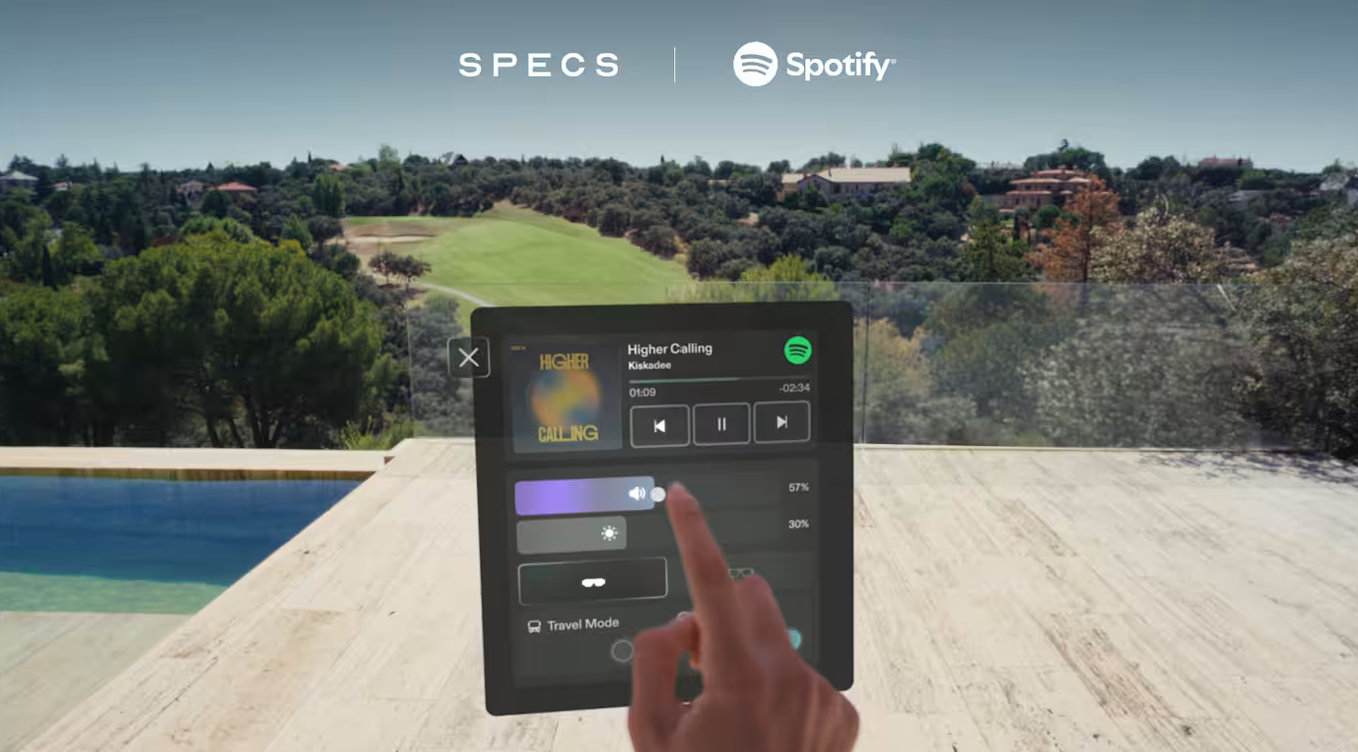
Secondly, Snap revealed a series of strategic partnerships intended to broaden Specs’ utility and appeal. These include collaborations with entertainment giants HBO Max and Spotify, promising immersive content experiences directly through the glasses. For the professional sphere, "Specs for Enterprise" leverages partnerships with tech behemoths like Amazon, Salesforce, and Nvidia, integrating the device into corporate workflows for applications ranging from remote assistance to data visualization. Sports enthusiasts will benefit from alliances with the NBA and WNBA, enabling AR-enhanced training and interactive experiences. Furthermore, a connectivity package with Verizon will provide untethered cellular access via a charging case, addressing a critical need for mobile AR.
Thirdly, Snap reaffirmed the price point of $2,195 and its target launch window. The device is set to ship sometime this fall, with early adopters having an opportunity to experience it at a pop-up event in Los Angeles, California, in October 2026. This high price signals Snap’s confidence in the device’s advanced capabilities, particularly the integration of cutting-edge AI.
Finally, the company reiterated that Specs will operate on its proprietary Snap OS, indicating a commitment to building a cohesive software ecosystem tailored for augmented reality. This move also highlights the ongoing efforts to cultivate a developer community to create a rich array of applications for the platform. These announcements collectively underscore Snap’s strategic pivot towards making Specs an indispensable tool that offers clear, tangible value to consumers and professionals alike, directly addressing earlier criticisms regarding the device’s initial perceived lack of purpose.
Chronology: Snap’s AR Journey to Specs
Snap’s foray into wearable technology and augmented reality has been a journey marked by both innovation and challenges, dating back several years before the current Specs iteration.

The company first dipped its toes into hardware with the launch of Spectacles in 2016. These camera-equipped sunglasses allowed users to record short video clips and share them directly to Snapchat. While Spectacles generated initial buzz and demonstrated Snap’s willingness to experiment with hardware, subsequent generations (Spectacles 2 and 3) saw limited commercial success, primarily due to their niche appeal and the novelty factor eventually waning. These earlier attempts, however, provided invaluable lessons in hardware design, user interaction, and market acceptance for camera-equipped wearables.
Fast forward to earlier this year (2026), Snap officially debuted its "long-awaited smart glasses," the precursors to the current Specs. This initial reveal, however, was met with a somewhat underwhelming reception from a segment of users and industry observers. The primary points of contention were the significant cost of the device and its design – described as "big, bold, and black," and notably bulkier than other smart glasses on the market, such as the Meta-Ray Bans. Critics questioned the value proposition at a price point that seemed high for a device whose exact utility wasn’t immediately apparent to the average consumer. The design, available in two lens sizes (47mm and 52mm), further reinforced the notion that these were distinctly "smart glasses" rather than a discreet piece of eyewear.
Recognizing the need to address these concerns and articulate a compelling reason for consumers to adopt such a high-end AR device, Snap orchestrated the Wednesday, September 16, 2026, event. This presentation served as a strategic intervention, designed to give Specs a "clearer purpose in customers’ everyday lives" and to justify the substantial $2,195 price tag. The slew of updates announced—from the AI assistant to enterprise and entertainment partnerships—were all meticulously crafted to reposition Specs from a mere hardware novelty to an essential productivity and lifestyle tool.
Looking ahead, the company has confirmed that Specs will ship sometime this fall, aligning with the critical holiday shopping season. To build momentum and allow potential buyers a hands-on experience, Snap plans to host a pop-up event in Los Angeles, California, in October 2026, offering early adopters a chance to interact with the glasses and their new features. This chronological progression illustrates Snap’s iterative approach to hardware development, learning from past endeavors, responding to market feedback, and strategically enhancing its product to meet evolving consumer and enterprise demands in the competitive AR space.
Supporting Data: Unpacking Specs’ Capabilities and Ecosystem
The true potential of Snap Specs lies in the intricate details of its features, the robust technology underpinning them, and the strategic partnerships forming its ecosystem. These elements collectively aim to distinguish Specs in a crowded, yet nascent, AR market.
Specs Intelligence: The "Anticipatory AI Service"
At the heart of Snap’s renewed vision for Specs is Specs Intelligence, an AI assistant that promises to transcend conventional voice commands by offering proactive, context-aware support. Described as an "anticipatory AI service," it’s engineered to "help you manage what needs attention today, so you can make progress toward your longer-term goals." This isn’t merely a conversational chatbot; it’s designed to be a digital companion that understands and optimizes a user’s daily life.
Users can interact with Specs Intelligence conversationally, much like other leading AI assistants. However, its differentiating factor is the ability to connect securely with a user’s preferred apps and tools. By integrating with services like Gmail, Slack, and potentially many others, Specs Intelligence gains a deeper understanding of a user’s "goals, priorities, relationships, and routines." This personal context is crucial, allowing the AI to ground its outputs in relevant, personalized information, making its suggestions and actions highly pertinent.
Consider these elaborated examples:

- Work Tasks: Before a crucial meeting, Specs Intelligence could proactively pull up relevant documents from connected cloud storage, summarize key discussion points from recent emails, and even suggest insightful questions to ask, all displayed discreetly in the wearer’s field of view. It might also flag upcoming deadlines that are intertwined with the current discussion.
- Travel Information: For an upcoming trip, the AI could automatically generate flight details, hotel booking confirmations, and dinner reservations. Beyond simple itinerary display, it could monitor flight status in real-time, suggest alternative routes to the airport based on live traffic, or even recommend local attractions and restaurants tailored to the user’s preferences, cross-referencing with their calendar for free time.
- Personal Goals: If a user has set a fitness goal, Specs Intelligence could integrate with fitness trackers, display daily progress overlays during a workout, or remind them of upcoming training sessions. For learning new skills, it could surface relevant tutorials or practice exercises at opportune moments.
Technical Underpinnings and Privacy: Snap states that Specs Intelligence is powered by a "proprietary combination of open-source models hosted in the US alongside local large language models (LLMs)." This hybrid approach likely allows for robust, scalable AI capabilities while potentially enabling faster, more personalized processing of sensitive data directly on the device.
Crucially, Snap has made strong assurances regarding user privacy. The company asserts that it "cannot view or access personal content fed to Specs Intelligence." Furthermore, it explicitly states: "Personal content from connected accounts will not be used to train or fine-tune Snap’s AI models, or to serve personalized ads." This commitment to privacy aims to build trust, differentiating it from concerns often associated with other AI services that might leverage user data for monetization or model improvement.
Availability: Specs Intelligence is currently available on iOS in preview, allowing users to experience its core functionalities. A waitlist has been opened for a "full early-access experience" on Mac, indicating Snap’s multi-platform strategy before its full integration into the AR glasses, where personal content will be placed "directly into view" when relevant.
Hardware and Design Considerations
The $2,195 price point remains a significant hurdle for mass adoption, positioning Specs as a premium device. This cost places it in the upper echelon of consumer electronics, requiring a compelling value proposition that Snap is diligently trying to build through its AI and partnership ecosystem.
Regarding design, the article notes Specs’ "big, bold, and black" aesthetic, emphasizing that "there is no mistaking these for a regular pair of glasses." Available in 47mm and 52mm lens sizes, they are described as "bulkier than regularly designed smart glasses like the Meta-Ray Bans." This design choice implies a prioritization of functionality and integrated technology over extreme discreetness, a common trade-off in early-stage AR hardware. While Meta-Ray Bans (and other similar devices) focus on subtle integration of cameras and audio, Specs appears to embrace its role as a more overt AR computing platform, necessitating larger components for displays, sensors, and processing power. This bulky design, initially a point of criticism, is now being offset by the promise of unparalleled utility.
New Features and Partnerships: Expanding the Ecosystem
Snap’s strategy hinges on creating a diverse ecosystem of applications and services that leverage Specs’ AR capabilities, making it indispensable for various aspects of daily life.
- Entertainment Integration: Partnerships with HBO Max and Spotify signify a push into immersive media consumption. Imagine watching a show on a virtual screen projected into your environment, or having contextual information about a song playing around you. This transforms passive consumption into an interactive experience, potentially offering private viewing/listening without being tethered to a physical screen or headphones.
- Specs for Enterprise: This program is a critical strategic move, targeting the lucrative business sector. Collaborations with Amazon, Salesforce, and Nvidia suggest powerful applications. For instance, an IT technician, as shown in a demo video, could receive real-time repair instructions or schematics overlaid onto the hardware they are fixing, guided by an expert remotely. Field service, manufacturing, training, and architectural visualization are other potential use cases, where hands-free data access and AR overlays can significantly boost productivity and safety.
- Sports and Fitness: Teaming up with the NBA and WNBA opens doors for AR-enhanced athletic training. Wearers could practice basketball with real-time feedback on their shot trajectory, arc, and form, seeing virtual targets or statistical overlays in their vision. This gamified and data-driven approach could revolutionize personal coaching and skill development.
- Untethered Connectivity with Verizon: The partnership with Verizon for a new connectivity package is vital for an AR device designed for real-world use. By offering cellular connectivity through a charging case, Specs can operate independently of Wi-Fi or a tethered smartphone. This freedom is crucial for outdoor use, enterprise applications, and spontaneous content creation or AI interaction, making the device truly mobile. The pricing structure ($10/month for Verizon customers, $20/month for others) makes this essential feature accessible.
Snap OS and Developer Ecosystem
The foundation of Specs’ future success is its proprietary Snap OS. This operating system will be optimized for AR experiences, ensuring seamless integration between hardware, software, and the AI assistant. Snap’s announcement that "developers are already working on apps for the device" is a positive sign, indicating efforts to cultivate a vibrant developer ecosystem. A rich library of third-party applications will be essential for expanding Specs’ utility beyond Snap’s core offerings, mirroring the success strategies of smartphone platforms. These applications could range from educational tools to interactive games, spatial navigation aids, and specialized professional software.
Official Responses: Evan Spiegel’s Vision for Human-Centric Computing
Snap’s CEO and co-founder, Evan Spiegel, articulated a profound philosophical stance during the announcement, framing Specs as a counter-narrative to prevailing anxieties about artificial intelligence. His statements were not just product pitches but a broader commentary on the direction of technology itself.

Spiegel candidly acknowledged the current technological climate, stating, "I will say it’s an interesting time to be launching a new computer because things in tech are pretty weird right now." This recognition of the industry’s flux – characterized by rapid AI advancements, debates over virtual realities, and concerns about job displacement – set the stage for Snap’s distinctive approach.
He then directly confronted the dystopian narratives surrounding AI: "We’re being told that AI will take our jobs, that virtual worlds will replace the real one. Well, no, thank you. We do not accept that future. Making people irrelevant is not progress, and computers should make us more important, not less." This powerful declaration underscores Snap’s commitment to a human-centric vision for technology. For Spiegel, the purpose of computing, especially augmented reality, is not to detach humans from reality or diminish their roles, but rather to enhance their capabilities, augment their perception, and empower them in their daily lives.
This philosophy is directly reflected in the design and functionality of Specs. The "anticipatory AI" of Specs Intelligence is a prime example of technology designed to make individuals "more important." Instead of replacing human decision-making, it aims to offload cognitive burdens, manage routine tasks, and provide timely, relevant information so users can focus on higher-order thinking, creativity, and meaningful interactions. By connecting to personal accounts and understanding individual goals, the AI acts as an extension of the user’s memory and planning, allowing them to be more present and effective in the real world.
Furthermore, the emphasis on AR – augmenting the real world rather than replacing it with virtual reality – aligns perfectly with Spiegel’s vision. Specs integrates digital information seamlessly into a user’s physical environment, enhancing their perception and interaction with the world around them, rather than isolating them within a fabricated one. Whether it’s an IT technician guided by AR overlays for repairs or an athlete receiving real-time coaching, the technology serves to make the human agent more capable and efficient within their existing reality.
Spiegel’s official responses thus serve not just as a marketing message, but as a guiding principle for Snap’s long-term hardware strategy. They position Specs as a thoughtful, ethical response to the evolving tech landscape, advocating for a future where technology empowers humanity rather than overshadowing it. This strong philosophical underpinning is crucial for a high-priced, cutting-edge device trying to find its place in the consumer consciousness.
Implications: Shaping the Future of AR and Human-Computer Interaction
The launch of Snap’s enhanced Specs with Specs Intelligence and a robust partnership ecosystem carries significant implications for the augmented reality market, the future of human-computer interaction, and Snap’s strategic trajectory.
Market Position and Competition
Snap’s renewed push with Specs places it firmly in the nascent but highly competitive AR/smart glasses market. Its primary rivals include:
- Meta: With its Ray-Ban Stories (focused on discreet camera/audio) and the more immersive Quest headsets (primarily VR, but with AR passthrough capabilities), Meta is investing heavily in the metaverse and spatial computing. Specs’ focus on "anticipatory AI" and enterprise applications offers a distinct differentiation from Meta’s largely social and gaming-centric approach.
- Apple: The Apple Vision Pro, though primarily a mixed reality headset, sets a high bar for immersive spatial computing. While significantly more expensive and less discreet than Specs, it demonstrates Apple’s commitment to the space. Specs, being a more glasses-like form factor, aims for a different use case, prioritizing subtle augmentation over full immersion.
- Google: Historically, Google Glass Enterprise Edition targeted industrial applications, and its recent Project Astra hints at advanced AI integration in wearables. Snap’s Specs for Enterprise directly competes in this domain, while Specs Intelligence aims to be a more consumer-friendly, proactive AI.
Snap’s strategy with Specs is to carve out a niche defined by a seamless blend of discreet design (relative to headsets), powerful on-device AI, and a focus on practical, everyday utility through targeted partnerships. The $2,195 price point signals a premium offering, aiming for early adopters and professionals willing to invest in cutting-edge productivity tools. The challenge will be to demonstrate undeniable value that justifies this cost in the face of cheaper alternatives and more powerful, albeit bulkier, competitors.
Future of AR and AI Integration
Specs Intelligence represents a significant step towards the "ambient computing" paradigm, where technology fades into the background, proactively assisting users based on context. The concept of an "anticipatory AI service" is transformative:
- Proactive Assistance: Moving beyond reactive commands, Specs Intelligence hints at a future where devices anticipate needs, offering information or taking actions before being explicitly asked. This could fundamentally alter how we interact with technology, making it feel less like a tool and more like an intuitive extension of ourselves.
- Contextual Relevance: By connecting to personal data sources, the AI becomes deeply contextualized, providing hyper-relevant information tailored to individual goals and routines. This personalized experience could make AR glasses indispensable for managing complex lives.
- Human-Centric Computing: Aligned with Evan Spiegel’s vision, this integration suggests a future where AI enhances human capabilities rather than replacing them. It’s about augmenting intelligence, memory, and perception, allowing individuals to be more efficient, creative, and present in the real world.
Privacy and Ethical Considerations
While Snap has made strong privacy assurances regarding Specs Intelligence (no viewing/accessing personal content, no training AI models with personal data, no personalized ads), the very nature of always-on, context-aware wearables raises broader ethical questions:
- Data Collection: Even with Snap’s assurances, the sheer volume of personal data (calendar, emails, location, activities) that Specs Intelligence will process to be "anticipatory" is immense. Trust in the company’s data handling practices will be paramount.
- "Always On" Surveillance: The presence of cameras and microphones in smart glasses raises public perception issues around privacy, both for the wearer and those around them. While Specs is consumer-focused, the line between personal utility and potential surveillance can be blurry.
- AI Bias and Autonomy: As AI becomes more anticipatory and influential in decision-making (e.g., suggesting travel plans, prioritizing tasks), concerns about algorithmic bias and the erosion of human autonomy will grow. Snap will need robust ethical AI frameworks to navigate these challenges.
- Digital Divide: The high cost of Specs means this advanced technology will initially be accessible only to a privileged few, potentially exacerbating the digital divide in terms of productivity and access to information.
Snap’s Business Strategy
Specs represents a bold and potentially high-stakes strategic play for Snap:
- Diversification Beyond Social Media: It signifies a deeper commitment to diversifying beyond Snapchat, positioning Snap as a spatial computing and hardware innovator. This could unlock new revenue streams and market opportunities.
- Long-Term Platform Play: Success in AR hardware could establish Snap as a foundational platform for the next generation of computing, much like smartphones became for mobile apps. This is a long-term investment that could yield substantial returns if AR becomes mainstream.
- Financial Risks: Entering the hardware market is capital-intensive and fraught with risks, as evidenced by past Spectacles iterations and other companies’ struggles. The high R&D costs, manufacturing complexities, and marketing expenses for a niche product like Specs require sustained financial commitment.
- Ecosystem Lock-in: By developing Snap OS and fostering a developer ecosystem, Snap aims to create a sticky platform that retains users and encourages further investment in its services.
In conclusion, Snap’s reimagined Specs are more than just a pair of smart glasses; they are a declaration of intent for a human-centric future of augmented reality. By combining sophisticated AI with practical utility and strategic partnerships, Snap is attempting to unlock the true potential of AR and redefine how we interact with information and the world around us. The success of this ambitious venture will depend not only on technological prowess but also on building trust, demonstrating undeniable value, and navigating the complex ethical landscape of pervasive, intelligent computing.
