

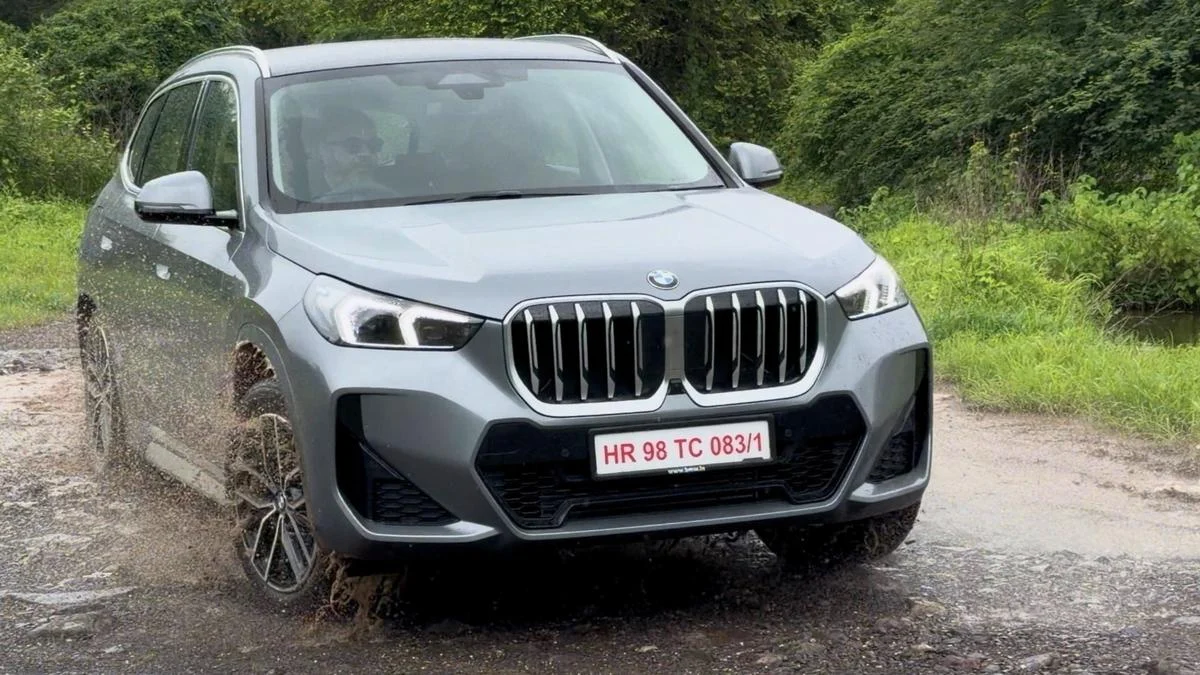
The luxury automotive landscape in India has undergone a seismic shift over the last decade. Once defined solely by the presence of a prestigious badge, the "entry-level" luxury segment has matured into a space where consumers demand the same sophistication, technology, and, crucially, space found in higher-tier segments. BMW, a brand synonymous with driver-centric dynamics, has historically positioned the X1 as the spirited gateway to its ‘X’ family of Sports Activity Vehicles (SAVs). However, the introduction of the BMW X1 Long-Wheelbase (LWB)—specifically the sDrive18Li M Sport—marks a pivotal transition. It is no longer just a "compact" SUV; it is a calculated response to the specific needs of the Indian luxury buyer who balances the desire for driving pleasure with the necessity of rear-seat comfort.
Main Facts: The X1 LWB at a Glance
The BMW X1 LWB enters the market not merely as a stretched version of its predecessor, but as a redefined proposition. Priced at INR 49.90 lakh (ex-showroom), the sDrive18Li M Sport aims to bridge the gap between the traditional compact luxury SUV and the more executive-focused segments.
At the heart of this vehicle is a 1.5-litre, three-cylinder TwinPower Turbo petrol engine. While the cylinder count might suggest a modest output, the engineering yields a respectable 156 hp and 230 Nm of torque. This power is managed by a sophisticated seven-speed Steptronic dual-clutch transmission (DCT), driving the front wheels.
The defining characteristic of this model is its 2,800 mm wheelbase. This extension is the cornerstone of the vehicle’s "LWB" nomenclature, directly translating into enhanced legroom and cabin volume. Visually, the car adopts the M Sport aesthetic, featuring aggressive bumpers, 18-inch M light-alloy wheels, and high-gloss black detailing that ensures it maintains a commanding presence on the road despite its more practical leanings.
Chronology: From Concept to the Monsoon-Beaten Roads of Mumbai
The development of the X1 LWB can be seen as a strategic chronology of adaptation. While the standard-wheelbase X1 remains a global staple, BMW recognized that in markets like India, the "owner-driven" and "chauffeur-driven" use cases often overlap within the same household.

Testing this vehicle on the streets of Mumbai provided a grueling, real-world assessment of this adaptation. The drive took place during the aftermath of a heavy monsoon season—a time when the city’s infrastructure is notoriously compromised. The chronology of the test drive revealed three distinct phases of performance:
- The Urban Crawl: Navigating through dense traffic, the 7-speed DCT demonstrated remarkable smoothness. The stop-and-go nature of Mumbai traffic often exposes the "jerkiness" of dual-clutch systems, but BMW’s tuning ensures a linear power delivery that masks the three-cylinder engine’s inherent vibrations.
- The Broken Surface Challenge: As the route moved toward suburban areas with significant undulations and broken tarmac, the X1 LWB’s suspension came to the fore. Unlike the stiff, sporty setups of BMWs past, this "comfort-oriented" suspension, combined with the longer wheelbase, provided a level of composure that prevented the "nervousness" typically felt in smaller luxury cars over rough patches.
- The Open Stretch: On the few stretches of open road, the TwinPower Turbo tech allowed for effortless overtaking. The 0-100 km/h sprint in 9.3 seconds may not break records, but the torque spread from 1,500 to 4,600 rpm ensured that the car never felt breathless.
Supporting Data: Engineering, Technology, and Interior Ergonomics
The X1 LWB’s appeal is supported by a robust set of technical specifications and interior features that justify its premium positioning.
Powertrain and Dynamics
The 1.5-litre engine utilizes BMW’s signature turbocharging technology to maximize efficiency without sacrificing the "willingness" to rev. The 50:50 weight distribution—a hallmark of BMW engineering—is maintained even in this front-wheel-drive LWB configuration, ensuring that body roll is minimized during cornering.
The Digital Cockpit
The interior is dominated by the BMW Curved Display, a seamless integration of:
- A 10.25-inch Digital Instrument Cluster: Providing high-resolution telemetry and navigation data.
- A 10.7-inch Central Information Display: Running the latest BMW Operating System 9. This system is designed for touch and voice control, significantly reducing the number of physical buttons and creating a minimalist, modern aesthetic.
Space and Utility
The 2,800 mm wheelbase is the most critical data point for the Indian consumer. This has resulted in:

- Rear Legroom: Comparable to vehicles in the segment above.
- Boot Capacity: A generous 540 litres, which can be further expanded by folding the 40:20:40 split rear seats.
- Seating Comfort: The rear seatbacks are reclining, allowing passengers to find an optimal posture for long-distance travel.
Safety Suite
BMW has not compromised on safety, equipping the X1 LWB with an extensive array of active and passive systems:
- Airbags: Eight in total, including side airbags for second-row passengers.
- ADAS (Advanced Driver Assistance Systems): Including Lane Departure Warning, Front Collision Warning with brake intervention, and Blind Spot Assistant.
- Parking Assistant Plus: Featuring a 360-degree surround-view camera, 3D views, and a Reversing Assistant that can automatically steer the car back out of tight spots for up to 50 meters.
Official Positioning: BMW’s Strategic Response to the Indian Market
While official corporate statements often focus on "luxury" and "performance," the X1 LWB represents BMW’s official response to the "value-conscious luxury" segment in India. By introducing the Long-Wheelbase variant, BMW is officially acknowledging that the entry-level SUV must serve as a primary family car, not just a secondary vehicle for the city.
The inclusion of the "M Sport" trim as a standard or prominent choice for the LWB version is an official move to ensure that "practicality" is never equated with "boring." The Pearl Chrome kidney frame and the M leather steering wheel are deliberate design choices intended to reinforce the brand’s identity as the "Ultimate Driving Machine," even when the vehicle is configured for maximum passenger comfort.
Furthermore, the "Comfort Access" with Digital Key Plus is a strategic technology play. By allowing a smartphone to act as the vehicle key, BMW is targeting a younger, tech-savvy demographic that values seamless integration between their digital and physical lives.
Implications: The Future of the Compact Luxury Segment
The introduction of the X1 LWB has significant implications for the Indian automotive market and the luxury segment at large.

1. The Death of the "Standard" Wheelbase?
In a market where the rear seat is often as important as the driver’s seat, the success of the X1 LWB may force competitors like Mercedes-Benz (GLA) and Audi (Q3) to reconsider their own wheelbase strategies. If the "entry-level" now offers "mid-size" space, the standard wheelbase may become a niche product for those who prioritize parking ease above all else.
2. Redefining Performance Expectations
The use of a 1.5-litre three-cylinder engine in a nearly 50-lakh-rupee car was once considered a risky move. However, the refinement of the X1 LWB suggests that modern turbocharging and transmission technology have reached a point where displacement is no longer the sole metric of luxury. The implication is a shift toward "adequate and efficient" performance rather than "excessive" power for daily urban use.
3. A Holistic Family Car
The X1 LWB successfully transitions the X1 from a "lifestyle vehicle" to a "primary family vehicle." With 540 litres of boot space and genuine room for four or five adults, it challenges the need for larger, more expensive SUVs like the X3 for families who primarily navigate urban environments.
4. Safety as a Standard
With eight airbags and a comprehensive ADAS suite, the X1 LWB sets a high bar for safety in the sub-50-lakh segment. This will likely drive a "safety arms race" among luxury manufacturers, benefiting the consumer through better-equipped entry-level models.
Conclusion: The Harmony of Heart and Head
The BMW X1 LWB is a rare example of a vehicle that satisfies two often-conflicting desires. To the "heart," it offers the prestige of the BMW badge, the aggressive styling of the M Sport package, and a chassis that remains engaging to drive. To the "head," it offers the practicality of a 2,800 mm wheelbase, the efficiency of a modern downsized engine, and a suite of technology that makes daily life easier.

By configuring the car around the realities of Indian roads—the monsoons, the potholes, and the need for chauffeur-driven comfort—BMW has created a product that feels less like a global model adapted for India and more like a model designed for it. At INR 49.90 lakh, it is a compelling argument that you don’t need to move up to the flagship models to experience a "complete" luxury SUV. For the Indian buyer, the X1 LWB is no longer just the beginning of the BMW range; for many, it will be the only car they ever need.
This report was prepared in association with Motorscribes and The Hindu. For more updates on the latest automotive trends, follow @motorscribes on Instagram.
