

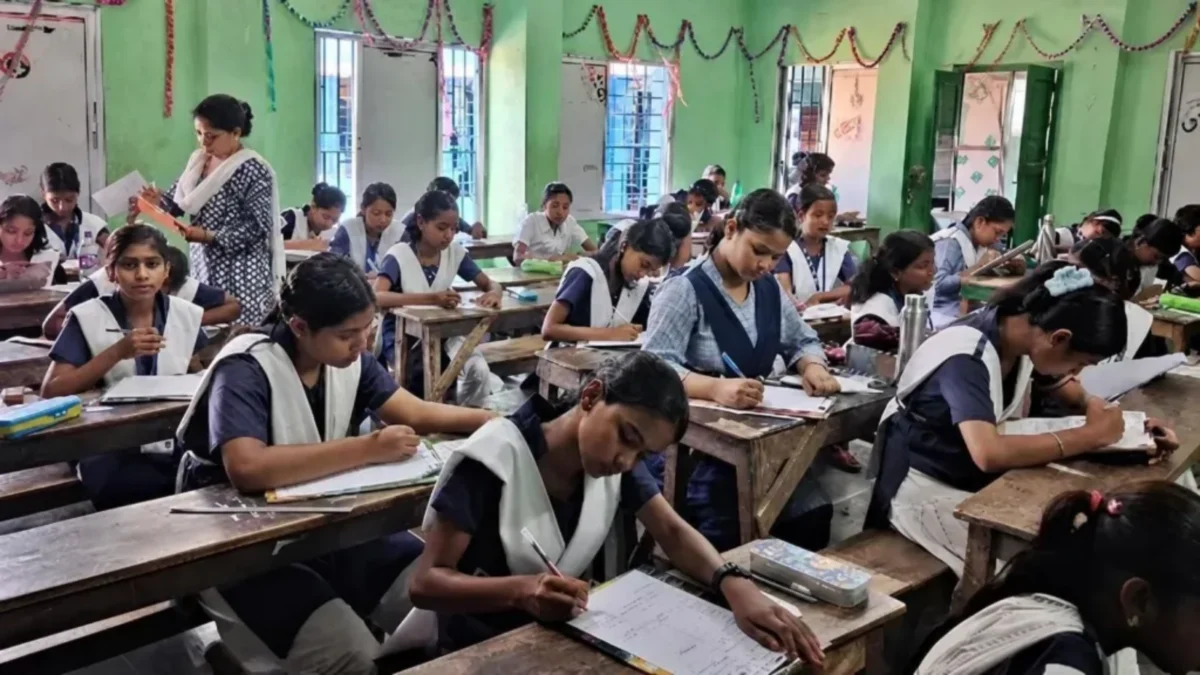
New Delhi, September 20, 2026 – The academic landscape of West Bengal is set to buzz with activity as the West Bengal Council of Higher Secondary Education (WBCHSE) gears up to commence the much-anticipated Higher Secondary Class 12 Semester 3 board examinations tomorrow, September 21, 2026. The examinations, slated to conclude on October 14, 2026, will witness thousands of students across the state undertaking a crucial step in their academic journey. This comprehensive examination period signifies a pivotal moment for students, marking the culmination of intensive preparation and the gateway to higher education and future career prospects.
The WBCHSE has meticulously planned the examination schedule, ensuring a structured and organized process for both students and examination staff. While the majority of subjects will be tested within a dedicated time slot, specific papers have been allocated distinct timings to accommodate their unique requirements. The council has also emphasized its commitment to upholding the integrity and fairness of the examination process through stringent guidelines and enhanced invigilation measures.
Examination Schedule: A Detailed Chronology
The examination period commences tomorrow, September 21, 2026, with papers for a wide array of subjects. Students will appear for examinations in languages such as Bengali (A), English (A), Hindi (A), Nepali (A), Urdu, Santhali, Odia, Telugu, and Punjabi on this inaugural day. The examination for these subjects is scheduled to take place from 11:00 AM to 12:30 PM, allowing ample time for students to demonstrate their understanding.
The subsequent days will see examinations for a diverse range of disciplines. On September 24, 2026, students will sit for papers including English (B), Bengali (B), Hindi (B), Nepali (B), and Alternative English. The following day, September 25, 2026, will feature examinations in Economics, Anthropology, Science of Well-Being, and Applied Artificial Intelligence.
As the examinations progress, the schedule diversifies further. September 28, 2026, is dedicated to Physics, Nutrition, Education, and Accountancy. A busy day awaits on September 29, 2026, with examinations for Computer Science, Modern Computer Application, Environmental Studies, Environmental Science, Health & Physical Education, Music, and Visual Arts.
The last week of September will see examinations for Statistics, Psychology, Commercial Law and Preliminaries of Auditing, and History on September 30, 2026. The first day of October, October 1, 2026, will be occupied by Chemistry, Geography, Human Development and Resource Management, and Business Studies. Philosophy will be examined on October 3, 2026.
The examination period will extend into the second week of October, with Mathematics, Business Mathematics and Business Statistics, Basic Mathematics for Social Sciences, Agriculture (AGRI), Journalism and Mass Communication, Sanskrit, Persian, and Arabic scheduled for October 12, 2026. The following day, October 13, 2026, will feature examinations in Cyber Security, Artificial Intelligence, Data Science, Sociology, Artificial Intelligence and Data Science, Fisheries and Aquaculture. Notably, vocational subjects in the second shift will also be conducted on this day. The examination period will draw to a close on October 14, 2026, with papers for Biological Science, Political Science, and Costing and Taxation.
It is crucial to note that while the majority of examinations will be conducted from 11:00 AM to 12:30 PM, exceptions exist. Papers for Music and Visual Arts will be held from 11:00 AM to 12:00 PM, concluding an hour earlier. Vocational subjects, on the other hand, will be conducted in the afternoon, from 2:00 PM to 3:00 PM, accommodating their practical and theoretical components.
Supporting Data: Exam Structure and Accessibility
The WBCHSE has made provisions to ensure that the examinations are accessible and conducted in a manner that caters to a diverse student body. The question papers will be available in four languages: Bengali, English, Hindi, and Ol Chiki. This multi-lingual approach underscores the council’s commitment to inclusivity and ensuring that students can comprehend and respond to questions in their preferred language, thereby minimizing language barriers and promoting equitable assessment.
For the Multiple Choice Questions (MCQ) section of the examinations, students will be provided with OMR (Optical Mark Recognition) answer sheets. This standardized format for objective questions allows for efficient and accurate evaluation, facilitating quicker processing of results. The use of OMR sheets is a widely adopted practice in modern examinations, designed to streamline the grading process and reduce the potential for human error.
Official Responses: Upholding Examination Integrity
The West Bengal Council of Higher Secondary Education has issued a detailed set of guidelines, accessible on its official website, wbchse.wb.gov.in, covering critical aspects such as invigilation protocols, examination hall restrictions, and the evaluation of OMR answer sheets. These guidelines are designed to ensure a fair, secure, and transparent examination process.
A paramount directive from the council pertains to the strict prohibition of electronic gadgets within examination centers. Students are explicitly warned against possessing mobile phones, calculators, or any other electronic devices during the examination. The council has issued a stern warning that any candidate found in possession of such devices will face immediate cancellation of their examination and enrollment. This stringent policy aims to prevent any form of malpractice and maintain a level playing field for all candidates.
To further bolster the integrity of the examinations, the council has significantly strengthened its invigilation arrangements. A key measure implemented this academic year is the deployment of at least two invigilators in every examination room. This strategic allocation ensures a favorable invigilator-to-student ratio of approximately 1:20, allowing for closer monitoring and supervision of students during the examination. This increased presence of invigilators is expected to act as a deterrent against any potential misconduct.
In addition to invigilators, the council has also mandated the appointment of one council nominee for every 20 students at each examination center. These nominees are tasked with overseeing the smooth conduct of examinations and ensuring adherence to all stipulated guidelines. Council nominees are required to report to their assigned centers by 10:00 AM, well in advance of the examination commencement, to familiarize themselves with the center’s arrangements and to ensure all preparatory steps are in place.
Furthermore, the council has emphasized the importance of the secure handling of question papers. Sealed question papers will be transported to the examination halls and will be opened in the presence of the students. This transparency in the distribution of examination materials aims to build trust and confidence among the student fraternity, ensuring that all candidates receive their papers under controlled and secure conditions.
Implications: A Stepping Stone to Higher Education and Beyond
The successful completion of the WBCHSE Class 12 Semester 3 examinations is a critical juncture for students aspiring to pursue higher education. The results of these examinations will play a significant role in determining their eligibility for admission into various undergraduate programs across universities and colleges in West Bengal and beyond. The performance in these exams not only reflects academic prowess but also demonstrates a student’s discipline, perseverance, and ability to perform under pressure.
Beyond academic pursuits, the skills and knowledge acquired during the Higher Secondary curriculum, as assessed through these examinations, form the foundational building blocks for future career paths. The subjects offered and the rigor of the examination process are designed to equip students with the necessary competencies to navigate the complexities of the professional world.
The stringent measures implemented by the WBCHSE, including enhanced invigilation and strict restrictions on electronic devices, underscore the council’s commitment to maintaining the credibility and sanctity of the examination system. These efforts are vital in ensuring that the results accurately reflect the genuine academic achievements of the students.
As the examinations commence tomorrow, the focus shifts to the students, who have dedicated months of hard work and preparation. The coming weeks will be a test of their knowledge, resilience, and ability to apply what they have learned. The West Bengal Council of Higher Secondary Education, through its meticulous planning and robust oversight, aims to provide a fair and secure platform for these young minds to showcase their academic capabilities, paving the way for their future endeavors. The success of this examination cycle will not only be measured by the pass percentages but also by the continued trust and confidence placed in the integrity of the WBCHSE examination system.
