

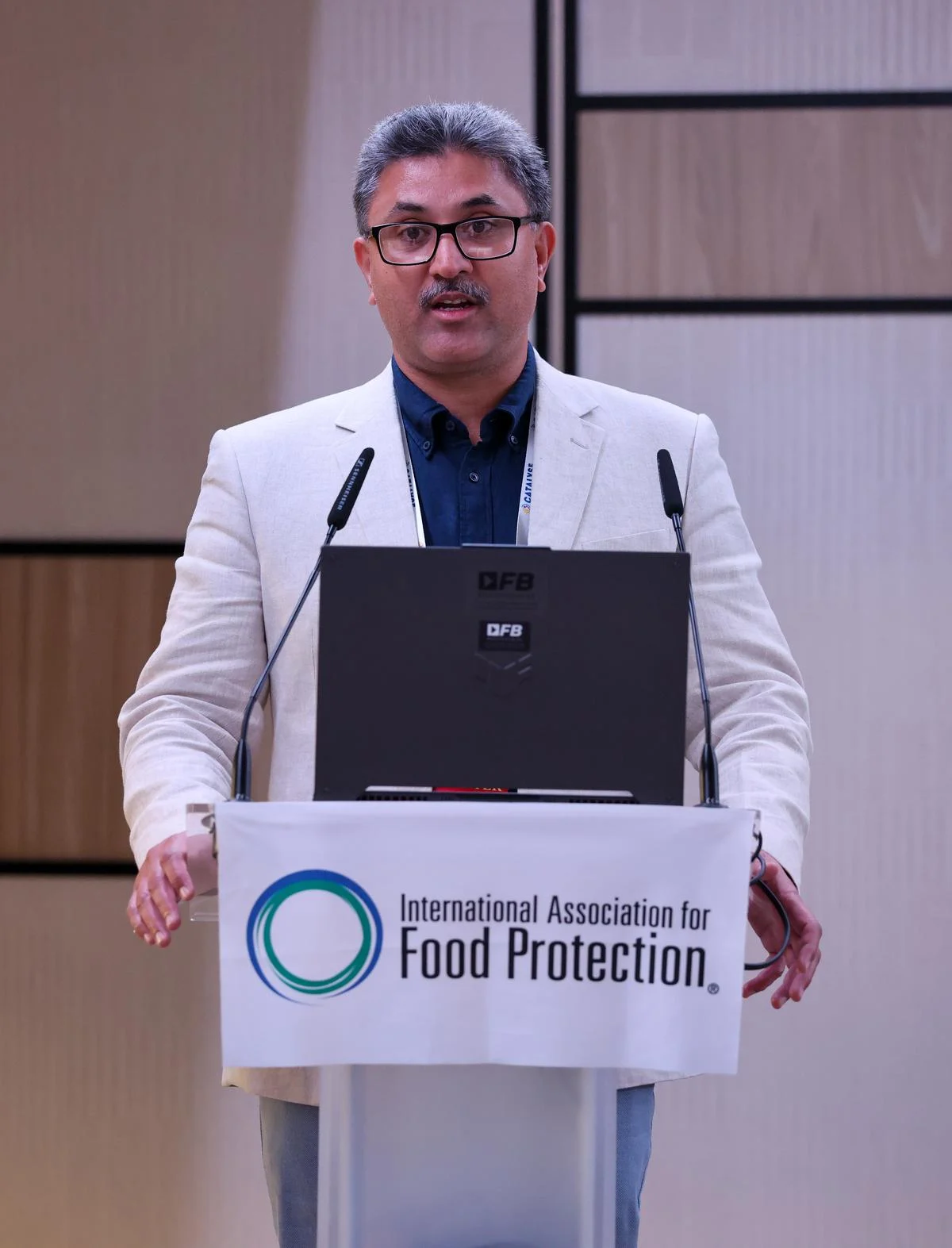
In the high-stakes world of international food safety, where a single microscopic pathogen can disrupt global trade and claim dozens of lives, the name Sukhvinder Pal Singh—affectionately known as "SP Singh"—carries significant weight. A senior research scientist with the New South Wales (NSW) Department of Primary Industries and Regional Development in Australia, Singh’s journey from a humble farming family in Una, Himachal Pradesh, to the pinnacle of food science is a testament to the power of specialized expertise in an increasingly vulnerable global food system.
In 2025, Dr. Singh reached a career milestone, receiving the Australian Institute of Food Science and Technology’s (AIFST) National Food Safety Award. The accolade recognizes a lifetime of work dedicated to securing the "farm-to-fork" pipeline, most notably his instrumental role in reshaping horticultural safety standards following Australia’s devastating 2018 Listeria outbreak.
As India grapples with a burgeoning crisis of food adulteration and contamination, Dr. Singh provides a critical perspective on how the world’s most populous nation can reform its fragmented safety protocols.
Main Facts: A Global Authority on Fresh Produce Safety
Dr. Sukhvinder Pal Singh, 46, currently operates out of Ourimbah, Australia, where he leads cutting-edge research on fresh-produce safety and traceability. His work is not merely academic; it is deeply practical, focusing on the points where pathogens enter the food chain and how they can be intercepted before reaching the consumer’s plate.
His expertise covers:
- Pathogen Mitigation: Developing protocols to eliminate bacteria like Listeria monocytogenes, Salmonella, and E. coli from fresh produce.
- Traceability Systems: Implementing digital and biological markers to track food items through complex global supply chains.
- Risk Assessment: Identifying vulnerabilities in the supply chain, particularly during the transition from farm to wholesale markets.
The 2025 AIFST award highlighted Singh’s ability to translate complex microbiological data into actionable policy. His work has become the blueprint for Australia’s horticultural industry, ensuring that fresh produce remains safe despite the challenges of climate change and intensifying agricultural practices.
Chronology: The Evolution of a Food Safety Pioneer
To understand Dr. Singh’s impact, one must look at the timeline of his career and the crises that defined it.

1. Roots in Himachal Pradesh (1980s–1990s)
Born into a family of farmers in Una, Himachal Pradesh, Singh’s childhood was inextricably linked to the land. This foundational experience provided him with an intuitive understanding of the challenges faced by small-scale producers—insights that would later prove invaluable when dealing with India’s decentralized food economy.
2. Academic Pursuit and Migration (2000s)
Singh pursued advanced studies in food science, eventually moving to Australia to specialize in post-harvest technology and food microbiology. His transition from the fields of India to the laboratories of New South Wales allowed him to bridge the gap between traditional farming knowledge and modern scientific rigor.
3. The 2018 Listeria Crisis: A Turning Point
The defining moment of Singh’s career came in 2018 when Australia was hit by a deadly Listeria outbreak linked to rockmelons. The crisis was catastrophic: 22 people were infected, seven died, and a miscarriage was attributed to the contamination. The outbreak shattered consumer confidence and devastated the rockmelon industry.
Dr. Singh led the research efforts to identify the source of the contamination and develop new sanitization and handling protocols. His findings drove mandatory changes in horticultural food-safety practices across Australia, turning a national tragedy into a catalyst for systemic reform.
4. National Recognition (2025)
Seven years after the rockmelon crisis, the AIFST bestowed its highest food safety honor on Singh. The award recognized not only his past interventions but his ongoing work in predictive microbiology and traceability—technologies that are now being eyed by international bodies as the future of food safety.
Supporting Data: The Scale of India’s Food Safety Challenge
While Dr. Singh’s work is based in Australia, his focus has increasingly turned toward his home country. The data regarding food safety in India paints a sobering picture. According to various public health reports and Singh’s own analysis, the problem is multi-layered.
The Socio-Economic Divide
Adulteration in India is not a "level-playing-field" issue. Dr. Singh points out that low- to medium-income households are disproportionately affected. These demographics often rely on unbranded, loose products sold in informal markets where oversight is minimal. For these consumers, "food fraud"—the deliberate substitution or addition of substances for financial gain—is a daily health hazard.

Emerging Contaminants
While traditional adulteration (like mixing water with milk or chalk with flour) remains a problem, Singh warns of a "significant data and knowledge gap" regarding modern contaminants:
- Microplastics: Found increasingly in salt, sugar, and bottled water.
- Antimicrobial Resistance (AMR): The presence of antibiotic-resistant organisms in poultry and meat.
- Heavy Metals: Lead and arsenic contamination in spices and vegetables grown in polluted soil.
- Environmental Toxins: The long-term impact of pesticide residues and industrial runoff.
The lack of comprehensive, easily accessible public data on the cumulative impact of these exposures means that the true scale of India’s public health crisis remains hidden.
Official Responses and Expert Context: Where the System Fails
In his assessment of India’s regulatory framework, Dr. Singh identifies a fundamental flaw in the current approach taken by authorities.
The "End-Point" Fallacy
Currently, much of India’s food safety enforcement is concentrated at the retail end—inspecting shops and sampling products from market shelves. Dr. Singh argues that this is an inefficient use of resources. Given the "enormous scale and complexity" of India’s food economy—stretching from mandis (wholesale markets) and street vendors to high-end restaurants—monitoring the final point of sale is akin to treating a symptom rather than the disease.
Fragmentation of Enforcement
Enforcement becomes fragmented when it lacks an "intelligence-led" strategy. Without mapping the supply chain, regulators cannot identify where risks originate. For instance, if a spice is found to be adulterated at a local grocery store, the contamination likely occurred at a bulk processing hub or during distribution, not at the shop itself.
Implications and Recommendations: A Roadmap for India
Dr. Singh’s vision for India does not require a total, overnight overhaul of the food system. Instead, he advocates for a "surgical" approach to safety.
1. The "Top 10" High-Risk Strategy
India should identify and prioritize the ten most vulnerable, high-volume food categories. According to Singh, these should include:

- Milk and Dairy Products: Prone to synthetic adulteration.
- Spices: Frequently mixed with lead chromate or starch.
- Edible Oils: Often blended with cheaper, toxic oils.
- Meat and Seafood: Vulnerable to temperature abuse and AMR.
- Fresh Produce: High risk for pesticide residue and microbial contamination.
2. Supply Chain Mapping
For each of these commodities, authorities must map the entire journey from farm to table. By identifying "critical control points"—such as bulk manufacturers and large-scale distributors—regulatory resources can be concentrated where they will have the most impact.
3. Climate Resilience
As global temperatures rise, food safety risks intensify. Heatwaves accelerate food spoilage, while flooding contaminates irrigation water. Dr. Singh emphasizes that India must prepare now for these climate-driven pressures, moving from a system that detects problems after they occur to one that anticipates them.
4. Behavioral Shifts
Safety must be built from the "household upwards." This involves public education campaigns that empower consumers to recognize the signs of adulteration and demand higher standards from their local vendors.
Conclusion: A Proactive Future
The work of Dr. Sukhvinder Pal Singh serves as a bridge between the rigorous standards of the developed world and the practical realities of the developing world. His 2025 National Food Safety Award is more than a personal achievement; it is a validation of a methodology that prioritizes intelligence over random sampling and prevention over reaction.
As India moves forward, the message from the scientist from Una is clear: the country does not need to wait for a complete economic transformation to ensure its food is safe. By focusing on high-risk chains, mapping the invisible pathways of the supply system, and addressing the data gaps in emerging contaminants, India can protect its most vulnerable citizens from the silent threat of food fraud. The objective is simple but profound: ensuring that every meal, regardless of the consumer’s income, is a source of nourishment rather than a risk to life.
