

Updated: September 20, 2026, 05:09 PM IST
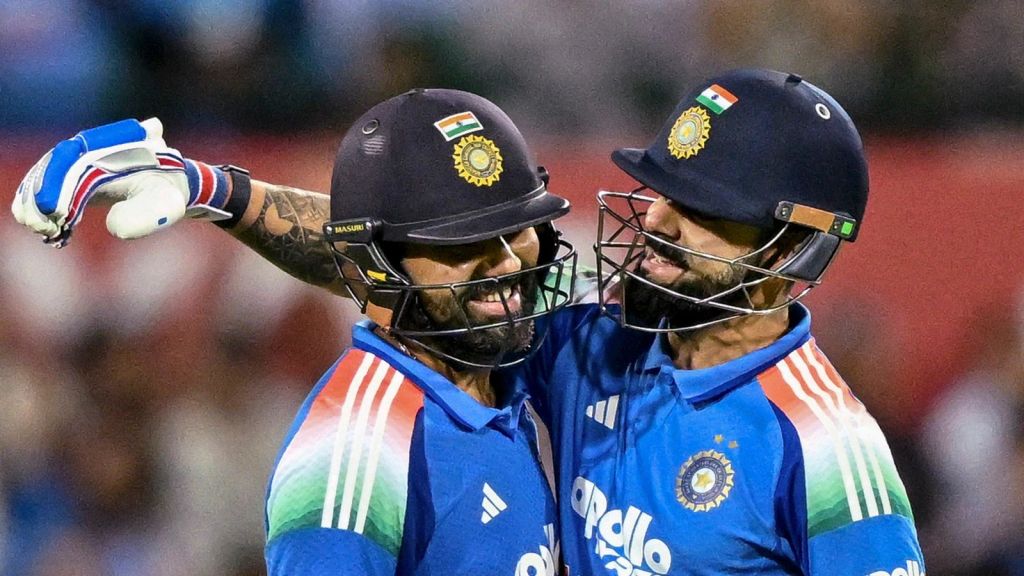
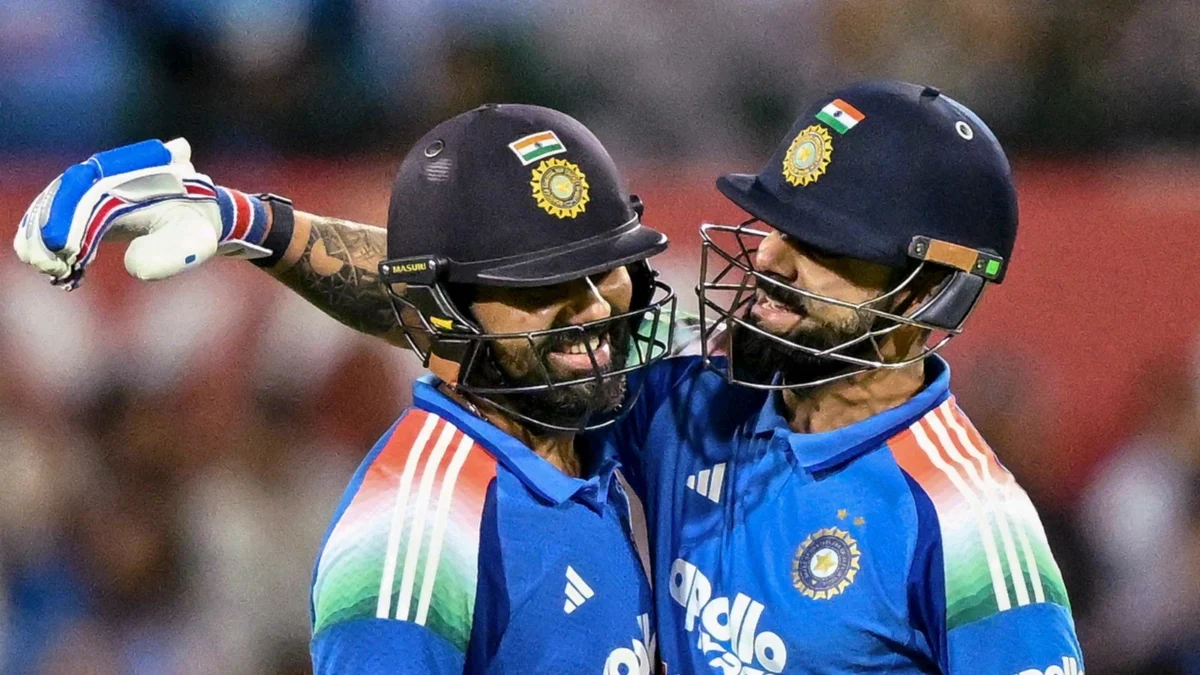
Rohit Sharma and Virat Kohli in action. (FILE photo)
The landscape of international cricket is perpetually shifting, a dynamic canvas where eras conclude, and new chapters begin. As the calendar inches closer to the much-anticipated 2027 ODI World Cup in Africa, the focus intensifies on the stalwarts of Indian cricket, Rohit Sharma and Virat Kohli. Both batting titans, now exclusively plying their trade in the 50-over format for the national team, are widely expected to lead India’s charge in what could be their final global spectacle. However, with their illustrious careers now spanning well over a decade and their ages pushing into the late thirties, persistent questions regarding their sustained fitness, form, and the readiness of the next generation loom large.
Amidst this evolving narrative, former Indian chief selector Sandeep Patil has offered a perspective that balances deep respect for the legends with a calm confidence in India’s robust talent pipeline. Patil, acknowledging the immense contributions of both Sharma and Kohli over the years, expressed a relaxed outlook on the prospect of eventual succession, emphasizing the strength of Indian cricket’s bench. His insights provide a crucial window into the ongoing strategic deliberations and the broader health of the sport in the nation.
The Main Facts: A Crossroads for Indian Cricket
The central theme gripping Indian cricket conversations revolves around the future of two of its most iconic figures: Rohit Sharma and Virat Kohli. As of late 2026, both players have streamlined their international commitments, dedicating themselves solely to One Day Internationals (ODIs) with a clear target – the 2027 ODI World Cup in Africa. This strategic focus is designed to maximize their impact and preserve their physical capabilities for the demanding pinnacle event.
However, the reality of elite sport dictates that age inevitably brings scrutiny. At 39 years old by the time the 2027 tournament commences, Rohit Sharma, and Virat Kohli, who will be 38, face an increasingly challenging battle against time, fitness demands, and the relentless march of emerging talent. The question isn’t merely if they can play, but if they can maintain the unparalleled standards they’ve set for themselves and the team.
Sandeep Patil, a voice of experience and authority, has weighed in with an assessment that seeks to assuage anxieties while acknowledging the natural progression of careers. Speaking on SportsNext, Patil articulated a balanced view, stating, "It is up to these two players. Will they want to continue playing? Will they be able to maintain their fitness? What is the selectors’ strategy? Are the selectors looking ahead?" This highlights the multi-faceted decision-making process involving player agency, physical conditioning, and the national selection committee’s long-term vision. Crucially, Patil’s overarching message is one of reassurance regarding India’s ability to navigate this transition. "Along with the current players, we always have to consider whether we have someone strong enough to replace them if the time comes for them to be left out of the team. And considering the Indian team’s bench strength, which… I don’t think there will be any problems, whether Virat or Rohit are in the team or not," he affirmed. This sentiment extends beyond batting, with Patil expressing similar confidence in the fast bowling department, even in the hypothetical absence of a superstar like Jasprit Bumrah.
A Chronology of Greatness and Gradual Transition
The careers of Rohit Sharma and Virat Kohli are intertwined with India’s cricketing narrative of the 21st century. Their journey from promising youngsters to global icons has been a saga of relentless record-breaking, match-winning performances, and an unwavering commitment to excellence.
The Ascent of Two Titans (2007-2015)
Rohit Sharma, making his ODI debut in 2007, initially showed flashes of brilliance but truly blossomed into a formidable white-ball opener in the early 2010s. His transformation under MS Dhoni’s captaincy was remarkable, culminating in his record-breaking double centuries and a reputation as one of the most destructive limited-overs batsmen. Virat Kohli, debuting in 2008, quickly established himself as a chase-master and a prolific run-scorer across all formats. His aggressive style and insatiable hunger for runs saw him rapidly ascend to the top, breaking Sachin Tendulkar’s long-standing records for fastest to various ODI run milestones. Both players were integral, albeit in different capacities, to India’s 2011 ODI World Cup triumph, with Kohli making a crucial half-century in the final against Sri Lanka.
Peak Dominance and Leadership (2016-2023)
The period between 2016 and 2023 arguably represents the zenith of their individual and collective powers. Kohli took over captaincy across formats, leading India to unprecedented heights in Test cricket and maintaining a formidable presence in white-ball cricket. His personal batting records during this phase were extraordinary, marked by an astonishing consistency in scoring centuries. Rohit, meanwhile, cemented his legacy as one of the greatest ODI openers, leading from the front with the bat and eventually taking over the white-ball captaincy from Kohli. Their partnership, both as batsmen and later as captain and senior player, formed the backbone of India’s white-ball strategy. They were the lynchpins in the 2019 and 2023 ODI World Cup campaigns, both of which saw India reach the semi-finals and final, respectively. Rohit’s captaincy in the 2023 World Cup, in particular, was lauded for its aggressive intent and inspiring leadership, even if the final outcome was not in India’s favour.
The Strategic Shift and The 2027 Horizon (2024-Present)
Post the 2023 World Cup, a significant strategic pivot became evident. With the rise of dynamic youngsters in T20I cricket and the need to manage player workloads, both Rohit and Kohli gradually transitioned away from the shortest format at the international level, focusing their energies solely on ODIs. This decision, whether explicitly stated or implicitly understood, was aimed at prolonging their careers in the 50-over format and ensuring their peak fitness for the 2027 World Cup in Africa. This tournament, slated to be held in Namibia, South Africa, and Zimbabwe, represents a logical and perhaps final global target for these two legends. For many, it is seen as their last shot at lifting the coveted trophy, a fitting swansong to an era of unparalleled individual brilliance and collective team effort. The pathway to 2027 involves careful player management, targeted training, and strategic selection to ensure that when the tournament arrives, both players are in the best possible physical and mental state to deliver.
Supporting Data: The Pillars of Performance and Preparation
The confidence expressed by Sandeep Patil is not unfounded; it is rooted in a combination of the veterans’ enduring class, the rigorous fitness standards of modern cricket, and the burgeoning talent pool nurtured by India’s robust cricketing infrastructure.
The Enduring Class of Rohit and Kohli
Despite the relentless march of time, Rohit Sharma and Virat Kohli continue to be statistical marvels. As of late 2026, their ODI records remain staggering. Rohit, with his three double centuries, boasts an average that few openers can match, coupled with a strike rate that often sets the tone for India’s innings. His ability to convert starts into monumental scores remains a potent weapon. Kohli, the chase-master, continues to possess an unparalleled record in successful run-chases, his average in ODIs hovering close to 60, with an astonishing number of centuries. While their peak form of 2016-2019 might be a touch behind, their ability to deliver under pressure and produce match-winning innings remains largely intact. Their experience, tactical acumen, and ability to absorb pressure are qualities that cannot be easily quantified but are invaluable in high-stakes tournaments. However, their physical output in terms of fielding intensity and quick singles between the wickets will be under constant observation, as these facets often decline with age.
India’s Batting Bench Strength: A Plethora of Options
Patil’s assurance about finding replacements for Kohli and Rohit stems from the visible depth in India’s batting talent. The emergence of players like Shubman Gill has been particularly significant; already a consistent performer across formats, Gill is seen as a long-term successor to an opening or top-order slot. His elegant stroke play, temperament, and ability to score big runs make him a cornerstone for the future.
Alongside Gill, Shreyas Iyer has established himself as a reliable middle-order batsman, capable of anchoring an innings or accelerating when required. Ishan Kishan, with his explosive left-handed batting and wicket-keeping skills, offers a dynamic option at the top or in the middle. Sanju Samson, a flamboyant stroke maker, continues to knock on the door with consistent domestic and IPL performances. The likes of Ruturaj Gaikwad and Yashasvi Jaiswal, already making strides in other formats, represent a further layer of top-order talent, showcasing the variety and depth available. The competition for spots ensures that only the most consistent and adaptable players make it to the national squad, preparing them for the intense pressure of international cricket.
The Fast Bowling Revolution and the NCA’s Role
Patil’s confidence extends emphatically to India’s fast bowling reserves, a domain where India historically struggled but has seen a remarkable transformation in recent decades. The mention of "three or four bowlers who can bowl at speeds of around 140 kmph" underscores the current strength. While Jasprit Bumrah remains irreplaceable in terms of his unique skill set and death bowling prowess, the pipeline is producing genuine pace.
Young bowlers like Umran Malik, with his blistering pace consistently touching 150 kmph, continue to hone their skills. Shivam Mavi and Arshdeep Singh have already made their mark with their ability to swing the ball and execute in pressure situations. Other promising pacers such as Mukesh Kumar, Tushar Deshpande, and Yash Dayal are consistently performing in domestic cricket and the IPL, ready to step up. The depth isn’t just in raw pace but also in skill, variation, and temperament, a testament to focused development.
This revolution in talent production is inextricably linked to the National Cricket Academy (NCA), or the Centre of Excellence, in Bengaluru. Patil’s visit with VVS Laxman, the Head of Cricket at the NCA, highlights the critical role this institution plays. The NCA is not merely a training facility; it’s a comprehensive hub for player development, rehabilitation, and sports science. It boasts:
- State-of-the-art training pitches: Catering to various conditions.
- Advanced gymnasiums and fitness centers: Tailored strength and conditioning programs.
- Sports science departments: Including physiotherapists, nutritionists, and mental conditioning coaches.
- Rehabilitation facilities: Crucial for injured players to return to peak performance.
- High-performance programs: Designed to identify, nurture, and fast-track young talent from across the country.
The BCCI’s significant investment in the NCA has created an ecosystem where raw talent can be refined into international-ready cricketers. This structured approach, overseen by cricketing luminaries like VVS Laxman, ensures a continuous supply chain of skilled players, making the prospect of replacing even legends like Bumrah, Kohli, or Rohit, less daunting.
Official Responses and Strategic Outlook
Sandeep Patil’s remarks, while personal, resonate with the broader strategic thinking within the Board of Control for Cricket in India (BCCI) and the national selection committee. His insights illuminate the multi-layered considerations that go into managing the careers of established stars and integrating new talent.
Deconstructing Sandeep Patil’s Perspective
Patil’s emphasis on "It is up to these two players" underscores the respect given to veterans. Elite athletes often know their bodies and minds best. The decision to continue playing at the highest level, especially into their late thirties, requires immense personal commitment, sacrifice, and an honest self-assessment of their capabilities. This suggests that while selectors have a strategy, the ultimate call to prolong a career rests with the individual, provided they meet fitness and performance criteria.
The query "Will they be able to maintain their fitness?" is perhaps the most critical. Modern cricket is incredibly demanding, requiring peak physical condition for fielding, batting for extended periods, and recovering quickly between matches. For players like Rohit and Kohli, managing workloads, preventing injuries, and adhering to rigorous fitness regimes become paramount. Their current focus solely on ODIs is a direct response to this challenge, a calculated move to extend their competitive lifespan.
"What is the selectors’ strategy? Are the selectors looking ahead?" points to the national selection committee’s long-term vision. This committee, headed by Chief Selector Ajit Agarkar (as of the 2026 context), is tasked with the unenviable balancing act of leveraging experience while grooming the future. Their strategy likely involves identifying key target tournaments (like the 2027 World Cup), ensuring a strong core of experienced players for those events, and simultaneously providing opportunities for younger players in bilateral series and other formats. The gradual phasing out of veterans from T20Is and potentially Tests (for Kohli, as he’s still playing Tests in this hypothetical future) is part of this forward-looking approach.
Patil’s unequivocal confidence in India’s "bench strength" is the most reassuring aspect of his statement. His belief that "there will not be any problems, whether Virat or Rohit are in the team or not," speaks volumes about the current state of Indian cricket’s talent pool. This isn’t a dismissal of the legends’ contributions but an acknowledgement of the system’s robustness. He rightly terms them "legends," recognizing their indelible mark on the sport, but also implies that the sport, and the team, must and will evolve.
The Broader Official Stance
The BCCI, through its selection policies and infrastructure development, implicitly supports Patil’s views. The gradual integration of younger players into the T20I setup, even while Rohit and Kohli were still active, demonstrated a proactive approach to succession planning. The consistent emphasis on fitness standards, mandatory camps at the NCA, and structured A-team tours all contribute to building a resilient and ready talent pool. The presence of former greats like VVS Laxman at the NCA signifies a concerted effort to impart top-level knowledge and experience to the next generation, ensuring a seamless transition of cricketing philosophy and skills. The official strategy appears to be one of calculated evolution: maximize the contributions of current stars for specific, high-stakes events, while simultaneously nurturing and exposing the next wave of talent to international demands.
Implications: The Future Landscape of Indian Cricket
The impending transition from the Rohit-Kohli era will undoubtedly mark a watershed moment in Indian cricket. Its implications are far-reaching, affecting team dynamics, fan expectations, and India’s standing in the global cricketing arena.
The Post-Kohli/Rohit Era: Challenges and Opportunities
The most immediate implication will be the void left by their immense experience, leadership, and unparalleled run-scoring ability. Replacing two players who have collectively scored over 25,000 ODI runs and nearly 100 centuries for India will not be a simple task of slotting in new names. It will require the collective effort of several players to fill their shoes. The challenge lies not just in finding batsmen who can score runs, but in identifying leaders who can inspire, absorb pressure, and guide the team through crunch situations, much like Rohit and Kohli have done for years.
However, this transition also presents a monumental opportunity. It will force the team to forge a new identity, allowing younger players to step out of the shadows and assume greater responsibility. New leaders will emerge, potentially fostering a fresh approach to strategy and team culture. The competitive environment within the squad, already intense, will only heighten, driving players to elevate their game further.
Impact on Team Dynamics and Leadership
With Rohit and Kohli potentially stepping down post-2027, the captaincy landscape will undergo a significant shift. Hardik Pandya, having already led India in T20Is, is a strong contender for white-ball leadership, known for his aggressive captaincy and all-round abilities. Other players like Shubman Gill or Shreyas Iyer, having captained at domestic and IPL levels, could also be groomed for future leadership roles. The team dynamic will likely become more collective, with responsibilities distributed among a younger core, fostering a sense of shared ownership and accountability. The transition will also be a test of the coaching staff and team management to guide this new generation effectively.
Fan Expectations and the Emotional Aspect
For millions of Indian cricket fans, Rohit and Kohli have been more than just players; they are icons, symbols of India’s cricketing prowess and passion. Their eventual departure will be an emotional moment, marking the end of a golden era. Managing fan expectations, which are always sky-high, will be crucial. The media narrative will shift from celebrating individual milestones to focusing on team building and the development of the new guard. While there might be initial comparisons and nostalgia, the success of the new generation will eventually carve out its own space in the hearts of fans.
India’s Continued Dominance in Talent Production
Sandeep Patil’s core message – "Indian cricket will continue to produce not just good bowlers but good batters" – points to a larger, positive implication. The sustained investment in grassroots cricket, the strength of the domestic circuit (Ranji Trophy, Vijay Hazare Trophy, Syed Mushtaq Ali Trophy), the IPL as a talent incubator, and the sophisticated development pathways through the NCA, collectively ensure that India remains a powerhouse in talent generation. This robust system means that even as legends retire, the wellspring of talent will not run dry. India’s ability to consistently produce world-class cricketers will ensure its continued dominance and influence in global cricket, maintaining its position as a formidable force across all formats.
The 2027 World Cup Strategy: A Defined Horizon
The immediate implication is the focused strategy leading up to the 2027 World Cup. The selection committee will meticulously manage the workloads of Rohit and Kohli, ensuring they are fresh and firing for the tournament. Every ODI series until then will be viewed through the lens of World Cup preparation – experimenting with combinations, fine-tuning strategies, and solidifying roles. The performance of the team in Africa will not only determine the immediate success but also profoundly influence the narrative surrounding the transition and the legacy of its departing legends. It is a defining period for Indian cricket, poised on the cusp of a new era, anchored by the wisdom of experience and propelled by the boundless energy of youth.
