

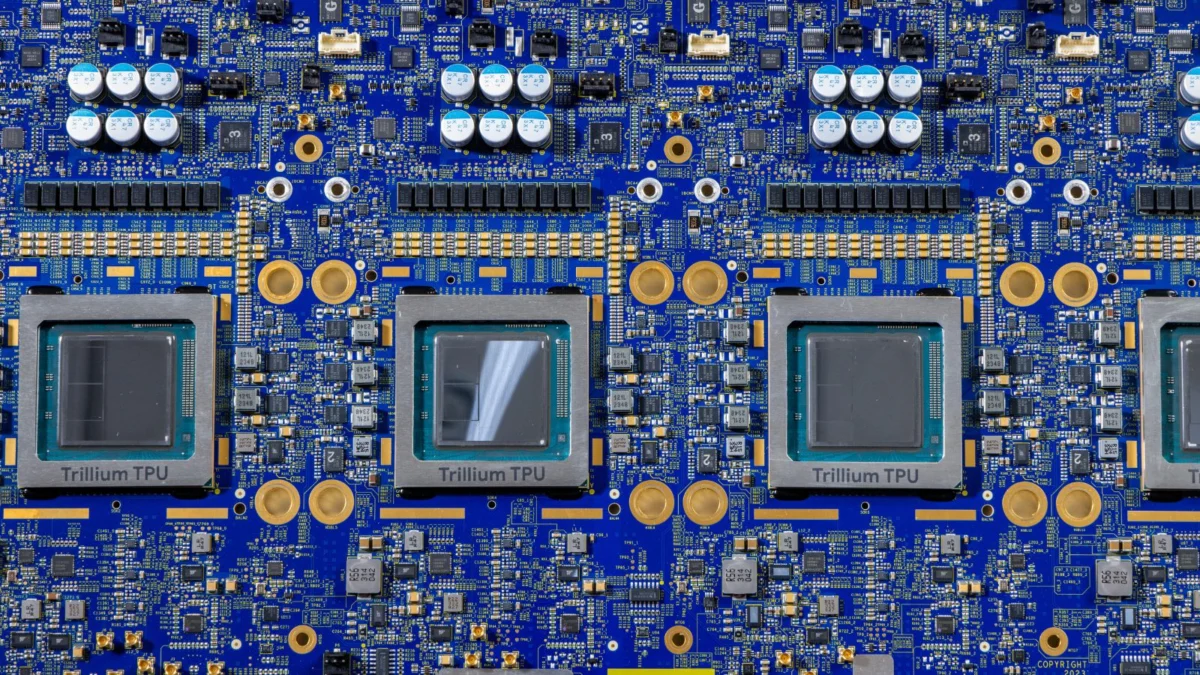
New Delhi, September 20, 2026 – In a significant development set to reverberate across the global technology landscape, Chinese DRAM chipmaker CXMT (ChangXin Memory Technologies) announced Sunday that its fifth-generation technology platform has entered mass production. This claimed breakthrough marks a pivotal moment in China’s ambitious quest for semiconductor self-sufficiency, positioning CXMT as a potentially formidable competitor to established industry titans like Samsung Electronics, SK Hynix, and Micron Technology in the fiercely contested global market for memory chips.
The announcement, made at the prestigious 2026 World Manufacturing Convention in Hefei, signifies a major step forward in China’s efforts to reduce its reliance on foreign semiconductor technology, especially in the wake of stringent US export controls initiated since 2022. CXMT’s new platform promises to deliver more powerful memory chips at lower costs and with significantly reduced power consumption, offering electronics manufacturers a vital alternative source of supply amidst ongoing global supply chain volatility.
A Leap Forward for China’s Semiconductor Ambitions
CXMT, which successfully listed on Shanghai’s STAR Market earlier this year, has emerged as China’s leading domestic producer of Dynamic Random-Access Memory (DRAM). The company’s latest achievement is not merely a technical upgrade but a strategic triumph for Beijing’s long-term vision of technological independence. DRAM, the short-term working memory indispensable for running applications and programs in virtually all modern electronic devices—from smartphones and personal computers to servers and advanced AI systems—is a critical component in the digital economy. Control over its production is paramount for national security and economic competitiveness.
For years, the global DRAM market has been dominated by a powerful oligopoly of South Korean and American firms. China, despite being the world’s largest consumer of semiconductors, has historically lagged in advanced chip manufacturing capabilities, particularly in memory. CXMT’s move into mass production of its fifth-generation platform, therefore, represents a tangible manifestation of years of concerted national investment and scientific endeavour aimed at closing this technology gap. This breakthrough is poised to not only bolster China’s domestic supply chain resilience but also to introduce a new dynamic into the global memory market, potentially leading to increased competition and diversification of supply.
Understanding Dynamic Random-Access Memory (DRAM)
To fully appreciate the significance of CXMT’s announcement, it’s crucial to understand the fundamental role of DRAM. Often referred to as the "working memory" of electronic devices, DRAM allows processors to quickly access and store data that is actively being used. Unlike long-term storage (like SSDs or HDDs), DRAM is volatile, meaning it loses its data when power is removed. Its speed and capacity are critical determinants of a device’s overall performance.
The global demand for DRAM has surged in recent years, driven by the proliferation of smartphones, the expansion of cloud computing, the rise of artificial intelligence, and the increasing complexity of automotive electronics. This insatiable demand, coupled with the capital-intensive and technologically challenging nature of DRAM manufacturing, has historically concentrated production among a handful of global giants. Any new entrant capable of producing competitive, high-performance DRAM at scale is thus a significant market disruptor. CXMT’s fifth-generation platform aims to carve out a substantial share in this high-stakes market by offering chips that are not only technologically advanced but also economically viable, leveraging the scale of China’s domestic electronics industry.
Chronology of CXMT’s Development and China’s Chip Push
CXMT’s journey to this milestone is intertwined with China’s broader national strategy to achieve self-sufficiency in critical technologies.
Early Beginnings and Strategic Imperatives
CXMT was established in 2016, a critical juncture when China began to significantly ramp up its investments in semiconductor manufacturing. The company was founded with substantial state backing and capital, reflecting Beijing’s strategic recognition of memory chips as a national priority. This push intensified under the "Made in China 2025" initiative, which explicitly targeted major advancements in high-tech manufacturing, including integrated circuits. The goal was clear: to reduce China’s dependence on foreign technology and to build a robust domestic semiconductor ecosystem capable of competing globally. CXMT was positioned as a key player in this national effort, specifically tasked with developing indigenous DRAM technology.
Navigating Geopolitical Headwinds
The strategic importance of CXMT’s mission became even more pronounced following the imposition of US export controls starting in 2022. These restrictions, primarily targeting advanced chipmaking equipment and related software, aimed to curb China’s progress in cutting-edge semiconductor technologies. While these controls presented significant challenges, they also served as a powerful catalyst for domestic innovation. Chinese companies, including CXMT, were compelled to accelerate their research and development efforts, seeking alternative suppliers for equipment and materials and fostering deeper collaboration within the domestic supply chain. The development of the fifth-generation platform under such constrained circumstances underscores the resilience and determination of China’s semiconductor sector. It highlights a strategic pivot towards indigenous solutions as a direct response to external pressures, transforming what could have been a hindrance into an accelerator for domestic innovation.
The Road to Fifth-Generation
The path to developing a fifth-generation DRAM platform is long and arduous, requiring immense capital investment, highly skilled talent, and relentless research. CXMT’s progress implies a systematic advancement through previous generations of technology, each building upon the last to achieve greater density, speed, and efficiency. The challenges involved in scaling DRAM technology are immense, encompassing complex lithography, material science, and manufacturing process optimization. The company has invested heavily in attracting top engineering talent, establishing state-of-the-art research facilities, and forging partnerships with domestic equipment suppliers and academic institutions. This sustained effort, culminating in the mass production announcement, reflects years of focused dedication to overcoming the intricate technical hurdles inherent in advanced memory chip manufacturing.
Technical Prowess: Supporting Data and Innovations
The specifics of CXMT’s fifth-generation platform reveal significant technical advancements that place it firmly within the realm of global competitiveness.
Miniaturization and Efficiency
A cornerstone of the new platform is the dramatic reduction in the spacing of key features within the chip’s data storage elements. CXMT has achieved a remarkable spacing of 11.95 nanometres, or approximately 12 billionths of a metre. This level of miniaturization is critical for increasing memory density, allowing more data to be stored on a single chip, and for improving performance by reducing the distance electrons need to travel.
To achieve this fine patterning, CXMT has employed "quadruple patterning," a sophisticated manufacturing process that involves repeating several lithography and etching steps multiple times. This technique is essential for overcoming the physical limitations of current deep ultraviolet (DUV) lithography equipment, enabling the creation of circuit patterns finer than what a single exposure could achieve. By effectively splitting a single, complex pattern into multiple simpler ones, quadruple patterning allows for the production of extremely dense and intricate circuit designs, pushing the boundaries of what is possible with existing manufacturing tools. This is a critical indicator of CXMT’s advanced process capability, as it reflects a mastery of complex fabrication techniques.
Power Consumption and Cost Reduction
Beyond raw performance, the new platform is specifically designed for lower power consumption and reduced manufacturing costs. Denser chips mean that more memory can be packed into a smaller physical footprint, which is crucial for compact devices like smartphones and laptops. Furthermore, the ability to produce more individual chips (or "dies") from each silicon wafer—a key metric CXMT highlights with a "50% more gross chip dies per wafer" claim—directly translates to lower per-chip manufacturing costs. This efficiency gain is vital for achieving economies of scale and for offering competitive pricing in the global market. For electronics makers, this represents an additional, cost-effective source of supply, which could alleviate price pressures across the consumer electronics market, as illustrated by the image caption referencing India’s market.
Unveiling LPDDR5X Products
As a tangible demonstration of its new platform’s capabilities, CXMT also unveiled two 24-gigabit LPDDR5X products. LPDDR5X (Low-Power Double Data Rate 5X) is a specialized type of DRAM optimized for power efficiency, making it the preferred choice for smartphones, tablets, and other portable electronic devices where battery life is paramount. The 24-gigabit capacity represents a significant leap, holding 50% more data than CXMT’s previous equivalent products. The company confirmed that these new LPDDR5X chips are already in mass production and are being offered in two different package formats to accommodate diverse smartphone and portable-device designs, indicating immediate market readiness. The "50% more gross chip dies per wafer" claim, based on an 8-gigabit-chip baseline, is a powerful indicator of enhanced production efficiency, meaning CXMT can produce a higher volume of chips from the same amount of raw material, ultimately improving output and cost-effectiveness.
Domestic Collaboration
CXMT emphasized that the development of this advanced platform was achieved through a combination of sophisticated computer simulations and "joint work with Chinese chip-equipment makers on critical production steps." This highlights a concerted effort to foster a robust domestic semiconductor ecosystem, where design, manufacturing, and equipment suppliers collaborate closely. Such collaboration is crucial for building a resilient supply chain that is less vulnerable to external disruptions and for continuously pushing the boundaries of technological innovation within China.
Official Responses and Industry Reactions
The announcement by CXMT has elicited strong reactions, both from within China and across the global semiconductor industry.
CXMT’s Vision
Luo Xiaodong, CXMT’s vice president and head of its marketing center, proudly stated at the 2026 World Manufacturing Convention in Hefei, "Our process capability is now on par with the most advanced mass-produced nodes out there in the industry." This statement is a direct challenge to the established leaders, signaling CXMT’s intent to be recognized as a top-tier player. The company’s strategic goals extend beyond mere domestic supply; it aims to become a credible and competitive global alternative, diversifying the memory chip supply chain and potentially disrupting existing market dynamics. Their vision aligns with China’s broader ambition to move up the technology value chain, transforming from a manufacturing hub into an innovation powerhouse.
Government Endorsement
The Chinese government is expected to view this breakthrough with immense satisfaction and pride. The 2026 World Manufacturing Convention itself serves as a platform to showcase China’s industrial prowess and technological advancements, making it an ideal venue for such a high-profile announcement. This achievement provides concrete evidence of the efficacy of Beijing’s long-term industrial policies and significant state investments in the semiconductor sector. It reinforces the narrative of China’s growing self-reliance and technological capability, serving as a powerful symbol of national progress in the face of international competition and restrictions. This success will likely embolden further government support for the domestic semiconductor industry, including increased R&D funding, talent development programs, and policy incentives.
Global Industry Scrutiny
The reactions from global industry giants like Samsung, SK Hynix, and Micron Technology will undoubtedly be cautious but keen. While some skepticism may persist regarding CXMT’s yield rates, long-term reliability, and true volume production capabilities compared to their decades of experience, the explicit claim of being "on par with the most advanced mass-produced nodes" cannot be ignored. This development could spur accelerated R&D efforts from the incumbents to maintain their competitive edge. Industry analysts will be closely monitoring CXMT’s market penetration, pricing strategies, and technological roadmap. The entry of a strong Chinese player into the high-end DRAM market could lead to increased price competition, potentially impacting the profitability of existing players and necessitating strategic adjustments in their global operations and investment plans. Furthermore, this breakthrough will add another layer of complexity to ongoing discussions about global supply chain diversification and resilience, as major tech companies assess the implications of a new, significant memory chip supplier.
Implications for the Global Semiconductor Landscape
CXMT’s mass production announcement carries far-reaching implications that could reshape the global semiconductor landscape for years to come.
Shifting Power Dynamics
Perhaps the most significant implication is the potential for a tangible shift in power dynamics within the memory chip sector. For too long, China has been largely dependent on foreign suppliers for advanced DRAM. CXMT’s success means a substantial reduction in this reliance, granting China greater strategic autonomy and enhancing its national security. It challenges the long-standing oligopoly, potentially fostering a more diversified and competitive market structure. This shift is not just economic but geopolitical, as control over critical technologies becomes an increasingly central element of international relations.
Economic Ramifications
Economically, the implications are profound. A robust domestic DRAM supply chain means Chinese electronics manufacturers can source critical components locally, potentially leading to lower input costs and greater supply stability. This could translate into more competitively priced consumer electronics, not just within China but also for global markets, including India, as suggested by the initial image caption. Furthermore, the growth of CXMT and its associated ecosystem will create high-value jobs within China’s semiconductor sector, contributing to economic growth and technological advancement across the country. The increased competition could also benefit consumers globally through more affordable devices.
Geopolitical Considerations
The breakthrough will inevitably intensify the ongoing "chip war" between the US and China. From Beijing’s perspective, this is a clear validation of its strategy to counter US export controls through indigenous innovation. From Washington’s vantage point, it signifies China’s growing success in bypassing restrictions and achieving technological independence, potentially prompting a re-evaluation of existing policies and the consideration of new measures. The development highlights the evolving nature of this geopolitical contest, where technological prowess is increasingly intertwined with national power and influence. It underscores the global push for supply chain resilience, as nations and companies worldwide seek to de-risk their reliance on single points of failure.
Future Outlook for CXMT
While the mass production of the fifth-generation platform is a monumental achievement, CXMT still faces considerable challenges. Maintaining high yield rates, ensuring consistent quality, and continuously innovating to keep pace with the rapid advancements in memory technology will be crucial. Market acceptance beyond domestic Chinese manufacturers and establishing a strong global customer base will also be key hurdles. However, with strong government backing and a proven capability to develop advanced technology, CXMT is well-positioned to expand its footprint, potentially venturing into other memory types or even more advanced process nodes. Its role in supporting China’s burgeoning AI sector, massive data centers, and advanced computing initiatives will be vital for the country’s broader technological ambitions.
In conclusion, CXMT’s announcement marks a watershed moment for China’s semiconductor industry and the global technology landscape. It is a powerful testament to the country’s relentless pursuit of technological self-reliance, demonstrating its capacity to innovate at the cutting edge of chip manufacturing. As CXMT ramps up production and its products enter the market, the global memory chip industry is poised for an era of heightened competition and strategic reconfigurations, ushering in a new chapter in the ongoing narrative of technological leadership.
