

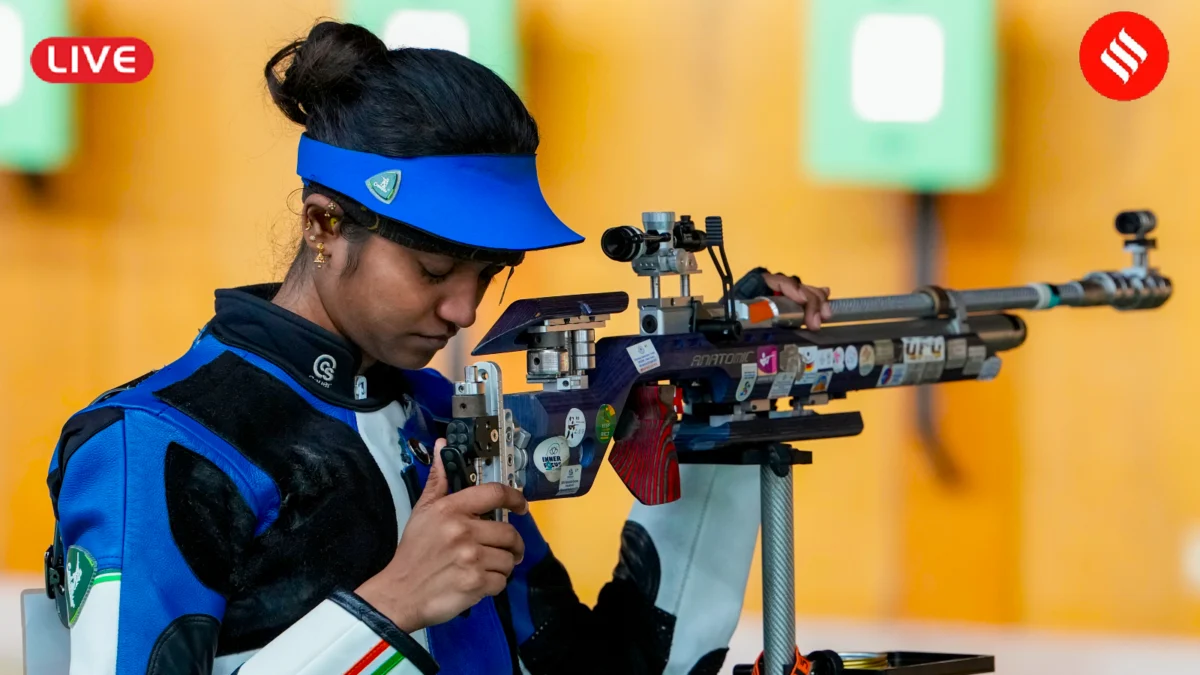
Aichi-Nagoya, Japan – September 21, 2026 – As the sun rises over the vibrant city of Nagoya, India’s quest for its inaugural gold medal at the 2026 Asian Games intensifies. The second day of competition dawns with palpable anticipation, following a resilient opening performance on Sunday that saw the nation secure two silver medals, both courtesy of the remarkable sharpshooter Elavenil Valarivan. While these early accolades have placed India 10th in the provisional medal standings, the contingent remains hungry for the top podium finish that would ignite their campaign.
The inaugural day concluded with Asian sporting powerhouses China and hosts Japan asserting their dominance, each accumulating an impressive haul of 20 medals. China, with 11 golds, currently holds a slender lead over Japan, who boast six golds, setting the stage for a thrilling fortnight of continental rivalry. For India, the focus now shifts to Monday’s events, where a promising lineup of athletes across various disciplines will aim to convert potential into precious gold.
Day 1: A Silver Lining Amidst Golden Aspirations
Sunday’s proceedings were a testament to the dedication and precision of India’s shooting contingent, particularly the women’s 10m Air Rifle team. The initial hours of the Games saw the Indian flag hoisted twice, a moment of pride tempered slightly by the tantalizing proximity to gold.
Elavenil Valarivan’s Stellar Performance
The undeniable star of Day 1 for India was Elavenil Valarivan, whose composure and skill under pressure earned her not one, but two silver medals in the 10m Air Rifle discipline. Her individual performance in the final was a nail-biting affair that had spectators on the edge of their seats. Valarivan, showcasing her characteristic calm, maintained a leading position for the majority of the final, executing a series of near-perfect shots. However, in a cruel twist of fate, the gold medal slipped through her grasp by the slimmest of margins – a mere 0.6 points – in the ultimate two shots against Japan’s Taichi Hinata. Despite the heartbreak of narrowly missing gold, her individual silver was a monumental achievement, signaling India’s strong presence on the global shooting stage.
Earlier in the day, Valarivan had also played a pivotal role in securing India’s first medal of the Games as part of the women’s 10m Air Rifle team event. Alongside her teammates Sonam Maskar and Vidarsa Vinod, the trio demonstrated remarkable synergy and consistency, combining their scores to clinch the team silver. This collective effort underscored the depth of talent within the Indian shooting squad and provided a crucial morale boost for the entire contingent. The double silver was a powerful statement from Valarivan, echoing her long journey of perseverance and near-misses finally culminating in a significant Asian Games moment.
The Long Road to Nagoya: Elavenil’s Defining Moment
Elavenil Valarivan’s journey to the Asian Games podium has been anything but conventional. Her career trajectory has often been characterized by immense promise and agonizingly close calls, making her double silver in Nagoya a profoundly significant milestone.
A Career Defined by Proximity
For years, Elavenil has been touted as one of India’s brightest shooting prospects, a prodigious talent destined to carry forward the legacy forged by legends like Abhinav Bindra and Gagan Narang. Her early career saw her rise rapidly through the ranks, achieving the coveted World No. 1 ranking in the junior category and consistently delivering strong performances in World Cups. Yet, despite her undeniable talent, major multi-sport event medals, particularly at the senior level, remained elusive. She was often "close enough" to Olympic berths, "close enough" to major championship podiums, watching others – sometimes younger, sometimes more experienced – seize the spotlight while she continued her diligent work in the background.
This period of waiting, of being on the cusp without quite breaking through, could have been disheartening. However, Valarivan channeled her experiences into relentless training and mental fortitude. Her mentor, the veteran shooter Gagan Narang, who himself secured team and individual silvers at the 2010 Asian Games, has been a guiding force. Narang, understanding the pressures and demands of elite-level shooting, has consistently advocated for patience and persistence. His own path, paved with years of dedication before achieving Olympic glory, served as a powerful example for Valarivan. The emotional weight of these two silvers is thus immense, not just for the nation, but for Elavenil herself, marking a definitive moment where her potential translated into tangible, high-profile success. These medals are not merely statistics; they are a culmination of years of sacrifice, self-belief, and unwavering commitment, finally solidifying her place among India’s elite sportspersons.
Medal Tally and Regional Rivalries: A Snapshot of Early Dominance
The early medal standings at the 2026 Asian Games paint a clear picture of the continent’s sporting hierarchy, while also highlighting the fierce competition that defines this quadrennial spectacle.
Current Standings and Powerhouses
As Day 1 drew to a close, the leaderboard was predictably dominated by East Asian giants. China, with their robust sports infrastructure and vast talent pool, quickly established themselves at the top, securing 11 gold medals among their total of 20. Hot on their heels was the host nation, Japan, also with 20 medals but six golds, demonstrating their home advantage and strong performances across various disciplines. The Republic of Korea, Uzbekistan, and Kazakhstan also began to register their presence, picking up a mix of golds, silvers, and bronzes, indicating the competitive depth of the Games.
India’s 10th position, with two silver medals, reflects a modest but promising start. While the initial focus remains on the shooting arena, where the first medals were won, many of India’s traditional strongholds – such as wrestling, boxing, and athletics – are yet to commence their full slate of events. This early standing, therefore, serves as a baseline, with the expectation that India’s medal tally will significantly climb as the Games progress and athletes in other disciplines begin their campaigns. Analysts predict a closely contested Games, with several nations vying for top-tier positions, making every medal, especially gold, critically important.
Anticipating Day 2: India’s Pursuit of Gold
Monday, September 21st, promises to be another day of intense competition for the Indian contingent, with several athletes poised to make their mark and potentially secure the nation’s first gold medal.
Sharpshooters Aim for the Bullseye
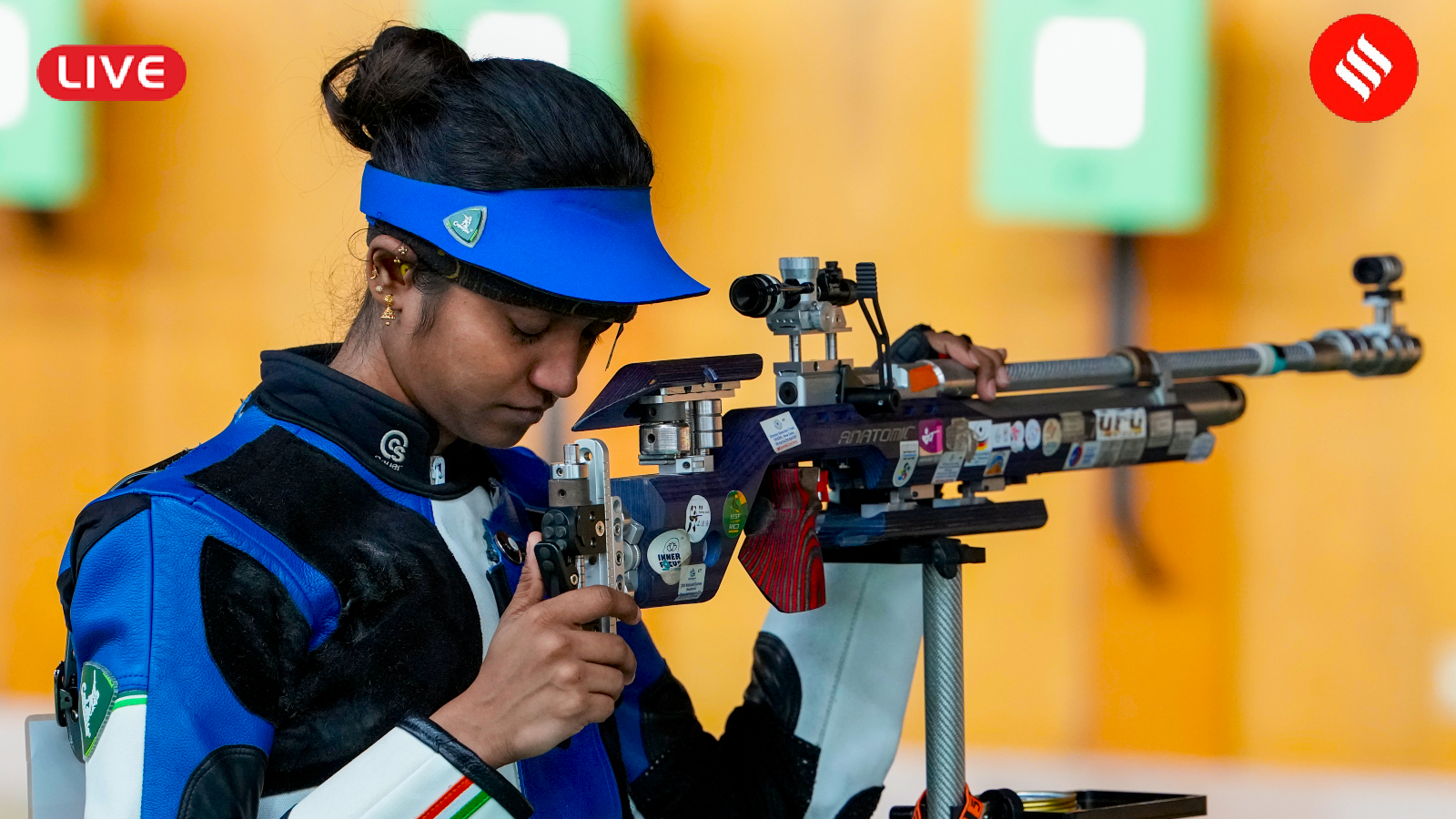
Following the women’s success, all eyes will turn to the men’s 10m Air Rifle event, featuring a formidable Indian lineup. Parth Rakesh Mane, Himanshu Dhillon, and Rudranksh Balasaheb Patil are set to compete in both the individual qualification and the team final. Each of these shooters brings a strong pedigree to the competition. Rudranksh Patil, in particular, has been a rising star in recent years, with a junior World Championship title and consistent senior-level performances showcasing his immense talent and potential for a gold medal. Parth Rakesh Mane and Himanshu Dhillon are also seasoned campaigners, known for their precision and ability to perform under pressure. The collective strength of this trio makes them strong contenders for the team gold, and individually, any one of them could very well challenge for the top spot. The competition will be fierce, with strong opposition expected from China, Korea, and Japan, but the Indian men’s rifle team carries the hopes of the nation for that elusive first gold.
Table Tennis Titans Face Arch-Rivals
Beyond the shooting range, a highly anticipated clash is scheduled in table tennis, where the Indian women’s team will face arch-rivals Pakistan. While India traditionally holds an advantage in table tennis, particularly against Pakistan, the nature of this rivalry often adds an extra layer of intensity to the match. The Indian women’s team, comprising experienced players and promising youngsters, will be eager to assert their dominance and advance further in the team event. This match is crucial for building momentum and confidence as they navigate through the challenging rounds towards a potential medal. A decisive victory here would be an important statement for the team’s aspirations.
Beyond the Marquee Events: Diverse Hopes
Monday’s schedule also features Indian athletes in several other disciplines, highlighting the nation’s diverse sporting ambitions. In Wushu, Nyeman Wangsu will compete in the Women’s Changquan event at 5:30 AM IST. Wangsu, known for her powerful and acrobatic style, will aim to impress the judges and secure a strong position. Wushu, a martial arts discipline, often sees incredible displays of strength, agility, and artistic interpretation, and Wangsu’s performance will be keenly watched.
Simultaneously, in Soft Tennis, the mixed doubles pair of Jay Meena and Aadhya Tiwari will commence their campaign in the group stage. Soft tennis, a racket sport similar to tennis but played with a softer ball and flexible rackets, requires immense hand-eye coordination and tactical prowess. Meena and Tiwari will be looking to start strong and navigate their way through the initial rounds.
Later in the morning, the Indian Men’s Team Regu in Sepaktakraw will clash with hosts Japan. Sepaktakraw, a captivating sport combining elements of volleyball and soccer played with a rattan ball, demands exceptional acrobatic skill and teamwork. Facing the home team will be a challenging encounter, but the Indian squad will be determined to put up a strong fight and register an early victory in their group stage match. These events, though perhaps not as high-profile as shooting or table tennis, are vital for India’s overall medal tally and showcase the breadth of talent within the contingent.
India’s Historical Performance at the Asian Games
India has a rich and storied history at the Asian Games, consistently featuring among the top-performing nations, albeit often behind the dominant East Asian powers. Since the inception of the Games in 1951, India has hosted the event twice and has accumulated a significant number of medals across various editions. Historically, disciplines like athletics, wrestling, boxing, kabaddi, and shooting have been India’s strongest medal-yielding sports.
In recent editions, there has been a concerted effort by the Indian Olympic Association (IOA) and the Sports Authority of India (SAI) to broaden the medal base, investing in sports like rowing, fencing, and equestrian. The nation’s best performance to date came in the 2018 Jakarta-Palembang Games, where India secured a record 70 medals, including 16 golds, finishing 8th in the overall standings. The ambition for the 2026 Aichi-Nagoya Games is to surpass that tally, aiming for an unprecedented haul of 100+ medals. The early silvers, while not gold, are a crucial stepping stone towards this ambitious target, setting a positive tone and signaling India’s intent to compete at the highest level.
Voices from the Arena: Reactions and Outlook
The initial performances and the anticipation for Day 2 have naturally elicited responses from the athletes, coaches, and sports officials, reflecting a mix of satisfaction, determination, and optimism.
Valarivan’s Reflection and Future Focus
Speaking after her double silver win, Elavenil Valarivan expressed a blend of relief and resolve. "It’s an incredible feeling to finally have Asian Games medals around my neck. There’s a slight disappointment about missing the gold by such a narrow margin, but it only fuels my motivation for future events," Valarivan stated, her voice reflecting both exhaustion and pride. "This is just the beginning for me and for India at these Games. I’ve learned valuable lessons today, and I’m determined to come back stronger. The support from my teammates and coaches has been immense." Her words underscore the psychological battle every athlete faces – celebrating achievements while immediately refocusing on future challenges.
Coaching Staff’s Perspective
The Indian shooting team’s head coach, whose name will be withheld for privacy but represents the collective voice of the coaching staff, lauded Valarivan’s performance. "Elavenil was magnificent today. To win two silvers, especially the individual one coming so close to gold, speaks volumes about her talent and mental strength," the coach remarked. "We are immensely proud. For tomorrow, our men’s 10m Air Rifle team is well-prepared. Parth, Himanshu, and Rudranksh are world-class shooters, and we have full confidence in their ability to deliver. We are on track, and every medal, regardless of its color, contributes to our overall goal." This sentiment highlights the strategic importance of early medals in building momentum for the entire contingent.
IOA/Sports Authority Statements
Officials from the Indian Olympic Association (IOA) and the Sports Authority of India (SAI) were quick to congratulate the early medalists and express their optimism for the Games ahead. "We extend our heartfelt congratulations to Elavenil Valarivan for her exceptional performance and for bringing India its first medals at the Asian Games 2026," an IOA spokesperson commented. "Her silvers are a testament to the hard work of our athletes and the support system in place. We are immensely optimistic about the coming days. Our athletes are giving their best, and India aims high for a record medal tally this year. We urge the nation to continue supporting our champions as they strive for glory." Such statements are crucial for public morale and reaffirm the organizational support behind the athletes.
Broader Implications: Momentum, Morale, and the Road Ahead
The initial results of the Asian Games 2026 carry significant implications for India’s campaign, influencing everything from athlete morale to strategic planning for the remaining days.
Building Momentum and Boosting Morale
Early medals, even if not gold, serve as a powerful catalyst for an entire contingent. Valarivan’s double silver has undoubtedly injected a much-needed boost of confidence and enthusiasm among the Indian athletes. It signals that India is here to compete, and that the long hours of training are beginning to pay off. For athletes in other disciplines, witnessing their peers succeed can be incredibly motivating, fostering a collective spirit of determination. The psychological edge gained from an early medal can be invaluable, helping to alleviate initial jitters and set a positive tone for the challenging competitions ahead. However, it also places a unique pressure on the first medal winners, as the nation’s expectations are immediately heightened.
Setting the Tone for India’s Campaign
The silvers establish a baseline for India’s performance, but the hunger for gold remains paramount. Day 2’s results, particularly from the men’s shooting events and the table tennis clash, will be crucial in shaping the narrative for the coming week. Converting potential into actual gold medals is vital for India’s standing on the medal table and for validating the investments made in sports development. A gold medal on Monday would not only elevate India’s position but also send a strong message to competitors and stakeholders about the nation’s serious intent to contend for top honors. It would demonstrate the ability to finish strong and capitalize on opportunities, a characteristic of truly dominant sporting nations.
The Journey Continues: Beyond Nagoya
For the athletes involved, the Asian Games are often a critical stepping stone in their careers. Performances here can significantly influence their trajectory towards future major championships, including the Olympic Games. For Elavenil Valarivan, these silvers could be the confidence-booster she needs to convert her consistent potential into Olympic glory. For the young men’s rifle team, a strong showing can cement their places in future national squads and international competitions. The Asian Games provide invaluable exposure to high-pressure environments, allowing athletes to test their mettle against continental bests. Beyond individual athletes, India’s overall performance in Aichi-Nagoya will also contribute to its reputation on the international sporting stage, reflecting the efficacy of its sports policies and talent development programs. The journey is long, the competition fierce, but India has thrown its hat into the ring, determined to make its mark at the 2026 Asian Games.
© IE Online Media Services Pvt Ltd
