

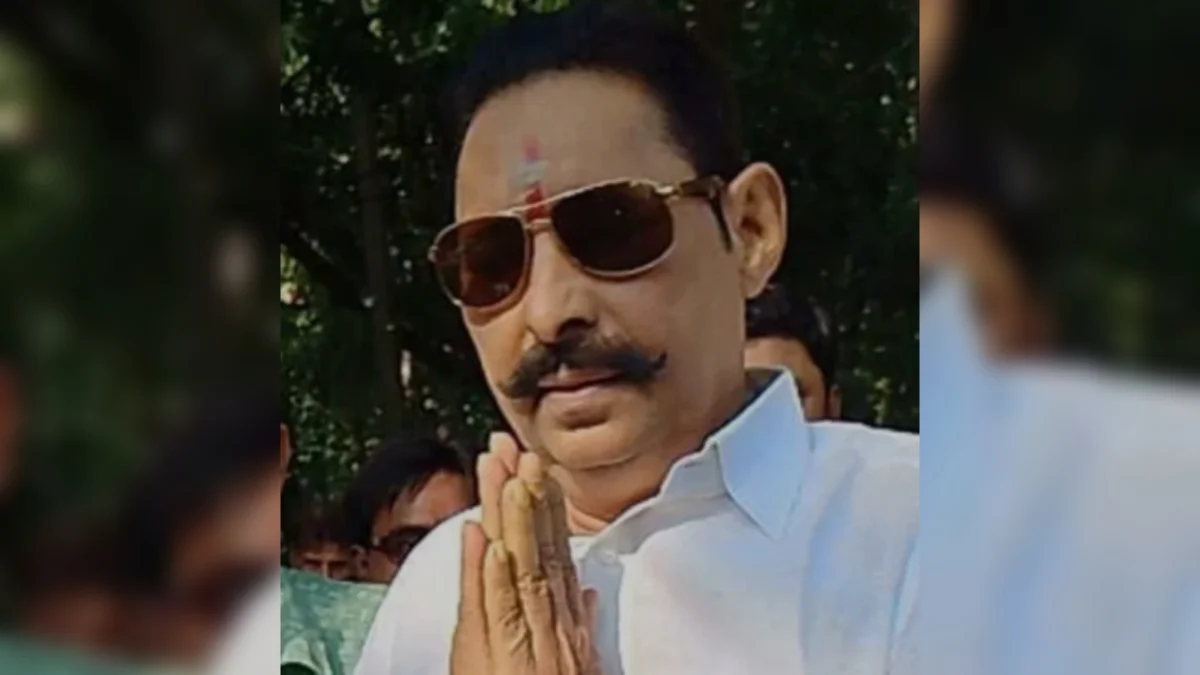
Patna, Bihar – September 20, 2026 – A political earthquake is rumbling through Bihar’s ruling Janata Dal (United) as one of its most prominent figures, Mokama MLA and formidable strongman Anant Kumar Singh, has publicly declared his intent to orchestrate the defeat of fellow party leader and chief spokesperson, Neeraj Kumar, in the upcoming Bihar Legislative Council elections. This audacious pronouncement, made just weeks before the crucial polls, has not only cast a long shadow over the JD(U)’s internal cohesion but has also thrust a decade-old, deeply acrimonious rivalry back into the unforgiving glare of the public spotlight.
Singh, known colloquially as ‘Chhote Sarkar’ (the ‘junior master’ or ‘little government’) for his undeniable influence in the Mokama region, has pledged his full support to an independent candidate, Anuj Singh, to challenge Neeraj Kumar for the Patna Graduates constituency. Neeraj Kumar, a seasoned politician and an intellectual voice within the JD(U), is currently seeking an unprecedented fourth consecutive term from this prestigious seat, making the upcoming contest a litmus test for both leaders and a significant challenge for the party’s high command.
The Bihar Legislative Council elections, scheduled for late October or early November, will see polling for eight critical seats – four Graduate and four Teachers’ constituencies. The six-year terms of the incumbent members, including Neeraj Kumar, are set to expire on November 16. With the Election Commission (EC) anticipated to issue the official notification in late September or early October, the battle lines are being drawn, and the JD(U) finds itself in an unenviable position, grappling with a public feud between two of its prominent faces.
The Unfolding Electoral Battle: A Gauntlet Thrown
Anant Kumar Singh’s declaration is not merely a statement of intent; it is a direct challenge to the party’s internal discipline and an open act of rebellion against a colleague. Speaking to reporters on Friday, Singh minced no words, stating, "I will ensure Neeraj does not win back his MLC seat. He has never supported me in my entire political career and, in fact, got me framed in an AK-47 (possession) case in 2019. He has opposed me in four elections." He further escalated his allegations, challenging Neeraj Kumar to undergo a narco-analysis test to prove his innocence regarding the alleged framing in the arms case.
This move by Singh has sent ripples across the political landscape of Bihar, not least because it involves two leaders from the same party, both hailing from the influential Bhumihar community of Mokama. It transforms what would typically be a routine legislative council election into a high-octane political drama, replete with personal vendettas, allegations of conspiracy, and a clash of political styles.
The Stakes for Neeraj Kumar
For Neeraj Kumar, a respected party spokesperson and a fixture in the Legislative Council, this election is more than just about retaining a seat; it’s about validating his political standing and image. His pursuit of a fourth consecutive term from the Patna Graduates constituency underscores the importance of this electoral battle. The Patna Graduates constituency, encompassing a significant urban and semi-urban intellectual voter base, is often seen as a barometer of the educated electorate’s mood. Losing this seat, especially due to internal party sabotage, would be a severe blow to his reputation and political career. As a prominent voice of the JD(U) and a close confidante of Chief Minister Nitish Kumar, his defeat could also be interpreted as a subtle weakening of the party’s intellectual flank and its ability to maintain internal harmony.
Bihar Legislative Council Elections: A Primer
The Bihar Legislative Council, the upper house of the state legislature, plays a crucial role in the legislative process. Its members are elected through various methods, including indirect elections by local bodies, nominations by the Governor, and direct elections from Graduate and Teachers’ constituencies. These Graduate and Teachers’ constituencies are unique as they represent specific professional and academic segments of the electorate. Voters in these constituencies must possess a graduate degree or be actively engaged in the teaching profession, respectively. The elections, while often less flashy than Assembly or Lok Sabha polls, are significant for political parties to maintain their legislative strength and influence. The six-year term provides stability, and the members often contribute to policy debates with specialized insights. The Election Commission’s impending notification will kickstart the formal election process, setting in motion candidate filings, campaigning, and eventually, polling. The outcome of these elections, especially in closely watched contests like the Patna Graduates seat, can often reflect underlying political currents and internal party dynamics.
A Decade of Discord: The Chronology of a Bitter Rivalry
The animosity between Anant Kumar Singh and Neeraj Kumar is not a sudden eruption but the culmination of a long-standing, deeply entrenched rivalry that has simmered for over a decade. Both leaders, despite their shared political affiliation and regional roots, have been locked in a bitter contest, marked by electoral clashes, public denunciations, and even allegations involving serious criminal cases.
Roots in Mokama’s Soil
The feud’s genesis lies in their shared geography and caste identity. Both Anant Singh and Neeraj Kumar hail from Mokama, a region historically associated with strongman politics in Bihar, and both belong to the influential Bhumihar community. While Singh carved out a reputation as a powerful local chieftain with a strong, often feared, presence, Neeraj Kumar cultivated an image as an articulate intellectual, a party loyalist, and a voice of reason within the JD(U). Their divergent political trajectories and public personas set the stage for an inevitable clash, as their ambitions and methods often stood in stark contrast. The local dynamics of Mokama, where caste and muscle power frequently intersect with political aspirations, further fueled their personal and political antagonisms.
The 2015 Assembly Election Flashpoint
The rivalry escalated dramatically in 2015, a pivotal year that cemented their mutual antagonism. Anant Singh faced arrest in connection with the murder of a youth named Putus in Barh, a charge that led the JD(U) to deny him a ticket for the Assembly elections. Defiant, Singh contested the elections as an independent candidate, remarkably securing a victory from behind bars. In a direct electoral confrontation, he defeated Neeraj Kumar, who was then the JD(U)’s official candidate, by a significant margin of 18,348 votes. This defeat was not just an electoral loss for Neeraj; it was a public humiliation. During the intensely fought campaign, Neeraj Kumar had openly described Singh as a "political nuisance," a remark that further inflamed their hostility and transformed their professional rivalry into a deeply personal one. The 2015 election thus became a defining moment, solidifying the perception of them as sworn adversaries within the same political ecosystem.
The AK-47 Controversy of 2019
The acrimony between the two reached a fever pitch in 2019 following a police raid on Anant Singh’s ancestral home in Ladma village. The raid uncovered a cache of illegal weapons, including an AK-47 rifle, live ammunition, and hand grenades. Singh was subsequently booked under the Unlawful Activities (Prevention) Act (UAPA) and the Arms Act. From the outset, Singh vehemently denied the charges, alleging that the weapons had been planted as part of a elaborate conspiracy orchestrated by his political rivals, explicitly naming Neeraj Kumar as being involved. This allegation, though denied by Neeraj, became a core grievance for Singh. He was eventually convicted in the case in 2022 by a special court. However, in a significant turn of events in August 2024, the Patna High Court acquitted him, citing a lack of sufficient evidence. Despite the acquittal, Singh’s belief that Neeraj Kumar was instrumental in his legal troubles has remained unshaken, serving as a primary motivation for his current electoral vendetta.
Persistent Public Antagonism
Beyond these major incidents, the relationship between Singh and Neeraj has been characterized by persistent public antagonism. Neeraj Kumar has, on multiple occasions, publicly criticized politicians with criminal backgrounds, often seen as veiled but direct attacks on Anant Singh. He has consistently ruled out campaigning alongside Singh, emphasizing his principled stance against individuals facing serious charges. This moral high ground adopted by Neeraj has, in turn, fueled Singh’s resentment, who perceives it as a continuous campaign to tarnish his image. Singh is currently out on bail in connection with the Gulabchandra Yadav murder case, which occurred ahead of the 2025 Bihar Assembly elections, further complicating his public image and providing Neeraj with additional ammunition for his critique. This ongoing public friction has kept their rivalry alive, constantly threatening to destabilize the JD(U)’s internal dynamics.
Beyond the Personal: Supporting Data and Context
The clash between Anant Singh and Neeraj Kumar transcends a mere personal feud; it is emblematic of deeper structural issues within Bihar’s politics, reflecting the enduring tension between traditional strongman politics and the aspiration for a more governance-oriented, intellectual leadership.
The Anatomy of a Strongman: Anant Kumar Singh’s Enduring Influence
Anant Kumar Singh’s political career is a classic study in the phenomenon of the ‘strongman’ in Indian politics. His moniker, ‘Chhote Sarkar,’ is not merely a nickname but a reflection of the significant, almost parallel, authority he wields in his stronghold of Mokama and surrounding areas. His influence is built on a complex matrix of caste loyalty (Bhumihar), a reputation for swift, albeit often extra-legal, justice, and a network of patronage. Despite a long history of criminal cases, including charges of murder, kidnapping, and illegal arms possession, Singh has repeatedly demonstrated an uncanny ability to win elections, often with substantial margins. This resilience underscores a particular voter psychology in regions like Mokama, where traditional allegiances and the perception of a leader’s ability to ‘get things done’ – regardless of their legal standing – often outweigh concerns about criminal records. His electoral successes, even when contesting as an independent or from jail, highlight a significant challenge for mainstream parties attempting to project a clean image.
The Party Loyalist: Neeraj Kumar’s Political Persona
In stark contrast to Singh, Neeraj Kumar represents a different archetype within the JD(U). With an academic background and a reputation for articulate communication, he has carved out a niche as the party’s intellectual face and chief spokesperson. His political identity is closely intertwined with Chief Minister Nitish Kumar’s image of ‘sushasan’ (good governance) and ‘nyay ke saath vikas’ (development with justice). Neeraj Kumar is widely perceived as a loyal soldier of Nitish Kumar, consistently defending the party’s policies and leadership. His long tenure as an MLC from the Patna Graduates constituency further solidifies his image as a representative of the educated and professional classes. His emphasis on principle, his public stance against criminalization of politics, and his commitment to party ideology position him as a counterpoint to leaders like Anant Singh. This ideological divide within the party, represented by their personal feud, highlights the internal struggle to reconcile differing political styles and public expectations.
Caste Dynamics: The Bhumihar Factor
The fact that both Singh and Neeraj belong to the Bhumihar community adds another layer of complexity to their rivalry. Bhumihars are an influential upper-caste community in Bihar, holding significant sway in several constituencies, including Mokama and parts of Patna. While this shared caste identity might typically foster solidarity, in this instance, it has intensified the internecine battle. Their rivalry becomes a struggle for supremacy within the community, with each leader vying for the Bhumihar vote bank and asserting their dominance. Singh’s supporters often view him as a protector of community interests, while Neeraj’s intellectual appeal aims to capture the more progressive elements. This internal contest within an influential caste bloc could have broader implications for caste equations in Bihar politics, especially if it leads to a significant fragmentation of the Bhumihar vote or forces other communities to take sides.
The JD(U)’s Internal Fissures
The public spat between Anant Singh and Neeraj Kumar exposes deep fissures within the JD(U). A ruling party thrives on internal harmony and a unified public front, especially heading into elections. This open defiance by an MLA against a party spokesperson undermines the party’s authority and discipline. It raises questions about Chief Minister Nitish Kumar’s ability to rein in powerful, sometimes recalcitrant, leaders within his own party. The JD(U) has historically projected an image of a disciplined, cadre-based party, but such public spats threaten to erode this perception. The challenge for the party high command is immense: intervening too strongly might alienate Singh’s powerful support base, while inaction could be perceived as weakness and embolden further dissent. This internal conflict complicates the JD(U)’s electoral strategy and could distract from its broader governance agenda.
The Role of Independent Candidates
Anant Singh’s pledge of support for independent candidate Anuj Singh is a strategic move that leverages the unique characteristics of Legislative Council elections. Unlike Assembly or Lok Sabha polls, where party symbols and affiliations often dictate voter behavior, MLC elections, particularly from Graduate constituencies, can sometimes see a more nuanced approach from the electorate. Registered graduate voters, often more discerning and less bound by traditional party loyalties, might be swayed by a strong local personality or a candidate perceived to have independent merit. An independent candidate, when backed by a powerful figure like Anant Singh, can pose a formidable challenge to an official party nominee, especially if the internal party dissent is substantial. Singh’s endorsement effectively mobilizes his personal network and influence, turning what might otherwise be a straightforward contest into a highly unpredictable battle.
Official Responses and Counter-Allegations
The core of this political conflict lies in the direct accusations and counter-accusations exchanged between Anant Singh and Neeraj Kumar, highlighting the deep-seated mistrust and animosity that defines their relationship.
Singh’s Unwavering Accusations
Anant Singh’s narrative is clear and unyielding: he views Neeraj Kumar as a direct adversary who has actively sought to undermine his political career and even implicate him in criminal cases. His assertion that Neeraj "never supported me in my entire political career" and, more gravely, "got me framed in an AK-47 (possession) case in 2019," forms the bedrock of his current campaign against his party colleague. The challenge for a narco-analysis test is a dramatic escalation, designed to publicly cast doubt on Neeraj Kumar’s integrity and lend credibility to Singh’s claims of conspiracy. This level of personal attack, involving serious allegations of criminal framing, is rarely seen within the confines of a single political party and underscores the profound breakdown of trust between the two leaders. For Singh, this MLC election is not just about a seat; it’s about vindication and retribution.
Neeraj’s Defense: Loyalty and Principle
Neeraj Kumar, in his response to The Indian Express, has firmly rejected Singh’s allegations, framing his defense around his unwavering loyalty to the JD(U) and Chief Minister Nitish Kumar. "I have been a loyal soldier of (party chief and ex-Bihar CM) Nitish Kumar ever since I entered politics over 35 years ago. I have never deserted the party like others," he stated, an apparent and pointed jab at Anant Singh’s brief stint with the Rashtriya Janata Dal (RJD) in the past. This emphasizes his image as a dedicated party member, contrasting it with Singh’s perceived opportunism. Regarding the demand for a narco-analysis test, Neeraj dismissed it as baseless, explaining that such a test could only be ordered by a court based on a valid complaint. He reiterated his principled stance, stating, "I have always resisted such forces in the party," a clear reference to leaders with criminal backgrounds. By focusing on his loyalty, principles, and the democratic process, Neeraj attempts to pivot the narrative away from personal mudslinging towards a more ideological and ethical plane, reminding everyone that ultimately, the more than 88,000 registered graduate voters in the constituency would decide the election, not personal feuds.
The Party’s Stance
As of the latest reports, the Janata Dal (United) high command has maintained a studied silence on the escalating public feud. This silence, while perhaps aimed at preventing further exacerbation of the conflict, also highlights the precarious position the party finds itself in. Publicly reprimanding Anant Singh could risk alienating a powerful figure and his substantial vote bank, especially within the Bhumihar community, and might lead to his complete rebellion or defection. Conversely, not defending Neeraj Kumar, a loyal and articulate spokesperson, could be seen as undermining his authority and morale within the party. The JD(U) leadership is likely grappling with the difficult task of finding a way to mitigate the damage, perhaps through back-channel negotiations or a discreet internal intervention, without making a public spectacle that further damages the party’s image of unity and discipline. The absence of an official statement itself speaks volumes about the tricky internal dynamics at play.
Implications: A Test for the JD(U) and Bihar Politics
The Anant Singh-Neeraj Kumar showdown carries significant implications, not just for the JD(U) but for the broader political landscape of Bihar, potentially influencing future electoral strategies and the very narrative of governance in the state.
Internal Party Cohesion
The most immediate and apparent implication is the severe strain on the JD(U)’s internal cohesion. A public battle of this magnitude, especially between an influential MLA and a key party spokesperson, exposes deep cracks within the organizational structure. It sets a dangerous precedent, suggesting that powerful individuals can openly defy party lines and campaign against colleagues without immediate repercussions. This could encourage other disgruntled elements within the party to voice their dissent more openly, leading to further fragmentation and weakening the party’s ability to present a united front to the electorate. The challenge for the JD(U) will be to restore a sense of discipline and unity post-election, regardless of the outcome.
Nitish Kumar’s Leadership
This public feud poses a direct challenge to the authority and leadership of Chief Minister Nitish Kumar. Known for his emphasis on good governance and a principled stance against criminalization in politics, Nitish Kumar now faces a situation where one of his MLAs is actively working to defeat another loyal party member, citing deep-seated personal grievances that include serious criminal allegations. How Nitish Kumar manages this crisis will be a critical test of his leadership. His ability to navigate this internal strife without alienating key vote banks while upholding party discipline will be closely watched. A perceived inability to control his own ranks could subtly undermine his image as a strong and decisive leader, potentially impacting the JD(U)’s prospects in future, larger elections.
Impact on Future Elections
While the Legislative Council elections are often secondary to Assembly or Lok Sabha polls, the outcome of the Patna Graduates constituency contest could have ripple effects on future electoral dynamics. If Anant Singh successfully engineers Neeraj Kumar’s defeat, it would not only validate his influence but also send a powerful message about the enduring power of strongman politics and personal vendettas in Bihar. This could potentially embolden other strongmen within various parties to exert their will more forcefully. Conversely, if Neeraj Kumar manages to retain his seat despite the internal opposition, it would be a significant victory for the party’s official line and a testament to the power of a clean image and party loyalty. The outcome could thus influence candidate selection, campaign strategies, and alliance formations in subsequent elections, particularly in regions where caste and personal influence play a dominant role.
The Evolving Political Narrative
The public spat also shapes the broader political narrative in Bihar. It brings to the forefront the perennial debate about criminalization in politics, the role of strongmen, and the internal struggles within parties to reconcile diverse elements. For the electorate, it provides a glimpse into the often-murky world of political power struggles, potentially leading to increased cynicism or a demand for greater transparency and accountability. The media coverage will inevitably focus on the allegations of conspiracy, the clash of personalities, and the party’s inability to resolve internal conflicts, all of which contribute to the evolving public perception of the JD(U) and the state’s political culture.
Precedent and Power Dynamics
Finally, this episode could set a significant precedent for power dynamics within political parties in Bihar and beyond. It highlights the constant tension between "muscle power" (represented by leaders like Anant Singh) and "intellectual capital" (represented by Neeraj Kumar). The outcome will indicate which of these forces holds greater sway within the party structure and among specific electorates. If a strongman can openly defy party leadership and successfully sabotage a party colleague, it could empower similar figures elsewhere. Conversely, a victory for the party loyalist, despite such internal opposition, could reinforce the importance of party discipline and adherence to a principled political line.
In conclusion, the electoral battle for the Patna Graduates constituency is far more than a routine legislative council election. It is a microcosm of Bihar’s complex political landscape, a theatre for a deeply personal and politically charged rivalry, and a significant test for the JD(U)’s internal strength and Nitish Kumar’s leadership. As the election notification looms, all eyes will be on Patna, waiting to see whether Anant Singh’s "Chhote Sarkar" influence can indeed unseat a seasoned party loyalist, and what lasting implications this high-stakes showdown will have on Bihar’s political future.
