

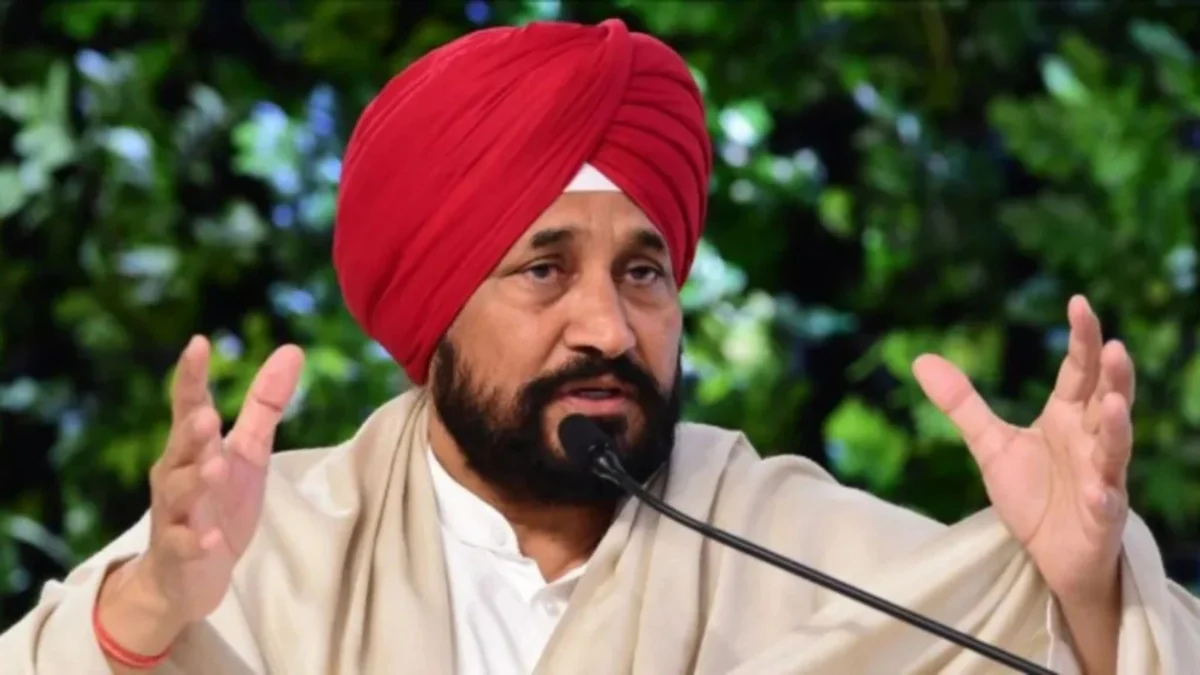
Jalandhar, Punjab – In the intricate and often tumultuous landscape of Punjab politics, Charanjit Singh Channi, the Member of Parliament from Jalandhar and former Chief Minister, has found himself at the nexus of the Punjab Congress’s ongoing internal debates. A prominent voice within the opposition, Channi recently engaged in a candid interview with The Indian Express, dissecting the myriad challenges confronting the state. His insights illuminate a Punjab grappling with deeply entrenched issues of drug addiction, a burgeoning climate of gangsterism, and a pressing need for systemic reforms in policing and governance.
Channi’s perspective is particularly pertinent given his prior tenure as Chief Minister, offering a unique blend of experience and opposition critique. He articulates a clear vision for a revitalized Punjab, contingent on the Congress party’s potential return to power, emphasizing accountability, professional administration, and a concerted effort to dismantle the criminal ecosystems that have taken root. This detailed exposition delves into his diagnosis of the state’s ailments, his proposed remedies, and the broader implications for Punjab’s social and political fabric.
The Enduring Scourge of Drugs in Punjab: A Crisis Beyond Statistics
Punjab’s battle against narcotics is a long-standing and agonizing saga, casting a dark shadow over its youth and future. While the Punjab Police frequently highlights significant drug seizures and a proliferation of First Information Reports (FIRs) as evidence of a robust crackdown, the ground reality, according to Channi and a significant portion of the opposition, paints a starkly different picture. The omnipresence of "chitta" (heroin) remains a tragic testament to a crisis that continues to elude comprehensive resolution.
Beyond Seizures: Questioning the Supply Chain
Channi critically questions the efficacy of merely counting seizures as a measure of success. "If the government claims that seizures have increased," he states, "it begs the question: where are the drugs coming from and why is the supply continuing?" This incisive query cuts to the heart of the matter, suggesting that current enforcement strategies may be addressing symptoms rather than the root causes. The sheer volume of confiscated narcotics, while indicative of police activity, concurrently underscores a relentless and apparently unhindered flow of illegal substances into the state.
The former Chief Minister emphasizes the critical need to meticulously examine and disrupt the entire supply chain. His concerns are not abstract; they are rooted in the tragic human cost. He recounts the heart-wrenching story of a 32-year-old man in a village near Chamkaur Sahib who succumbed to drug overdose, leaving behind a grieving family. Such personal tragedies, he argues, are the true indicators of failure, rendering mere statistics meaningless to those who suffer. Channi dismisses campaigns like "Yudh Nashian Virudh" (War Against Drugs) as insufficient if they are limited to "hoardings, advertisements and political statements." He stresses that "the people need to see an impact on the ground," implying a disconnect between official narratives and lived experiences.
A Divided Responsibility: Centre, State, and Border Security
The geographical realities of Punjab, sharing a porous international border with Pakistan and boundaries with neighboring Indian states like Rajasthan and Gujarat, complicate the fight against drugs. These borders serve as critical conduits for illicit drug trafficking, making the issue a shared, yet often contentious, responsibility between the state and central governments.
Channi acknowledges the Centre’s identification of districts like Amritsar, Gurdaspur, Tarn Taran, Ferozepur, Fazilka, and Ludhiana as "ultra-sensitive drug zones." However, he swiftly pivots to the question of accountability. "Most of these districts are along the international border and the Centre has the responsibility of preventing drugs entering India," he asserts. He points to the 2021 expansion of the Border Security Force’s (BSF) jurisdiction in border states, extending its operational reach up to 50 km from the border. This expansion, he argues, necessitates a clearer explanation from the Centre regarding what additional measures are being undertaken to staunch the flow of drugs at the very entry points.
Beyond the international frontier, Channi highlights the ingress of drugs from neighboring Indian states, necessitating robust coordination among central agencies to tackle inter-state trafficking. The prevailing situation, he laments, is characterized by a perpetual blame game between the Centre and the state, while "drugs continue to percolate into our villages," devastating lives and communities. This political deadlock, he implies, obstructs a unified and effective strategy, leaving the populace vulnerable.
Unfulfilled Promises and the Need for Ground Impact
The Aam Aadmi Party (AAP), upon assuming power in Punjab, had famously pledged to eradicate the drug menace within months. This promise, a cornerstone of its electoral campaign, now faces scrutiny. Speaker Kultar Singh Sandhwan’s recent admission that the promise remains unfulfilled serves as a stark reminder of the complexity and tenacity of the drug problem.
Channi dismisses attempts to reduce the issue to a single statement. For him, the tragic deaths of young people due to addiction are the most damning indictment of the government’s failure. He asserts that the Congress has consistently raised this issue through various platforms, demonstrating its commitment to demanding "concrete action." This ongoing political pressure underscores the gravity of the situation and the opposition’s intent to hold the ruling party accountable for its electoral pledges.
The critical assessment of the drug situation by Channi implies a profound erosion of public trust in government institutions to effectively tackle this crisis. The gap between political rhetoric and tangible results fuels cynicism and despair, particularly among families directly affected by addiction. The implications for Punjab’s demographic dividend are severe, as a significant portion of its youth is either entrapped by addiction or vulnerable to it, jeopardizing the state’s future productivity and social stability.
Reforming Punjab’s Policing and Tackling Gangsterism
The challenge of law and order in Punjab extends beyond drugs to the pervasive issue of gangsterism, which, according to Channi, has seen a troubling resurgence. His critique of the current policing system and the perceived nexus between crime and politics is sharp, advocating for a fundamental overhaul to restore public safety and trust.
Towards Professional and Politically Insulated Policing
If the Congress were to return to power, Channi identifies a pivotal area for immediate reform: the functioning of the police system. He advocates for "professional, accountable and politically insulated policing." This vision calls for a police force that operates autonomously, free from political interference, and guided by principles of merit and law.
He argues that transfers, often used as tools for "political management," must cease to be so. Instead, officers require "reasonable stability of tenure" to effectively deliver results and implement long-term strategies. Accountability, he stresses, must be "fixed at the entry-level, particularly at the district level," where the police force interacts directly with citizens and confronts local criminal elements. In the short term, he proposes strengthening intelligence gathering, enhancing investigative capabilities, and more effectively identifying drug networks to combat organized crime.
Crucially, Channi declares "zero tolerance to political and institutional patronage of drugs and gangsterism." This statement underscores a belief that the longevity and audacity of criminal networks are often facilitated, directly or indirectly, by political or administrative support. He calls for "political accountability and a moral responsibility on leaders," suggesting that ethical leadership is paramount in dismantling such ecosystems. The ultimate objective, he clarifies, is not merely a higher count of arrests and FIRs, but the complete "break[ing of] the criminal ecosystem and creat[ing] a Punjab where people can live safely, peacefully and with dignity." This holistic approach acknowledges that law enforcement alone cannot solve deeply embedded societal problems.
The Nexus of Crime and Politics: A Troubling Trend
Channi’s concerns about law and order are not just theoretical; he cites specific instances to illustrate what he perceives as a disturbing trend of "gangsterwaad" coexisting with the suppression of legitimate dissent. He frames the issue not through statistics, but through the lens of whether "an ordinary Punjabi feels safe, gets justice and whether the law is equal for everyone."
He highlights the "Gulzar Singh case," where an individual made serious allegations against Finance Minister Harpal Singh Cheema and others in a video. Channi points out that while allegations against others were included in the FIR, those against the minister were not treated with the same gravity. Furthermore, he mentions reports that Gulzar Singh’s son was allegedly prevented from performing his father’s final rites, raising questions about due process and political interference. He insists that "the investigation cannot depend on political position. Every allegation must be probed…"
Another instance involves "Mohanjit," who allegedly faced harsh police treatment for waving black flags at Chief Minister Mann from a rooftop. Channi views this as an alarming overreaction to dissent, questioning a government that "treats every criticism as a challenge to its authority." He argues that Punjab needs a government that is receptive to its youth’s concerns, not one that clamps down on legitimate forms of protest.
Perhaps most controversially, Channi brings up the case of Gurpreet Singh Sekhon, a figure termed a gangster with several criminal cases and a history of jailbreaks, who has reportedly joined the AAP. Channi questions the message this sends to Punjab’s youth: "What message is being sent out to Punjab’s youth by providing such a person with a political platform? It creates a perception of double standards." He firmly asserts that "Gangsterism must never be allowed to acquire political legitimacy." This criticism strikes at the heart of political ethics and the potential for a dangerous normalization of criminal elements within mainstream politics.
Confronting "Gangsterwaad": More Than Just Arrests
While the AAP government often touts its achievements in apprehending hundreds of gangsters, including extraditions from abroad, Channi clarifies that he is "not questioning the police for arresting gangsters." He acknowledges that lawful extraditions are part of their job. His central concern, however, lies deeper. He notes that "four-and-a-half years ago, gangsterism was not dominating everyday conversations in Punjab" to the same extent.
His point is not about the mechanics of law enforcement but about the broader societal and political context. "The state cannot fight gangsterism on one hand, and allow gangster culture to acquire social or political legitimacy on the other," he warns. This implies that while arrests are necessary, they are insufficient if the underlying conditions that foster gangsterism – and, crucially, its perceived acceptance or even patronage by political actors – are not addressed. The implications of such a trend are profound, potentially eroding the rule of law, undermining public trust in institutions, and creating an environment where fear and intimidation become normalized.
A Vision for Punjab: Channi’s Proposed Solutions
Channi’s critique is coupled with a clear articulation of his party’s potential approach, should they return to power. His proposed solutions underscore a commitment to both immediate enforcement and long-term societal transformation.
The "100-Day Plan" Against Drugs and Disorder
At the core of Channi’s strategy lies unwavering "political will, the courage to confront the drug mafia without fear or favour." He envisions the first 100 days of a Congress government as a period to establish a decisive "direction and accountability." The immediate priorities would include:
- Breaking the Supply Chain: A relentless focus on disrupting the flow of drugs, targeting the networks and kingpins who profit from this illicit trade.
- Firm Action Against Profiteers: Swift and stringent measures against those who enable and benefit from drug trafficking.
- Immediate Access to Treatment: For those already ensnared by addiction, providing prompt access to medical treatment, counselling, and comprehensive rehabilitation programs. This humane approach recognizes addiction as a disease requiring compassionate intervention.
Beyond Enforcement: Addressing Root Causes
Channi emphasizes that enforcement alone cannot resolve the multi-faceted drug problem. A sustainable solution necessitates a proactive approach to "prevent the next generation from being addicted." This involves addressing the socio-economic vulnerabilities that make youth susceptible to drug use. His proposals include:
- Good Education: Investing in quality education to provide young people with knowledge, skills, and aspirations.
- Employment Opportunities: Creating meaningful jobs to offer economic stability and a sense of purpose, diverting youth from idleness and despair.
- Sports and Other Meaningful Avenues: Promoting sports, cultural activities, and other constructive engagements to channel youthful energy positively and build resilience.
Crucially, Channi calls for a fundamental shift in "social attitude towards drugs," advocating for a society-wide campaign. He envisions a future where "Our children must see classrooms, playing fields, and workplaces as their path to a better future." This implies a collective responsibility, transcending government action, to foster an environment where aspirations replace addiction. He acknowledges that "Defeating drugs requires a sustained effort beyond 100 days," recognizing the deep-seated nature of the problem and the necessity of long-term commitment.
Inter-Party Dynamics and the Path Forward
The drug menace and law and order situation in Punjab are not merely administrative challenges; they are highly politicized issues, frequently becoming battlegrounds for inter-party rivalries. Channi’s analysis extends to these political dynamics, offering a critique of opposing parties’ approaches.
Critiquing the Opposition’s Efforts: BJP’s "Nasha Mukt Punjab Yatra"
The Bharatiya Janata Party (BJP) has also launched its "Nasha Mukt Punjab Yatra" (Drug-Free Punjab Journey), aiming to raise awareness and pressure the state government. Channi expresses a nuanced view: "Any campaign against drugs is welcome if it produces concrete results." However, he quickly adds a caveat, stating that "a yatra cannot be a substitute for effective action." This highlights his belief that symbolic gestures, while potentially raising awareness, must be backed by tangible policy and enforcement efforts.
He reiterates the shared responsibility between the state and the Centre, asserting that "Both governments need to answer for what is happening." His concluding remarks encapsulate this frustration with political posturing over decisive action. He quotes a poignant Urdu couplet, directed at both Union Home Minister Amit Shah and CM Bhagwant Mann:
"Tu idhar-udhar ki baat na kar, bata ki qafila luta kyun; humein rahznon se garaz nahi, teri rahbari ka sawaal hai"
(Don’t beat around the bush; tell me why the caravan was plundered. I have no concern with the bandits – the issue at hand is your leadership.)
This powerful poetic indictment summarizes Channi’s central argument: the focus should not be on peripheral issues or blame-shifting, but on the fundamental failure of leadership to protect the populace from the prevailing crises. The "caravan" represents Punjab itself, and its "plundering" signifies the social and economic devastation wrought by drugs and crime, with the ultimate responsibility resting on those in power.
The Stakes for Punjab’s Future
Charanjit Singh Channi’s comprehensive interview lays bare the profound challenges confronting Punjab. From the devastating impact of drug addiction on its youth and families to the erosion of public trust due to perceived political interference in law enforcement and the rise of gangsterism, the state faces a multi-faceted crisis. The implications are far-reaching: a generation lost to addiction, a stifled economy, an exodus of skilled labor, and a general sense of insecurity among its citizens.
His vision, predicated on strong political will, professional policing, and a holistic approach to rehabilitation and prevention, offers a roadmap for recovery. However, the realization of this vision hinges not only on political change but also on a concerted, collaborative effort from all stakeholders – state and central governments, law enforcement agencies, civil society, and the public. The rhetoric of blame must give way to genuine cooperation, and symbolic campaigns must be replaced by sustained, impactful action. As Punjab stands at a critical juncture, the call for decisive, accountable leadership to reclaim its future resonates with increasing urgency. The ultimate test for its political class will be their ability to move beyond partisan squabbles and deliver the security, dignity, and peace that its people so desperately seek.
