

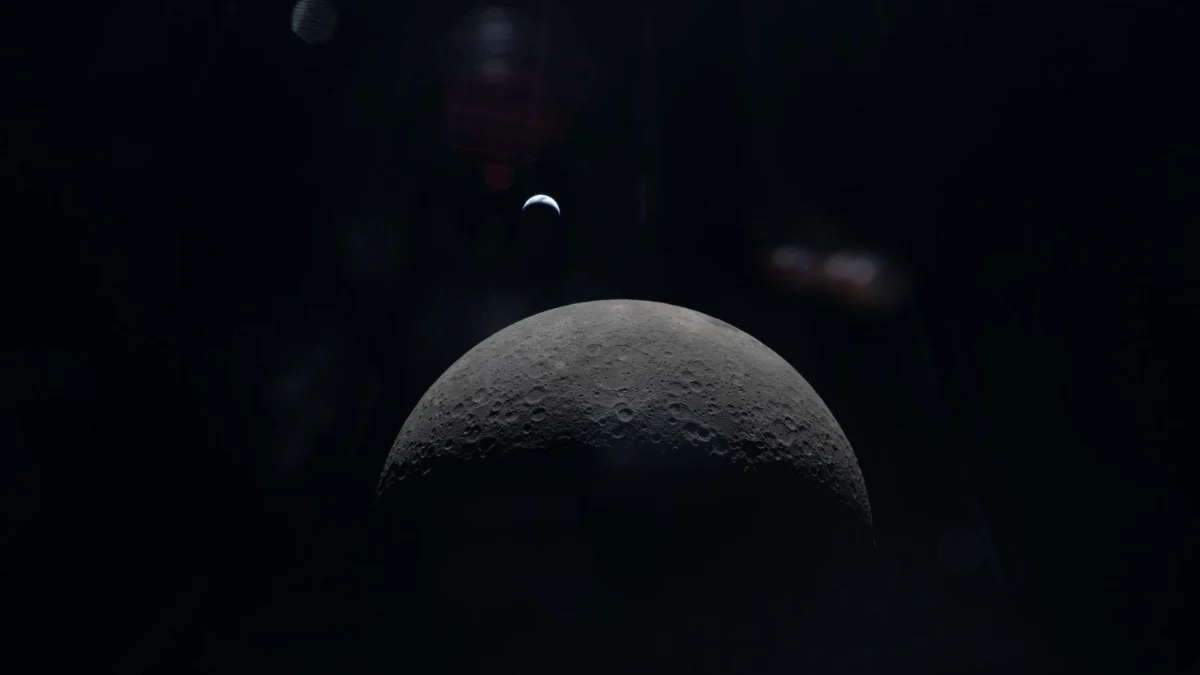
LUNAR ORBIT — On August 5, 2026, an 8,800-pound (4,000-kilogram) SpaceX Falcon 9 rocket stage careened into the lunar surface at several thousand miles per hour. The impact, which occurred near the Einstein Crater, sent a massive plume of regolith (lunar dust) into the thin exosphere, visible to orbital sensors. While the crash was a predicted end to the hardware’s journey, it has reignited an intense international debate regarding the environmental stewardship of Earth’s nearest neighbor.
As the "New Moon Race" accelerates—driven by a mix of national prestige, scientific discovery, and commercial interests—experts warn that the Moon is rapidly becoming a repository for orbital junk. With no dedicated international laws to govern waste disposal on the lunar surface, the scientific community fears that we are repeating the mistakes of Earth’s industrial age on a pristine celestial body.
I. Main Facts: The Impact and the Accumulating Debris
The recent crash of the Falcon 9 upper stage is not an isolated incident, but rather a symptom of increasing lunar traffic. The hardware in question was part of a mission launched in January 2025, tasked with delivering Firefly Aerospace’s Blue Ghost and ispace’s Resilience landers toward the Moon. After completing its primary objective, the rocket stage was left in a chaotic, high-altitude Earth orbit that was constantly perturbed by the Moon’s gravitational pull.
The Scale of the Problem
Humanity has been depositing material on the Moon since the Soviet Union’s Luna 2 became the first human-made object to reach the surface in 1959. Today, it is estimated that over 200 tonnes (approximately 440,000 pounds) of human-made material reside on the Moon. This inventory includes:
- Historical Artifacts: Apollo descent modules, lunar roving vehicles, and Soviet Lunokhod rovers.
- Scientific Instruments: Seismometers, retroreflectors, and discarded experiments.
- Intentional Impacts: Rocket stages crashed by NASA during the Apollo era to calibrate seismic sensors.
- Accidental Crashes: Failed landers from various nations and private companies.
- Discarded Hardware: Upper stages and spent boosters that drift into the Moon’s gravitational "well."
The August 5 impact highlights a growing concern: unlike the controlled landings of the 20th century, modern lunar debris is often the result of "chaotic orbits" where hardware is abandoned in regions of space where its eventual impact point is difficult to predict.
II. Chronology: From Scientific Milestone to Industrial Waste
The history of lunar impacts has shifted from carefully planned scientific endeavors to accidental or poorly managed disposals.
The Cold War Era (1959–1976)
During the first space race, impacts were often the goal. The Soviet Luna missions and the American Ranger program used "hard landings" to prove they could reach the Moon. Later, during the Apollo missions, NASA intentionally crashed the S-IVB (third stages) of Saturn V rockets into the Moon. These were calculated events designed to create artificial moonquakes, allowing scientists to study the lunar interior using seismometers placed by astronauts.
The Transitional Gap (1977–2000)
Lunar activity slowed significantly during this period, with only a handful of missions like Japan’s Hiten (which intentionally impacted in 1993) maintaining a human presence. The Moon remained largely undisturbed for two decades.
The Modern Renaissance (2000–Present)
The 21st century has seen a surge in lunar interest.
- 2009: NASA’s LCROSS mission intentionally crashed a kinetic impactor into the Cabeus crater to search for water ice.
- 2022: A Chinese Long March 3C rocket stage struck the lunar far side. This event was notable because it was initially misidentified as a SpaceX booster, highlighting the difficulties in tracking deep-space debris.
- 2024–2026: A flurry of private missions, including those by Intuitive Machines, Astrobotic, and ispace, have increased the density of hardware in lunar orbit.
- August 5, 2026: The Falcon 9 crash near Einstein Crater serves as the latest reminder that lunar exploration lacks a "clean-up" protocol.
III. Supporting Data: The Physics of Lunar Contamination
The environmental impact of a rocket crash on the Moon is significantly different—and in some ways more damaging—than a similar event on Earth.
The Dust Plume Effect
The Moon’s gravity is roughly 17% of Earth’s. Without a substantial atmosphere to provide drag, dust particles kicked up by an impact do not settle quickly. A 4,000-kg rocket stage hitting the surface at 2.5 kilometers per second can eject tonnes of regolith. These particles can travel hundreds of miles, potentially "sandblasting" existing scientific equipment or settling on sensitive optical lenses of nearby rovers.
Chemical and Biological Contamination
Rocket stages are not "clean" objects. They contain residual propellants, heavy metals, and potentially terrestrial microbes.
- Hydrazine and Nitrogen Tetroxide: Common propellants that can chemically alter the lunar soil at the impact site.
- Terrestrial Microbes: While the harsh vacuum and radiation of space kill most bacteria, some extremophiles can survive in a dormant state. The introduction of biological material complicates future "Life Detection" experiments that aim to find indigenous organic compounds.
The Loss of Geological Integrity
The Moon’s surface is a pristine record of the solar system’s history, preserved for billions of years. Natural impacts from meteoroids occur constantly, but human-made impacts introduce artificial materials (aluminum, titanium, plastics) that "pollute" the geological record. Scientists argue that we are losing the ability to study the Moon’s original state before we have even fully mapped it.
IV. Official Responses and the Legal Vacuum
The primary challenge facing space agencies today is that lunar exploration is expanding much faster than the rules governing it.
The 1967 Outer Space Treaty (OST)
The OST remains the bedrock of international space law. Article IX states that parties must conduct exploration "so as to avoid their harmful contamination" of the Moon and other celestial bodies. However, the treaty fails to define "harmful."
- The Interpretation Gap: Does a rocket crash constitute "harmful contamination," or is it merely an "incidental consequence" of exploration? Without a legal definition, countries and private companies operate in a gray area.
The Artemis Accords
Led by the United States, the Artemis Accords attempt to establish "safety zones" and guidelines for the protection of lunar heritage sites (like the Apollo 11 landing site). However, the Accords are a non-binding political agreement, not a formal treaty, and major spacefaring nations like China and Russia have not signed them.
Expert Perspectives
Jonathan McDowell, an astronomer and space historian at the Harvard-Smithsonian Center for Astrophysics, describes this as a "transitional moment." He notes that while we once viewed the Moon as a vast, empty void where a few rocket stages didn’t matter, it is now becoming a crowded workspace. "We need to stop treating the Moon like a cosmic junkyard," McDowell warned in a recent interview with Space.com.
Marieta Valdivia Lefort, a policy officer at the Royal Astronomical Society, emphasizes the lack of "waste law." She points out that there are currently no requirements for companies to "de-orbit" their hardware into designated disposal zones or to ensure that spent stages are sent into solar orbits (away from the Earth-Moon system).
V. Implications: The Future of the Lunar Environment
The unchecked accumulation of debris on the Moon has long-term implications for science, industry, and international relations.
Risks to Future Infrastructure
As NASA, China, and private consortia plan permanent lunar bases, the risk of "accidental bombardment" increases. A rocket stage crashing near a crewed habitat or a sensitive radio telescope (such as those proposed for the lunar far side) could be catastrophic. The dust clouds generated by these impacts can also interfere with laser communication systems and solar power arrays.
The "Tragedy of the Commons"
The Moon is a classic example of the "Tragedy of the Commons." Because no one owns the Moon, no single entity feels responsible for its cleanliness. If every nation and company leaves its trash behind, the very environment they seek to exploit will become too hazardous or contaminated to be useful.
The Call for New Norms
Experts are calling for several immediate changes to mission planning:
- Mandatory Disposal Maneuvers: Requiring rocket stages to use their remaining fuel to steer away from the Moon or into "safe" impact zones.
- Tracking and Transparency: A global registry of all objects in the Earth-Moon neighborhood to prevent "mystery crashes."
- Heritage Protection: Formally designating certain areas of the Moon as "off-limits" to any form of impact or industrial activity.
Conclusion
The crash of the SpaceX Falcon 9 on August 5 is a wake-up call. As we stand on the threshold of becoming a multi-planetary species, the way we treat the Moon will set the precedent for our expansion into the rest of the solar system. The challenge for the next decade is not just learning how to reach the Moon, but learning how to stay there without destroying the very world we have worked so hard to reach. Humanity’s legacy on the Moon should be one of discovery and stewardship, not a trail of twisted metal and radioactive dust.
