

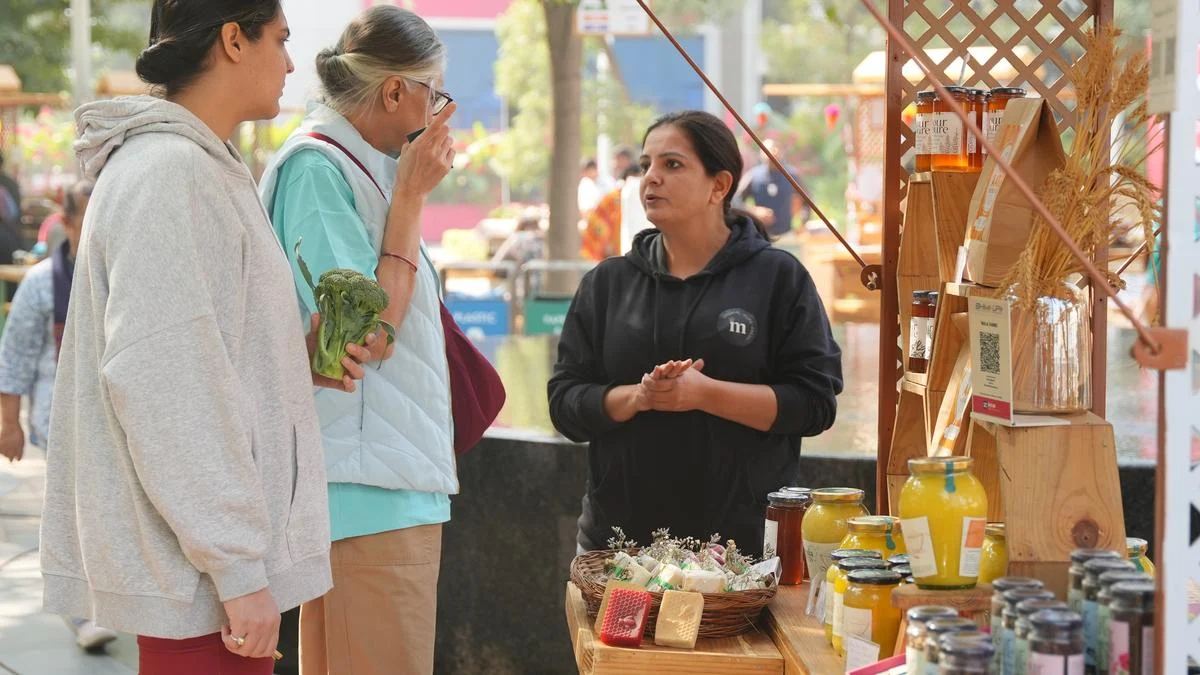
A quiet revolution is brewing in Indian kitchens, a subtle yet significant shift in how a growing segment of the population approaches their daily meals. It’s a movement driven not just by a desire to eat healthy, but to eat better. This evolving consumer landscape is characterized by a discerning palate that increasingly prioritizes provenance, transparency, and clean labels over mass-produced alternatives, even if it means a steeper price tag. From the rich, nutty aroma of cold-pressed groundnut oil to the nuanced notes of single-origin coffee, urban Indians are actively seeking out food products with a story, a traceable origin, and a commitment to natural processes.
This culinary awakening, amplified by a heightened awareness of health and food safety post-pandemic, is reshaping market dynamics and challenging conventional notions of value. While the allure of premium ingredients is undeniable, the journey towards "eating better" is not without its complexities, prompting questions about true health benefits, the authenticity of claims, and the economic realities of this burgeoning trend.

The Genesis of a Culinary Awakening: From Pantry Staples to Provenance Powerhouses
The shift is palpable, often sparked by seemingly ordinary conversations over shared meals. Neeraj Singh, a tech consultant and passionate home cook in South Delhi, exemplifies this trend. His decision to exclusively use cold-pressed groundnut oil, despite its higher cost, is a deliberate step towards integrating what he perceives as "healthier alternatives" into his everyday cooking. This conscious substitution of familiar pantry staples is a recurring theme, reflecting a broader re-evaluation of what constitutes good food.
"I’ve replaced most of the basmati in my kitchen with varieties like joha that we grew up eating in Assam," chimes in Pakhi Sharma, an advertising professional and a guest at Singh’s dinner. Sharma’s anecdote highlights a common pattern: a reconnection with ancestral food traditions, often facilitated by newfound access through online platforms. She recalls the days of bringing back indigenous short-grain rice from Assam after every visit, a practice now replaced by convenient online purchases, albeit at nearly double the price. The conversation at the table further revealed a growing appreciation for the craft behind food, with another guest proudly mentioning their preference for single-origin coffee sourced from a small estate in Chikmagalur.

This dinner-table dialogue is a microcosm of a larger phenomenon sweeping across urban India. Consumers are moving beyond mere nutritional concerns, actively seeking out food that offers a richer narrative. They are drawn to products that tell a story – of the land they were grown on, the methods used in their cultivation and processing, and the people behind their creation. This is a departure from the era of brand loyalty based solely on mass marketing; now, the emphasis is on understanding the "why" and "how" behind every ingredient.
The author’s own pantry mirrors this evolution. A gradual integration of cold-pressed mustard oil and extra virgin olive oil, alongside diverse rice varieties like jeerakasala and black rice, signifies a deliberate move away from uniform consumption. Sweeteners have also seen a transformation, with date sugar, coconut palm sugar, and desi khand (unrefined sugar) finding a place alongside conventional staples, and even a jar of date honey making an appearance. This transition is not an overnight phenomenon but a steady accumulation of conscious choices, driven by an increasing curiosity about the origin and production methods of the food we consume.

A Taste for the Authentic: The Ascendance of Cold-Pressed Oils, Heritage Grains, and Artisanal Delights
The surge in popularity of cold-pressed oils stands as one of the most visible indicators of this evolving consumer preference. Market research by IMARC Group projects a substantial growth in the Indian cold-pressed oil market, from an estimated ₹580.3 million in 2020 to ₹755.2 million in 2025, with a projected reach of ₹1,213.8 million by 2034. This trend, however, extends far beyond cooking oils, encompassing a diverse array of products such as single-origin coffee, artisanal chocolate, varietal honey, and heritage rice.
The appeal of these products lies in their inherent connection to specific geographical regions and traditional farming practices. For instance, the demand for artisanal cheese and bread is on the rise, with a particular emphasis on sourdough and other "clean-label" options. Fermented foods are also carving out a significant niche, with IMARC estimating India’s fermented superfoods market at $1.3 billion in 2025, a category that includes popular items like kombucha, kefir, kimchi, and miso.

The post-pandemic era has undoubtedly accelerated this trend, prompting a deeper introspection into food sourcing and its impact on health. Shalini Krishan, founder of the Goa-based restaurant Edible Archives and a proponent of indigenous ingredients, observes a mainstreaming of the idea that market-available food may not always be "healthy." "You can’t buy things just on the basis of a brand name or a shop name because you don’t know if the maida is bleached, what’s in the oil, or how much pesticides were used to grow the produce," she explains. Her initiative to launch hampers featuring indigenous rice, ghee, and regional produce, each with its unique narrative, resonated strongly with consumers, underscoring the demand for traceable and story-rich food products.
The Geographic Divide: Urban Hubs Lead the Charge, While Rural Potential Remains Untapped
While this culinary transformation is gaining momentum, it remains largely concentrated within the metropolises of India. Puneeta Chaddha Khanna, founder of HandpickedByPC, a farmers’ market in Gurugram, notes that the ability to "go premium" is often tied to a certain economic stratum. However, she clarifies that it’s not solely about wealth but also about "awareness and exposure." This suggests that education and access to information play a crucial role in driving consumer choices towards these premium offerings.

Anand Sankar, co-founder of Sayb and Tons Valley Shop, which connects the people and produce of Uttarakhand’s Tons Valley with a wider market, echoes this sentiment. He observes significant interest in premium products from Tier 2 and Tier 3 cities, particularly for fresh apples, unfiltered juice, and clean-label items. Yet, he points out that the scalability of these ventures remains a challenge. Despite appearing to have a pan-India reach on a map, his business primarily draws 70% of its revenue from major cities like Mumbai and Bengaluru, followed by Chennai and the National Capital Region (NCR). This geographical concentration highlights the current limitations of widespread adoption.
Sankar further articulates a critical concern regarding food safety in India. "Food safety in India is in a very dangerous space right now. There is a huge trust deficit between the FSSAI, the farmers, the manufacturers, and the consumers. I also see customers with very varied states of awareness: some have in-depth scientific knowledge, while most are just WhatsApp aware," he states. This observation underscores the complex interplay of regulatory oversight, industry practices, and consumer understanding in shaping the food landscape.

Decoding the Premium: What Consumers Are Paying For
The price disparity between premium and mass-market food products is significant, prompting a closer examination of what consumers are actually purchasing. A bottle of varietal honey from brands like Two Brothers Organic Farms or Beez can cost up to ₹900, a stark contrast to the ₹280 for a 400g bottle from a major brand. Similarly, a litre of cold-pressed groundnut oil might retail for ₹500, while mass-market alternatives are available for around ₹195. Heritage rice can command prices of ₹300 per kilogram, compared to conventional white rice starting at just ₹45.
Khanna, herself an organic farmer, sheds light on the economic realities behind these price differentials. Her small-batch mustard oil production involves sending mustard seeds to Rajasthan for cold-pressing, incurring a cost of ₹120 per litre. The oil then undergoes a month-long natural settling process, resulting in a significant wastage of approximately 20% that cannot be sold. "That is why there is a premium attached to this," she explains. "It’s the process, the wastage, and the lower yield." These factors, combined with the intricate and often labor-intensive methods of production, contribute to the higher cost of premium products.

Yahvi Mariwala, co-founder of Nandan Coffee, an organic coffee company, cautions against viewing premium labels as an infallible guarantee of quality. "There’s always a risk of them becoming marketing buzzwords rather than meaningful indicators of quality," she warns. She elaborates that "single-origin" merely denotes the source and doesn’t inherently promise exceptional taste, just as "organic" refers to farming practices and not necessarily flavor profiles. Mariwala emphasizes that consumers should seek transparency, demanding that brands substantiate their claims with verifiable information about origin, processing, and sourcing. This highlights the need for informed consumerism, where labels are scrutinized and validated.
Beyond the Label: Is "Premium" Synonymous with "Healthier"?
The question of whether paying more inherently translates to eating better is a complex one, with nuanced answers. Kavita Devgan, a Delhi-based nutritionist and author, acknowledges that while some premium choices offer distinct health advantages, others may not. "Some are healthier, some aren’t," she states plainly. She uses the example of bean-to-bar chocolate, which, despite its artisanal nature, remains a form of chocolate. Similarly, she points out that no amount of heritage grain or organic vegetables can compensate for a fundamentally imbalanced diet lacking essential proteins and fiber.

However, Devgan does endorse the switch to cold-pressed oils from a nutritional standpoint. Unlike refined oils that undergo high-temperature processing, cold-pressed variants retain a higher concentration of natural antioxidants, vitamin E, and beneficial plant compounds like polyphenols. These nutrients play a crucial role in overall health and well-being.
Regarding provenance, Devgan suggests that while knowing the origin of food can instill greater confidence in its quality and authenticity, it doesn’t automatically confer superior nutritional value. The true challenge for consumers, she argues, lies in asking the pertinent questions about their food. Ultimately, the pursuit of "eating better" might be less about simply upgrading pantry items and more about understanding the tangible benefits and nutritional contributions these upgrades truly deliver.

This evolving landscape of food consumption in India signifies a growing awareness and a desire for more than just sustenance. It’s a movement towards a more conscious, informed, and ultimately, a more meaningful relationship with the food that nourishes us. As consumers continue to explore and demand greater transparency, the food industry is compelled to adapt, offering not just products, but also narratives, ethical practices, and a genuine commitment to quality and well-being. The journey is ongoing, but the direction is clear: towards a future where every bite tells a story, and every choice is a conscious one.
