

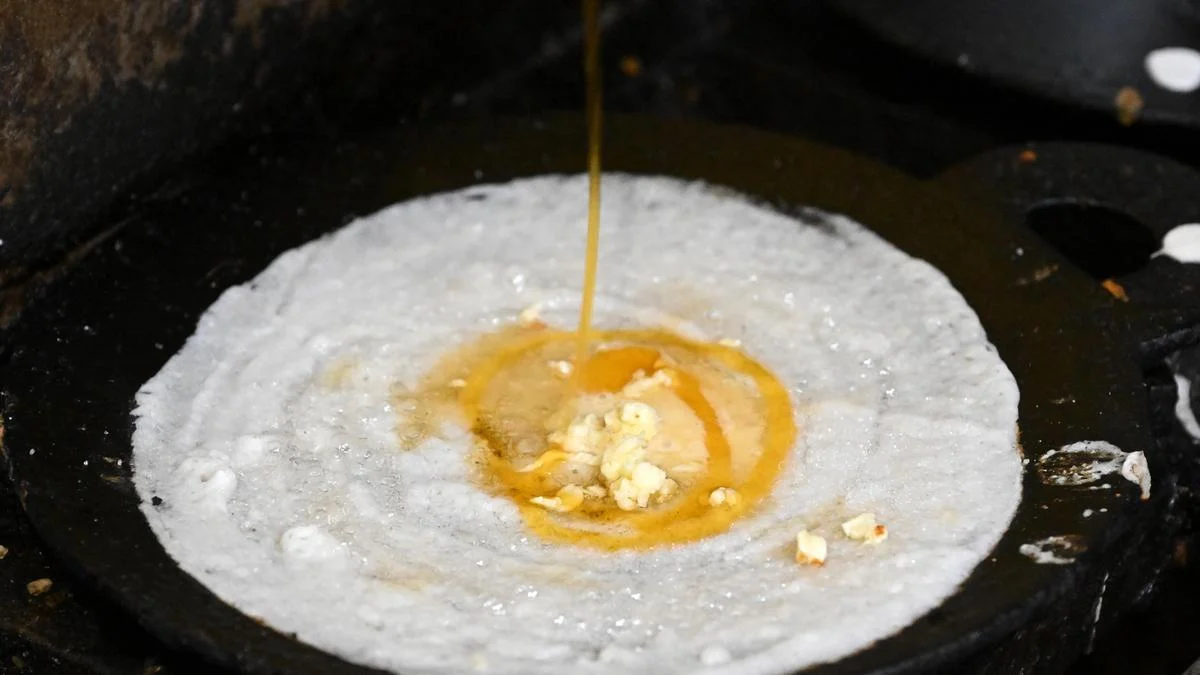
MADURAI – In the labyrinthine heart of Madurai, a city globally renowned for its towering temple gopurams and its fiercely spiced non-vegetarian fare, a quiet culinary revolution has been simmering for over half a century. While the city’s identity is often tied to the flaky, multi-layered parotta and the pungent gravies of the Pandyan heartland, a modest eatery on Pandiya Velalar Street is challenging the status quo, one ladle of fermented batter at a time.
Ayyappan Dosai Kadai, a name synonymous with innovation in the Temple City, has spent the last five decades transforming the humble dosa from a breakfast staple into a canvas for gastronomic experimentation. With a menu boasting more than 100 varieties—ranging from the traditional podi dosa to the avant-garde ice cream and butterscotch iterations—the shop has become a pilgrimage site for food enthusiasts and a testament to the evolving palate of Southern India.
A Legacy Forged in Fermentation: The Chronology of Ayyappan Dosai Kadai
The story of Ayyappan Dosai Kadai is intrinsically linked to the narrative of Madurai’s post-independence urban growth. Founded in the 1970s, the eatery began as a humble roadside stall. At its inception, the shop adhered to the traditional norms of Tamil cuisine, serving a limited menu centered on idlis and basic dosas to the local workforce and residents of the Periyar area.
A. Karthikeyan, the current proprietor and the creative force behind the shop’s expansion, recalls his childhood as being defined by the rhythmic clanging of the spatula against the iron tawa (griddle). "I was just a little boy when my father started this shop," Karthikeyan reflects. "Back then, the idea of a ‘specialty’ dosa was limited. It was about sustenance, not necessarily variety."
The transition of leadership occurred in the 1980s when Karthikeyan took over the tawa. It was during this decade that the seeds of innovation were sown. Madurai in the 80s was beginning to see a shift in dining habits, and Karthikeyan realized that to stand out in a city saturated with eateries, he needed to offer something the local "Parotta culture" lacked: versatility.
His first experiment was the egg dosa—a bold move at the time for a predominantly vegetarian-style preparation. The success of the egg dosa emboldened him. Over the subsequent four decades, the menu expanded exponentially, earning Karthikeyan the affectionate moniker "The Dosa Man" among his loyal clientele. Today, the shop stands as a multi-generational landmark, bridging the gap between the austerity of the 1970s and the fusion-heavy preferences of the 2020s.
Gastronomic Engineering: Mapping the 100-Variety Menu
What distinguishes Ayyappan Dosai Kadai is not merely the quantity of its offerings but the sheer audacity of its flavor profiles. The menu is a sprawling document that categorizes dosas into savory, spicy, sweet, and "fusion" segments.
The Savory and the Spicy
For the traditionalists, the shop continues to serve perfected versions of the Podi Dosa (coated in spiced lentil powder) and the Rava Dosa (a lacey, semolina-based variant). However, the "Dosa Man" has pushed the boundaries of savory fillings. The menu features:
- Paneer and Mushroom Dosas: Catering to a growing vegetarian middle class looking for North Indian flavors.
- Cheese-Burst Dosas: Integrating dairy elements that were once foreign to the Tamil tawa.
- Multi-Layered "Sandwich" Dosas: Perhaps his most complex creation, Karthikeyan offers three-layer and five-layer dosas. These are constructed like a savory cake, with different fillings—spices, vegetables, and chutneys—placed between thin layers of dosa batter, creating a vertical explosion of texture and taste.
The Sweet Revolution
Perhaps the most controversial yet popular segment of the menu is the sweet dosa category. In a move that purists might deem sacrilegious, Karthikeyan introduced jam, honey, chocolate, strawberry, and vanilla dosas.
The Butterscotch Dosa has emerged as a cult favorite among the younger demographic. It arrives hot from the tawa, possessing a crisp exterior that yields to a soft, chewy interior infused with the buttery, caramel notes of butterscotch. Similarly, the Ice Cream Dosa challenges the temperature norms of street food, pairing the scorching heat of the griddle with the frigid sweetness of commercial ice cream, creating a sensory contrast that has gone viral on social media platforms.
The "Pizza Dosa": A Fusion Masterclass
The "Pizza Dosa" stands as the shop’s flagship fusion dish. Karthikeyan’s process for this dish is meticulous. He starts with a standard dosa base but instead of the traditional coconut chutney, he spreads a proprietary, house-made pizza sauce. The toppings are a medley of mushrooms, paneer, capsicum, and onions.

The "official" secret to the dish’s success lies in the finishing: a generous mound of grated cheese is added, and the dosa is covered with a lid. This traps the steam, melting the cheese into a gooey canopy that stretches when sliced. "Customers were initially cautious," Karthikeyan admits. "A dosa that looks and acts like a pizza was a hard sell 15 years ago. Now, it’s one of our most requested items."
Supporting Data: The Mechanics of a High-Volume Street Eatery
Operating a menu of 100+ items from a narrow street-side location requires significant logistical precision. While the shop maintains a modest footprint, its output is substantial.
- The Batter Factor: The foundation of every dish is the fermented rice and lentil batter. Karthikeyan emphasizes that despite the toppings, the batter remains traditional. The fermentation process is adjusted according to Madurai’s high humidity to ensure the "sour-crisp" balance is maintained.
- Customer Demographics: Internal observations suggest a clear age-based divide in ordering patterns. Approximately 70% of customers under the age of 25 opt for the "fusion" or "sweet" varieties (Pizza, Chocolate, Butterscotch). Conversely, older patrons (50+) almost exclusively order the plain or podi varieties, citing a preference for the "authentic" taste of the grain.
- Peak Hours: The shop operates primarily in the evenings. Data from footfall traffic indicates that the "rush hour" begins at 7:00 PM and lasts until nearly midnight, aligning with Madurai’s reputation as the Thoonga Nagaram (the city that never sleeps).
Community and Official Response: A Cultural Institution
While Ayyappan Dosai Kadai does not have the formal "official responses" of a government body, its status in the community is validated by its high-profile visitors and local influence. The shop has hosted numerous Tamil film personalities, who often stop by Pandiya Velalar Street to experience the "Dosa Man’s" creations away from the glare of the limelight.
Local food critics and heritage enthusiasts view the shop as a vital part of Madurai’s "living heritage." Unlike the high-end hotels that attempt to sterilize street food, Ayyappan Dosai Kadai maintains the grit and authenticity of the street.
"The shop represents the democratization of gourmet food," says a local food blogger frequently seen at the stall. "Karthikeyan took the concept of a ‘tasting menu’ and applied it to a dish that costs a fraction of a fine-dining meal. He made innovation accessible to the common man."
Implications: The Future of South Indian Street Food
The success of Ayyappan Dosai Kadai carries broader implications for the South Indian culinary landscape.
First, it signals the death of culinary silos. The integration of pizza sauce, butterscotch, and ice cream into the dosa repertoire suggests that the South Indian palate is becoming increasingly globalized. As the youth of Madurai consume international media, their food expectations shift, and entrepreneurs like Karthikeyan are the ones meeting that demand.
Second, it highlights the resilience of family-owned micro-businesses. In an era of aggressive expansion by multinational fast-food chains, Ayyappan Dosai Kadai has thrived not by scaling up into a franchise, but by deepening its roots and expanding its creativity. It proves that "hyper-local" innovation can compete with global branding.
Finally, there is the paradox of the purist. Despite his 100-variety empire, Karthikeyan’s personal favorite remains the plain dosa. This choice serves as a poignant reminder that while innovation drives growth, the foundation of any great culinary tradition lies in the perfection of its simplest form.
As Madurai continues to modernize, the narrow lane of Pandiya Velalar Street remains a microcosm of the city itself: ancient in its foundations, but endlessly adaptable in its spirit. For those looking to taste the future of tradition, the "Dosa Man" is waiting at his tawa, ready to ladle out the next century of Madurai’s food history.
Fact Box: Ayyappan Dosai Kadai
- Location: Pandiya Velalar Street, Periyar, Madurai Main.
- Established: 1970s.
- Proprietor: A. Karthikeyan.
- Signature Dish: Pizza Dosa / Five-Layer Dosa.
- Contact: 98650 96095.
