

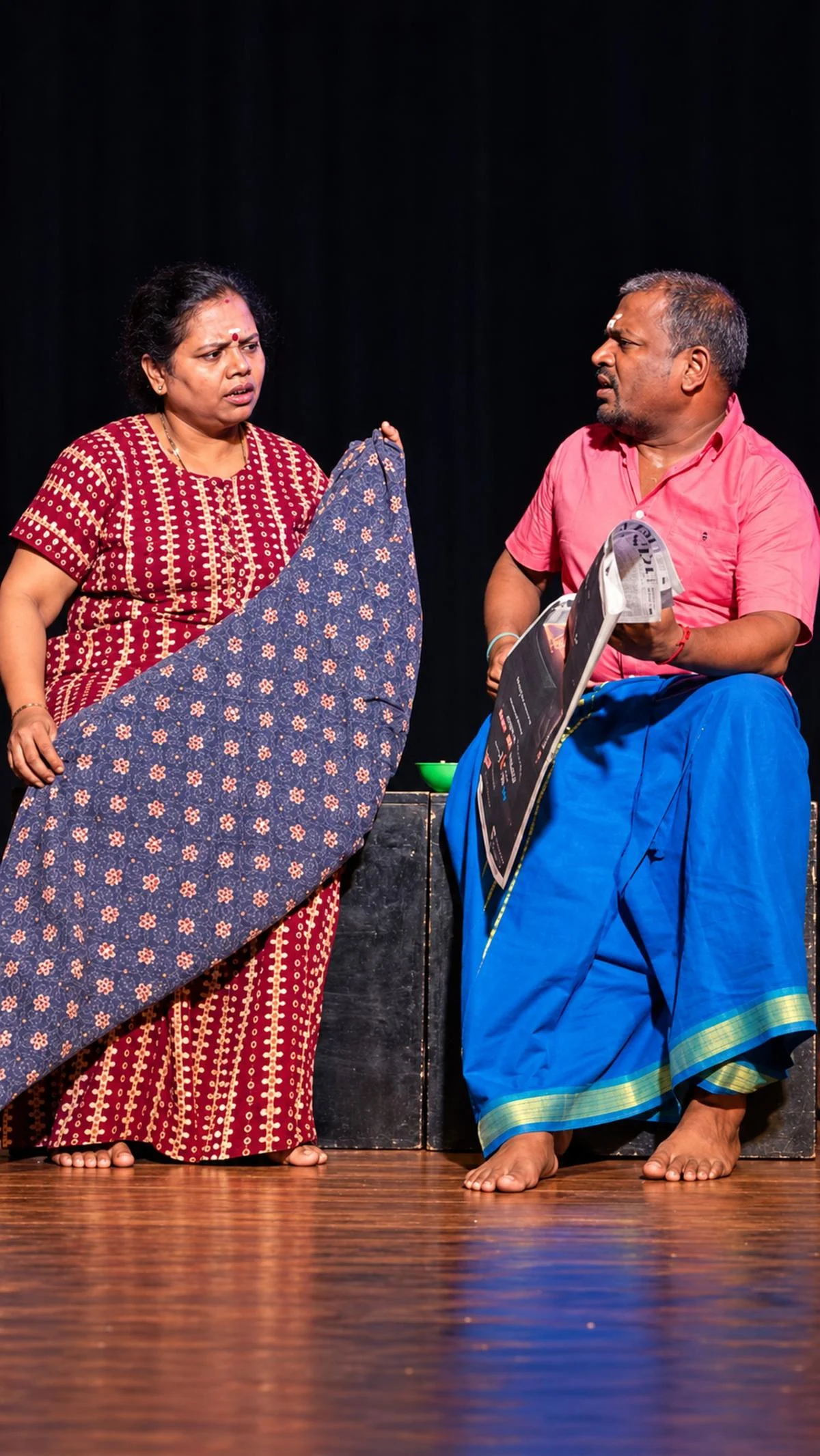
Chennai, September 21, 2026 – The hallowed halls of Krishna Gana Sabha, a bastion of classical arts, recently played host to a refreshingly diverse theatrical offering. Theatre Marina, under the astute curation and direction of R. Giridharan, presented a compelling collection of seven standalone short plays, an initiative by the Sabha to broaden its artistic horizons beyond traditional performances. This ambitious anthology, aptly titled "Marakkuma Nenjam" (Will the Heart Forget?), aimed to explore a spectrum of human emotions and experiences, from the poignant to the profoundly humorous. The evening proved to be a testament to the power of concise storytelling, delivering impactful narratives that resonated deeply with the assembled audience.
The Art of Curation: Weaving a Cohesive Thread
Anthology theatre, by its very nature, presents a unique set of challenges. The success of such a production hinges on meticulous curation, where each individual piece, even without a unifying thematic narrative, must stand on its own merit. A single misstep, a weak link in the chain, can unravel the entire carefully constructed edifice. Fortunately, R. Giridharan’s directorial vision and sharp curatorial eye ensured that this evening of theatre remained firmly rooted in a shared spirit of insightful observation and often, delightful humor. The collection managed to weave together a tapestry of human experiences, showcasing the versatility and depth achievable within the constraints of short-form drama.
A Journey Through Seven Distinct Narratives
The evening unfolded with a series of plays, each offering a unique window into the human condition. The diversity in themes, characters, and dramatic styles was a hallmark of the production, ensuring that the audience remained engaged and captivated throughout.

"Chithappa Vijayam" (Uncle’s Victory): A Letter of Unforeseen Consequences
The anthology opened with "Chithappa Vijayam," a play that immediately set a tone of playful intrigue. The narrative is ignited by a simple letter, announcing the impending arrival of an uncle the protagonist has never met. This seemingly innocuous piece of correspondence triggers a whirlwind of activity and anticipation within the household. The clever twist, however, lies not in the uncle’s arrival, but in its unexpected absence, leaving the audience to ponder the nature of expectations and the often absurd realities that unfold in their wake. The play masterfully uses humor to explore the anxieties and preparations that often accompany the unknown, highlighting the human tendency to overthink and anticipate scenarios that may never materialize.
"Coffee with Kadavul" (Coffee with God): The Irony of Deferred Dreams
Transitioning to a more introspective and melancholic tone, "Coffee with Kadavul" delved into the life of Raghunathan, a 59-year-old bachelor. His lifelong resolution to marry only after achieving the coveted Chartered Accountancy qualification has become a poignant symbol of deferred dreams. The premise resonated deeply with an audience familiar with the notoriously challenging path to CA certification. The play poignantly illustrates the cruel irony of fate, where cherished desires are often granted only when the capacity to fully enjoy them has waned. This narrative served as a stark reminder of the passage of time and the often-unforeseen sacrifices made in the pursuit of seemingly attainable goals. The portrayal of Raghunathan’s quiet resignation and the lingering sense of what-ifs offered a powerful commentary on personal ambition and the relentless march of life.
"Avan Aval Adhu" (He, She, It): The Balancing Act of Passion and Profession
"Avan Aval Adhu" offered a lighter, yet equally relatable, exploration of human motivation. The play centers on two ardent theatre enthusiasts – one yearning for the spotlight of the stage, the other content to be a keen observer from the audience. To pursue their respective passions, they resort to concocting elaborate excuses at their workplaces, each living in perpetual fear that the other might inadvertently expose their shared secret to their manager. This comedic setup beautifully captures the delicate balancing act many individuals perform between their professional obligations and their personal passions. The inherent tension and the shared vulnerability of the characters create a sense of camaraderie and humor, highlighting the universal desire to carve out space for what truly brings us joy, even if it requires a little creative subterfuge.

"Rail Sneham" (Train Friendship): A Letter Sent Too Late
A stark shift in tone marked the arrival of "Rail Sneham." The narrative begins with Govindasamy pouring his heart out in a letter to his neighbor, Ramasamy. The letter meticulously details a litany of complaints against Ramasamy’s family, yet concludes with a fervent declaration of his desire to be a good neighbor. The humor, however, is delivered with a devastating punchline. Govindasamy reveals he is mailing the letter from Mumbai, having just heard that Ramasamy’s house is engulfed in flames. The tragic irony is amplified when the letter, a testament to petty grievances, arrives too late to convey any solace or assistance, leaving the audience to confront the devastating consequences of delayed communication and misplaced priorities. The play serves as a chilling reminder of the fragility of life and the importance of expressing genuine concern before it is tragically too late.
"Ulaga Vazhakkam" (Worldly Ways): A Masterclass in Psychological Nuance
The undisputed highlight of the evening, and a standout piece written by J. Raghunathan, was "Ulaga Vazhakkam." This play was a profound exploration of human psychology, dissecting the irresistible allure of wealth and the insidious nature of sibling envy in shaping life choices. The narrative also masterfully depicted how a shrewd father, portrayed with chilling effectiveness by Kamaraj Mani, manipulates his daughter into accepting a bridegroom of his own choosing. The playwright’s skill lay in his ability to balance profound emotional depth with a sharp, tongue-in-cheek wit, all within a remarkably concise runtime. "Ulaga Vazhakkam" was a testament to Raghunathan’s writing prowess, offering a nuanced and thought-provoking commentary on familial dynamics, ambition, and the often-unseen forces that guide our decisions. The play left the audience contemplating the complex interplay of societal pressures, personal desires, and the subtle art of persuasion.
"Malayankulathu Ninaivugal" (Memories of Malayankulam): A Twist of Recollection
"Malayankulathu Ninaivugal" presented a contemplative journey into the past, as two characters engaged in reminiscing about life in their ancestral village. Just as the audience began to wonder about the play’s trajectory beyond a simple string of recollections, the writer delivered a surprising and poignant ending. This play, like others in the anthology, demonstrated the power of subverting expectations and finding unexpected depths within seemingly familiar themes. The narrative evoked a sense of nostalgia and the enduring impact of one’s roots, while simultaneously offering a fresh perspective on the nature of memory and its ability to surprise and transform.

"Marakkuma Nenjam" (Will the Heart Forget?): A Loop of Endearing Forgetfulness
The titular play, "Marakkuma Nenjam," brought the evening to a close with a deeply affecting and charming portrayal of three elderly friends reuniting. However, their reunion is not marked by a deep dive into shared past glories or poignant reminiscences. Instead, the three women suffer from memory loss, their conversations becoming endearing loops about sugarless coffee, with them sipping endless cups without realizing the repetition. The actors, Anitha Balachander, Vidhyalakshmi, and Latha, imbued these characters with an extraordinary warmth and authenticity, making them utterly lovable despite their cognitive challenges. This play served as a powerful reminder that even in the face of fading memories, the essence of human connection and affection can endure. It underscored the notion that brevity in storytelling can be remarkably effective, proving that profound emotional resonance can be achieved in a short, focused narrative. The play’s title, in this context, takes on a bittersweet meaning, hinting at the love that persists even when the details of its origin begin to fade.
A Testament to Concise Storytelling
The collection of short plays presented by Theatre Marina served as a potent reminder of the power of concise storytelling. In an era often dominated by sprawling narratives and extended plotlines, these short, impactful pieces demonstrated that a well-crafted story, delivered with precision and emotional honesty, can leave a lasting impression. The brevity of each play did not detract from their depth; rather, it amplified their impact, forcing the playwrights and directors to distill their themes and characters to their essential core. This approach allowed for a rapid succession of emotional journeys, keeping the audience thoroughly engaged and providing a rich and varied theatrical experience.
Implications for the Future of Theatre
Krishna Gana Sabha’s initiative to showcase performances beyond the traditional classical arts signals a welcome evolution in its programming. By providing a platform for diverse theatrical forms like anthology plays, the Sabha is actively fostering a more inclusive and dynamic cultural landscape. This move acknowledges the growing audience appetite for varied artistic expressions and the potential for established institutions to champion new voices and innovative approaches to theatre. The success of Theatre Marina’s "Marakkuma Nenjam" serves as a compelling argument for continued support and exploration of short-form theatre, offering a fertile ground for creative experimentation and the discovery of new theatrical talent. The anthology format, in particular, allows for a broader exploration of themes and a greater accessibility for both artists and audiences, promising a vibrant future for the performing arts in Chennai.
