

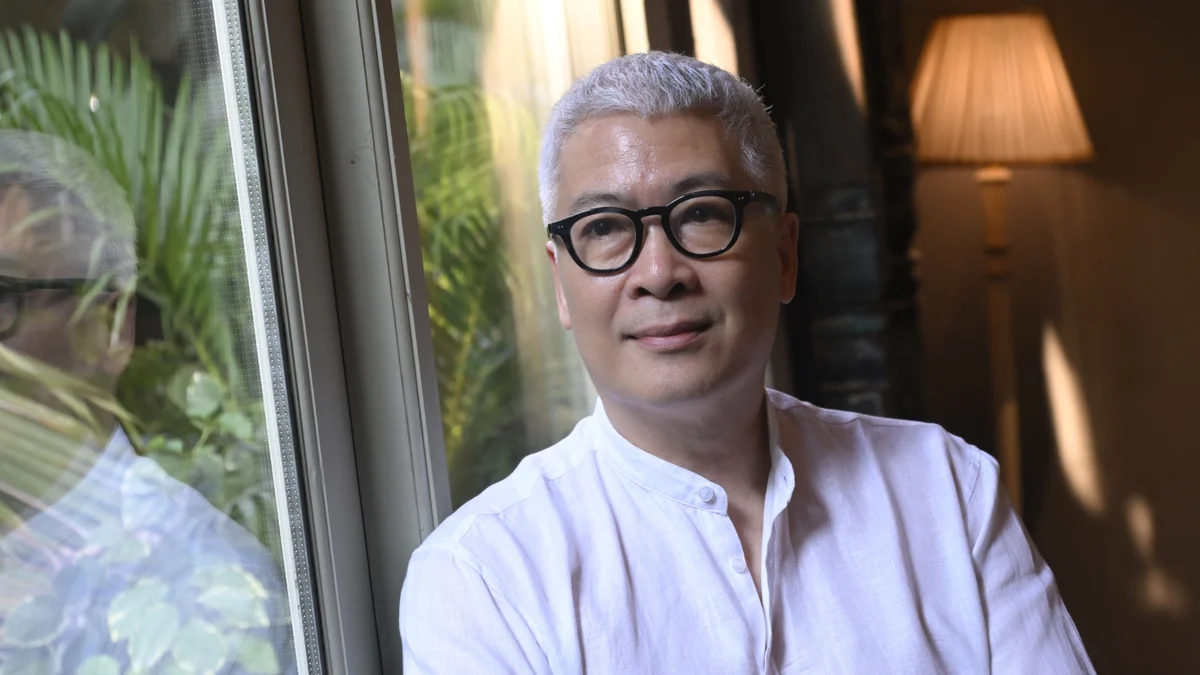
Singapore – September 21, 2026 – In the vibrant heart of Southeast Asia, Peter Lee stands as a distinguished figure, a Singaporean collector, curator, and cultural historian whose life’s work is dedicated to understanding the profound narratives woven by the movement of cultures. His passion lies in the intricate dance of ideas, objects, and people that have traversed the Asian continent, leaving behind a rich legacy of shared heritage. Lee’s extensive collection, a testament to his lifelong fascination, encompasses a breathtaking array of Peranakan treasures, vibrant Tamil and Indian textiles, evocative old photographs, and a myriad of artifacts that eloquently narrate tales of robust trade, significant migration, and the dynamic ebb and flow of cultural exchange across Asia.
Currently, Lee is gracing Karaikudi with his presence for the esteemed Chettinad Festival. An exhibition, thoughtfully curated and presented by the Registry of Sarees, showcases select pieces from Peranakan communities, meticulously drawn from Peter Lee’s personal archives. This presents a unique opportunity for attendees to glimpse into a culture profoundly shaped by the enterprising spirit of merchants who not only traversed the globe but also brought the world back to their homes.
The Genesis of a Collector: A Lifelong Fascination with Cultural Crossroads
Peter Lee’s journey into the world of collecting and curation is not a recent development but rather a lifelong pursuit fueled by an innate curiosity about the interconnectedness of Asian societies. From a young age, he was captivated by the tangible remnants of historical interactions, recognizing that objects are not merely static entities but possess the power to tell compelling stories of human endeavor and cultural fusion. This fascination led him to meticulously gather pieces that represent the diverse cultural currents that have shaped the region.
His association with the NUS Baba House, a meticulously preserved 19th-century Peranakan home in Singapore, has been instrumental in his career. As the Honorary Founding Curator, Lee has been at the forefront of preserving and interpreting the unique heritage of the Peranakan community, a vibrant culture that emerged from the intermingling of Chinese immigrants and local Malay populations. His work has delved deep into the intricacies of Peranakan art, fashion, and domestic life, shedding light on the distinct aesthetic sensibilities and social customs that characterize this unique Straits Chinese community.
Beyond his direct involvement with the Peranakan Museum, Lee’s curatorial endeavors have extended to exploring the broader landscape of Asian textiles. He has dedicated significant effort to understanding the extraordinary ways in which motifs, patterns, and design philosophies have traveled across the continent, influencing and enriching local artistic traditions. This expansive approach underscores his belief that cultural exchange is a continuous and reciprocal process, where ideas and aesthetics are not merely borrowed but are reinterpreted and adapted to create something new and uniquely resonant.
A Journey Through Time: The Chronology of Peter Lee’s Collection and Influence
Peter Lee’s engagement with cultural heritage can be traced through a series of significant milestones and contributions:
- Early Years and Developing Passion: While specific details of his early collecting habits are not widely documented, it is understood that Lee’s fascination with history and culture began in his formative years. This early spark ignited a lifelong dedication to preserving and understanding the material culture of Asia.
- Founding Curator of NUS Baba House: A pivotal moment in Lee’s career was his role in establishing and curating the NUS Baba House. This initiative provided a dedicated space for the preservation and exhibition of Peranakan heritage, allowing Lee to contribute significantly to the understanding and appreciation of this unique cultural group. His curatorial vision transformed the house into a living museum, offering visitors an immersive experience of 19th-century Peranakan life.
- Contributions to the Peranakan Museum: Lee’s involvement with the Peranakan Museum has been multifaceted, encompassing research, exhibition development, and the acquisition of significant artifacts. His expertise has been crucial in shaping the museum’s narrative and showcasing the rich diversity of Peranakan material culture, particularly in the realm of textiles and batik.
- Ongoing Research and Archival Work: Throughout his career, Lee has been actively engaged in research and archival work, meticulously documenting and cataloging his extensive collection. This dedication to preservation ensures that the stories embedded within his artifacts are accessible to future generations.
- Participation in the Chettinad Festival: Lee’s current presence at the Chettinad Festival in Karaikudi marks a significant moment, bringing his Peranakan collection into dialogue with the rich mercantile history of the Chettiar community. This collaboration highlights the shared threads of trade and cultural exchange that bind these seemingly disparate yet historically connected communities.
Supporting Data and Anecdotes: Illuminating the Interconnectedness of Asian Cultures
Peter Lee’s collection serves as a rich repository of evidence for the intricate cultural connections that have historically existed across Asia. His insights offer compelling examples of how trade and migration have fostered a vibrant exchange of ideas and aesthetics.
Peranakan Treasures: The Peranakan culture itself is a powerful testament to cultural synthesis. Originating from the descendants of Chinese immigrants who married local Malay women, the Peranakans developed a distinct hybrid culture characterized by unique culinary traditions, elaborate fashion, and exquisite decorative arts. Lee’s collection of Peranakan artifacts, including intricate beadwork, ornate silverware, and beautifully crafted porcelain, offers a glimpse into this fascinating fusion. The motifs and designs often reflect a blend of Chinese symbolism and Malay aesthetics, showcasing a seamless integration of different cultural influences.

Tamil and Indian Textiles: Lee’s deep appreciation for Tamil and Indian textiles is evident in his extensive collection. He highlights the profound influence of Indian textiles, particularly Chintz and Kalamkari, on the sartorial traditions of Southeast Asia.
- Chintz: This brightly colored, often floral-patterned cotton fabric, originating from India, became highly sought after across Asia and Europe. Lee notes its pervasive presence in Peranakan attire, where it was used to create vibrant sarongs, kebaya tops, and other garments. The enduring appeal of Chintz lies in its versatility and its ability to absorb and reflect diverse cultural interpretations.
- Kalamkari: This ancient Indian art form, involving hand-painted or block-printed textiles, also features prominently in Lee’s collection. The intricate narratives and motifs depicted on Kalamkari fabrics often tell stories from mythology, folklore, and daily life, offering a rich visual language that resonated with communities across trade routes. Lee’s fascination with Kalamkari stems from its storytelling capacity and its intricate craftsmanship.
The Unseen Archives: Lee alludes to a "rare pornography collection" that will remain publicly undisclosed. While the nature of this collection is not detailed, its existence underscores the breadth and unconventionality of his collecting interests, suggesting a commitment to documenting all facets of human expression and cultural history, even those considered taboo or private. This aspect, though veiled, hints at a more comprehensive approach to understanding the entirety of human experience within historical contexts.
Bridging Communities: The Case of Pulicat Sarongs: A particularly compelling example of cultural confluence, as highlighted by Lee, is the shared heritage found in Pulicat sarongs, also known as kain pelikat. These sarongs, traceable to the 17th-century port town of Pulicat (Pazhaverkadu) in Tamil Nadu, India, were traditionally worn by Malay men and bear a striking resemblance to the lungi commonly worn in South India. This shared garment exemplifies how trade routes facilitated the dissemination of everyday wear, creating a tangible link between communities separated by vast distances. The fabric, the weaving techniques, and the patterns likely evolved through continuous interaction and adaptation, demonstrating a dynamic cultural exchange that transcended geographical boundaries.
Lee’s personal reflections often reveal his delight in uncovering these unexpected connections. He speaks with enthusiasm about the common ground between a Chettinad collector and a Peranakan collector, finding it in the shared appreciation for garments like the Pulicat sarong. This highlights his broader philosophy: that beneath superficial differences, there are often deep-seated historical and cultural connections waiting to be discovered.
Expert Opinions and Endorsements: Recognizing Peter Lee’s Contributions
Peter Lee’s reputation as a leading collector and cultural historian is widely acknowledged within academic and curatorial circles. His dedication to preserving and interpreting Asian heritage has earned him significant respect.
- Academics and Researchers: Scholars specializing in Southeast Asian art, history, and material culture frequently cite Lee’s work and his collection as invaluable resources. His meticulous research and insightful interpretations contribute significantly to the academic discourse on cultural exchange and heritage preservation.
- Museum Professionals: Curators and directors of museums with a focus on Asian art and history recognize the importance of Lee’s contributions. His role at the NUS Baba House and his collaborations with institutions like the Peranakan Museum have set benchmarks for the preservation and presentation of cultural heritage.
- Cultural Enthusiasts and Collectors: Within the broader community of collectors and cultural enthusiasts, Peter Lee is admired for his discerning eye, his extensive knowledge, and his commitment to sharing his passion. His participation in festivals and exhibitions, such as the Chettinad Festival, serves to inspire and educate a wider audience.
The video accompanying this article, featuring an interview with Peter Lee, provides further insight into his perspectives. His "rapid fire" responses and his willingness to share his favorite Indian textiles, Chintz and Kalamkari, offer a direct window into his intellectual curiosity and his deep affection for these culturally significant artifacts. His advice to young collectors, though not detailed in the provided text, is likely to be rooted in his own experiences and his understanding of the importance of context, provenance, and the stories that objects carry.
Implications and Future Prospects: Preserving the Legacy of Cultural Exchange
Peter Lee’s work carries significant implications for our understanding of Asian history and cultural identity in the 21st century.
- Reinforcing Cultural Connections: In an era often characterized by globalization and the potential for cultural homogenization, Lee’s endeavors serve as a vital reminder of the deep-seated historical connections that bind Asian societies. His collection and curatorial efforts actively work to maintain and celebrate these intricate networks of exchange.
- Inspiring Future Generations of Collectors and Curators: Lee’s passion and expertise can serve as a powerful inspiration for young individuals interested in cultural heritage. His advice to aspiring collectors, particularly concerning the importance of understanding the narratives embedded within objects, is crucial for fostering a new generation of stewards for Asia’s rich cultural tapestry.
- Promoting Cross-Cultural Dialogue: Exhibitions and discussions featuring Peter Lee’s collection, such as the one at the Chettinad Festival, create platforms for cross-cultural dialogue. By bringing together artifacts from different communities and historical periods, these events foster a deeper appreciation for shared heritage and encourage a more nuanced understanding of cultural diversity.
- The Enduring Significance of Material Culture: Lee’s dedication to collecting and curating underscores the enduring significance of material culture in understanding human history. Objects, from the grandest of heirlooms to the most humble of everyday items, are powerful conduits of information, revealing the complexities of trade, migration, social customs, and artistic expression.
As Peter Lee continues his journey through the vibrant landscape of Asian heritage, his work remains a beacon, illuminating the interconnectedness of cultures and reminding us that the stories of Asia are not etched in isolation but are intricately woven through centuries of shared experiences, journeys, and the enduring legacy of human ingenuity. His collection is more than just a repository of artifacts; it is a living testament to the dynamic and ever-evolving nature of cultural identity in Asia.
