

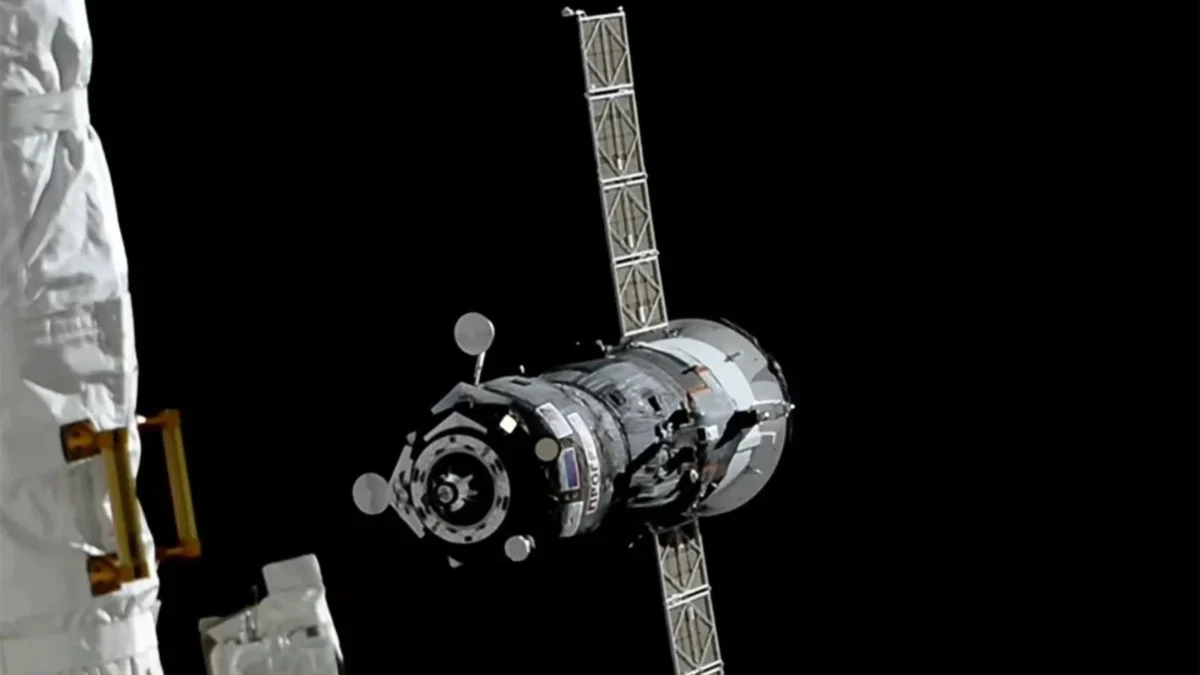
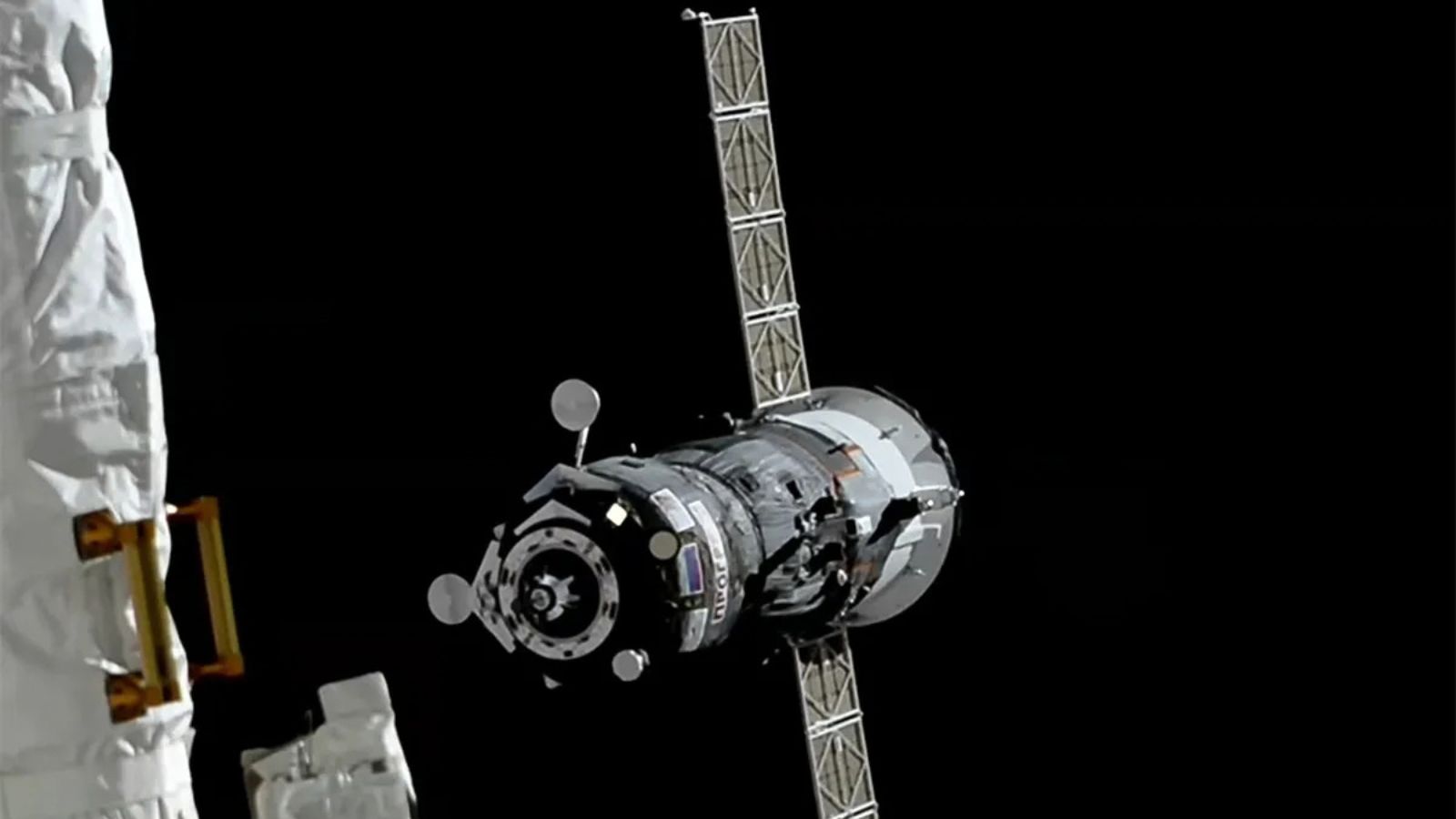
NEW DELHI — In a seamless display of orbital mechanics and international cooperation, Russia’s Progress 96 cargo spacecraft successfully moored itself to the International Space Station (ISS) on September 19, 2026. The arrival of the uncrewed freighter marks a critical milestone in the ongoing maintenance of the orbiting laboratory, delivering three tonnes of essential supplies, scientific hardware, and life-support consumables to the multi-national crew currently residing 418 kilometers above Earth.
The mission, designated Progress MS-28 by the Russian space agency Roscosmos, underscores the continued reliance on the venerable Progress platform, which has served as the backbone of Soviet and Russian space logistics since the late 1970s. As the ISS enters its final years of planned operation, such routine yet complex missions remain vital for the safety and productivity of the astronauts and cosmonauts on board.
Main Facts: A Precise Arrival Above the Black Sea
The Progress 96 spacecraft completed its automated docking sequence at 9:44 a.m. EDT (7:14 p.m. IST) on September 19. The contact occurred as the spacecraft and the space station were soaring over the Black Sea, a picturesque backdrop for a maneuver that requires millimeter-level precision.
The spacecraft docked with the space-facing Poisk module (also known as the Mini-Research Module 2), which is part of the Russian Segment of the ISS. The Poisk module serves multiple roles: a docking port for Soyuz and Progress vehicles, an airlock for Russian extravehicular activities (EVAs), and a venue for scientific experiments.
Key Mission Statistics:
- Launch Date: September 16, 2026
- Docking Date: September 19, 2026
- Payload Weight: Approximately 3,000 kilograms (3 tonnes)
- Docking Port: Poisk Module (Space-facing)
- Altitude at Docking: 418 kilometers (260 miles)
- Mission Duration: Approximately 5 months (docked)
The payload includes a pressurized hold filled with food rations, clothing, and medical supplies, alongside external tanks carrying propellant for the station’s thrusters, nitrogen to replenish the atmosphere, and fresh water for the crew’s life-support systems.
Chronology: From Baikonur to the Poisk Module
The journey of Progress 96 began in the arid steppes of Kazakhstan at the historic Baikonur Cosmodrome.
1. Launch and Ascent (September 16)
The mission commenced on September 16, 2026, when a Soyuz-2.1a rocket ignited its engines, lifting the Progress 96 spacecraft into the morning sky. The ascent followed a standard profile, with the three-stage rocket successfully placing the freighter into a preliminary "chase orbit." Once separated from the upper stage, the spacecraft deployed its solar arrays and navigational antennas, beginning a series of engine burns to refine its trajectory.
2. The Three-Day Orbital Pursuit
Unlike "fast-track" rendezvous profiles that can reach the ISS in just three hours, Progress 96 followed a more traditional three-day approach. This longer duration is often chosen to conserve fuel or to allow for more precise orbital phasing. During this 72-hour period, the spacecraft performed several autonomous maneuvers to gradually close the gap with the ISS, which orbits the Earth at roughly 28,000 kilometers per hour.
3. The Final Approach (September 19)
On the morning of September 19, the spacecraft entered the "approach zone" of the ISS. Utilizing the Kurs automated docking system, Progress 96 began its final fly-around and station-keeping maneuvers. At a distance of approximately 400 meters, the spacecraft’s onboard computers verified all systems were "go" for final contact.
4. Hard Mate and Integration
At 9:44 a.m. EDT, the "probe" of the Progress spacecraft entered the "cone" of the Poisk module. Once the mechanical latches engaged—a process known as "hard mate"—the interface became airtight. Within hours, the crew began the process of pressure equalization and leak checks before opening the hatches to begin the grueling task of unloading three tonnes of cargo.
Supporting Data: The Logistics of Life in Low Earth Orbit
The delivery of three tonnes of cargo is not merely a logistical feat; it is a calculated necessity for the seven-member crew currently inhabiting the station.
The Current Expedition Crew
The ISS is currently home to a diverse group of explorers who represent the pinnacle of international scientific collaboration:
- NASA (USA): Jack Hathaway, Jessica Meir, and Anil Menon.
- ESA (Europe): Sophie Adenot.
- Roscosmos (Russia): Pyotr Dubrov, Andrey Fedyaev, and Anna Kikina.
Payload Breakdown
While the specific manifest of Progress 96 remains partially proprietary, typical Russian resupply missions are divided into several critical categories:
- Dry Cargo (Pressurized): Roughly 1,200 kg of equipment, including spare parts for the station’s Carbon Dioxide Removal Assembly (CDRA), new scientific experiments, and personal "care packages" for the crew.
- Propellant: Approximately 800 kg of fuel. This is vital because the ISS experiences atmospheric drag, which causes its orbit to decay over time. Progress engines are often used to perform "re-boost" maneuvers to lift the station back to its required altitude.
- Water and Gases: About 420 kg of fresh water and 50 kg of nitrogen and oxygen to maintain the station’s internal environment.
Disposal and Waste Management
Progress spacecraft are designed for one-way trips. For the next five months, Progress 96 will act as a floating pantry and a "trash can." As the crew consumes the delivered food and supplies, they will fill the empty hold with waste, broken equipment, and dirty laundry. In early 2027, the spacecraft will depart, re-enter Earth’s atmosphere, and incinerate over the uninhabited regions of the South Pacific Ocean.
Official Responses: Cooperation Amidst the Stars
In the wake of the successful docking, officials from both NASA and Roscosmos emphasized the reliability of the Progress-Soyuz system and the importance of the partnership.
Roscosmos Statement:
In a post-docking briefing, a Roscosmos spokesperson noted: "The successful arrival of Progress MS-28 (96) confirms the high reliability of our automated docking systems. Our cosmonauts, Pyotr Dubrov and Andrey Fedyaev, monitored the approach closely and were prepared to take manual control if necessary, but the Kurs system performed flawlessly. We continue to fulfill our obligations to the ISS partnership with pride."
NASA Commentary:
NASA’s mission control in Houston echoed these sentiments during the live webcast. "Resupply missions like Progress 96 are the heartbeat of the International Space Station," said a NASA commentator. "With seven crew members on board conducting cutting-edge research, ensuring a steady flow of supplies is paramount. We congratulate our Russian partners on a perfect docking."
The presence of astronauts like Anil Menon and Jessica Meir—both veterans and highly trained scientists—highlights the shift toward more complex orbital research that requires the very hardware delivered by this mission.
Implications: The Future of Orbital Logistics
The arrival of Progress 96 occurs at a transitional moment for the International Space Station. With the station slated for retirement by 2030, the logistics of its final years are becoming increasingly scrutinized.
1. The Diversity of the Cargo Fleet
Progress 96 is part of a larger ecosystem of spacecraft. While the Russian Progress and the American Northrop Grumman Cygnus are "disposable" vehicles that burn up on re-entry, the SpaceX Dragon remains the only vehicle capable of returning scientific samples and hardware back to Earth intact. Japan’s upcoming HTV-X is also expected to join this rotation, providing even more heavy-lift capability. This "redundancy in resupply" is what has allowed the ISS to remain continuously inhabited for over 25 years.
2. Geopolitical Stability in Orbit
Despite tensions on the ground, the ISS remains a rare "neutral zone." The seamless integration of a Russian spacecraft into a station currently commanded by an international crew serves as a reminder of the shared human interest in space exploration. The technical interdependencies—where Russia provides propulsion and NASA provides power—necessitate the type of cooperation seen with Progress 96.
3. Preparation for Commercial Successors
The lessons learned from the docking and long-term berthing of Progress 96 are being used to inform the design of future commercial space stations. Companies like Axiom Space and Blue Origin (with their Orbital Reef project) are watching these routine operations to understand how to manage "orbital logistics" as a profitable business model.
4. Scientific Continuity
The three tonnes of cargo include materials for experiments in biology, physics, and materials science. By maintaining a steady supply chain, the ISS ensures that the microgravity environment remains a productive laboratory. For the current crew, the arrival of new experiments means the continuation of work that could lead to breakthroughs in medicine and sustainable energy back on Earth.
As Progress 96 settles into its five-month stay, the focus now shifts to the crew’s intensive "unboxing" process. While the docking was a triumph of automation, the coming weeks will be a triumph of human labor, as the seven residents of the ISS work together to integrate these new supplies into the most complex machine ever built by humanity.
