

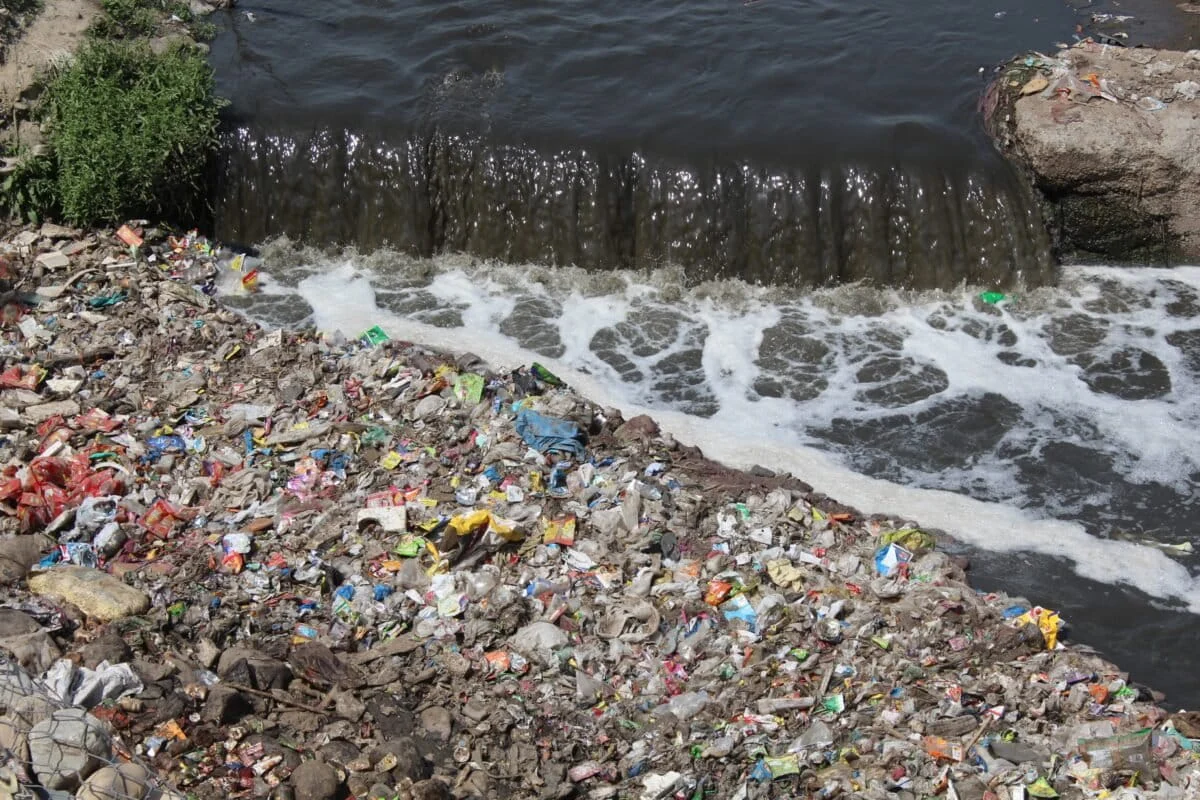
In the shadow of the Himalayas, the city of Dehradun serves as a gateway to the sacred Ganges. Yet, beneath the picturesque landscape, a silent biological crisis is brewing. What were once life-giving tributaries—the Bindal Rao and Rispana rivers—have been transformed into open conduits for municipal waste, heavy metals, and, most alarmingly, a surge of antibiotic-resistant "superbugs."
A comprehensive study led by researchers from the Indian Institute of Technology (IIT) Roorkee and international collaborators has revealed that the seasonal monsoon, traditionally seen as a period of cleansing and dilution, is actually accelerating the spread of antimicrobial resistance (AMR) in these urban water bodies. As these rivers merge to form the Suswa, and eventually feed into the Ganga, the local pollution of Dehradun is evolving into a regional public health threat.
Main Facts: A Convergence of Faecal Pollution and Genetic Mutation
The core of the crisis lies in the intersection of inadequate urban infrastructure and biological evolution. Researchers Kenyum Bagra and Gargi Singh of IIT Roorkee, alongside Uli Klümper of Technische Universität Dresden, have documented a staggering presence of antibiotic resistance genes (ARGs) in the Bindal and Rispana rivers. These genes are the blueprints that allow bacteria to survive treatment by common antibiotics, rendering modern medicine increasingly ineffective.
The Seasonal Paradox
Contrary to the expectation that increased water volume during the monsoon would dilute pollutants, the study found that rainfall acts as a "flush mechanism." It mobilizes accumulated solid waste, faecal matter from overflowing septic tanks, and untreated hospital effluents from the city’s streets into the riverbeds. This results in a 10 to 1,000-fold increase in the relative abundance of ARGs during the rainy season compared to pre-monsoon levels.
The Chemical Cocktail
The rivers are not just biologically contaminated; they are chemically saturated. High concentrations of heavy metals, including Lead (Pb), Chromium (Cr), Cadmium (Cd), and Zinc (Zn), were found embedded in the river sediments. While heavy metals are known to "co-select" for antibiotic resistance—essentially training bacteria to become tougher—the sheer volume of raw sewage in Dehradun is so high that it has become the primary driver of resistance, potentially masking the secondary effects of metal toxicity.

A Failure of Containment
The Bindal and Rispana rivers collectively carry approximately 28 million liters per day (MLD) of municipal wastewater. Much of this enters the river systems through informal drains, bypasses, and direct dumping, effectively turning these natural waterways into "sewers in plain sight."
Chronology: From Fieldwork to Scientific Revelation
The trajectory of this research highlights a multi-year effort to understand the shifting ecology of Uttarakhand’s urban rivers.
- May 2019: The Initial Sampling. Kenyum Bagra, then a Ph.D. student, began collecting water and sediment samples across multiple locations in Dehradun. Her observations were stark: while the upstream sections of the seasonal Bindal Rao were dry, the sections near human settlements maintained a "slim flow" consisting entirely of urban wastewater.
- 2019-2021: Laboratory Analysis. Samples were analyzed across three seasons: pre-monsoon, monsoon, and post-monsoon. This period involved collaboration with German scientists to utilize advanced genomic sequencing to identify specific ARGs, such as sul1, sul2 (sulfonamide resistance), ermF (macrolide resistance), and tetW (tetracycline resistance).
- 2021-2023: Data Correlation. Researchers compared their findings with national data from the Central Pollution Control Board (CPCB) and the Comptroller and Auditor General (CAG), identifying a systemic gap between sewage generation and treatment capacity.
- 2024: Publication and Public Alarm. The findings were recently published in the journal Environmental Pollution, coinciding with renewed government interest in the Rispana-Bindal elevated corridor project, sparking a fresh debate on the future of Dehradun’s hydrology.
Supporting Data: The Magnitude of the Infrastructure Gap
The degradation of Dehradun’s rivers is a microcosm of a larger national challenge. To understand the scale, one must look at the quantitative disparity between urban growth and environmental safeguards.
The National Sewage Deficit
According to the CPCB’s 2021 status report, there is a 78.7% gap in India between the sewage generated in urban centers and the installed capacity to treat it. This leaves approximately 22,939 MLD of untreated sewage to find its way into natural water bodies every single day.
Local Loadings
In Dehradun, the Rispana carries 10 MLD of wastewater, while the Bindal carries 18 MLD. These rivers eventually feed the Suswa River, which is officially listed as a "polluted river stretch" under the Namami Gange restoration program. Despite the "perennial" status of the Rispana, its flow is increasingly dominated by effluent rather than natural spring water.

The Genetic Fingerprint
The study identified specific ARGs that remained elevated in river sediments even after the monsoon subsided. The persistence of genes like sul1 and sul2 suggests that the riverbeds are becoming long-term reservoirs for resistance. When children play in these waters or when farmers use them for irrigation—as observed by Bagra during her fieldwork—the path for these "superbugs" to enter the human food chain is direct and unimpeded.
Heavy Metal Enrichment
The research group analyzed ten heavy metals: Silver (Ag), Cadmium (Cd), Cobalt (Co), Chromium (Cr), Copper (Cu), Iron (Fe), Manganese (Mn), Nickel (Ni), Lead (Pb), and Zinc (Zn). While water samples showed varying levels, the sediments acted as a "sink," showing severe enrichment. Peak levels were frequently observed downstream of Sewage Treatment Plant (STP) discharge points, suggesting that even "treated" water may still be carrying a heavy chemical and biological burden.
Official Responses and the Infrastructure Debate
The government’s response to the crisis has been a mix of large-scale restoration projects and controversial infrastructure developments.
The STP Scrutiny
While Uttarakhand has made strides in installing STPs, a recent report by the CAG revealed that 12 out of 44 STPs in the state were discharging untreated or partially treated sewage directly into the Ganga or its tributaries. This indicates that "installed capacity" does not always equate to "operational efficiency."
The Elevated Corridor Controversy
In an effort to ease Dehradun’s crippling traffic congestion, the National Highways Authority of India (NHAI) has proposed a Rs 6,500 crore elevated road project. This 26-kilometer corridor would run directly over the Bindal and Rispana rivers.

However, urban water experts like Nidhi Singh from the Centre for Ecology Development and Research (CEDAR) have raised alarms. They argue that building heavy concrete structures over these fragile riverbeds will:
- Amplify Flood Risks: By obstructing natural floodways.
- Hinder Recharge: Preventing the rivers from replenishing the city’s groundwater.
- Encourage Encroachment: Permanently altering the river’s ecological boundaries.
The official stance focuses on "cleaning" the rivers as a separate goal from "utilizing" the space above them for roads. However, ecologists argue that these two goals are fundamentally at odds.
Implications: A "One Health" Emergency
The findings from the Bindal and Rispana studies point toward a grim reality: the health of a city is inextricably linked to the health of its water.
The Public Health Crisis
The prevalence of ARGs in urban rivers creates a "conduit for transmission." When Dehradun faces its annual bouts of waterlogging and flooding, the water entering homes is not just dirty—it is potentially untreatable. If a resident contracts a bacterial infection from floodwater laden with tetW or sul1 genes, standard antibiotics may fail to work, leading to longer hospital stays, higher mortality rates, and increased healthcare costs.
The "One Health" Perspective
The study advocates for a "One Health" approach—a framework that recognizes that human health, animal health, and environmental health are one and the same. When dead animals are dumped in the Bindal, and children bathe just downstream, the barrier between environmental contamination and human pathology vanishes.

A Paradigm Shift in Management
Nidhi Singh of CEDAR emphasizes that the policy approach must shift from "cleaning" to "living with" rivers. This involves:
- Restoring Hydrological Functions: Ensuring that floodplains are not built upon.
- Decentralized Waste Management: Moving beyond massive, often failing STPs toward localized solutions that prevent sewage from ever reaching the river.
- Continuous Surveillance: Monitoring ARGs as a standard metric of river health, much like pH levels or Dissolved Oxygen (DO).
Conclusion
The Bindal Rao and Rispana are no longer just rivers; they are early warning systems. They tell the story of a city that has outgrown its infrastructure and a natural world that is evolving to survive human neglect. As the researchers from IIT Roorkee have shown, the monsoon is no longer a cleanser—it is a messenger of a growing antibiotic resistance crisis. Unless Dehradun treats its rivers as critical infrastructure rather than convenient drains, the "health and resilience of the city itself" remains in jeopardy.
