

The Indian automotive landscape in August 2026 presented a fascinating study in brand divergence within a single corporate entity. Skoda Auto Volkswagen India Private Limited (SAVWIPL) reported a combined sales performance that, on the surface, showed modest growth, but beneath the numbers lay two very different trajectories for its primary brands. While Skoda Auto India leveraged its new compact SUV strategy to post double-digit year-on-year (YoY) growth, Volkswagen India faced a challenging month, grappling with double-digit declines across its portfolio.
As the industry prepares for the critical festive season, the performance of these two European marques highlights the volatile nature of the Indian market and the immense pressure on product lifecycles.
Main Facts: The August 2026 Sales Snapshot
In August 2026, Skoda Auto India emerged as the primary growth engine for the group, registering domestic sales of 5,650 units. This represents a healthy 13.66% increase compared to the 4,971 units sold in August 2025. This growth was largely underpinned by the continued market penetration of the Kylaq, Skoda’s entry into the highly competitive sub-4-meter SUV segment.
Conversely, Volkswagen India’s performance told a more sobering story. The brand recorded 2,283 units in August 2026, a sharp 16.04% decline from the 2,719 units it moved during the same period the previous year. The decline at Volkswagen was felt across its two main pillars—the Virtus sedan and the Taigun SUV—indicating a potential cooling of demand or a shift in consumer preference toward newer rivals.
When viewed collectively, SAVWIPL’s domestic sales stood at 7,933 units, a 3.17% improvement over the 7,690 units recorded in August 2025. However, the month-on-month (MoM) data suggests a cooling trend. Against July 2026’s combined tally of 8,424 units, total volumes fell by 5.83%. Volkswagen was responsible for the lion’s share of this sequential reduction, signaling that the brand may need more than just "special editions" to reclaim its momentum.

Chronology: From India 2.0 to the Current Crossroads
To understand the August 2026 figures, one must look back at the trajectory set by the "India 2.0" project. Launched years ago, this strategy introduced the MQB-A0-IN platform, which birthed the Kushaq, Taigun, Slavia, and Virtus. For a time, these models revitalized both brands, bringing European driving dynamics to a more accessible price point.
By August 2025, the novelty of these models had begun to plateau, leading Skoda to pivot toward the "India 2.5" strategy—the introduction of the Kylaq compact SUV. The Kylaq was designed to capture a higher volume segment where price sensitivity and feature-loading are paramount.
The timeline leading to August 2026 shows a clear shift:
- Early 2026: Both brands introduced "refreshed" versions of the Kushaq and Taigun. While these updates included feature additions, they were not full-scale facelifts.
- July 2026: Skoda maintained strong momentum with the Kylaq, while Volkswagen began to see a softening in Taigun sales as rivals launched newer generations of mid-sized SUVs.
- August 2026: The divergence solidified. Skoda’s reliance on the Kylaq (accounting for over 63% of its sales) paid off, while Volkswagen, lacking a sub-4-meter offering, saw its volumes shrink.
Supporting Data: A Model-by-Model Breakdown
Skoda’s Performance: The Kylaq Heavyweight
Skoda’s success in August was heavily skewed toward its newest offering.
- Skoda Kylaq: With 3,590 units sold, the Kylaq grew 15.84% YoY. Despite a minor 3.68% MoM dip, it remains the brand’s undisputed volume driver, contributing 63.54% of total sales.
- Skoda Kushaq: The mid-sized SUV was the surprise performer of the month, recording 1,048 units. This was a 32.83% YoY increase and a 25.81% MoM jump, making it the only model in the entire group to grow on both a yearly and monthly basis.
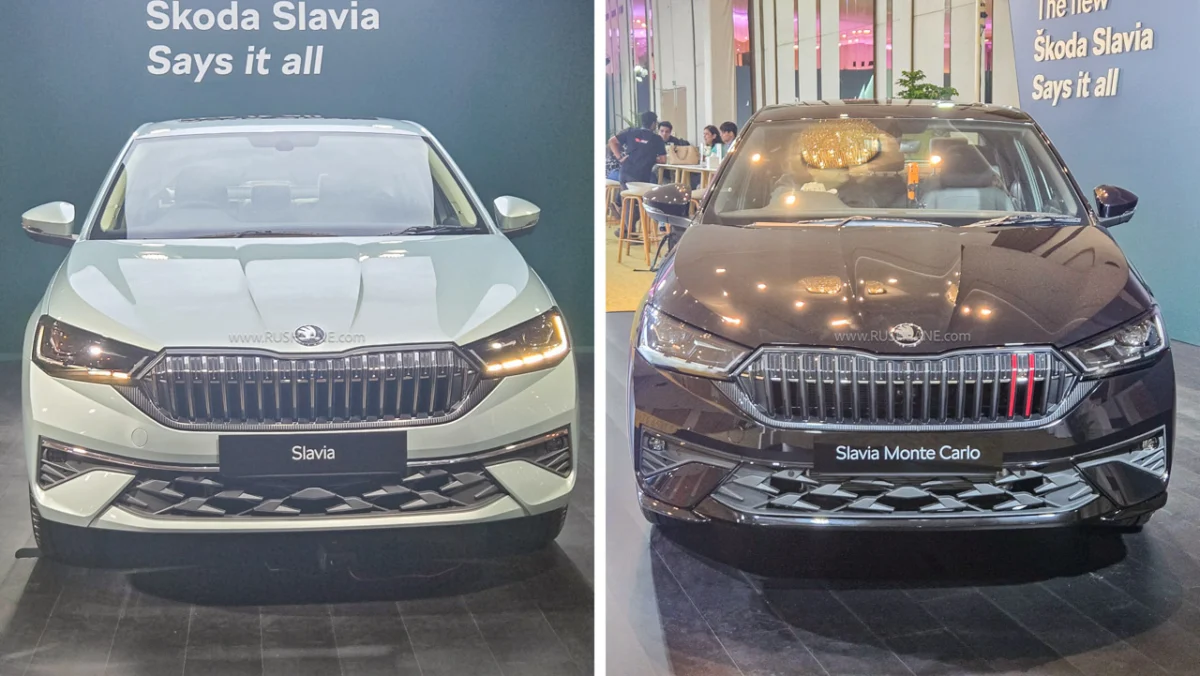
- Skoda Slavia: The sedan saw a decline, recording 897 units (down 11.01% YoY). This dip is largely attributed to "wait-and-watch" consumer behavior, as the Slavia facelift had already been teased to the public.
- Skoda Kodiaq: The premium flagship sold 115 units, a 53.33% YoY increase, though it fell 26.28% from July’s high of 156 units.
Volkswagen’s Performance: The Virtus Resilience
Volkswagen’s portfolio, though smaller, showed signs of fatigue.
- VW Virtus: The sedan continues to be the brand’s bestseller with ,1301 units. However, this was a 22.28% YoY drop. Despite the decline, the Virtus outsells its Skoda sibling (Slavia), maintaining its status as a preferred enthusiast sedan.
- VW Taigun: The SUV recorded 938 units, down 6.29% YoY. More concerning was the 23.43% MoM drop from July’s 1,225 units. The Taigun is currently facing immense pressure from the Hyundai Creta and Kia Seltos, which continue to dominate the 4.3-meter SUV segment.
- Niche Models: The Tayron (42 units) and Tiguan (2 units) contributed negligible volumes, while the Golf recorded zero sales, suggesting it remains a halo product or a limited-run import not intended for mass volume.
Official Responses and Strategic Moves
While official spokespeople for SAVWIPL often emphasize "sustainable growth" over "market share at any cost," the strategic moves behind the scenes tell a more aggressive story.

The JSW-Skoda Partnership:
One of the most significant developments influencing the brand’s future is the non-binding Memorandum of Understanding (MoU) signed between the JSW Group and Skoda Auto Volkswagen India. The proposed 51:49 joint venture, with JSW holding the majority stake, is a clear signal that the German group realizes it needs a local powerhouse to navigate the complexities of mass-market manufacturing and electric vehicle (EV) infrastructure in India. This partnership is expected to focus on high-localization and cost-competitive models that could eventually replace or augment the current India 2.0 lineup.
The Product Offensive:
Skoda has already unveiled the Slavia facelift, which is slated for an imminent launch. Key upgrades include a more sophisticated feature list and the potential introduction of a new 8-speed torque converter automatic gearbox, moving away from the aging 6-speed units in certain trims. Volkswagen is expected to follow suit with a Virtus update in the coming weeks to ensure parity.
Implications: What This Means for the Future
The August 2026 data carries several critical implications for the Indian automotive market and the SAVWIPL group.
1. The "Kylaq Lesson" for Volkswagen:
Skoda’s growth is almost entirely credited to the Kylaq. Volkswagen’s lack of a sub-4-meter SUV has left it vulnerable. The company has finally confirmed that a VW-badged compact SUV, based on the Kylaq’s platform, will debut in 2027. However, the delay of nearly a year could result in lost market share that may be difficult to claw back.
2. The Resilience of the Sedan:
Despite the SUV onslaught, the Virtus and Slavia combined for 2,198 units. While lower than their SUV counterparts, they represent a loyalist base. The upcoming facelifts are crucial; if SAVWIPL can address the "cabin premiumness" complaints and update the infotainment and ADAS (Advanced Driver Assistance Systems) suites, they could reinvigorate a segment that many competitors have abandoned.
3. The Mid-SUV Struggle:
The Kushaq’s growth in August is an anomaly in an otherwise tough month for mid-sized SUVs in the group. The Taigun’s sharp decline suggests that "German Engineering" alone is no longer enough to compete with the feature-rich and service-heavy networks of Korean and Indian manufacturers (Mahindra and Tata). The group may need to consider more aggressive pricing or "Generation 3.0" updates sooner than planned.

4. The Festive Season Outlook:
With the Slavia facelift and Virtus updates arriving just before the peak festive period, the group is betting on a "sedan renaissance" to balance the books. If these updates fail to spark interest, the reliance on the Kylaq will become even more pronounced, potentially leading to an internal imbalance where Skoda thrives at the expense of Volkswagen’s domestic presence.
Conclusion
August 2026 was a month of transition for Skoda and Volkswagen in India. Skoda has successfully found a new gear with the Kylaq, proving that moving down the price ladder—without sacrificing brand DNA—is a viable path to volume. Volkswagen, meanwhile, is in a period of consolidation, waiting for its own compact SUV and relying on the Virtus to hold the line.
The proposed JSW partnership looms large in the background, promising a future where these European cars are built with Indian industrial might. For now, however, the focus remains on the showroom floor, where the upcoming sedan facelifts will determine whether SAVWIPL finishes 2026 on a high note or a cautionary one.
