

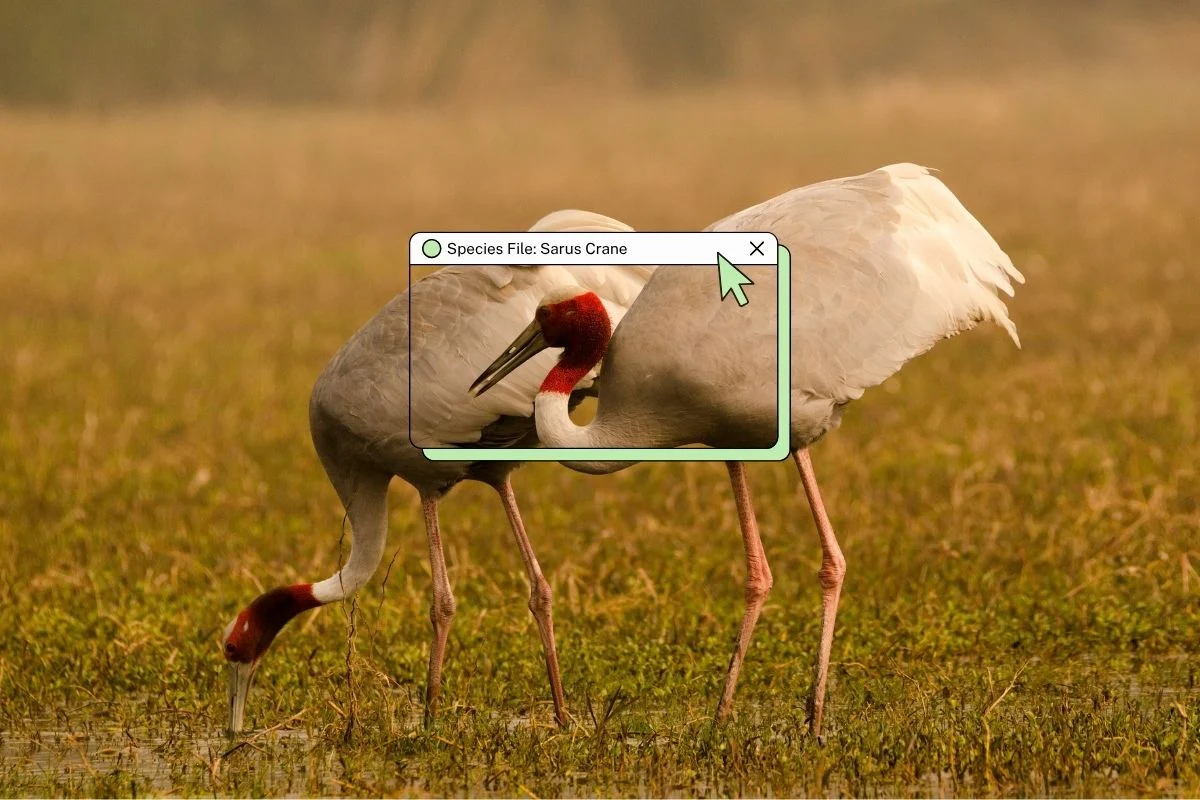
In the misty reaches of India’s agricultural heartlands, a sound both primitive and profound echoes across the marshes. It is the duet of the Sarus Crane (Antigone antigone), the world’s tallest flying bird and a living symbol of marital fidelity in Indian folklore. While these birds have long been celebrated for their majestic stature and striking red-and-grey plumage, a new scientific study has peeled back the layers of their complex vocalizations, offering fresh insights into how these vulnerable giants communicate, bond, and defend their territories in an increasingly crowded landscape.
As India grapples with the dual challenges of rapid urbanization and the need for ecological preservation, the Sarus Crane has emerged as a flagship species for the health of rural wetlands. From the plains of Uttar Pradesh to the salt pans of Gujarat, the survival of this species is intricately tied to the traditional farming practices and the remaining fragments of natural marshland.
The Acoustic Architecture: A Three-Part Duet
Recent research conducted across the agricultural landscapes of Uttar Pradesh, Haryana, and Gujarat has provided a breakthrough in our understanding of Sarus Crane communication. The study focused on the "duet"—a loud, highly coordinated series of calls produced by mating pairs. These calls are not merely noise; they are sophisticated acoustic signals used to reinforce pair bonds and signal territorial boundaries to rival cranes.
Researchers discovered that these duets follow a rigid, three-part structural framework: an introduction, a trill, and a main segment. Interestingly, the study noted that it is typically the female who initiates the duet, setting the tempo for the male to follow. This coordination is a feat of biological timing, ensuring that the pair sounds as a single, unified entity to any listeners in the vicinity.
One of the most surprising findings of the study was the lack of regional "dialects." In many bird species, populations separated by geography develop distinct vocal variations, much like human accents. However, the Sarus Cranes of Haryana sounded remarkably similar to those in Gujarat and Uttar Pradesh. While individual pairs exhibit unique acoustic signatures—allowing researchers to distinguish between birds based on their calls—the overarching structure remains consistent across the Indian subcontinent. This suggests that the "language" of the Sarus Crane is deeply innate, a biological blueprint that remains unchanged regardless of the specific agricultural or wetland environment the birds inhabit.
A Profile of the World’s Tallest Flying Bird
Standing up to 1.8 meters (nearly six feet) tall with a massive wingspan of 2.4 meters, the Sarus Crane is an imposing figure in the wild. Their aesthetic is unmistakable: a stately grey body contrasted by a velvet-like, bright red head and upper neck. This coloration becomes even more vivid during the breeding season, serving as a visual signal of health and maturity.
Unlike songbirds, which possess a complex vocal organ called a syrinx capable of producing intricate melodies, the Sarus Crane utilizes a more primitive vocal system centered around the pharynx. This anatomical limitation means they have a restricted repertoire of sounds. However, what they lack in musical variety, they make up for in sheer volume and resonance. Their calls, often described as trumpeting, can be heard from several kilometers away, thanks to a long, coiled trachea that acts as a natural amplifier.
For years, one of the primary challenges for conservationists was the fact that Sarus Cranes are sexually monomorphic—meaning males and females look virtually identical to the human eye. Distinguishing between the sexes usually required invasive blood tests or DNA sampling. However, the recent deconstruction of their duets has provided a non-invasive alternative. By analyzing the specific notes and timing within a call, scientists can now accurately "sex" the birds by sound, a development that significantly aids in monitoring population dynamics and breeding success rates.
Population Trends: The Rohilkhand Success Story
While many large bird species across Asia are in decline, the Sarus Crane has shown remarkable resilience in specific regions of India. The state of Uttar Pradesh, where the Sarus is the official state bird, has become the species’ primary stronghold.
Recent data from the forest department highlights a significant success story in the Rohilkhand region. A total of 1,942 Sarus Cranes were recorded in this area, marking a steady increase that officials attribute to focused conservation efforts. This growth is not accidental; it is the result of a concerted push to protect wetlands and marshy patches within the agricultural matrix.
Forest officials emphasize that the rising numbers in Rohilkhand are a positive indicator of ecological balance. The presence of Sarus Cranes suggests a healthy wetland ecosystem, as these birds require clean water and an abundance of aquatic plants, insects, and small vertebrates to thrive. Their resurgence in this region serves as a blueprint for how "reconciliation ecology"—the practice of promoting biodiversity within human-dominated landscapes—can work effectively.
Legal Protection and Global Status
Despite the local successes in northern India, the global outlook for the Sarus Crane remains precarious. The International Union for Conservation of Nature (IUCN) Red List categorizes the species as "Vulnerable." This classification indicates that the bird faces a high risk of extinction in the wild in the medium-term future if the current threats are not mitigated.

In India, the government has accorded the Sarus Crane the highest level of legal protection. It is listed under Schedule I of the Wildlife Protection Act, 1972. This status places it on par with the Bengal tiger and the Asian elephant, making any harm to the bird or its eggs a severe criminal offense.
The species’ range extends beyond India into Nepal, Pakistan, parts of Southeast Asia, and Australia. However, the Indian population is by far the largest and most critical for the species’ long-term survival. In Southeast Asia, particularly in Cambodia and Vietnam, the Sarus Crane populations have dwindled to dangerously low levels due to extreme habitat loss and the remnants of past conflicts, making the stability of the Indian population even more vital for the global gene pool.
The Looming Threats: Concretization and Changing Agriculture
The primary threat to the Sarus Crane is not hunting or poaching, but the quiet, relentless encroachment of "development." As India’s population grows, the demand for land has led to the widespread draining of wetlands—often dismissed as "wastelands"—for construction and industrial use.
Concretization is the most immediate danger. When a wetland is paved over or a grassland is converted into a housing complex, the Sarus Crane loses not just a home, but a nesting site. These birds are territorial and highly faithful to their nesting spots; when a site is destroyed, the pair may fail to breed for several years.
Furthermore, changing agricultural patterns are altering the delicate relationship between the birds and the land. Historically, Sarus Cranes have thrived in paddy (rice) fields, which mimic their natural wetland habitats. The birds provide a service to farmers by consuming pests like locusts and snails. However, a shift toward "dry" crops or the intensive use of chemical pesticides and herbicides can turn these refuges into ecological traps. Pesticide runoff can lead to eggshell thinning or direct poisoning, while the loss of flooded fields removes the essential moisture required for their foraging.
K.S. Gopi Sundar, a renowned scientist from the Nature Conservation Foundation, has noted that habitat degradation is leading to unusual behavioral changes. In some areas, researchers have observed the formation of "breeding trios" rather than the traditional pairs. This phenomenon is often a sign of habitat stress, where a lack of suitable nesting territory forces birds into atypical social structures.
Community-Led Conservation: The Path Forward
The future of the Sarus Crane does not lie in fenced-off sanctuaries, but in the hands of the farming communities who share the land with them. Because the majority of Sarus Cranes in India live outside protected areas, their survival depends on "community conservation."
In many parts of Uttar Pradesh and Gujarat, local farmers view the arrival of a Sarus pair as a good omen. Some communities have taken it upon themselves to guard nests from stray dogs and prevent people from disturbing the eggs. This grassroots protection is often more effective than any government mandate.
Educational programs that highlight the crane’s role in pest control are helping to strengthen this bond. When farmers understand that the cranes help maintain the health of their crops, they are more likely to tolerate the birds’ presence and maintain the small marshy corners of their fields that the cranes require.
Implications for the Future
The story of the Sarus Crane is a microcosm of the broader struggle for biodiversity in the 21st century. It is a story that moves between the ancient—represented by the bird’s primitive vocal system and its place in Vedic mythology—and the modern, represented by satellite tracking and acoustic analysis.
To ensure that the "Symphony of the Wetlands" continues to be heard, several steps are necessary:
- Wetland Mapping: Rigorous identification and protection of small, "scattered" wetlands that fall outside the current legal definition of protected forests.
- Sustainable Agriculture: Incentivizing farmers to maintain traditional paddy cultivation and reduce chemical inputs in crane-heavy regions.
- Infrastructure Planning: Ensuring that new roads and power lines (which are a major cause of crane collisions) are designed with bird safety in mind.
The Sarus Crane is more than just a bird; it is an indicator of the health of our water systems and the resilience of our rural landscapes. If the trumpeting call of the Sarus were to go silent, it would signal not just the loss of a species, but the collapse of the delicate balance between humanity and the natural world. For now, the rise in numbers in regions like Rohilkhand provides a glimmer of hope—a sign that with the right combination of science, law, and community spirit, the world’s tallest flying bird can continue to soar.
