

The Indian automotive landscape in 2026 continues to be defined by a singular, overarching trend: the insatiable appetite for Sport Utility Vehicles (SUVs). While the sub-4-meter and compact SUV segments have traditionally driven volumes, the 4.5-meter to 5.0-meter category—a space that bridges the gap between mass-market family haulers and luxury cruisers—has emerged as the new frontier for growth.
In August 2026, this specific segment witnessed a staggering 65.50% year-on-year (YoY) growth, reaching a total of 43,054 units compared to 26,014 units in August 2025. This surge is not merely a statistical anomaly but a reflection of shifting consumer preferences toward larger footprints, premium interiors, and advanced powertrain options, including a significant pivot toward electrification.
Main Facts: The State of the Segment in August 2026
The data for August 2026 reveals a market that is both expanding and concentrating. At the heart of this growth is Mahindra & Mahindra, a manufacturer that has successfully leveraged its heritage in rugged vehicles to dominate the modern SUV era. Mahindra currently accounts for over 71% of the total volumes in this category, a feat achieved through a diversified portfolio that spans across internal combustion engines (ICE) and dedicated electric vehicle (EV) platforms.
The segment itself is diverse, comprising four distinct sub-categories:
- Mainstream Family SUVs: Models like the Tata Harrier, Safari, and MG Hector.
- Dedicated Electric Models: The burgeoning XEV range from Mahindra and upcoming EV variants from Tata.
- Premium Monocoque SUVs: Sophisticated offerings like the Kia Sorento and Skoda Kodiaq.
- Ladder-Frame Offerings: Rugged, go-anywhere vehicles led by the Toyota Fortuner and the MG Majestor.
The total volume of 43,054 units represents a 5.59% month-on-month (MoM) increase over July 2026 (40,774 units), indicating that the momentum is not just sustained but accelerating as the festive season approaches.
Chronology: From Gloster to Majestor and the EV Influx
To understand the current market dynamics, one must look at the developments over the past twelve months. In late 2025, the segment was largely dominated by established names like the Scorpio and Fortuner. However, the period between August 2025 and August 2026 saw five major new entrants that fundamentally altered the competitive landscape: the Mahindra XEV 9S, MG Majestor, Kia Sorento, Volkswagen Tayron, and Honda ZR-V.
A pivotal moment occurred when MG Motor India decided to replace the Gloster with the Majestor. Measuring 5,046 mm, the Majestor slightly exceeds the 5-meter mark but remains the primary challenger to the Toyota Fortuner. Similarly, Mahindra’s aggressive push into the "Born Electric" space with the XEV 9S and 9e has shifted the conversation from "EVs as city cars" to "EVs as flagship SUVs."
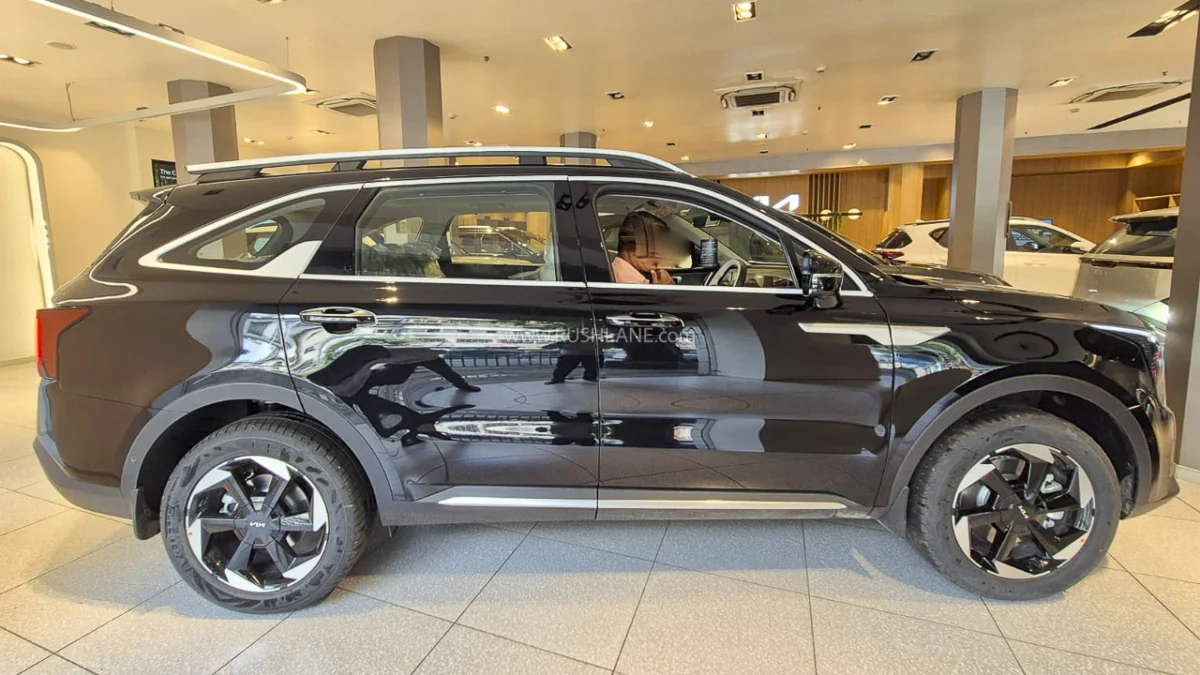
The most recent addition, the Kia Sorento, began dealer dispatches in August 2026 with 365 units. Its official launch in September and the commencement of customer deliveries mark Kia’s intent to capture the premium monocoque space, offering a blend of diesel and hybrid powertrains that cater to long-distance travelers and eco-conscious urbanites alike.

Supporting Data: A Deep Dive into the Leaderboard
The Mahindra Juggernaut
Mahindra’s performance in August 2026 was nothing short of a masterclass in market penetration. The Scorpio family (Classic and Scorpio N) remains the bedrock of their success, selling 15,576 units. While this was a slight 2.70% dip from July, the YoY growth of 58.29% highlights the enduring appeal of the Scorpio brand.
The XUV7XO followed with 8,541 units, a 72.34% increase over the previous year. However, the real story lies in the XEV electric sub-brand. The XEV 9S (4,508 units) and XEV 9e (2,001 units) combined for 6,509 units. In total, Mahindra’s four entries accounted for 30,626 units, representing 71.13% of the tracked category. Remarkably, Mahindra’s volume growth alone accounted for approximately 79% of the net YoY increase for the entire segment.
The Battle of the Mainstream: Tata vs. MG vs. Hyundai
Tata Motors continues to hold its ground with the Harrier and Safari. The Harrier (including the Harrier EV) saw 3,577 units, while the Safari recorded 1,953 units. The Safari’s 31.16% annual growth is expected to climb further following the imminent launch of the Safari EV, which features a triple-screen dashboard and enhanced range.
MG Motor saw a significant resurgence. The Hector and Hector Plus reached 1,177 units—a massive jump from a low base of 379 units in August 2025. This indicates that MG’s updates and feature-rich cabins are regaining consumer interest. Conversely, the Hyundai Alcazar faced headwinds, declining 27.89% YoY to 856 units, suggesting that the model may be due for a significant mid-cycle refresh to compete with the newer XUV and XEV offerings.
The Rugged Elites: Fortuner and Majestor
In the ladder-frame sub-segment, the Toyota Fortuner remains the undisputed king of resale value and reliability. It recorded 3,504 units, up 39.71% YoY. Its new rival, the MG Majestor, clocked 602 units. While the Majestor has yet to threaten the Fortuner’s volume, it provides a tech-heavy alternative for those who find the Toyota too utilitarian.
The Niche and Premium Players
The premium end of the spectrum remains a low-volume, high-margin game. The Skoda Kodiaq (115 units) and Jeep Compass (114 units) maintain a steady presence. The Jeep Meridian followed with 88 units. Newer entrants like the Volkswagen Tayron (42 units) and Honda ZR-V (33 units) are still in the early stages of market penetration, while the Citroen C5 Aircross struggled, recording zero sales for the month.
Official Responses and Industry Sentiment
While official statements from individual manufacturers regarding the August data are typically reserved for quarterly earnings, industry analysts and spokespeople have pointed toward several key drivers.
A senior executive at Mahindra recently noted that the "democratization of luxury" has been central to their strategy. By offering Level 2 ADAS, panoramic sunroofs, and high-performance engines in the Scorpio N and XUV series, they have attracted buyers who were previously looking at entry-level luxury sedans.
Tata Motors’ leadership has consistently emphasized the "Power of Choice," highlighting that providing ICE, EV, and potentially CNG options in the same SUV body style is the key to maintaining market share. The positive reception of the Harrier EV pre-launch indicates that their customer base is ready to transition to electric mobility without compromising on size or status.

Market analysts suggest that the 65% YoY growth is also a result of improved supply chain logistics. In August 2025, many manufacturers were still grappling with semiconductor shortages and high waiting periods. By August 2026, production lines are running at near-full capacity, allowing brands to satisfy the pent-up demand for larger vehicles.
Implications: The Future of the 4.5m-5.0m Segment
The August 2026 sales figures carry several long-term implications for the Indian automotive industry:
1. The "Mahindra-fication" of the Segment: Mahindra’s 71% market share creates a challenging environment for competitors. To break this dominance, other manufacturers will need to offer either significantly better technology or more competitive pricing. Mahindra’s ability to scale its EV production (XEV series) while maintaining ICE volumes (Scorpio) provides them with a unique dual-engine growth model.
2. The Rise of Large EVs: With over 6,500 units coming from Mahindra’s EVs alone, and Tata’s Safari/Harrier EVs on the horizon, the 4.5m-5.0m segment is becoming the primary playground for high-end electric mobility. These vehicles offer the battery real estate required for 500km+ ranges, which is the "magic number" for Indian consumers to overcome range anxiety.
3. The Polarization of Choice: The market is splitting into two clear paths: the "Rugged Ladder-Frame" (Scorpio, Fortuner, Majestor) for those prioritizing durability and presence, and the "High-Tech Monocoque" (XUV7XO, Sorento, Kodiaq) for those prioritizing comfort and features. Manufacturers failing to clearly position their products in one of these two camps risk falling into the "niche" category with sub-100 unit sales.
4. Upcoming Disruptors: The market is far from static. The upcoming launch of the MG Hector Tomahawk EV and Plug-in Hybrid (PHEV) variants is expected to challenge Mahindra’s current EV lead. Furthermore, the expansion of the Kia Sorento lineup and the potential entry of more Japanese and European models in the hybrid space will give consumers even more variety.
Conclusion
The August 2026 sales data for the 4.5m to 5.0m SUV segment paints a picture of a maturing market. Buyers are no longer satisfied with just "big" cars; they demand a sophisticated mix of performance, technology, and sustainability. While Mahindra currently holds the keys to the kingdom, the influx of five new competitors and the rapid shift toward electrification ensure that the battle for SUV supremacy is only just beginning. As the industry moves into the final quarter of the year, all eyes will be on whether the "New Entrants" can convert dealer dispatches into long-term market share.
