

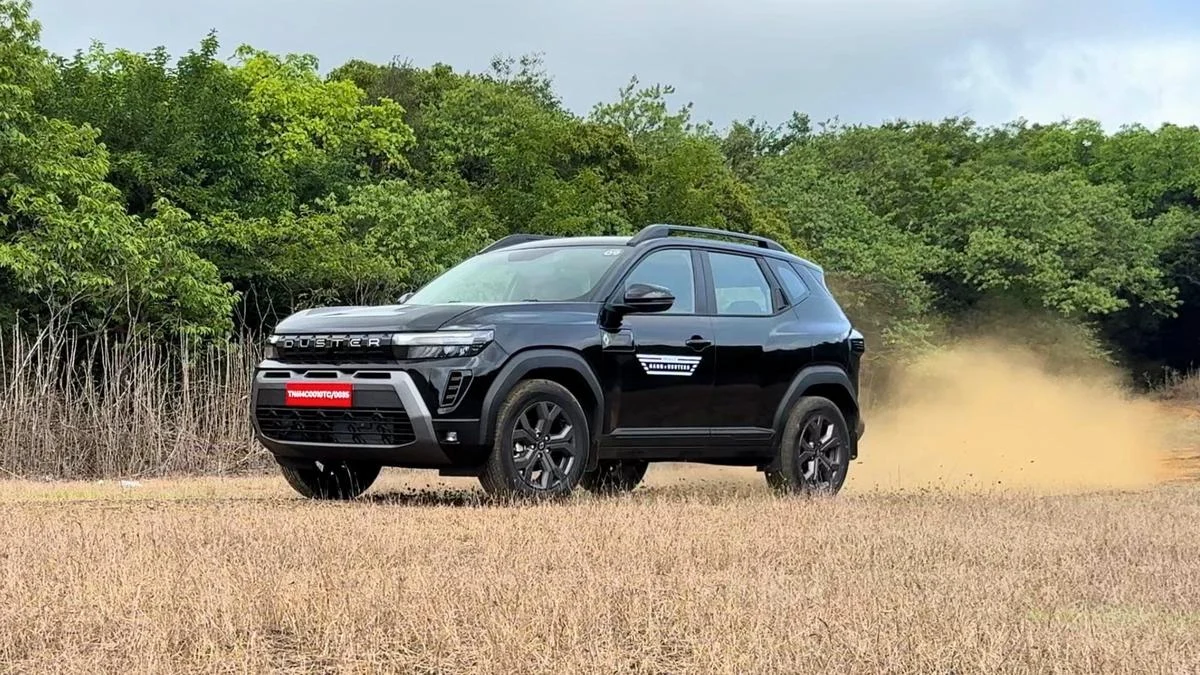
In the contemporary automotive landscape, a persistent skepticism lingers among car buyers regarding small-capacity engines. The prevailing logic is often reductionist: a larger engine equates to effortless power, while a smaller one—particularly a sub-1.0-litre unit—is destined to struggle under the bulk of a modern Sports Utility Vehicle (SUV). However, the automotive industry is currently undergoing a radical downsizing phase, driven by stringent emission norms and the pursuit of efficiency.
The Renault Duster TCe 100 stands at the epicenter of this transition. On paper, its specifications—a 999cc, three-cylinder turbocharged petrol engine—might seem modest for a vehicle of its stature. Yet, a comprehensive evaluation reveals that Renault has managed to extract a level of performance and refinement that challenges the "no replacement for displacement" adage. This is not merely a budget-friendly alternative; it is a meticulously engineered machine that prioritizes driveability and engagement over raw, numerical dominance.
Main Facts: The TCe 100 at a Glance
The Renault Duster TCe 100 enters the highly competitive C-SUV segment with a clear focus on balancing value with a sophisticated European driving character. At the heart of the vehicle lies a 1.0-litre turbocharged petrol engine, delivering 100 PS of power and a peak torque of 160 Nm. While these figures appear conservative compared to the 1.3-litre turbo variants or larger naturally aspirated rivals, the magic lies in the delivery.
Key Specifications:
- Engine: 999cc, 3-cylinder, Turbocharged Petrol
- Maximum Power: 100 PS
- Peak Torque: 160 Nm @ 2,000 rpm
- Transmission: 6-speed Manual
- Price Range: ₹10.49 lakh – ₹13.49 lakh (Ex-showroom)
- Key Features: All-wheel disc brakes, 17-inch alloy wheels, 8-inch touchscreen with wireless smartphone integration.
The Duster TCe 100 is positioned to capture a demographic that seeks the ruggedness of an SUV without the prohibitive costs of a high-displacement powertrain, all while refusing to compromise on the tactile joys of driving.

Chronology: A Comprehensive Test of Versatility
To understand the true capabilities of the TCe 100, the vehicle was subjected to a rigorous testing cycle across diverse terrains, ranging from congested urban corridors to high-altitude mountain passes.
Phase 1: The Urban Commute
The initial hours behind the wheel focused on city driveability. Typically, small turbocharged engines suffer from "turbo lag"—a momentary hesitation before the boost kicks in. However, the Duster displayed a surprisingly crisp throttle response. The engine feels eager at low speeds, allowing for effortless navigation through stop-and-go traffic. The light clutch and slick 6-speed manual gearbox made the constant shifting required by city congestion a fatigue-free experience.
Phase 2: Highway Cruising and High-Speed Stability
As the city limits faded, the Duster was pushed onto the open highway. A common concern with 1.0-litre engines is their ability to maintain triple-digit speeds. The Duster addressed this with a strong mid-range. At 100 km/h, the engine remains within its power band, allowing for clean acceleration when overtaking. The flexibility of the 160 Nm torque spread means the driver does not always need to downshift to find momentum; a gentle squeeze of the throttle is often sufficient.
Phase 3: The Mountain Challenge
The ultimate litmus test for a small-capacity engine is the steep incline. On winding mountain roads, the Duster TCe 100 proved its mettle. While many small engines "gasp" for air on gradients, requiring the driver to chase high revs, the Duster’s torque delivery at 2,000 rpm provided a consistent surge. It tackled hairpins and steep climbs with a level of composure that suggested a much larger displacement was at work.
Phase 4: Off-Road and Broken Tarmac
The final leg involved dirt tracks and broken surfaces to test the Duster’s legendary suspension. True to its lineage, the vehicle maintained impressive body discipline. Whether over potholes or gravel, the chassis remained planted, absorbing imperfections without transmitting jarring vibrations to the cabin.

Supporting Data: Engineering and Performance Metrics
The success of the TCe 100 is not accidental; it is the result of strategic engineering. While Renault shares the basic 1.0-litre engine block with the Kiger, the Duster’s powertrain has undergone significant recalibration.
Torque Dynamics
The engine’s ability to produce 160 Nm from as low as 2,000 rpm is the cornerstone of its driveability. This allows the vehicle to pull cleanly from 25-30 km/h in third gear, reducing the need for constant gear changes in urban environments.
Refinement and NVH
Three-cylinder engines are inherently prone to vibrations due to their unbalanced firing order. Renault engineers have utilized advanced engine mounts and sound-deadening materials to mitigate this. While a faint "thrum" is audible at idle, it disappears once the vehicle is in motion. The Noise, Vibration, and Harshness (NVH) levels are among the best in the segment, contributing to a "mature" driving feel.
Braking and Safety
Uniquely for this price point, the Techno variant comes equipped with all-wheel disc brakes. This provides superior stopping power and heat dissipation compared to the drum-brake setups found on many competitors. Coupled with 17-inch alloy wheels, the Duster offers a mechanical grip that inspires confidence during spirited driving.
Official Responses and Engineering Philosophy
Renault’s approach with the Duster TCe 100 reflects a shift in philosophy. According to engineering insights associated with the project, the goal was to create a "right-sized" rather than "down-sized" experience.

The integration of the 6-speed manual gearbox is a critical component of this strategy. By choosing specific gear ratios, Renault ensured that the engine stays within its "sweet spot" during most legal driving speeds. This synergy between the gearbox and the turbocharger’s spool-up time is what creates the "effortless" sensation reported by drivers.
Furthermore, the interior design reflects a move toward "sensible luxury." Renault has moved away from hard plastics in key touchpoints, opting for fabric trims and dual-tone finishes. The use of brown accents and sophisticated upholstery is a deliberate attempt to elevate the cabin experience to match the refined powertrain.
Implications: Impact on the C-SUV Market
The arrival of the Duster TCe 100 has significant implications for the Indian and global automotive markets.
1. Challenging the German Hegemony
For years, the Volkswagen Taigun and Skoda Kushaq have been the go-to choices for buyers seeking a "European" driving feel. The Duster TCe 100 now offers a formidable alternative. It provides similar—and in some cases, superior—steering feedback and chassis balance, but often at a more accessible price point and with a more rugged aesthetic.
2. Redefining Value in the Segment
Starting at ₹10.49 lakh, the Duster TCe 100 undercuts several rivals while offering a more engaging driving experience than many naturally aspirated 1.5-litre SUVs. This positions the Duster as a "disruptor," proving that driving pleasure does not have to be a premium-only feature.

3. The Future of Small-Capacity Turbos
The Duster’s performance serves as a case study for the industry. It proves that with the right turbocharging technology and transmission calibration, a 1.0-litre engine is more than capable of powering a family SUV. This may accelerate the phase-out of larger, less efficient naturally aspirated engines across other manufacturers.
4. Areas for Improvement
Despite the overwhelming positives, the market response suggests two areas where Renault could have further solidified the package. In the Indian climate, the absence of ventilated seats is a notable omission. Additionally, while the powered tailgate is a "nice-to-have" luxury, the inclusion of electrically adjustable front seats would have added more daily utility for many owners.
Conclusion: The "Sweet Spot" of the Range
The Renault Duster TCe 100 is a vehicle that rewards the open-minded. It is a car designed for the driver who understands that performance is about the quality of power delivery, not just the quantity of horses under the hood.
While the 1.3-litre turbo variant will remain the choice for those craving outright speed, the TCe 100 emerges as the "sweet spot" for the pragmatic enthusiast. It offers a rare blend of mechanical honesty, rugged practicality, and surprising refinement. In an era of digital isolation and oversized engines, the Duster TCe 100 is a refreshing reminder that sometimes, less really is more. It doesn’t just meet expectations; it recalibrates them, proving that the most impressive vehicles are often the ones that do the most with the least.
Renault Duster TCe100 Price Range: ₹10.49 lakh – ₹13.49 lakh
Motorscribes, in association with The Hindu, brings you the latest in cars and bikes. Follow them on Instagram @motorscribes
