

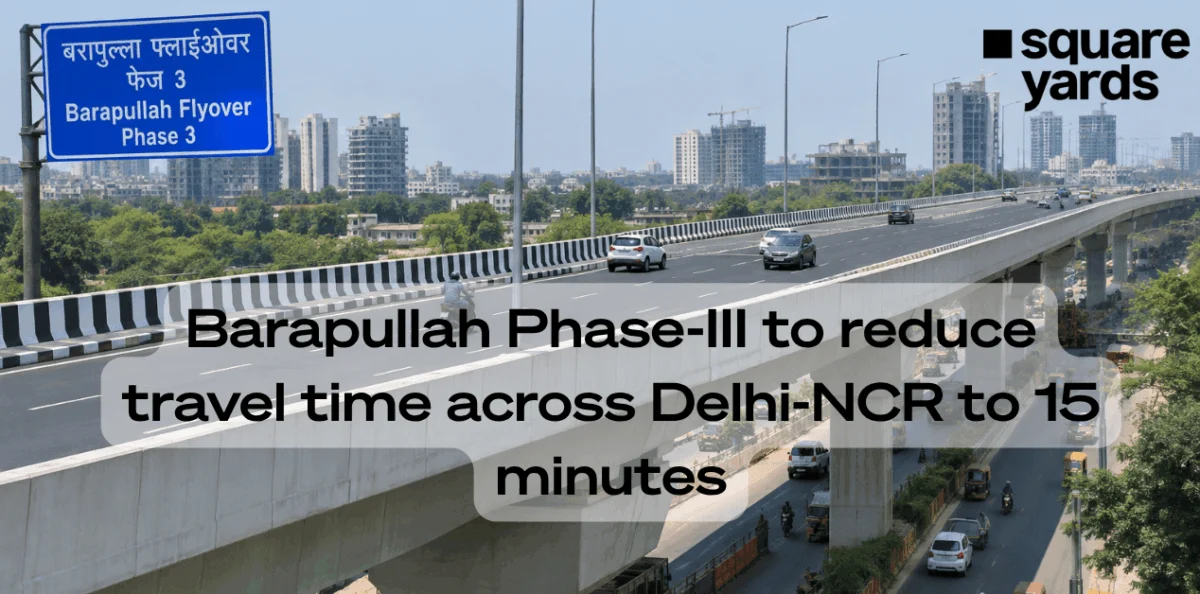
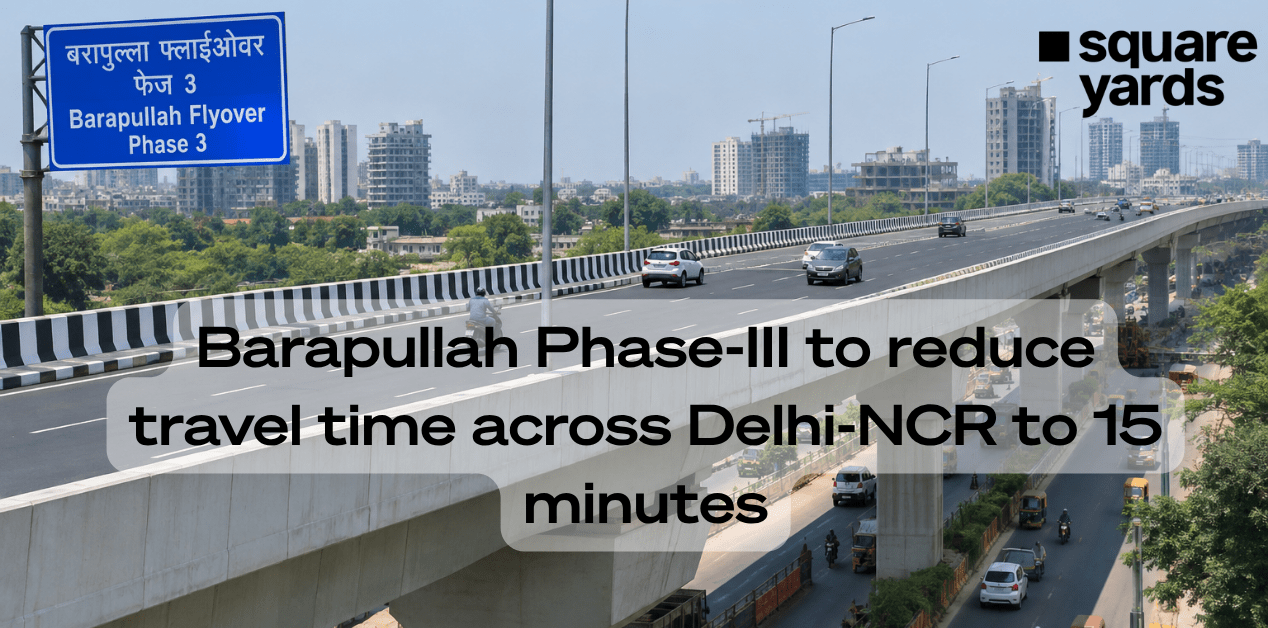
New Delhi, September 21, 2026 – In a move that promises to fundamentally alter the commuting landscape of the National Capital Region (NCR), the Delhi Government and the Public Works Department (PWD) have officially announced that the long-awaited Barapullah Phase-III elevated corridor will be inaugurated on September 29. This 3.5-kilometer engineering feat marks the completion of one of the city’s most critical "missing links," finally providing a seamless, signal-free connection between East Delhi and the heart of South Delhi.
For over a decade, the Barapullah project has been a symbol of both Delhi’s ambitious infrastructure goals and the bureaucratic hurdles that often accompany large-scale urban development. With its opening, the journey from Mayur Vihar to the All India Institute of Medical Sciences (AIIMS) is expected to shrink from a grueling 40-minute crawl through congested bottlenecks to a brisk 15-minute drive.
I. Main Facts: Completing the Signal-Free Vision
The Barapullah Phase-III project is a 3.5-km elevated corridor designed to bridge the gap between Mayur Vihar Phase-I in East Delhi and Sarai Kale Khan in South Delhi. While Phases I and II already connect Sarai Kale Khan to the Jawaharlal Nehru (JLN) Stadium and further to INA/Aurobindo Marg, Phase-III was the final piece of the puzzle required to cross the Yamuna River.
Key Project Highlights:
- Total Length: 3.5 Kilometers of elevated roadway.
- Connectivity Points: Mayur Vihar Phase-I (East) to Sarai Kale Khan (South).
- Time Savings: Estimated reduction in travel time by 60–70%.
- Integration: Direct link to the existing Barapullah Phase-I and Phase-II corridors, effectively creating a signal-free artery from the eastern border of Delhi to the western edges of South Delhi.
- Strategic Importance: The bridge serves as a vital conduit for residents of Noida, Ghaziabad, and East Delhi who work in the central and southern districts of the capital.
The corridor is not merely a local road; it is a strategic bypass. By diverting traffic away from the heavily congested Ring Road and the DND Flyway, it is expected to alleviate the perennial gridlock at the Ashram intersection and the NH-24 approaches.
II. Chronology: The Long Road to Completion
The journey of Barapullah Phase-III has been anything but smooth. To understand the significance of the September 29 inauguration, one must look at the timeline of its development, which spans more than a decade.
1. Conceptualization and Phase I & II (2010–2015)
The Barapullah project was originally conceived ahead of the 2010 Commonwealth Games. Phase I (Sarai Kale Khan to JLN Stadium) was completed in record time for the games. Phase II, which extended the corridor to INA and Aurobindo Marg, followed shortly after, significantly easing access to AIIMS and Safdarjung Hospital.
2. The Launch of Phase III (2015)
Work on Phase III officially began in 2015. The initial deadline was set for 2017. The project aimed to build a high-capacity bridge over the Yamuna to link the existing corridor with the residential hubs of East Delhi.
3. The Land Acquisition Deadlock (2017–2023)
The project hit a major roadblock involving an 800-meter stretch of land in the village of Nangli Razapur. Approximately 8.5 acres of private land were required to complete the approach ramps. Legal disputes over compensation and land ownership led to years of litigation and stalled construction. While the bridge over the river was largely completed by 2019, it stood as a "bridge to nowhere" because the land for the landing ramps remained unavailable.
4. Resolution and Final Push (2024–2026)
Following interventions by the Delhi High Court and a revised compensation package by the Delhi Government, the land was finally acquired in late 2024. Over the last 18 months, construction proceeded at an accelerated pace. Engineers utilized pre-cast segments and advanced launching girders to complete the final spans over the floodplains, leading to the upcoming September 2026 launch.
III. Supporting Data: Quantifying the Impact
The opening of Barapullah Phase-III is backed by impressive data regarding traffic flow and economic efficiency.
Traffic Volume and Congestion Relief
Urban planners estimate that the corridor will handle upwards of 1.5 lakh (150,000) vehicles daily. Currently, commuters from Mayur Vihar and Noida must use either the DND Flyway or the Nizamuddin Bridge. Both routes are frequently choked during peak hours. Phase-III is projected to reduce the traffic load on the DND Flyway by approximately 20% and on the Nizamuddin Bridge by 15%.
Fuel and Environmental Savings
By reducing idling time at major intersections like Sarai Kale Khan and Ashram, the corridor is expected to contribute to a significant reduction in vehicular emissions. A study by transport experts suggests that the 25-minute reduction in travel time per vehicle could result in a collective saving of thousands of liters of fuel daily, aligning with Delhi’s "Green Mobility" initiatives.
The Multi-Modal Hub at Sarai Kale Khan
The southern terminus of Phase-III integrates directly with the Sarai Kale Khan Multi-Modal Transit Hub. This hub is perhaps the most complex in India, housing:
- Hazrat Nizamuddin Railway Station: One of Delhi’s primary rail terminals.
- Sarai Kale Khan ISBT: A major bus terminal for interstate travel.
- Delhi Metro (Pink Line): Providing intra-city connectivity.
- RRTS (Namo Bharat): The Rapid Rail Transit System connecting Delhi to Meerut and Alwar.
The synergy between the Barapullah elevated road and these transit modes means that a commuter from East Delhi can now reach the RRTS station in under 10 minutes, facilitating seamless regional travel.
IV. Official Responses: A Vision for a Seamless Delhi
Government officials and PWD engineers have hailed the project as a testament to persistence and engineering excellence.
A Senior PWD Official stated:
"The completion of the Barapullah Phase-III is a landmark achievement for the PWD. We faced unprecedented challenges, particularly with the hydraulic complexities of building over the Yamuna floodplains and the legal intricacies of land acquisition. However, the final structure is a state-of-the-art corridor that meets the highest safety and durability standards."
The Delhi Transport Minister commented:
"Our vision has always been to make Delhi a signal-free city. With the inauguration of Barapullah Phase-III, we are fulfilling a promise made to the residents of East Delhi. This is not just a road; it is a lifeline that will bring families closer by reducing the hours they spend in traffic. It also marks a significant step in our integration with the wider NCR, including Noida and Ghaziabad."
Environmental Experts have also weighed in, noting that while new roads often invite more traffic, the "bypass" nature of this corridor is essential for removing bottlenecks that cause localized air pollution "hotspots" in residential areas.
V. Implications: Real Estate, Economy, and Lifestyle
The ripple effects of this project extend far beyond the asphalt of the road itself. The inauguration is set to trigger significant shifts in the socio-economic fabric of the surrounding regions.
1. Real Estate Surge in East Delhi
Localities like Mayur Vihar Phase-I, Patparganj, and Trilokpuri are poised for a "real estate renaissance." Historically, these areas were seen as affordable alternatives to South Delhi but were hampered by poor connectivity. With South Delhi’s premium healthcare (AIIMS, Safdarjung) and shopping hubs (South Extension, INA) now just 15 minutes away, property valuations in East Delhi are expected to appreciate by 15–20% over the next two fiscal years.
2. Noida and Ghaziabad: The New Commuter Reality
For residents of Noida (Sectors 15, 16, 18, and 62) and Ghaziabad (Indirapuram and Vasundhara), the Barapullah Phase-III provides a "fast-track" to South Delhi. It bypasses the bottlenecked internal roads of Noida and the heavy traffic of the DND. This makes these NCR suburbs even more attractive for professionals working in South and Central Delhi.
3. Boosting the Delhi-Mumbai Expressway
The corridor’s proximity to the starting point of the Delhi-Mumbai Expressway at Sarai Kale Khan is a strategic advantage. It allows residents of East Delhi and Western UP to access the national expressway network without ever having to navigate the congested surface roads of the city.
4. Enhancing Healthcare Access
Perhaps the most human impact of the project is the improved access to emergency medical care. AIIMS and Safdarjung Hospital are the primary tertiary care centers for the region. For an ambulance coming from East Delhi or Noida, the 25 minutes saved by using the Barapullah corridor could quite literally be the difference between life and death.
Conclusion: A New Era for Delhi’s Mobility
As the ribbon is cut on September 29, 2026, the Barapullah Phase-III will transition from a project of delays to a project of delivery. It stands as a vital component of Delhi’s evolving "signal-free" infrastructure, joining the ranks of the Ring Road bypasses and the various elevated corridors that have defined the city’s growth in the 21st century.
For the daily commuter, the project offers the most precious commodity of all: time. By bridging the Yamuna and bypassing the bottlenecks, Delhi has successfully stitched together two of its most vibrant zones, ensuring that the capital remains a dynamic, moving, and interconnected metropolis.
Disclaimer: Information regarding the Barapullah Phase-III project is based on current infrastructure progress and official announcements. Commuters are advised to check local traffic advisories for specific route changes following the inauguration.
