

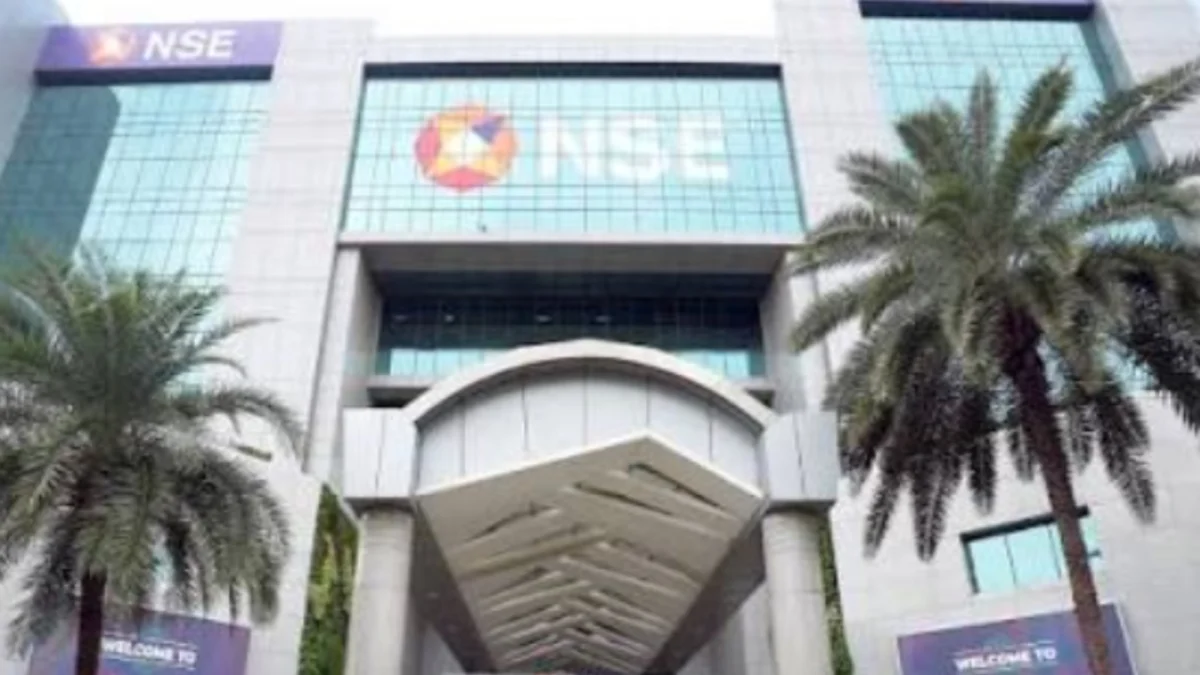
Mumbai, India – The highly anticipated market debut of the National Stock Exchange of India (NSE) on the BSE saw a measured start, yet quickly showcased its underlying strength with an intraday rally. While the initial listing was described as "muted," failing to meet the lofty expectations of the grey market, market experts are urging investors to look beyond the day-one price action and focus on the fundamental strengths and long-term trajectory of India’s largest stock exchange.
The NSE, a pivotal institution in India’s financial ecosystem, listed at Rs 1,800, marking a modest 0.84 per cent premium over its issue price of Rs 1,785. This contrasted sharply with pre-debut predictions that often inflate expectations for new listings. However, the stock soon found its footing, surging over 5 per cent during Thursday’s intraday trade to touch Rs 1,878. This surge propelled its market valuation beyond an impressive Rs 4.5 lakh crore, firmly establishing its position as a behemoth in the Indian financial landscape.
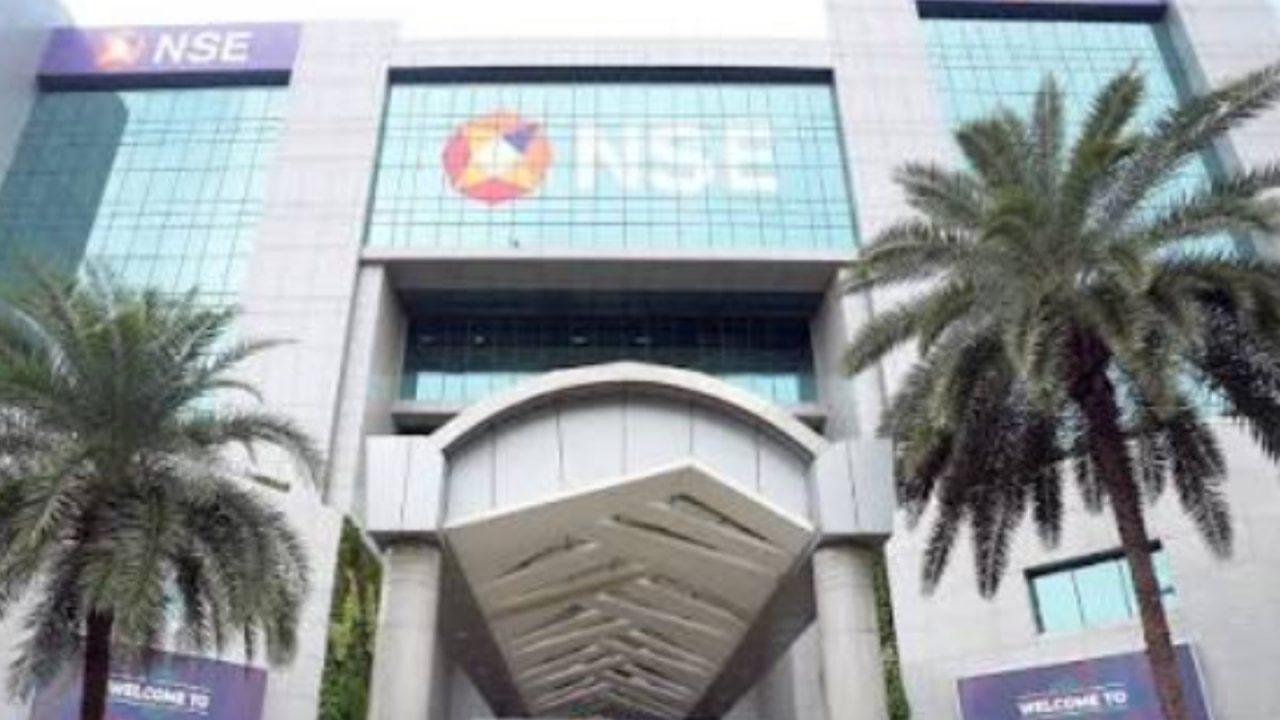
Despite the flat initial performance, a consensus among market analysts suggests that this does not signify weak investor interest. Instead, they point to a confluence of factors unique to large-scale market infrastructure providers like the NSE, advocating for a deeper dive into valuation metrics, earning potential, derivative market dominance, and the intricate web of regulatory dynamics.
Chronology of a Landmark Listing: From Anticipation to Intraday Rally
The journey to the NSE’s public listing was a protracted and keenly observed one, spanning years of regulatory deliberations, strategic planning, and immense market speculation. As one of India’s most significant public offerings, the Rs 22,561.5-crore IPO commanded considerable attention, not just for its sheer size but for the institution it represented – the very backbone of India’s modern capital markets.
)
Pre-Listing Buzz and Unmet Expectations
Leading up to the debut, the grey market, an unofficial over-the-counter market for IPO shares, had hinted at a significantly higher premium for NSE’s shares. These unofficial valuations often serve as a barometer for market sentiment, creating an atmosphere of heightened expectation. The actual listing at a mere 0.84 per cent premium thus came as a mild surprise to many retail investors hoping for a quick "listing pop." This divergence highlights the often-unpredictable nature of market debuts, especially for large-cap entities where institutional investors play a more dominant role.
The Debut Day: A Muted Start, A Strong Recovery
On the day of its listing, the NSE’s shares commenced trading on the BSE at Rs 1,800. While a premium is always welcomed, the marginal gain did not initially ignite the euphoria often associated with smaller, high-growth IPOs. However, the initial hours of trading provided a crucial demonstration of resilience. After what some might perceive as a brief period of price discovery and absorption, the stock began its upward trajectory. The intraday climb to Rs 1,878, representing over a 5 per cent gain from its listing price, quickly assuaged concerns, illustrating robust underlying demand and a rapid recognition of its intrinsic value by a broader segment of the market. This swift recovery underscores the distinction between immediate speculative interest and longer-term institutional confidence.

Distinguishing Large IPO Behaviour
CA Manish Mishra, Co-Founder & CEO of GenZCFO, provides crucial context for understanding such a debut. He points out that large public offerings, especially those of the magnitude of NSE’s, often exhibit distinct characteristics compared to mid-sized IPOs. "A flat or modest listing is not a red flag on its own," Mishra explains. "Large issues tend to absorb liquidity more slowly, and institutional investors typically take time to build positions rather than chasing the first-day price." This measured approach from sophisticated investors often prevents the dramatic swings seen in smaller, more retail-driven listings, leading to a more stable, albeit less immediately spectacular, debut.
Supporting Data: Unpacking NSE’s Dominance and Valuation Nuances
The National Stock Exchange’s listing provides a rare window into the financial architecture that underpins India’s economic growth. A deeper dive into its comparative metrics, valuation, and market share reveals why experts remain optimistic despite the initial subdued market reaction.
)
NSE vs. BSE: A Tale of Two Exchanges
The immediate comparison drawn by analysts is with its venerable peer, the Bombay Stock Exchange (BSE), which has been publicly listed for several years. This comparison is vital for understanding the relative scale and market positioning of NSE.
Ajay Garg, Director & CEO of SMC Global Securities, emphasizes NSE’s commanding presence. "NSE’s listing highlights its significant scale and market-share advantage," Garg notes. The stark difference in market capitalization is a testament to this: NSE’s valuation crossed Rs 4.5 lakh crore during its debut session, dwarfing BSE’s approximate Rs 1.3 lakh crore market capitalization. This gap underscores NSE’s dominant position and its larger footprint across various segments of the Indian capital markets.
)
Valuation Metrics and Earnings Outlook
From a valuation perspective, NSE also presents an intriguing picture. At its IPO price, the exchange was valued at approximately 43 times its estimated FY26 earnings. This stands in contrast to BSE, which traded at around 53 times its FY26 earnings. While a lower P/E multiple might initially suggest a more attractive valuation for NSE, experts caution against simplistic comparisons. The difference often reflects market perceptions of growth trajectories, segment dominance, and future earning stability.
It’s also crucial to consider the impact of specific financial events. Ratiraj Tibrewal, Director at Choice Capital Advisors, highlights that NSE’s FY26 profit was influenced by a one-time SEBI settlement charge. Such non-recurring items can temporarily depress reported earnings, making the P/E ratio appear higher or lower than what it would be based on normalized, core profitability. Adjusting for such charges provides a clearer picture of the exchange’s true earning power and intrinsic value.
)
Unrivaled Market Share Dominance
Perhaps the most compelling argument for NSE’s long-term potential lies in its overwhelming market share across key segments. For the fiscal year 2026 (FY26), the NSE held a near-monopoly in several critical areas:
- Cash Market Turnover: NSE commanded an impressive 92.99% share, indicating its primary role in facilitating equity trading for both retail and institutional investors.
- Equity Futures Turnover: Its dominance was even more pronounced in the derivatives segment, with 99.79% of the equity futures turnover flowing through its platform.
- Equity Options Premium Turnover: In the highly lucrative equity options market, NSE accounted for 74.71% of the premium turnover, demonstrating its leadership in this rapidly growing and high-volume segment.
This unparalleled market share is not merely a statistical point; it represents a significant competitive moat. As a market infrastructure business, exchanges benefit from network effects – liquidity attracts more liquidity. NSE’s dominant position ensures that it remains the preferred platform for traders and investors, leading to higher transaction volumes and, consequently, robust recurring revenue streams from transaction fees, listing fees, data dissemination services, and other ancillary offerings.
)
The Business Model of an Exchange: A Unique Proposition
Unlike traditional manufacturing or service companies, a stock exchange operates as a critical market infrastructure provider. Its revenue model is largely tied to market activity, making it a proxy for the overall health and growth of the capital markets. Key revenue drivers include:
- Transaction Fees: The largest component, derived from trades executed on its platforms.
- Listing Fees: Charges for companies to list their shares and other securities.
- Data Vending Fees: Selling market data to financial institutions and data providers.
- Technology Services: Offering co-location and other technology-driven services to traders.
- Clearing and Settlement Charges: Revenue from its subsidiary, National Securities Clearing Corporation Limited (NSCCL).
The stability and recurring nature of these revenues, coupled with the high barriers to entry for new competitors in the exchange space, contribute to a business model that is often characterized by strong cash flows and high operating leverage.
)
Expert Insights on Intrinsic Value
Mishra further elaborates on the factors investors should prioritize: "Investors should look beyond NSE’s day-one price action and focus on its free float, pre-IPO price discovery, recurring revenue, regulatory clarity, and potential index inclusion." A "tightly held float," as was the case with NSE’s listing, inherently limits sharp price swings, offering a different risk profile compared to issues where a large percentage of shares immediately enter public trading. For market infrastructure businesses, these longer-term, fundamental factors are deemed more critical for attracting and retaining institutional investment than fleeting opening-day performance.
Tibrewal’s perspective echoes this sentiment, noting that NSE’s valuation left limited room for a significant listing pop. He adds, "I wouldn’t read it as investors turning against large IPOs. LG and ICICI Prudential show the market still rewards big issues when the price is right. NSE is a strong business priced close to fair value, and a quiet start is what that usually looks like." This implies that the market has recognized NSE’s inherent strength and priced it accordingly, rather than indicating a lack of interest.
)
Official Responses and Expert Opinions
While the initial article did not contain direct "official responses" from NSE management or regulatory bodies, it heavily relies on the interpretations and analyses of seasoned financial experts. Their collective insights form the core of understanding the market’s reaction and the future outlook for the exchange.
CA Manish Mishra: The Institutional Perspective
CA Manish Mishra’s analysis centers on the behavioral economics of large-scale IPOs and the strategic approach of institutional investors. He provides a crucial counter-narrative to the common expectation of a "listing pop."
)
- Slow Liquidity Absorption: Mishra emphasizes that large issues, due to their sheer volume, require more time to absorb liquidity from the market. This process is inherently different from smaller IPOs, where a limited number of shares can see dramatic price movements on debut due to intense retail and short-term speculative interest.
- Institutional Patience: Institutional investors, who typically constitute a significant portion of the demand for large-cap listings, are less driven by immediate listing gains. Their investment horizon is longer-term, focusing on fundamental value, growth prospects, and strategic positioning within their portfolios. They are more likely to build positions gradually, observing post-listing price discovery, rather than aggressively bidding up the price on day one.
- Importance of Free Float and Regulatory Clarity: Mishra’s mention of "free float" refers to the percentage of a company’s shares available for public trading. A tightly held float, where a significant portion of shares are locked up or held by strategic investors, can limit immediate supply, preventing wild price swings in either direction. This contributes to a more stable, albeit less volatile, listing. Furthermore, for a highly regulated entity like an exchange, "regulatory clarity" is paramount. Any uncertainty regarding policies or future directives can influence investor sentiment and valuation.
Ajay Garg: Scale, Growth, and Market Evolution
Ajay Garg from SMC Global Securities offers a macro perspective, highlighting NSE’s foundational role in India’s capital market expansion.
- Dominant Scale as a Competitive Advantage: Garg reinforces the idea that NSE’s significant scale and market share are not just statistics but fundamental competitive advantages. In a network-effect business, the largest player tends to attract more participants, creating a virtuous cycle of liquidity and volume. This makes it incredibly difficult for new entrants to challenge the incumbent.
- Leveraging India’s Growth Story: His commentary on India’s expanding investor base and growing participation in capital markets is critical. India is witnessing a significant financialization of savings, with more individuals entering the stock market through demat accounts. As the economy grows, and wealth increases, participation in capital markets is expected to rise, directly benefiting exchanges like NSE through increased transaction volumes.
- Strategic Monitoring: Garg’s advice to monitor regulatory changes, trading patterns, and the derivatives segment is a forward-looking caution. Regulatory shifts can impact revenue models (e.g., transaction fee caps), while evolving trading patterns (e.g., algorithmic trading, high-frequency trading) necessitate continuous technological upgrades and adaptation from the exchange. The derivatives segment, in particular, is a high-growth, high-margin area for exchanges globally.
Ratiraj Tibrewal: Valuation Realism and Future Risks
Ratiraj Tibrewal of Choice Capital Advisors brings a pragmatic view on valuation and potential future supply dynamics.
)
- Fair Value Pricing: Tibrewal’s assertion that NSE was "a strong business priced close to fair value" is a key takeaway. It suggests that the IPO pricing already incorporated much of the company’s inherent value and growth potential, leaving less room for a substantial listing pop driven by undervaluation. This is often the case with established, stable businesses coming to market.
- One-Time Charges and Normalized Earnings: His mention of the "one-time SEBI settlement charge" impacting FY26 profit is crucial for a nuanced financial analysis. Sophisticated investors and analysts typically strip out such non-recurring items to arrive at a "normalized" earnings figure, which provides a more accurate reflection of the company’s operational profitability and sustainable earning power.
- Lock-in Expiry as a Supply Event: Tibrewal’s warning about potential supply pressure from pre-IPO shareholders post-March 2027 is a significant forward-looking risk. When lock-in periods expire, a large block of shares can become available for sale, potentially increasing supply and exerting downward pressure on the stock price. Investors need to factor this into their long-term holding strategies.
In essence, the expert responses collectively paint a picture of an intrinsically strong business, prudently valued, making a stable debut. The focus shifts from short-term speculative gains to the long-term growth story driven by India’s expanding capital markets and NSE’s entrenched dominance.
Implications: Navigating the Future for Investors and the Exchange
The listing of the National Stock Exchange is not merely an event; it’s a significant milestone with far-reaching implications for individual investors, the exchange itself, and the broader Indian capital market. Understanding these implications is crucial for anyone looking to engage with this unique investment opportunity.
)
What Investors Should Watch Ahead: Key Metrics and Potential Risks
For investors considering NSE as a long-term holding, a disciplined approach focusing on fundamental drivers and potential headwinds is essential.
H3. Earnings Growth and Derivatives Volumes
Ratiraj Tibrewal succinctly highlights the primary drivers: "NSE’s performance over the next 6–12 months will depend on earnings, derivatives volumes and regulatory changes, particularly NSE’s share in index options."
)
- Sustainable Earnings Growth: While NSE boasts robust recurring revenues, future growth will depend on the overall expansion of market activity. Monitoring quarterly and annual earnings reports for consistent growth, especially in core transaction fee revenues, will be paramount. Investors should look beyond one-time charges and focus on operational profitability.
- Derivatives Market Expansion: The derivatives segment, particularly index options, is a high-growth and high-margin area. India’s derivatives market has witnessed explosive growth, driven by increasing sophistication of retail investors and institutional hedging activities. NSE’s dominant share in this segment positions it well to capitalize on this trend. Any innovation in derivative products or changes in trading patterns within this segment will directly impact NSE’s top and bottom lines.
H3. Regulatory Landscape and Policy Shifts
As a critical market infrastructure provider, NSE operates under strict regulatory oversight by SEBI (Securities and Exchange Board of India). Regulatory changes can have a profound impact on its business model.
- Transaction Fee Regulation: Regulators might intervene to cap transaction fees or alter market structures, which could impact profitability.
- Market Timings and Product Innovation: Changes in trading hours, introduction of new asset classes (e.g., commodity derivatives, new equity products), or adjustments to existing product specifications can create new revenue streams or alter existing ones.
- Competition: While limited, regulatory decisions regarding new exchange licenses or promoting competition could subtly shift market dynamics. Investors should closely monitor SEBI announcements and policy papers.
H3. Potential Supply Pressure from Lock-in Expiry
A significant risk flagged by experts like Tibrewal is the potential supply pressure when pre-IPO shareholders become eligible to sell their shares. "I also flag potential supply pressure when pre-IPO shareholders become eligible to sell from around March 2027," he cautions.
)
- Lock-in Periods: Typically, anchor investors and existing shareholders in an IPO are subject to a lock-in period, preventing them from selling their shares immediately after listing. This helps stabilize the stock price.
- Post-Lock-in Volatility: Once these lock-in periods expire (in this case, around March 2027), a substantial number of shares could flood the market, potentially leading to increased supply and a temporary dip in the stock price. Long-term investors should be aware of this future event and factor it into their valuation models.
H3. Understanding the Long-Term Narrative
Despite these watch points, the long-term narrative for NSE remains compelling. India’s economy is on a growth trajectory, fueled by demographic advantages, increasing urbanization, and a growing middle class. This leads to:
- Financialization of Savings: A shift from traditional savings instruments to capital market products.
- Increased Investor Participation: Growth in the number of demat accounts and active traders.
- Deepening Capital Markets: More companies seeking to raise capital, leading to more listings.
NSE, as the dominant player, is ideally positioned to be a direct beneficiary of these macro trends. Its status as a ‘picks and shovels’ play in the gold rush of India’s economic expansion makes it an attractive proposition for patient, long-term investors.
)
Implications for the National Stock Exchange
For NSE management, the listing heralds a new era of public accountability and strategic imperatives.
- Maintaining Market Dominance: The primary challenge will be to not only maintain its overwhelming market share but also to expand into new segments and product offerings. This requires continuous innovation, robust technology infrastructure, and proactive engagement with market participants.
- Navigating Regulatory Scrutiny: As a publicly listed entity, NSE will face increased scrutiny from both investors and regulators. Balancing shareholder value creation with its role as a market regulator and infrastructure provider will be a delicate act.
- Strategic Growth Initiatives: NSE will likely explore avenues for inorganic growth (acquisitions) or expansion into new areas like environmental, social, and governance (ESG) linked products, data analytics, and global partnerships to diversify its revenue streams and enhance its competitive edge.
Broader Impact on the Indian Capital Market
The listing of NSE has profound implications for the Indian capital market as a whole:
)
- Increased Transparency and Benchmarking: With both major Indian exchanges (BSE and NSE) now publicly listed, the market gains unprecedented transparency into their financial performance, growth strategies, and operational efficiencies. This allows for better benchmarking and a clearer understanding of the health of India’s market infrastructure.
- Maturity of the Ecosystem: The successful listing of such a large and critical institution signals the growing maturity and depth of India’s capital markets. It demonstrates the ability to absorb significant public offerings and provides a blueprint for future large-scale listings.
- Investor Confidence: The stability demonstrated post-listing, despite initial muted expectations, can bolster investor confidence in the Indian IPO market, especially for large, fundamentally strong businesses.
In conclusion, the National Stock Exchange’s debut, while initially subdued, quickly revealed the robust underpinnings of a dominant market infrastructure provider. Far from being a red flag, experts view it as a testament to a strong business prudently valued. For investors, the journey ahead will require a focus on fundamental drivers—earnings, derivatives growth, and regulatory shifts—rather than short-term price movements. As India’s capital markets continue their impressive expansion, NSE stands poised to be a key beneficiary, offering a compelling long-term investment opportunity for those who understand its unique position and enduring strengths.
