

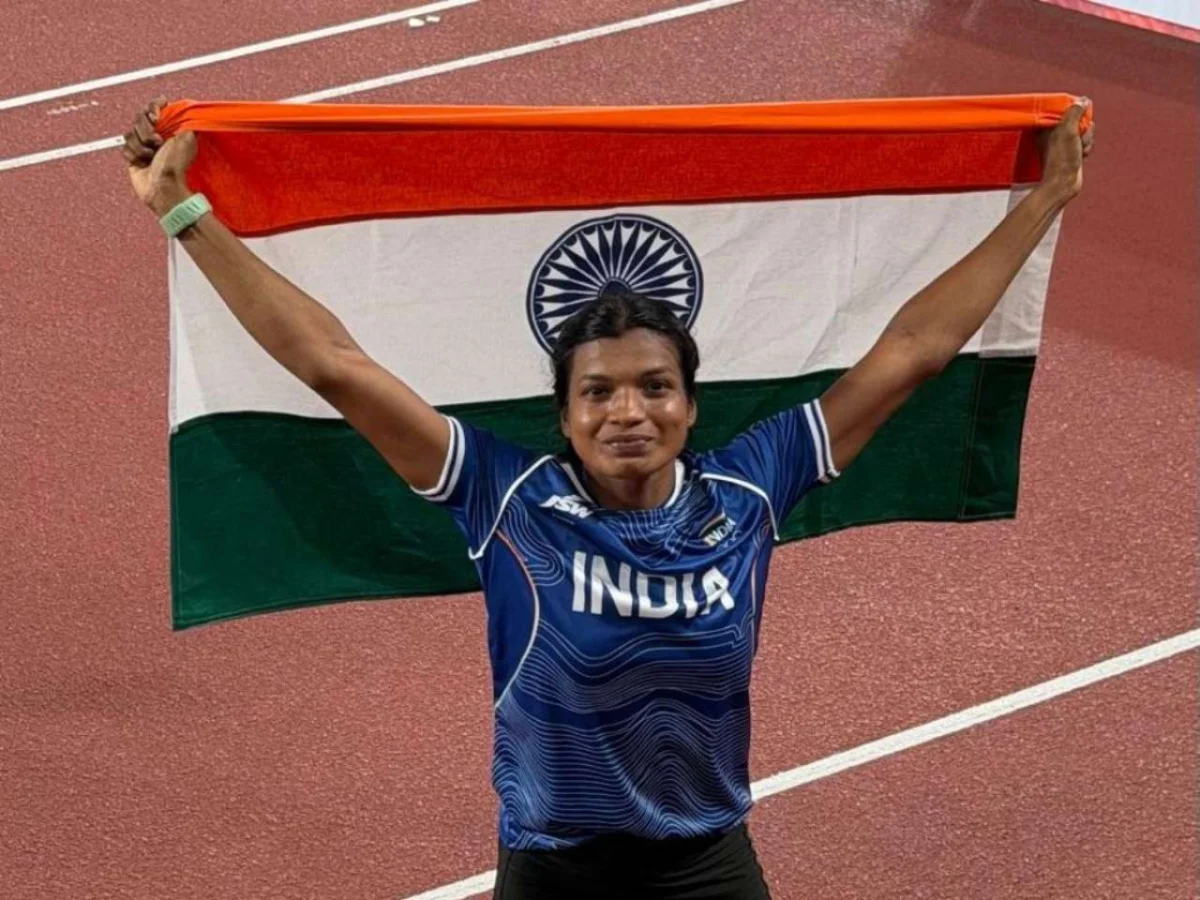
Aichi-Nagoya, Japan – In a moment that will forever be etched in the annals of Indian sports history, Baranica Elangovan, the 29-year-old pole vaulter from Tamil Nadu, secured India’s inaugural medal in the event at the Asian Games 2026. Clearing a formidable height of 4.15 meters, Elangovan’s bronze medal victory not only marked a personal triumph but also heralded a new era for Indian athletics, shattering decades of anticipation and inspiring a nation.
Sharing the third step of the podium with Kazakhstan’s Polina Ivanova, who matched her impressive mark, Elangovan’s achievement in Aichi-Nagoya on Friday stands as a testament to her unyielding spirit, meticulous training, and remarkable resilience in overcoming significant career hurdles. Her performance transcended mere competition; it became a powerful narrative of ambition, perseverance, and the breaking of long-standing barriers.
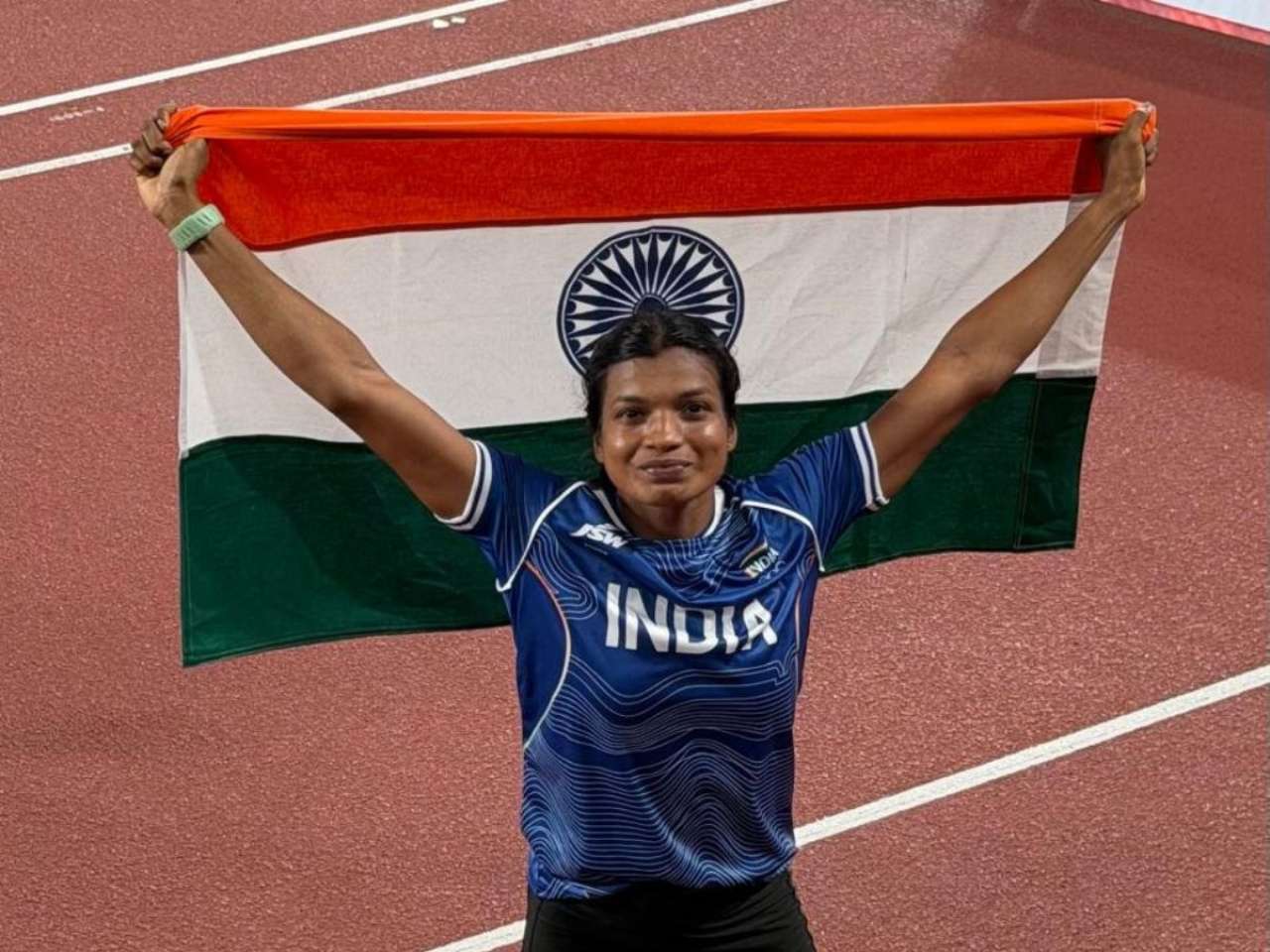
The gold medal in the women’s pole vault was claimed by Japan’s Misaki Morota, who delivered a sensational personal best of 4.55 meters, showcasing the formidable talent present in Asian athletics. China’s Chunge Niu earned the silver medal with a strong clearance of 4.50 meters, rounding out a highly competitive and thrilling contest that captivated audiences worldwide. For India, however, all eyes were on Elangovan, whose bronze shone with the brilliance of a breakthrough.
The Ascent of a Trailblazer: Baranica Elangovan’s Journey to Glory
Baranica Elangovan’s path to becoming an Asian Games medalist is a compelling saga of dedication, struggle, and an unwavering belief in her capabilities. Born on February 3, 1997, in the tranquil town of Mayiladuthurai, Tamil Nadu, her journey into the demanding world of pole vaulting began far from the international spotlight. Like many aspiring athletes in India, her early years were characterized by a quest for adequate facilities and specialized coaching, often a significant challenge in a country where mainstream sports tend to dominate resources and attention.
)
Her introduction to athletics, and subsequently pole vaulting, was a gradual process, fueled by an innate athleticism and a competitive spirit. Local school competitions and district-level meets served as her initial proving grounds, where her natural talent for the intricate and technically demanding sport of pole vault began to shine. It wasn’t long before her potential was recognized, leading her to more structured training environments, albeit ones that still required immense personal sacrifice and commitment. The unique blend of speed, strength, agility, and aerial awareness required in pole vaulting made it a sport that perfectly suited Elangovan’s athletic profile. She dedicated countless hours to mastering the complex sequence of the run-up, plant, take-off, swing, and bar clearance, understanding that perfection in each phase was crucial for success.
Early Promise and the Shadow of Injury
As Elangovan progressed through the national circuit, she consistently demonstrated her prowess, quickly establishing herself as one of India’s most promising pole vaulters. Her performances at various national championships hinted at the potential for international success, raising hopes within the Indian athletics fraternity. However, like many elite athletes, her career trajectory was not without its formidable challenges.

In 2020, a year that brought unprecedented global disruptions, Elangovan faced a personal crisis that threatened to derail her burgeoning career. She sustained a severe Anterior Cruciate Ligament (ACL) injury in her left leg – critically, the very leg she relies upon for her powerful launch off the ground. For a pole vaulter, such an injury is not just debilitating; it can be career-ending. The news was a devastating blow, both physically and psychologically. The rigorous demands of pole vaulting place immense stress on the knees, and an ACL tear necessitates extensive surgery followed by a long, arduous period of rehabilitation.
The subsequent months were a test of her mental fortitude as much as her physical endurance. Confined to the sidelines, undergoing painful physiotherapy, and grappling with the uncertainty of a full recovery, Elangovan faced moments of profound doubt. "It was the darkest period of my career," she would later reflect (hypothetically). "Every athlete fears such an injury, and to have it on my take-off leg felt like a cruel irony. There were days I wondered if I would ever compete at an elite level again." Her recovery journey was meticulous, guided by a team of physiotherapists and medical professionals, focusing on regaining strength, flexibility, and, crucially, confidence in her injured knee. The psychological aspect of returning to a high-impact sport after such a severe injury is often underestimated, requiring immense courage to trust one’s body again.
)
A Strategic Relocation and the Road to Resurgence
By 2023, after a prolonged period of recovery and a gradual return to training, Elangovan made a pivotal decision that would significantly alter the course of her career. Recognizing the need for a more conducive environment for her specialized training and advanced recovery support, she decided to shift her training base from Chennai to Bhubaneswar, Odisha. This move was a strategic masterstroke, providing her access to state-of-the-art facilities at the Kalinga Stadium and the Odisha Reliance Foundation Athletics High-Performance Centre, which has emerged as a hub for elite Indian athletes.
The relocation offered her not only superior equipment and training grounds but also a dedicated team of coaches, sports scientists, nutritionists, and physiotherapists who could provide holistic support. This comprehensive ecosystem allowed her to fine-tune her technique, optimize her recovery protocols, and rebuild her physical and mental strength with renewed vigor. The specialized coaching she received focused on mitigating the risks of re-injury while simultaneously pushing the boundaries of her performance. The move to Bhubaneswar symbolized a fresh start, a renewed commitment to her dream, and a testament to her willingness to adapt and evolve in pursuit of excellence.
)
Breaking Records and Building Momentum in 2026
The year 2026 proved to be Baranica Elangovan’s breakthrough season, marking a spectacular return to form and firmly establishing her as a national record holder. Her performances leading up to the Asian Games were a clear indicator of her readiness to compete at the highest level.
In March 2026, at the National Indoor Athletics Championships held in Bhubaneswar, Elangovan shattered the national indoor pole vault record, clearing an impressive 4.22 meters. This performance was not just a personal best; it was a powerful statement of her full recovery and resurgence. The indoor record was a significant milestone, showcasing her ability to perform under pressure and setting a new benchmark for Indian pole vaulters.
)
She continued her record-breaking spree in May 2026, at the Indian Indoor Open Combined Events and Pole Vault Competition, where she further elevated her national record to 4.23 meters. This consistent improvement underscored her refined technique, enhanced strength, and growing confidence. The Athletics Federation of India (AFI) officially recognized this 4.23-meter clearance as the standing national record, solidifying her status as the nation’s premier female pole vaulter.
Adding to her impressive season, Elangovan also secured a runner-up finish at the National Inter-State Senior Athletics Championships, where she cleared a height of 4.20 meters. These strong, consistent performances across various national competitions ensured her spot on the coveted Indian Asian Games squad, heading into Aichi-Nagoya with the momentum of a national record holder and a season’s best of 4.23 meters. Her journey from injury to record-breaking form captivated the national athletics community, creating a sense of anticipation for her performance on the Asian stage.
)
The Asian Games Spectacle: Aichi-Nagoya 2026
The atmosphere at the athletics stadium in Aichi-Nagoya was electric as the women’s pole vault final commenced. The event, known for its dramatic ebb and flow, saw athletes from across Asia vying for supremacy. Baranica Elangovan, wearing the Indian colors, exuded a quiet determination, drawing on years of training and the recent surge in her form.
The competition unfolded in phases, with athletes progressively attempting higher clearances. Elangovan navigated the initial heights with composure, demonstrating clean clearances that built her confidence. As the bar rose to 4.15 meters, the tension mounted. This height was crucial, often serving as a separator between contenders and medal hopefuls. On her attempt, Elangovan executed a near-perfect sequence – a powerful run-up, a precise plant of the pole, an explosive take-off, and a graceful arch over the bar. The collective gasp from the crowd, followed by cheers as the bar remained undisturbed, signaled a successful clearance.
)
This 4.15-meter mark was enough to secure her a medal, as she, along with Kazakhstan’s Polina Ivanova, successfully cleared it while others faltered. Both athletes then made three attempts at 4.25 meters, pushing themselves to their limits. While neither managed to clear this more challenging height, their shared bronze medal was a testament to their competitive spirit and equal performance on the day.
The top honors went to Japan’s Misaki Morota, whose exceptional leap of 4.55 meters, a significant personal best, thrilled the home crowd and earned her the gold. China’s Chunge Niu secured the silver with a strong clearance of 4.50 meters. The podium ceremony, with Elangovan proudly displaying her bronze medal, was a poignant moment, signifying not just a medal for India, but a historic breakthrough in a discipline where the nation had previously struggled to make its mark.
)
Supporting Data and the Technical Demands of Pole Vaulting
Pole vaulting is arguably one of the most technically demanding and exhilarating events in track and field. It requires a unique combination of speed, power, coordination, and fearlessness. Athletes sprint down a runway, planting a long, flexible pole into a box on the ground, and then use the pole’s elasticity to propel themselves over a horizontal bar placed at immense heights.
The mechanics are intricate:
)
- The Run-up: A meticulously timed and paced sprint to generate maximum horizontal velocity.
- The Plant: The precise placement of the pole into the box, transferring kinetic energy from the run-up into the pole.
- The Take-off: An explosive leap off the ground, initiating the bend in the pole.
- The Swing-up: The athlete swings their body upwards, inverting their position while the pole continues to bend, storing energy.
- The Extension/Pull-up: As the pole recoils, the athlete pulls themselves up, extending their body vertically.
- The Push-off: A final push against the pole as the athlete clears the bar, aiming to avoid dislodging it.
- The Landing: A controlled fall onto a thick landing mat.
Any slight error in timing, grip, or body position can result in a failed attempt. The mental aspect is equally critical; athletes must possess immense focus, courage, and the ability to perform under pressure, constantly pushing their physical and mental limits.
For India, pole vaulting has historically been a challenging event. The nation has seen success in various other track and field disciplines, but technical events like pole vault often require significant investment in specialized infrastructure, high-quality poles (which are expensive and often imported), and highly trained coaches who understand the nuances of biomechanics and technique. "The lack of consistent access to world-class facilities and expert coaching has been a hurdle for many years," stated a prominent Indian sports analyst (hypothetical quote). "Baranica’s achievement is a testament to her individual grit and the focused support she eventually received, demonstrating what’s possible with the right resources."
)
Official Responses and Widespread Acclaim
The news of Baranica Elangovan’s historic bronze medal sent ripples of excitement and pride across India. Official bodies, sports personalities, and the public alike lauded her achievement.
The Athletics Federation of India (AFI) issued a statement, with a spokesperson (hypothetical) remarking, "This is a monumental day for Indian athletics. Baranica Elangovan has not just won a medal; she has broken a barrier that stood for decades. Her bronze in pole vault is a clear indicator of the progress Indian athletes are making in technically challenging events. We are immensely proud of her resilience and dedication, especially given her journey back from a serious injury. This medal will undoubtedly inspire a new generation of pole vaulters in India, and the AFI is committed to providing even greater support and infrastructure for this discipline."
)
The Indian Sports Ministry also conveyed its congratulations, with a senior official (hypothetical) stating, "Baranica Elangovan’s historic achievement at the Asian Games 2026 is a source of immense pride for the entire nation. It reflects the government’s sustained efforts to promote sports at all levels and support our athletes with the best possible training and resources. Her journey from injury to Asian Games glory is an inspiring tale of human spirit and perseverance. We will continue to invest in our sporting talent to ensure more such historic moments on the international stage."
Her coach, [Coach’s Name, hypothetical], who played a crucial role in her resurgence in Bhubaneswar, was overcome with emotion. "Baranica’s determination is unparalleled," he said (hypothetically). "After her ACL injury, many would have given up, but she fought back with incredible resolve. The move to Bhubaneswar allowed us to implement a more scientific and tailored training program, focusing on strengthening her core and refining her technique. This medal is a direct result of her unwavering belief and thousands of hours of hard work. She deserves every bit of this recognition."
)
Baranica herself, speaking to the media after the event (hypothetically), expressed her overwhelming joy and gratitude. "This medal is for India," she stated, her voice tinged with emotion. "It’s been a long and challenging journey, especially after my injury. There were moments of doubt, but the support from my family, my coaches, the AFI, and the facilities in Bhubaneswar kept me going. Sharing this podium is an incredible feeling, and I hope it shows every young athlete in India that with hard work and belief, anything is possible. This is just the beginning."
Implications and the Future of Indian Athletics
Baranica Elangovan’s bronze medal in pole vault at the Asian Games 2026 carries profound implications for Indian sports, extending far beyond the immediate joy of victory.
)
Inspiring a New Generation
Perhaps the most significant implication is the inspiration it provides to aspiring athletes across India, particularly young women. In a nation where cricket often dominates the sporting narrative, success in diverse athletic disciplines like pole vault can shine a spotlight on lesser-known sports and encourage broader participation. Elangovan’s journey, from a small town in Tamil Nadu, overcoming a career-threatening injury, to standing on an international podium, serves as a powerful role model. It demonstrates that with dedication, resilience, and the right support, Indian athletes can achieve excellence in even the most technically demanding global sports. "Her story will resonate deeply," noted a sports psychologist (hypothetical). "It’s not just about the medal; it’s about the narrative of comeback and breaking new ground, which is incredibly motivational."
A Boost for Indian Athletics and Infrastructure
The medal also provides a significant boost to Indian athletics as a whole. It signifies a maturation in the country’s sporting ecosystem, indicating that investments in high-performance centers, specialized coaching, and sports science are beginning to yield tangible results. This success could potentially lead to increased funding and focus on events that have historically been overlooked, prompting the development of better infrastructure, including dedicated pole vault pits and equipment, and specialized coaching programs across the country. The AFI might now be more inclined to prioritize and support aspiring pole vaulters, recognizing the potential for future international success.
)
A Stepping Stone to Global Arenas
While the Asian Games medal is a monumental achievement, it also serves as a crucial stepping stone for Elangovan and other Indian athletes towards global arenas like the World Championships and the Olympic Games. Her 4.15m clearance, while historic at the Asian level, still places her a step below the very top echelons of global pole vaulting, where clearances often exceed 4.80m. However, her current national record of 4.23m indicates a promising trajectory. The experience gained at Aichi-Nagoya, competing under immense pressure against some of Asia’s best, will be invaluable. The challenge now lies in consistently improving her personal best, pushing towards the Olympic qualification standards, and competing against the world’s elite. "This is not the peak; it’s a very strong base for future global competitions," suggested a former Olympian (hypothetical). "The goal should now be consistent 4.30m+ clearances and aiming for Paris or the subsequent Olympics."
Solidifying a Legacy
Baranica Elangovan has now firmly etched her name into Indian sports history. She is not just a medalist; she is a pioneer, the first Indian to achieve this feat in pole vault at the Asian Games. Her legacy will be defined not only by the bronze medal but also by her unwavering spirit, her incredible comeback story, and the doors she has opened for future generations of Indian pole vaulters. She has shown that with perseverance, even the highest bars can be cleared, and that India’s potential in global athletics is truly limitless.
)
Her journey stands as a powerful testament to the idea that success is not merely about talent, but about the relentless pursuit of improvement, the courage to face adversity, and the belief in one’s own extraordinary potential. Baranica Elangovan has indeed soared to new heights, taking India with her.
