

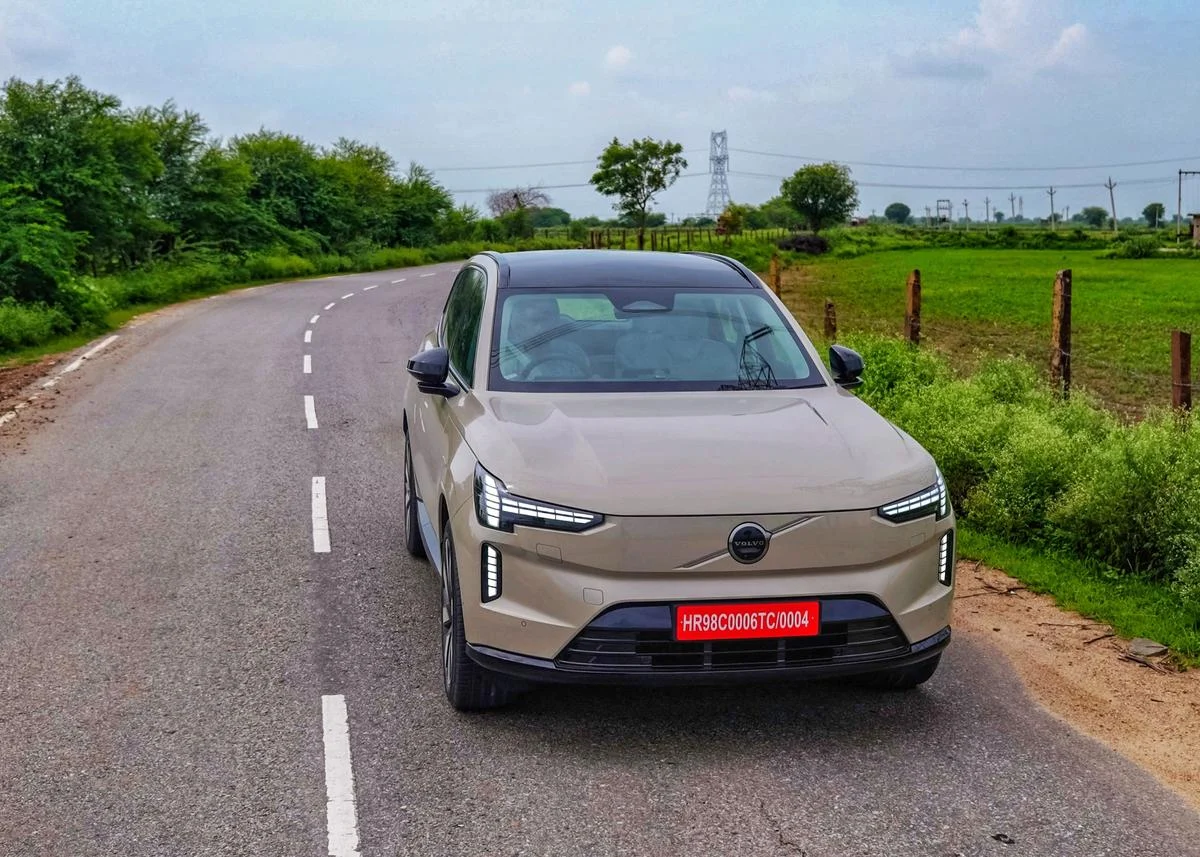
The global automotive landscape is undergoing a seismic shift, and at the forefront of this transition stands Volvo. Long regarded as the vanguard of automotive safety, the Swedish marque is now redefining itself as a leader in sustainable luxury. The Volvo EX90, the brand’s flagship electric SUV, is not merely a replacement for the venerable XC90; it is a manifesto for the future. As it prepares for its Indian debut, the EX90 brings a blend of understated elegance, cutting-edge 800V architecture, and a philosophical approach to technology that prioritizes human experience over sheer spectacle.
Main Facts: A New Benchmark for Electric Luxury
The Volvo EX90 arrives as a full-sized, seven-seater (configured as a six-seater for the Indian market) luxury SUV that eschews the aggressive, "look-at-me" styling often found in the premium segment. Instead, it leans into the restrained Scandinavian design language that has become Volvo’s signature.
The vehicle is built on a dedicated electric platform, allowing for a flat floor and optimized interior space. Key highlights include:

- Powertrain: A twin-motor all-wheel-drive system delivering 456hp and 670Nm of torque.
- Battery & Charging: A massive 106kWh battery supported by an 800V electrical architecture, capable of 350kW DC fast charging.
- Performance: 0-100kph in a brisk 5.5 seconds with a claimed WLTP range of up to 625km.
- Interior: A minimalist cabin centered around a 14.5-inch vertical touchscreen and a high-fidelity 25-speaker Bowers & Wilkins audio system.
In India, the EX90 is expected to be positioned in the ₹90 lakh to ₹1 crore price bracket, placing it in direct competition with the likes of the BMW iX, Audi Q8 e-tron, and the Mercedes-Benz EQS SUV.
Chronology: From the XC90 Legacy to the EX90 Future
To understand the EX90, one must look at the lineage of the XC90. For two decades, the XC90 was the gold standard for family-oriented luxury SUVs. However, as Volvo committed to becoming a fully electric car company by 2030, a radical evolution was required.
The development of the EX90 focused on "software-defined" architecture. Unlike previous models where software was an afterthought to the mechanical components, the EX90 was designed from the ground up to be a computer on wheels. This journey involved deep partnerships with Google for the infotainment ecosystem and Luminar for sensing technologies.

The India-spec car represents a tailored version of this global vision. While the global model emphasizes high-level autonomous readiness, the Indian iteration focuses on the luxury and refinement aspects that resonate with the local "chauffeur-driven" culture, evidenced by the inclusion of second-row captain’s chairs.
Supporting Data: Technical Excellence and Engineering Precision
Exterior Design and Aerodynamics
The EX90’s silhouette is a masterclass in functional minimalism. Despite its considerable dimensions, it achieves a drag coefficient of 0.29—a remarkable feat for a vehicle of its size. The absence of a traditional grille is replaced by a smooth, "shield" front end that houses various sensors.
The lighting system is perhaps the most advanced ever fitted to a Volvo. The "Thor’s Hammer" DRLs now feature a pixelated, kinetic opening mechanism. When the main beams are activated, the DRLs split apart to reveal the primary LED units. These are not just for show; they utilize adaptive beam technology to mask out other road users, ensuring maximum visibility without blinding oncoming traffic.

For the Indian market, Volvo has opted for a staggered tire setup to enhance grip and stability. The 21-inch wheels are wrapped in Michelin Pilot Sport EV tires—265/45 at the front and a wider 295/40 at the rear—providing the necessary footprint for a vehicle of this mass.
The 800V Architecture Advantage
The EX90’s 106kWh battery is more than just a large fuel tank for electrons. By utilizing an 800V architecture, Volvo has minimized charging times and improved thermal efficiency. On a 350kW DC fast charger, the EX90 can replenish its battery from 10% to 80% in just 22 minutes. In the context of long-distance Indian touring, this makes the EX90 a viable "one-car" solution for families.
Performance Metrics
| Feature | Specification |
|---|---|
| Max Power | 456 hp |
| Max Torque | 670 Nm |
| 0-100 km/h | 5.5 Seconds |
| Battery Capacity | 106 kWh |
| Range (WLTP) | 625 km |
| Charging Speed | Up to 350 kW DC |
Official Responses: Volvo’s Philosophy of "Purposeful Technology"
Volvo’s leadership has frequently emphasized that the EX90 is not about "technology for technology’s sake." This is evident in the cabin’s execution. While rivals are adding "hyperscreens" that span the entire dashboard, Volvo has stuck to a clean, 14.5-inch central hub.

The official stance is that the car should be a sanctuary. This is why the EX90 features a panoramic glass roof with electrochromic technology. Instead of a mechanical blind that adds weight and complexity, the glass itself can transition from transparent to opaque at the touch of a button.
On the subject of safety, Volvo representatives highlight the "Shield of Safety." While the India-spec car lacks the roof-mounted LiDAR found in some European trims, it retains a formidable array of five cameras, five radars, and 12 ultrasonic sensors. Volvo maintains that this suite provides a level of situational awareness that far exceeds the requirements for current Indian road conditions, offering a "safety net" rather than an intrusive autopilot.
The Interior Experience: A Six-Seater Sanctuary
The cabin of the EX90 is where the Scandinavian concept of Lagom (not too much, not too little) truly shines. The dashboard is draped in sustainable materials that feel every bit as premium as traditional leather.

Seating and Comfort
In India, the EX90 is presented as a six-seater. The second row features individual captain’s chairs, providing a level of comfort and adjustment that a bench seat cannot match. Unlike many SUVs where the third row is an "occasional" space for children, the EX90’s rear-most seats are properly contoured and offer sufficient room for adults on shorter journeys, or teenagers on long hauls.
Infotainment and Audio
The 14.5-inch touchscreen runs on a Google-built operating system. This means Google Maps, Google Assistant, and the Play Store are natively integrated. The interface is remarkably fluid, mimicking the responsiveness of a high-end tablet.
For audiophiles, the Bowers & Wilkins High Fidelity system is a revelation. With 25 speakers and 1,610 watts of power, it utilizes Dolby Atmos to create a 3D soundstage. The "Abbey Road Studios" mode is a standout feature, using digital signal processing to mimic the acoustic profile of the legendary London recording studio, turning the quiet cabin into a mobile concert hall.

Driving Dynamics: Composure Over Aggression
On the road, the EX90 belies its size. The driving position is commanding, yet the vehicle feels approachable. Much of this is down to the air suspension system, which constantly monitors the road surface and adjusts the damping in real-time.
The steering is tuned for effortless navigation. It is light at parking speeds, making the large SUV easy to maneuver through urban congestion, but it gains a reassuring weight at highway speeds. The body control is particularly impressive; the air suspension prevents the "floaty" sensation often associated with large SUVs, keeping the car flat through corners and stable under heavy braking.
Furthermore, the suspension allows for a 40mm lift in ride height, providing the EX90 with the ability to navigate broken Indian roads or mild off-road trails with confidence, even if its primary habitat remains the tarmac.

Implications: The Future of the Indian Luxury Market
The arrival of the Volvo EX90 in India carries significant implications for the luxury EV segment.
- A Shift in Luxury Perception: The EX90 proves that luxury does not need to be loud. Its success will signal whether Indian buyers are ready to move away from "conspicuous opulence" toward a more refined, sustainable form of prestige.
- Infrastructure Readiness: By bringing an 800V-capable car to India, Volvo is putting the onus on charging infrastructure providers to upgrade their hardware. The EX90 is future-proofed for the next decade of charging technology.
- The Safety Benchmark: Even without LiDAR, the EX90’s ADAS suite sets a high bar for collision avoidance and driver assistance in India. It reinforces Volvo’s position as the brand of choice for safety-conscious high-net-worth individuals.
Conclusion
The Volvo EX90 is a rare example of a flagship that feels both advanced and grounded. It manages the difficult task of being a high-tech powerhouse while remaining warm, inviting, and easy to use. It doesn’t shout about its 456 horsepower or its massive battery; instead, it whispers about comfort, safety, and acoustic perfection.
If Volvo can price the EX90 competitively between ₹90 lakh and ₹1 crore, it won’t just be a credible alternative to German rivals—it might just become the definitive choice for the modern, environmentally conscious Indian luxury buyer. The EX90 is not just a car; it is a calm, confident statement on what the future of mobility looks like.
