

By [Your Publication Name] Staff
In the vast, polyphonic landscape of Indian literature, certain voices are amplified until they become the definitive sound of a region, while others are relegated to the hushed corridors of "dialects" and "folk traditions." The politics of language is rarely a neutral field; it is a battleground of dominance, erasure, and systemic marginalization. For decades, the Angika language—spoken by millions in the Anga region of Bihar and Jharkhand—has existed in this shadow, often subsumed under the umbrella of Maithili or dismissed as a rural patois.
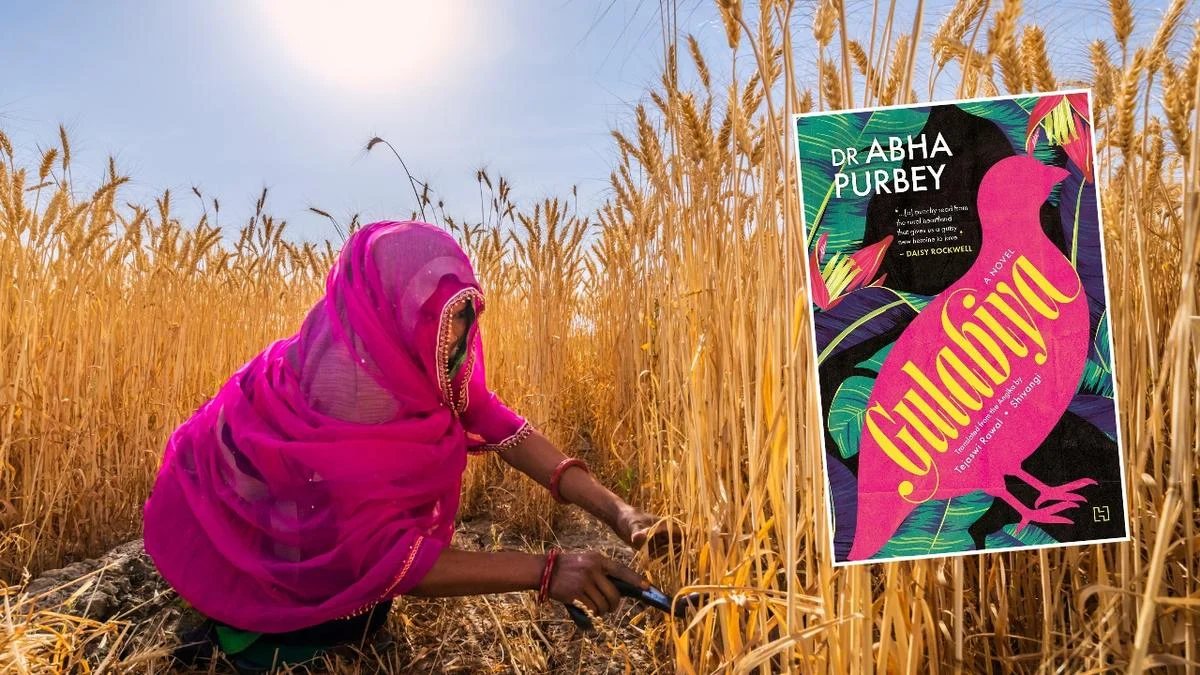
However, the recent release of the English translation of Abha Purbey’s seminal novel, Gulabiya, marks a watershed moment in Indian letters. Translated by Tejaswi Rawal and Shivangi, and published by Hachette India, Gulabiya is the first full-length translation of a work from Angika into English. More than just a literary release, it is a reclamation of an identity that has fought for recognition since the British Raj.
Main Facts: A Landmark in Vernacular Translation
Originally published in serialized form before appearing as a standalone book in 2008, Gulabiya has long been a cult classic within the Angika-speaking community. Its journey to the English-speaking world arrives at a time when the "global south" is increasingly looking toward its own hyper-local narratives to find universal truths.
The novel tells the story of Balesar and Gulabiya, two farm workers whose lives are a testament to the resilience of the human spirit against the crushing weight of feudalism and caste-based economics. By bringing this story to a global audience, translators Tejaswi Rawal and Shivangi have not only bridged a linguistic gap but have also challenged the hierarchy of Indian literature, where "Bhasha" (regional language) writings often struggle to find space in the mainstream unless they belong to the state-recognized "official" languages.
The book, priced at ₹399, arrives nearly two decades after its initial conception, signaling a renewed interest in the "graveyard of languages"—a term coined by renowned linguist G.N. Devy to describe the rapid disappearance of India’s linguistic diversity.

Chronology: From Oral Tradition to Global Shelves
The history of Angika and its literary evolution is a long, arduous journey. Understanding the significance of Gulabiya requires a look back at the timeline of the language and the book itself:
- Early 1900s: British linguist and civil servant George Grierson first identifies Angika during his monumental Linguistic Survey of India. However, he categorizes it as a dialect of Maithili, a classification that scholars argue stunted its formal recognition for a century.
- Late 20th Century: A grassroots movement begins in the Anga region (encompassing districts like Bhagalpur, Munger, and Banka) to distinguish Angika as an independent language with its own unique syntax and literary heritage.
- Early 2000s: Abha Purbey, a scholar and writer deeply rooted in the Anga culture, begins writing Gulabiya. It is first shared with the public in a serialized format, gaining a dedicated following among rural and semi-urban readers.
- 2008: The first edition of Gulabiya is published as a novel. It is celebrated for its authentic portrayal of the agrarian crisis and the specific cultural nuances of the Angika-speaking belt.
- 2010s-2020s: As a second edition is released to meet persistent demand, the novel catches the attention of translators Shivangi and Tejaswi Rawal. They recognize the text not just as a story, but as a linguistic artifact.
- September 2026: The English translation is officially released, marking the first time a full-length Angika work is accessible to the international Anglophone market.
Supporting Data: The Linguistic Struggle and the "Graveyard of Languages"
The struggle for Angika is emblematic of a larger crisis in India. According to the People’s Linguistic Survey of India (PLSI), the country has lost over 250 languages in the last 50 years. While the Indian Constitution’s Eighth Schedule recognizes 22 languages, hundreds of others—including Angika, which is spoken by an estimated 15 to 20 million people—remain in a state of "official" invisibility.
Linguists argue that when a language is labeled a "dialect," it loses access to state funding, educational support, and institutional preservation. This leads to what G.N. Devy describes as an "apathy-led erasure."
Gulabiya serves as a counter-narrative to this erasure. By translating the work, Rawal and Shivangi provide empirical proof of the language’s depth. The novel utilizes specific agricultural terminology, kinship terms, and emotional registers that are unique to the Angika landscape, proving that it is far more than a "subset" of another tongue.
The Narrative Arc: Love in the Time of Feudalism
At its core, Gulabiya is a poignant love story, but one that is inextricably tied to the land and the labor required to till it. The book opens with a vivid, sensory-heavy scene: Gulabiya working in the fields under a relentless, scorching sun. This is not a romanticized version of rural life; it is a gritty, sweat-stained reality.
The Protagonists
- Gulabiya: A farm worker whose interior life is rich with dreams that contrast sharply with her grueling daily routine. She represents the silent strength of the rural woman, whose labor is often the backbone of the economy but remains unacknowledged.
- Balesar: Gulabiya’s lover, who seeks to break the cycle of generational poverty. His promotion to "manager" by the landowner, Seth Patel Singh, creates a moral fracture. He is forced to choose between his loyalty to his fellow laborers and his own aspirations for upward mobility.
The Conflict: The Banana Farm Dream
Balesar’s ambition is centered on a specific goal: growing high-quality bananas on his own small plot of land. In the Anga region, banana cultivation is a significant economic activity, but it requires capital that workers like Balesar simply do not have.

The narrative takes a dark turn when Balesar is denied a loan by a formal banking institution—a common reality for the landless and the lower castes. This systemic failure pushes him into the clutches of a local moneylender. The subsequent collusion between the moneylender and Seth Patel Singh serves as a microcosm of the "debt trap" that continues to plague Indian farmers. The plot reveals how the existing social order—defined by caste and class—conspires to prevent outliers from achieving economic independence.
Official Responses and Societal Context
While there has been no official government statement regarding the release of Gulabiya, the literary community has responded with significant acclaim. Critics have noted that the novel exposes the "cracks in the system" that official data often glosses over.
Sociologists point out that the book’s depiction of the banking system’s failure to provide credit to the marginalized is a critique that remains relevant in 2026. Despite various financial inclusion schemes, the "last mile" connectivity for people like Balesar remains fraught with bureaucratic hurdles and social prejudice.
Furthermore, the "politics of language" mentioned in the novel’s reception highlights a growing demand for the inclusion of Angika in the Eighth Schedule. Advocates for the language argue that if a language can produce literature of the caliber of Gulabiya, it deserves the same constitutional protections as Maithili or Hindi.
Implications: Translation as a Tool for Change
The publication of Gulabiya in English carries several profound implications for the future of Indian literature and social policy:
1. Breaking the Monolith of "Indian Literature"
For too long, "Indian Literature" in the global consciousness has been dominated by English-original works or translations from major languages like Bengali, Tamil, or Malayalam. Gulabiya forces a shift in perspective, suggesting that the most vital stories may be found in the "minor" languages that the state has ignored.

2. The Ethics of Translation
Translators Shivangi and Tejaswi Rawal have been praised for their "tightly woven" prose. Their Translator’s Note is an essential component of the book, explaining the complexities of translating a language that lacks a standardized dictionary or a wealth of written precedents. Their collaborative effort ensures that the English version retains the "soil" of the original Angika, avoiding the trap of over-polishing the text into a generic "rural" story.
3. A Call for Policy Reform
By highlighting the plight of Balesar and Gulabiya, the novel serves as a soft-power tool for demanding better agrarian policies. It humanizes the statistics of farmer suicides and rural migration. When readers "live alongside" these characters, as author Abha Purbey intends, the "expendability" of rural lives becomes a harder narrative for the state to maintain.
4. Preserving the "Hues of Culture"
As India moves toward a more uniform national identity, works like Gulabiya act as repositories of diversity. They preserve the "different hues" of food, tradition, and local idiom that are being erased by the "race towards uniformity."
Conclusion
Gulabiya is more than a novelette; it is a manifesto for the ignored. Through the lens of a love story, Abha Purbey, Tejaswi Rawal, and Shivangi have brought the Anga region to the world. They have proven that while a language may be denied official status, its power to narrate the human condition remains undiminished.
As the reviewer notes, these are the stories usually "buried on the seventh page of a newspaper." By bringing Balesar and Gulabiya to the front page, this translation demands that we stop looking away from the realities of those who feed the nation while starving for recognition. In the "graveyard of languages," Gulabiya is a defiant, blooming flower.
