

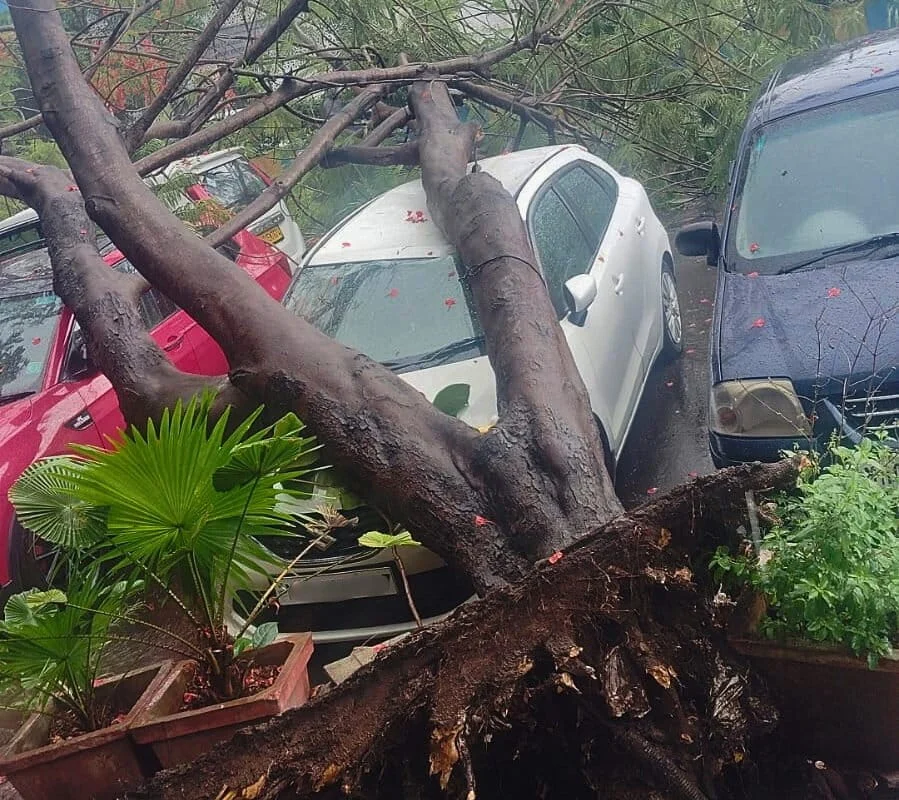
MUMBAI – For decades, the arrival of the monsoon in Mumbai was a celebrated reprieve from the sweltering heat, a season that turned the city’s concrete corridors into lush, rain-washed avenues. However, in recent years, this seasonal transformation has taken a sinister turn. Today, the city’s majestic tree-lined roads are no longer viewed merely as aesthetic or environmental assets; they have become high-risk hazard zones.
As heavy rains and gusty winds lash the metropolis, Mumbaikars find themselves looking upward with trepidation. The fear is palpable: the next tree to fall could be the one under which you are walking, driving, or waiting for a bus. This year, that fear was tragically realized as a spate of tree-related accidents claimed lives and fueled a growing debate over urban planning, civic neglect, and the "suffocation" of Mumbai’s green lungs.
Main Facts: A Season of Tragedy and Statistics
The human cost of Mumbai’s failing urban forestry was laid bare in a single week between late June and early July. Three separate incidents, occurring in disparate parts of the city, highlighted the indiscriminate nature of the danger.
On June 30, the city was shaken by the death of 11-year-old Vihaan Srivastava in Chembur. A 60-year-old tree, seemingly sturdy to the untrained eye, collapsed onto the school bus he was occupying. Days later, on July 5, 18-year-old Kumar Hasan Raza Jahangir Alam Syed was killed when a massive branch struck him while he was riding a motorcycle through the verdant but treacherous Aarey Colony. That same day, 63-year-old Yunus Kundawala lost his life to a falling tree in Kurla.

The scale of the crisis is reflected in the harrowing data released by the Brihanmumbai Municipal Corporation (BMC). Between June 22 and July 17, a staggering 902 trees were uprooted, and 1,251 branches collapsed across public spaces. The peak of the mayhem occurred on July 5 and 6, which recorded 203 and 523 tree-fall incidents, respectively—a rate of destruction that suggests a systemic failure rather than a series of isolated accidents.
Chronology: From Heatwave to Hazard
The timeline of this year’s crisis reveals a rapid escalation of incidents as the monsoon intensified:
- Pre-Monsoon (May–June): The BMC conducted its annual pruning drive, a process intended to "balance" trees. However, activists and experts warned that these interventions were often unscientific and top-heavy.
- Late June: Heavy rains began. On June 30, the death of Vihaan Srivastava in Chembur marked the first major fatality, triggering public outcry.
- Early July (The Peak): Gusty winds reaching speeds of 70-80 km/h (as per IMD data) coincided with saturated soils. July 5 and 6 saw over 700 combined tree-fall reports.
- July 7: BMC Commissioner Ashwini Bhide held a press conference to address the spike in deaths, attributing the failures primarily to extreme weather conditions rather than infrastructural flaws.
- Mid-July: In response to perceived civic apathy, citizen groups in Mumbai and Thane began "guerrilla de-concretization" efforts, manually removing cement from around tree bases.
- Late July: The BMC released an internal inquiry report on the Chembur tragedy, largely exonerating its own officials while penalizing private contractors.
Supporting Data: The Science of "Suffocation"
While the administration points toward "Act of God" weather events, environmental scientists and arborists point toward a more terrestrial culprit: Concretization.
The Death of the Root System
Urban design in Mumbai frequently prioritizes "paving over" every available inch of ground. When the base of a tree is encased in concrete or heavy pavers, the root zone is denied oxygen and water infiltration. Under normal circumstances, roots spread horizontally to provide anchorage. In Mumbai, these roots are often "choked," forced into a narrow, vertical struggle for survival.
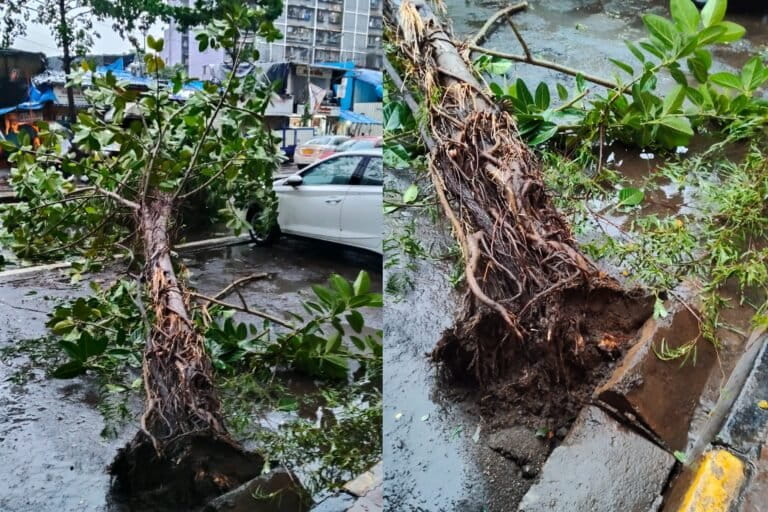
Data from a sample survey conducted by citizen volunteers and municipal representatives across 12 wards in Mumbai revealed a grim reality: 61% of the 1,115 trees inspected are still fully concretized, despite years of legal mandates to the contrary. Furthermore, 50 of these trees were classified as "dead and dangerous," standing as silent, wooden guillotines over busy sidewalks.
Utility Excavation and Infrastructure
The issue is compounded by the city’s constant state of repair. Stormwater drains (RCC boxes) are typically laid alongside footpaths where trees are planted. Abhijit Ekbote, an urban practitioner, notes that whenever a road is concretized, the adjoining footpath is dug up. This excavation frequently severs primary lateral roots.
Arborist Vaibhav Raje explains that this "cumulative, largely undocumented root loss" is the silent killer of urban trees. "The canopy may look lush and healthy," Raje says, "but below the surface, the tree has lost the structural integrity required to withstand even moderate winds."
Official Responses and the Accountability Gap
The administrative response to the fatalities has been met with skepticism from the victims’ families and environmental advocates.

The "Clean Chit" Controversy
Following the death of Vihaan Srivastava, the BMC’s internal inquiry concluded that its Road and Garden Department officials were not at fault. Instead, the corporation suspended three junior officials and imposed a ₹700,000 penalty on a private contractor and consultant involved in nearby roadwork.
Gaurav Srivastava, Vihaan’s father, has expressed deep dissatisfaction with this self-investigation. "It’s a matter of fairness," he stated, noting that a single-member independent committee led by botanist Sanjay V. Deshmukh has since been tasked with a secondary report.
Policy and Personnel Vacancies
The Maharashtra (Urban Areas) Protection and Preservation of Trees Act, 1975 mandates the appointment of "Tree Officers" for every municipal council. However, activists like Nilesh Baxi point out that significant vacancies remain in these roles. Furthermore, the mandatory tree census, which should occur every five years, has been neglected; the last comprehensive data for Mumbai dates back to 2018. While the BMC claims there are roughly 29.8 lakh trees in the city, the lack of updated, health-indexed data makes proactive management nearly impossible.
Implications: Beyond the Physical Danger
The tree-fall crisis in Mumbai carries deeper implications for the city’s relationship with nature, touching on psychological, ecological, and urban planning philosophies.
The "Extinction of Experience"
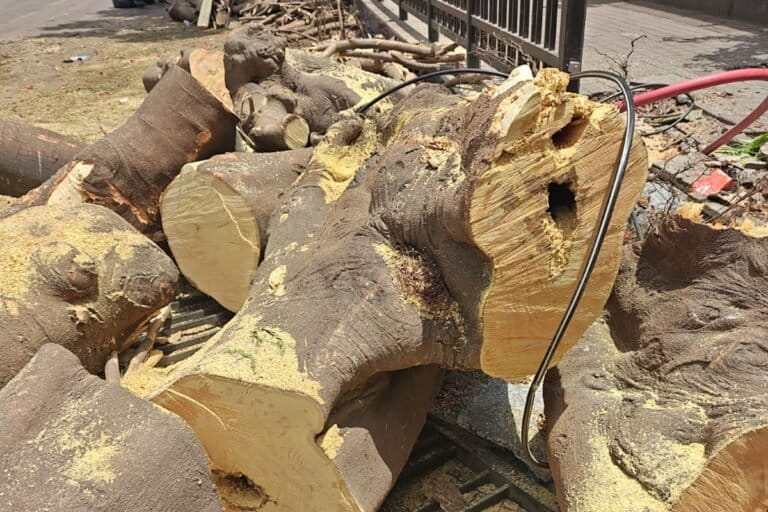
Psychologist Reshma Ashar links the public’s sometimes-indifferent reaction to tree-cutting to a phenomenon called the "extinction of experience." As Mumbaikars become increasingly alienated from their natural environment, trees are viewed as "furniture" or "obstructions" rather than living organisms. This anthropocentric mindset—where a tree is only valued for its utility—leads to a lack of empathy in how they are treated by both citizens and officials.
The Loneliness of the Urban Tree
Ecologically, the way Mumbai plants its trees—in isolated, narrow pits—goes against the fundamental biology of the species. Sayee Girdhari of SeasonWatch explains that trees in a forest are part of a "social network," communicating and sharing nutrients through underground mycorrhizal fungi.
"Street trees in Mumbai are often lonely," Girdhari says. Isolated by concrete and cut off from their peers, these trees cannot form the symbiotic networks that provide structural and nutritional support. This isolation makes them more vulnerable to disease and decay, which often goes unnoticed until the tree collapses.
The Need for "Climate-Smart" Arboriculture
The current practice of "pruning" in Mumbai is often criticized as "topping"—the haphazard removal of upper branches. Without a certified arborist on staff, the BMC relies on contractors who may not understand the "center of gravity" of a tree. Scientific pruning requires selective thinning to reduce wind load while maintaining the tree’s balance.

Conclusion: A Call for Coexistence
The rising number of tree-fall deaths in Mumbai is a stark warning that the city’s current model of development is at odds with its natural ecosystem. Blaming "gusty winds" is an oversimplification of a crisis manufactured by decades of poor urban design, unscientific maintenance, and civic apathy.
For Mumbai to remain a livable city, the approach to urban forestry must shift from "management by crisis" to "management by science." This includes:
- Immediate De-concretization: Adhering to the National Green Tribunal (NGT) orders to leave a minimum of one meter of unpaved space around every tree base.
- Arborist Integration: Mandating that every ward has a certified arborist to oversee pruning and health assessments.
- Root-Sensitive Infrastructure: Redesigning utility and drain layouts to ensure that roadwork does not become a death sentence for roadside canopies.
Until trees are treated as "fellow living beings" and essential infrastructure rather than obstacles to development, the monsoon will continue to be a season of mourning for Mumbai. The city must decide whether it wants a canopy that provides shade and life, or one that looms as a constant threat to its citizens.
