

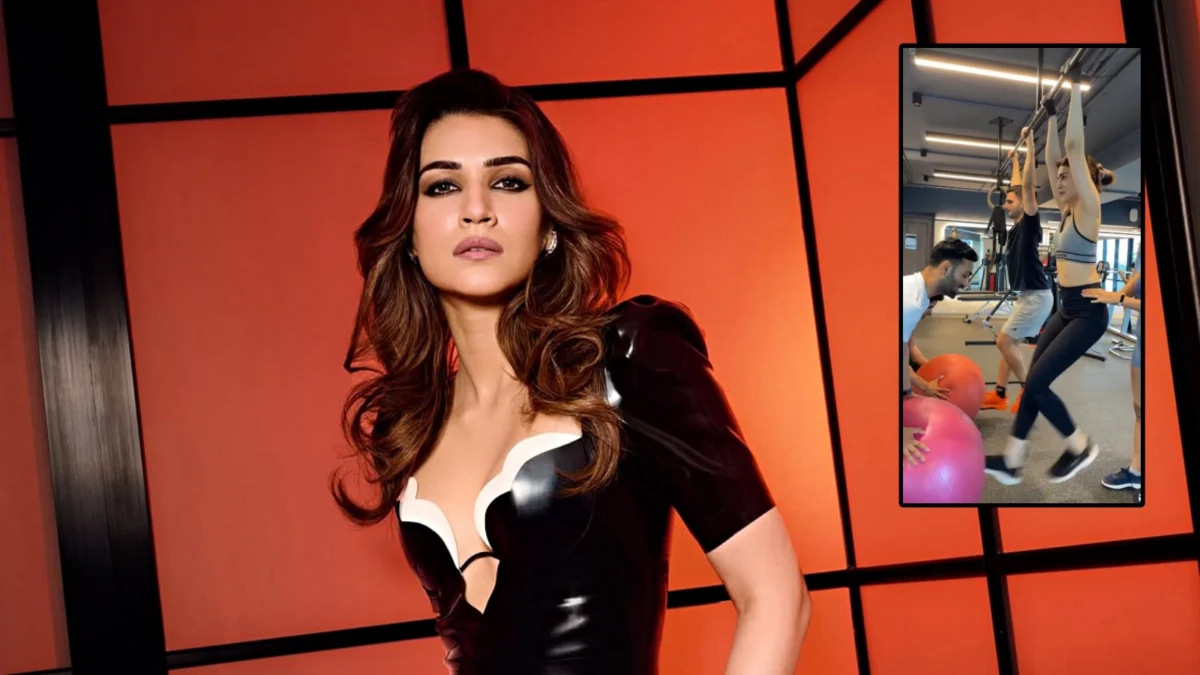
In the ever-evolving landscape of celebrity fitness, actor Kriti Sanon has once again captured attention, not with a new film, but with a captivating display of athletic prowess. A recent viral reel, shared by self-improvement coach and former professional footballer Karan Sawhney, showcases Sanon performing what appears to be a playful exercise: hanging from a gym bar and rapidly kicking an exercise ball. While the visual might evoke a sense of lighthearted fun, beneath the surface lies a sophisticated and demanding workout that engages multiple muscle groups and tests core stability and coordination. This "hanging core challenge," as it’s been dubbed, offers a compelling glimpse into the advanced training methodologies employed by some of today’s most dedicated athletes and performers.
The Genesis of a Viral Workout: Unpacking Kriti Sanon’s Fitness Secret
The video, shared by Karan Sawhney on his Instagram, depicts Kriti Sanon in mid-air, her body suspended from an overhead bar. Sawhney stands before her, holding a Swiss ball, which Sanon then repeatedly kicks with impressive speed and precision. To ensure proper form and safety, a trainer is seen providing subtle support around her waist, a testament to the exercise’s demanding nature. The accompanying caption, labelling it a "hanging core challenge," presented a specific directive: maintain a firm grip, aim for maximum speed within a 20-second interval, and crucially, prevent the lower body from swinging excessively. This seemingly simple instruction belies the complex physiological responses triggered by this advanced movement.
The reel quickly garnered widespread attention, sparking curiosity among fitness enthusiasts and the general public alike. The question on many minds was: what exactly is happening to the body when one attempts such a dynamic and visually engaging exercise? To provide a comprehensive understanding, this article delves into the biomechanics, muscle engagement, and potential benefits of Kriti Sanon’s unique fitness regimen, drawing insights from leading fitness experts.
The Intricate Mechanics: More Than Just a Leg Workout
Fitness experts emphasize that Sanon’s exercise is far from a simple leg-based activity. Sudeeksha Mukherjee, an Alpha Coach, identifies the move as an "advanced hanging flutter-kick variation." She elaborates that the actor’s ability to maintain an overhead grip on the bar while executing rapid, alternating leg movements, all while the Swiss ball introduces a target and coordination element, is what makes this exercise so potent.
"Because her body is suspended, she also has to keep her core braced, shoulders stable, and control excessive swinging while continuing the fast leg movement," Mukherjee explains. This highlights the multifaceted demands placed upon the body. The core, often perceived as the abdominal muscles, is in fact a complex network of muscles that stabilize the spine and pelvis. In this hanging position, the core muscles – including the rectus abdominis, obliques, transverse abdominis, and erector spinae – are constantly engaged to counteract gravity and maintain a rigid torso.
Yash Vardhan Swami, Founder and Transformation Coach at TrainedByYVS, corroborates this, stating that Sanon’s workout "mainly works the core, while also engaging the grip, shoulders and hip flexors." The act of hanging from a bar inherently requires significant grip strength. The forearms, hands, and even the muscles of the upper back are actively involved in maintaining that hold. Simultaneously, the shoulders are stabilized by the deltoids and rotator cuff muscles, preventing unwanted movement and contributing to overall body control. The hip flexors, located at the front of the hip, are instrumental in lifting the legs to kick the ball, and their strength and flexibility are crucial for executing the flutter-kick pattern effectively.
Swami further emphasizes the integrated nature of the exercise: "You’re not just moving your legs; you are also working to keep your body stable throughout the movement. It’s a good combination of core strength, grip strength and body control." This synergy between different muscle groups is a hallmark of functional training, which aims to improve the body’s ability to perform everyday activities with greater ease and efficiency.
The instruction to avoid swinging is not arbitrary; it is fundamental to the exercise’s efficacy. Experts explain that allowing the entire body to swing back and forth leads to an over-reliance on momentum rather than controlled muscular effort. This compromise diminishes the effectiveness of the core engagement and can even lead to compensatory movements that negate the intended benefits. A controlled, stable core is paramount for transferring power efficiently and executing the movement with precision.
The Swiss Ball Conundrum: Elevating the Challenge
The incorporation of the Swiss ball elevates an already demanding exercise into a sophisticated coordination and timing challenge. Kriti Sanon’s task is not merely to kick, but to accurately time her kicks to connect with the moving ball, all while maintaining a stable torso and pelvis. This introduces a layer of proprioception – the body’s awareness of its position in space – and fine motor control.
Mukherjee points out that the ball "adds a challenge to coordination, timing and body awareness." The objective is to maintain trunk and pelvic control while the limbs are in rapid motion. This requires a high degree of neuromuscular coordination, where the brain and muscles work in seamless unison. The ability to isolate leg movements while keeping the core engaged and stable is a critical skill developed through such exercises.
"The real benefit comes from being able to maintain trunk and pelvic control while the limbs are moving quickly, not simply from kicking faster," Mukherjee adds. This is a crucial distinction. In many exercises, speed is often equated with intensity and results. However, in this case, uncontrolled speed that leads to a loss of form is counterproductive. The true measure of success lies in the quality of movement and the ability to maintain a strong, stable core throughout the exercise.
Swami also recognizes the value of this type of functional core training as an alternative to more traditional abdominal exercises like crunches. While crunches can be effective, they often isolate the rectus abdominis and may not engage the deeper stabilizing muscles of the core as comprehensively. Functional movements, like Sanon’s hanging challenge, mimic real-world actions and promote a more holistic development of core strength and stability.
The Progression Pathway: From Beginner to Advanced
Despite its impressive benefits, fitness experts caution against beginners attempting this advanced variation without proper preparation. Swami strongly advises, "It’s not something I’d recommend beginners jump into immediately." The inherent risk of injury, particularly to the shoulders, back, and wrists, is significant if foundational strength and control are not established first.
The recommended approach involves a gradual progression. Building core and grip strength through simpler exercises is paramount. This could include basic hanging exercises, planks, dead hangs, and controlled leg raises. Once a solid foundation is established, individuals can gradually introduce more challenging movements. "Good form and control should always come before making an exercise more advanced," Swami reiterates. This principle underscores the importance of mastering the fundamentals before attempting complex, high-intensity exercises.
For those aspiring to incorporate such advanced training into their routine, a structured plan developed with a qualified fitness professional is essential. This ensures that the exercises are performed correctly, the progression is appropriate for the individual’s fitness level, and the risk of injury is minimized.
Beyond the Visual: The Holistic Impact of Kriti Sanon’s Routine
Kriti Sanon’s "hanging core challenge" serves as a powerful illustration of how seemingly playful exercises can yield significant physiological benefits. While she may be smiling through the exertion, her core muscles are undoubtedly working overtime. This advanced variation is a testament to her dedication to maintaining a high level of physical fitness, which is crucial for her demanding acting career.
The exercise’s effectiveness lies in its ability to:
- Enhance Core Strength and Stability: By forcing the core to stabilize the entire body against gravity and dynamic limb movements, it strengthens the deep stabilizing muscles, leading to improved posture and reduced risk of back pain.
- Improve Grip Strength: The sustained hanging position significantly challenges and develops grip strength, which is beneficial for everyday tasks and other athletic pursuits.
- Boost Shoulder Stability: Maintaining a stable shoulder girdle while the body is in motion requires the activation of numerous stabilizing muscles, contributing to overall shoulder health and injury prevention.
- Develop Coordination and Body Awareness: The incorporation of the Swiss ball demands precise timing, spatial awareness, and the ability to control limb movements independently of torso stability.
- Promote Functional Fitness: This type of exercise translates directly to improved performance in a wide range of physical activities, from sports to everyday movements, by enhancing the body’s ability to move efficiently and powerfully.
In conclusion, Kriti Sanon’s viral fitness moment is more than just an eye-catching display; it’s a sophisticated exercise that demands a high level of physical conditioning. It highlights the importance of functional training, core strength, and controlled movement in achieving optimal fitness. While the visual might appear deceptively simple, the underlying mechanics are complex, engaging multiple muscle groups in a coordinated effort. As the fitness world continues to explore innovative training methods, Sanon’s "hanging core challenge" stands out as a prime example of how dynamic and engaging workouts can be, pushing the boundaries of what is possible and inspiring others to embrace a more holistic approach to their fitness journey.
Disclaimer: This article is based on information from the public domain and insights from fitness experts. It is intended for informational purposes only and does not constitute medical advice. Always consult with a qualified health practitioner or certified fitness professional before starting any new exercise program or making any changes to your current routine.
