

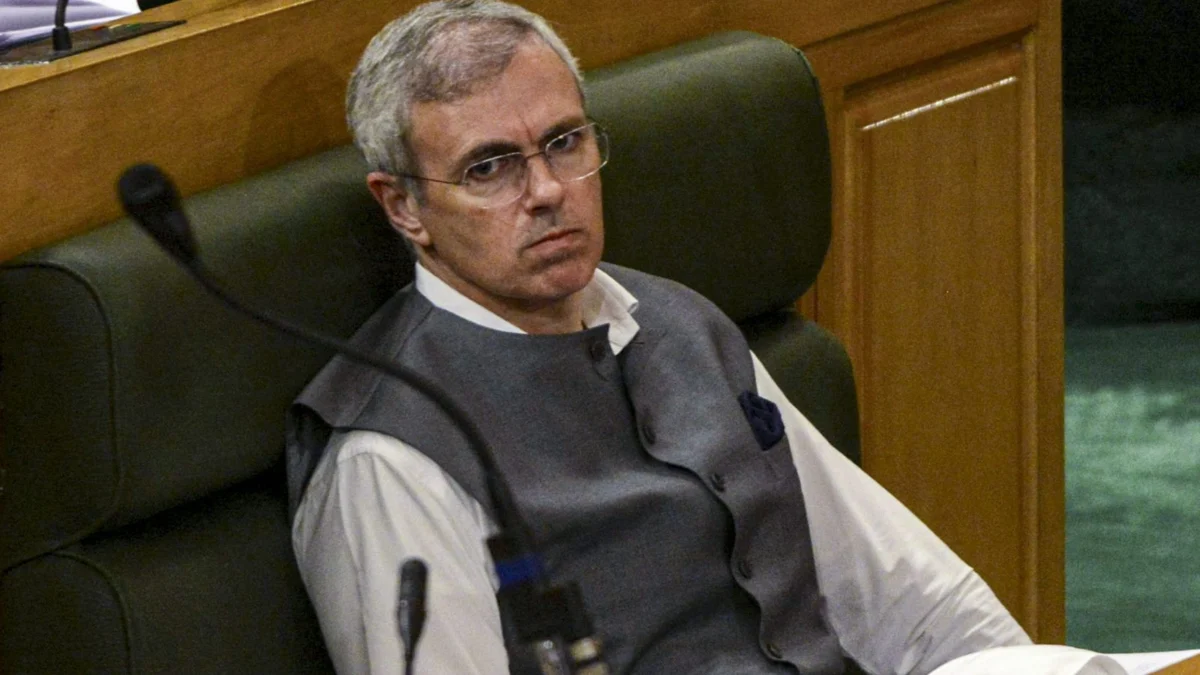
SRINAGAR, Jammu & Kashmir – In a significant development that reconfigures the long-standing political narrative surrounding resource allocation in Jammu and Kashmir, the Jammu province has, for the first time in recent memory, secured a higher share of capital expenditure (Capex) than the Kashmir Valley in the 2026-27 financial year. Figures tabled by the Omar Abdullah government in the Assembly reveal that the ten districts of Jammu collectively received a larger portion of the developmental funds, directly challenging the Bharatiya Janata Party’s (BJP) consistent claims of discrimination against the region.
This budgetary shift, detailed in the Union Territory’s financial statements, marks a pivotal moment, forcing political parties to recalibrate their stances and prompting a deeper examination of developmental priorities across the diverse landscape of Jammu and Kashmir.
Main Facts: A Paradigm Shift in Developmental Spending
The allocation figures for the 2026-27 financial year present a clear picture: the Jammu division is set to receive a greater share of the developmental pie. Out of a total Capex allocation of Rs 9,566.30 crore for the entire Union Territory, a substantial Rs 5,102.25 crore has been earmarked for the ten districts comprising the Jammu division. In contrast, the ten districts of the Kashmir Valley have been allocated Rs 4,464.05 crore.
Even in terms of released funds, Jammu maintains its lead. Of the Rs 5,837.91 crore already released, Jammu division has received Rs 3,292.93 crore, while Kashmir division has received Rs 2,544.98 crore. This statistical revelation directly confronts the BJP’s traditional political plank, which has historically centered on advocating for greater equity for Jammu, alleging a historical bias in favour of the Valley.
At the district level, the disparity is even more pronounced. Jammu district itself stands out with an allocation of Rs 2,314.35 crore, which is nearly double the Rs 1,486.88 crore allocated to Srinagar district, the highest in the Kashmir division. This concentration of funds within the administrative heart of the Jammu province underscores a strategic, albeit potentially controversial, approach to regional development.
Chronology of the Debate: Unpacking Decades of Disparity Claims
The debate over equitable resource distribution between the Jammu and Kashmir divisions is not new; it has been a contentious political issue for decades, often fueling regional aspirations and grievances. Historically, the BJP and other regional parties from Jammu have consistently articulated a narrative of neglect, arguing that the region, despite its diverse population and significant contributions, has been systematically deprived of its fair share in developmental funds and projects. These claims often highlighted the perceived favoritism towards the Kashmir Valley, particularly in sectors like infrastructure, education, and healthcare.
In the run-up to various elections and during legislative sessions, the alleged disparity in capital expenditure has been a recurring theme, with political leaders from Jammu frequently citing anecdotal evidence and, at times, specific budgetary figures to bolster their arguments. The perception was that major projects and higher allocations disproportionately benefited the Valley, leaving Jammu to contend with underdeveloped infrastructure and limited opportunities.
The current financial year’s budget, presented by the Omar Abdullah government, represents a direct, data-driven counterpoint to this long-standing narrative. By making these detailed district-wise and division-wise figures public in the Assembly, the government has introduced a new level of transparency and accountability into the financial allocation process. This move forces a re-evaluation of past assumptions and sets a new benchmark for discussions on regional equity. The shift in allocation for 2026-27 thus doesn’t just present a set of numbers; it marks a critical juncture in the political and developmental discourse of Jammu and Kashmir, compelling all stakeholders to engage with concrete data rather than relying solely on historical grievances or political rhetoric.
Supporting Data: A Deeper Dive into Allocations and Priorities
The granular details of the Capex allocations reveal not only the divisional distribution but also the specific priorities within each district and province, offering valuable insights into the government’s developmental strategy.
Divisional Disparity: Jammu Takes the Lead
The overall Capex allocation of Rs 9,566.30 crore for the Union Territory reflects a substantial commitment to infrastructure and developmental projects. The Jammu division’s share of Rs 5,102.25 crore, compared to Kashmir’s Rs 4,464.05 crore, represents a difference of approximately Rs 638.20 crore in favour of Jammu. This 14% higher allocation for Jammu is a significant departure from historical trends, as perceived by many. The released funds also mirror this trend, with Jammu receiving Rs 3,292.93 crore out of Rs 5,837.91 crore released so far, while Kashmir has received Rs 2,544.98 crore. This suggests that the implementation of projects is progressing in line with the initial allocations.
District-Level Insights: Concentrated Investments
The district-wise breakdown further illustrates the concentrated nature of these investments. Within the Jammu division, the capital district of Jammu receives a staggering Rs 2,314.35 crore, accounting for nearly 45% of the entire division’s projected Capex allocation. This indicates a strong focus on developing the region’s primary urban and administrative hub.
Following Jammu, other districts in the division have also received substantial allocations:
- Rajouri: Rs 419.14 crore
- Poonch: Rs 400.08 crore
- Kathua: Rs 377.78 crore
- Udhampur: Rs 361.95 crore
- Doda: Rs 318.42 crore
- Reasi: Rs 249.34 crore
- Kishtwar: Rs 242.93 crore
- Samba: Rs 211 crore
- Ramban: Rs 197.20 crore
In the Kashmir division, Srinagar district leads with an allocation of Rs 1,486.88 crore, though this is considerably less than Jammu district’s share. The other districts in Kashmir received:
- Anantnag: Rs 697.05 crore (the second-highest in Kashmir)
- Baramulla: Rs 468.93 crore
- Pulwama: Rs 448.30 crore
- Budgam: Rs 287.74 crore
- Kupwara: Rs 284.87 crore
- Ganderbal: Rs 247.18 crore
- Bandipora: Rs 206.97 crore
- Kulgam: Rs 184.24 crore
- Shopian: Rs 151.84 crore (the lowest in the Valley)
Sectoral Priorities: A Deeper Dive into Spending
The distribution of funds across various sectors highlights the specific developmental needs and strategic focus for each region:
In Jammu District:
The major beneficiaries of the Capex allocation are:
- Power Development Department: Rs 417.51 crore, reflecting a strong emphasis on energy infrastructure. This could include new power projects, grid upgrades, and transmission improvements vital for industrial and urban growth.
- Housing and Urban Development: Rs 359.58 crore, indicating investment in urban infrastructure, housing schemes, and civic amenities to support the growing population of the provincial capital.
- Agriculture Production: Rs 279.94 crore, underscoring the importance of the agricultural sector, which forms the backbone of the region’s rural economy.
- Public Works Department (PWD): Rs 219.83 crore, primarily for road construction, maintenance, and other public infrastructure.
- Animal and Sheep Husbandry: Rs 195.94 crore, vital for supporting the livestock sector, which is a significant livelihood source in many parts of Jammu.
In Srinagar District:
The key sectors receiving funds are:
- Power Development Department: Rs 238.59 crore, also a priority, though less than Jammu, indicating ongoing efforts to stabilize and expand power supply.
- Health and Medical Education: Rs 224.57 crore, reflecting a crucial investment in healthcare infrastructure, hospitals, and medical training, which is particularly vital for urban centres.
- Agriculture Production: Rs 204.86 crore, a continued focus on supporting the Valley’s agricultural base.
- Housing and Urban Development: Rs 152.04 crore, for urban renewal and housing projects in the capital city.
- Animal and Sheep Husbandry: Rs 119.09 crore.
- Industries and Commerce: Rs 115.69 crore, suggesting efforts to boost industrial growth and create employment opportunities.
It is notable that across both divisions, the Power Development and Public Works Departments consistently receive significant allocations in most districts. This highlights a universal recognition of the need for robust energy and transport infrastructure as foundational elements for overall development. In Anantnag district, an interesting sectoral priority emerges with Rs 113.51 crore allocated to Tourism, reflecting the region’s immense potential and the government’s intent to bolster this crucial economic sector in the Valley.
Political Alignment and Allocations
The political landscape of the high-allocation districts also presents an interesting correlation. In Jammu district, with its highest Capex, 10 of the 11 Assembly constituencies are represented by BJP MLAs, while one is held by Independent MLA Satish Sharma, who serves as a minister in the Abdullah government. This alignment could suggest that the current allocations inadvertently benefit areas represented by the opposition or their allies, or that the government is ensuring broader development regardless of political affiliation.
Conversely, in Srinagar district, the highest allocated district in Kashmir, seven of the eight Assembly constituencies are represented by the ruling National Conference (NC) MLAs, with one held by the Congress. This pattern could be interpreted as the government prioritizing development in its stronghold, though the overall divisional figures complicate this simplistic view. Chief Minister Omar Abdullah himself represents one of the two Assembly constituencies in Ganderbal district, which has been allocated Rs 247.18 crore, a mid-range figure for the Valley.
Official Responses and Political Reactions: "The Devil’s in the Details"
The release of these figures has naturally elicited varied responses from the political spectrum, with the BJP and the ruling National Conference offering differing interpretations of the data.
BJP’s Nuanced Stance: "The Devil’s in the Details"
The Bharatiya Janata Party, which has historically championed the cause of alleged discrimination against the Jammu region, finds itself in a peculiar position. While the aggregate figures appear to contradict their long-standing claims, party spokespersons have urged caution and a deeper analysis of the budgetary allocations.
BJP spokesperson Ankur Sharma articulated this nuanced stance, stating, "One has to go through the sub-classification of these budgetary allocations before saying anything. The allocation for Jammu division may be more on account of allocations in hydel power projects. The devil lies in the details." Sharma’s argument suggests that headline figures can be misleading and that large-scale infrastructure projects, such as hydel power, which are often concentrated in specific geographical areas (like the mountainous regions of Jammu province), might skew the overall divisional totals without necessarily reflecting equitable distribution for broader development across all sectors or districts. This implies a need to dissect whether the funds are truly for ‘development’ as understood by the populace or for large-ticket projects that might have a different impact profile.
Further elaborating on the party’s position, BJP Udhampur East MLA R S Pathania emphasized that the party’s core demand is for development funds to be allocated based on genuine needs and specific criteria, rather than a simplistic Jammu-versus-Kashmir comparison. "There cannot be parity between Jammu and Udhampur. Likewise, there cannot be parity between Jammu and Rajouri," Pathania argued, highlighting the diverse geographical spread and varying developmental requirements within the Jammu province itself. "We do not believe in a battle between Jammu and Kashmir. We only want a criteria-based allocation and that Jammu gets its share," he reiterated. This statement attempts to pivot the debate from a regional rivalry to a more pragmatic discussion about needs-based planning, even as the new figures challenge their historical grievances. The BJP’s stance, therefore, is to scrutinize the nature of the allocations rather than just the quantum.
National Conference’s Counter-Narrative
The ruling National Conference (NC) has seized upon the released figures to bolster its claim of equitable governance and to counter the BJP’s long-standing accusations. NC provincial president Rattan Lal Gupta directly accused the BJP of "misleading the people of Jammu," asserting that the facts and figures presented in the Assembly told "a different story."
Gupta highlighted the comparative allocation to the two major cities: "Even Jammu city has got more funds as compared to Srinagar. Whatever the BJP says, the fact is that the Omar government believes in taking everyone along on the path of development. It does not discriminate on the basis of caste, creed, religion or region." This statement directly refutes the notion of regional bias, portraying the Omar Abdullah government as committed to inclusive development that transcends geographical, social, or political divides. The NC’s position is that the budgetary allocations are a testament to their government’s non-discriminatory policies, aimed at fostering overall growth and addressing developmental needs wherever they are most pressing.
Implications and Future Outlook: Reshaping the Political and Developmental Landscape
The 2026-27 Capex allocations have far-reaching implications, not just for the developmental trajectory of Jammu and Kashmir but also for its intricate political dynamics. The data challenges deeply entrenched narratives, demanding a more evidence-based approach to policy debates.
Reshaping the Political Discourse
The revelation that Jammu province has received a higher share of Capex directly impacts the BJP’s political strategy in the region. For years, the party has leveraged the alleged discrimination against Jammu as a key electoral issue, mobilizing support by promising to rectify these imbalances. With the latest figures, this narrative becomes significantly harder to maintain in its original form. The BJP will now have to refine its arguments, perhaps focusing on the "devil in the details" as suggested by its spokesperson, or shifting towards a demand for more nuanced, criteria-based allocations rather than simply a larger aggregate share. This could force the party to adopt a more development-focused agenda rather than a grievance-based one.
Conversely, the figures strengthen the National Conference’s position, allowing them to project an image of fair and inclusive governance. This could enhance their credibility, especially in Jammu where they have traditionally struggled to gain significant ground against the BJP. The NC can now confidently assert that their government is committed to equitable development across both regions, irrespective of political affiliations or historical divides. This could potentially reduce regional polarization and foster greater unity.
Developmental Trajectories and Regional Balance
The increased focus on capital expenditure in Jammu, particularly in the district of Jammu itself, could significantly accelerate infrastructure development and economic growth in the province. Large allocations to sectors like Power Development, Housing and Urban Development, and Agriculture are foundational for long-term prosperity. If utilized effectively, these funds could lead to improved urban amenities, better energy access, enhanced agricultural productivity, and potentially new industrial growth, thereby addressing some of the developmental deficits previously highlighted by critics.
However, the significant concentration of funds in Jammu district also raises questions about intra-divisional equity within Jammu province. While Jammu district thrives, other districts like Ramban and Samba receive considerably less, albeit with their own specific sectoral priorities. Similarly, within Kashmir, the disparity between Srinagar/Anantnag and districts like Shopian and Kulgam highlights ongoing challenges in ensuring uniform development across all regions. The long-term impact will depend not just on allocation, but on efficient project execution, timely completion, and the actual benefits reaching the populace.
The Road Ahead: Transparency and Accountability
The public disclosure of these detailed budgetary figures by the Omar Abdullah government sets a crucial precedent for transparency and accountability in Jammu and Kashmir. In a region often plagued by political mistrust and allegations of corruption, such openness is vital for fostering public confidence.
In the future, there will likely be increased scrutiny on how these allocated funds are actually utilized. Civil society organizations, opposition parties, and the media will undoubtedly demand detailed reports on project progress, expenditure tracking, and outcome assessments. The success of this budgetary shift will not solely be measured by the numbers on paper but by tangible improvements in infrastructure, public services, and overall quality of life for the residents of both Jammu and Kashmir. This new data-driven environment could lead to more informed public discourse, more robust policy debates, and ultimately, a more equitable and prosperous future for the Union Territory.
